
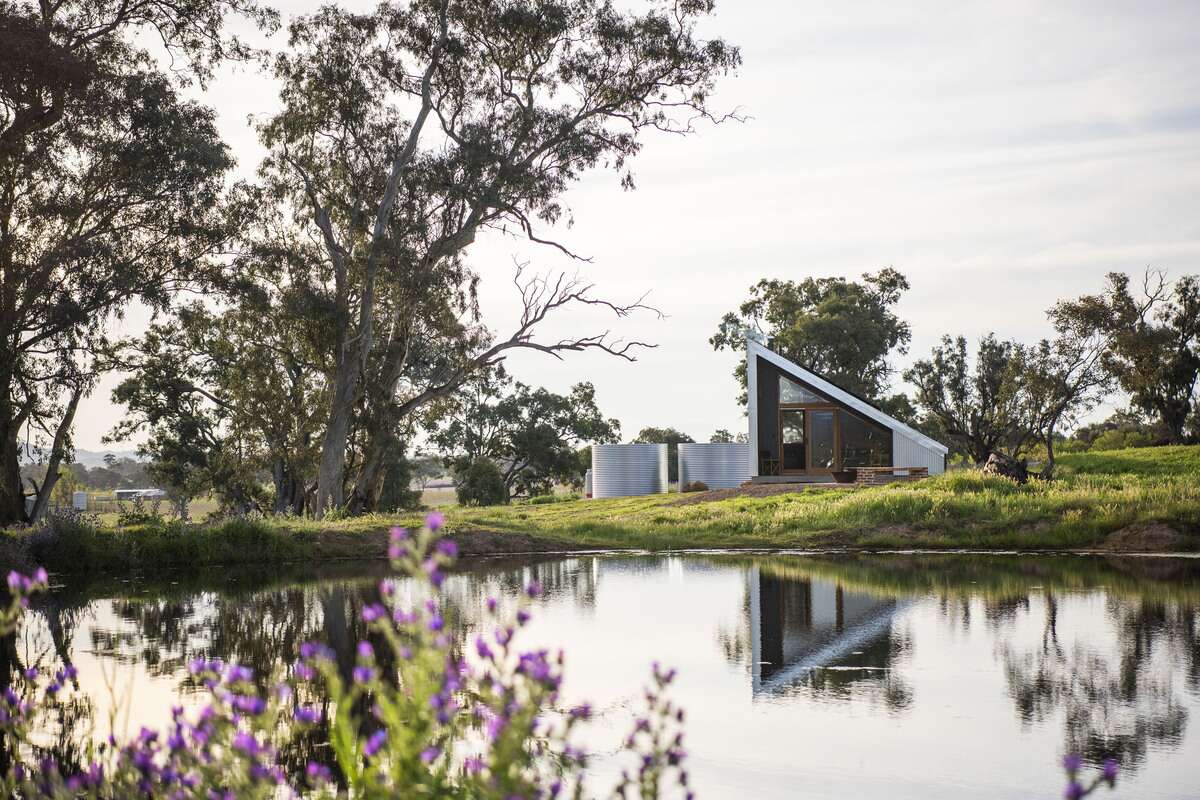
A modest, self-sufficient hut on a working rural property has generated worldwide interest for architect Cameron Anderson and owners Rick and Steph Gordon of Wilgowrah.
Gawthorne’s Hut, named after the historical owner of the property Benjamin Gawthorne, is located ten minutes drive from Mudgee, a small town in the Central West of New South Wales, Australia.
It was conceived as a luxury, two-person, off-grid accommodation designed to deliver a unique rural tourism experience and generate non-traditional farming income in a sustainable way, and without disrupting farming operations.
The project responds directly to the history and context of the property.
Whilst many options to site this new building were considered, there was one spot that was a clear winner.
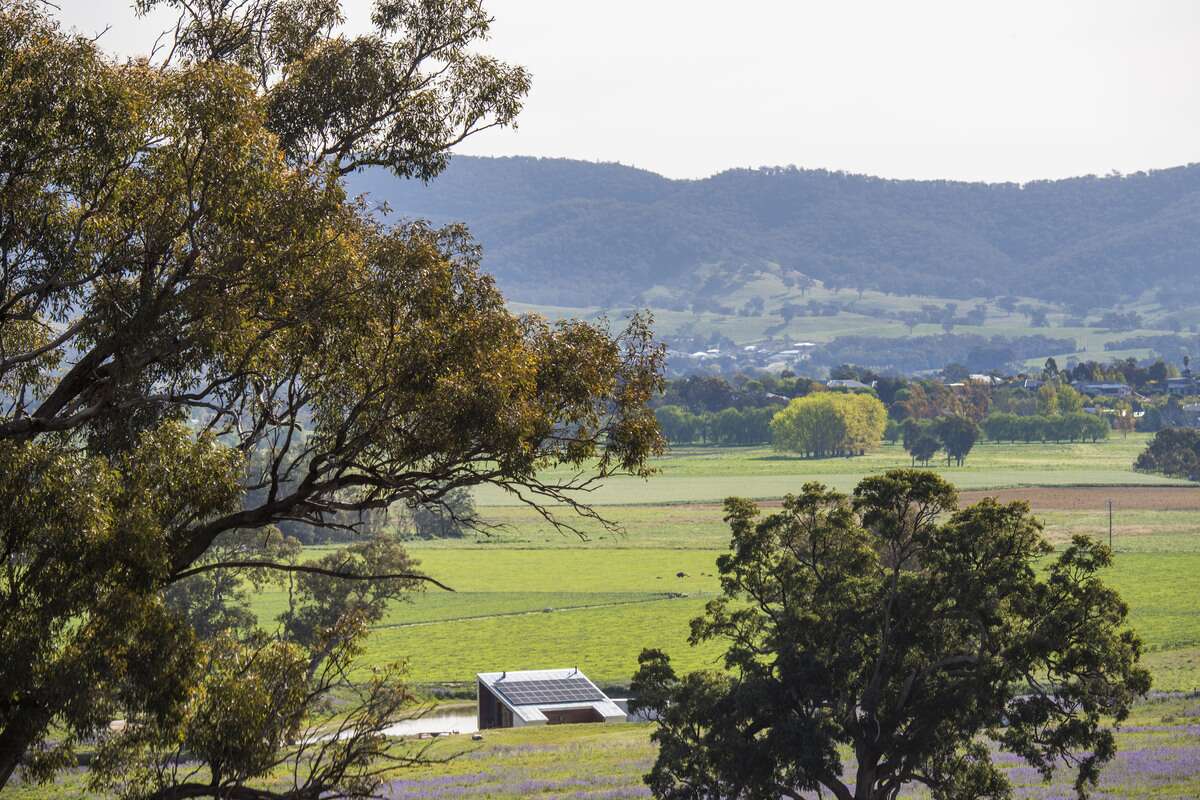
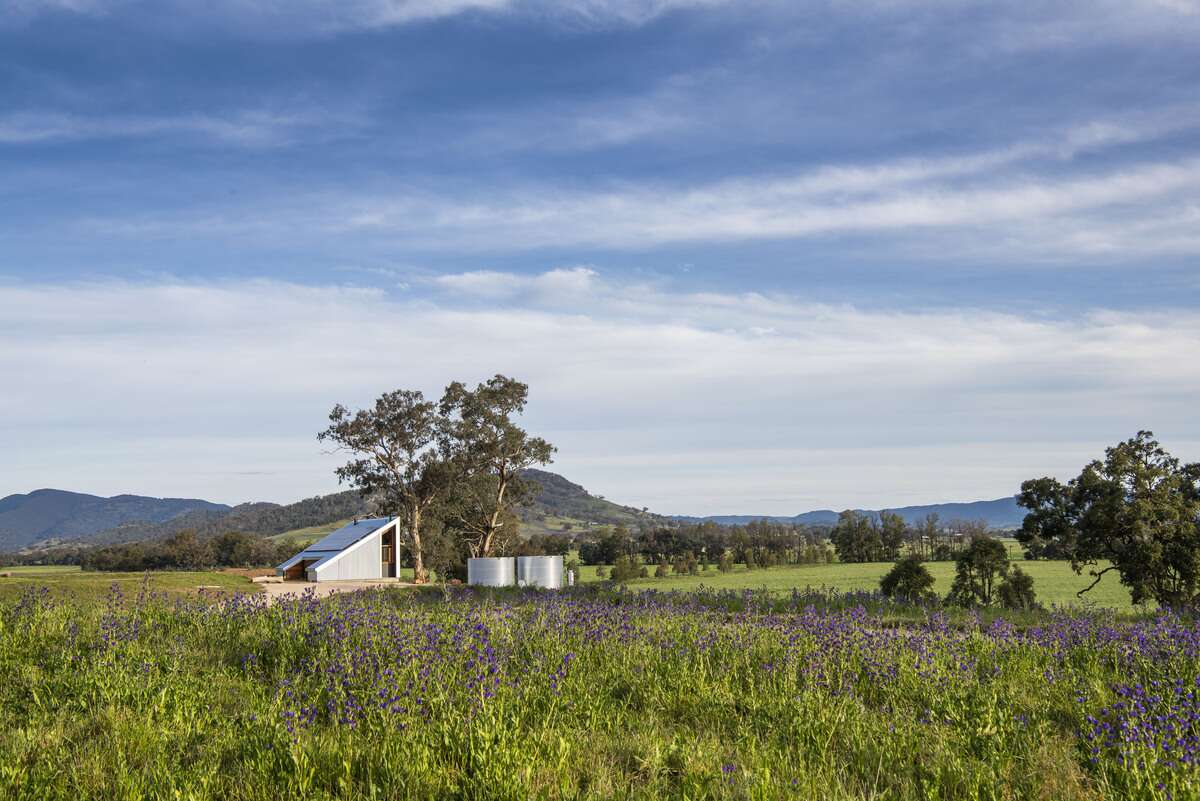
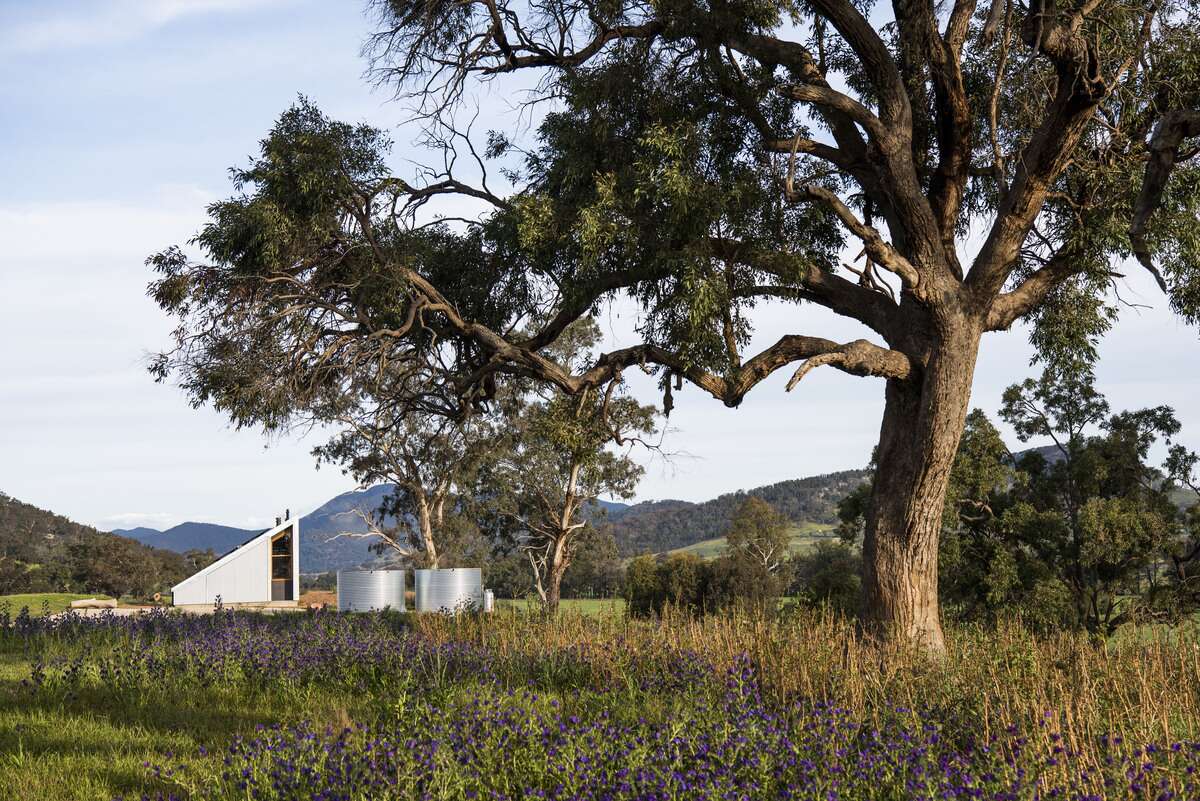
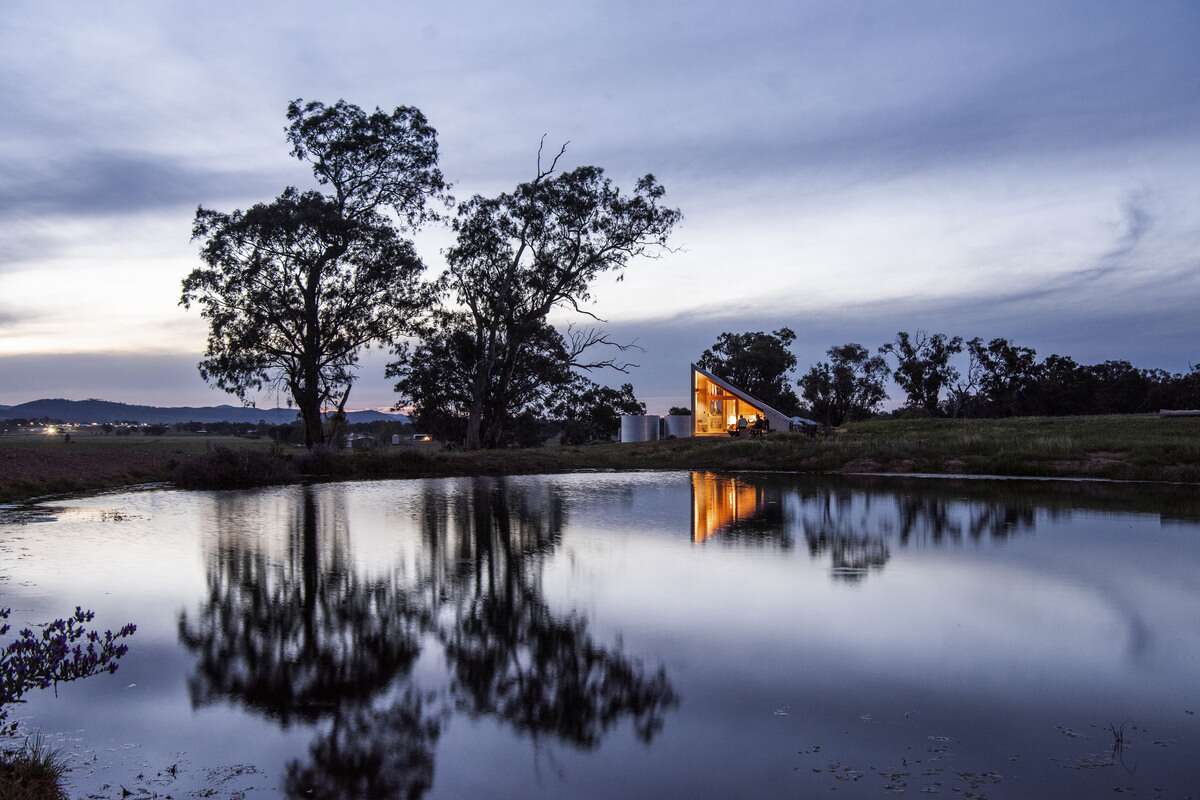
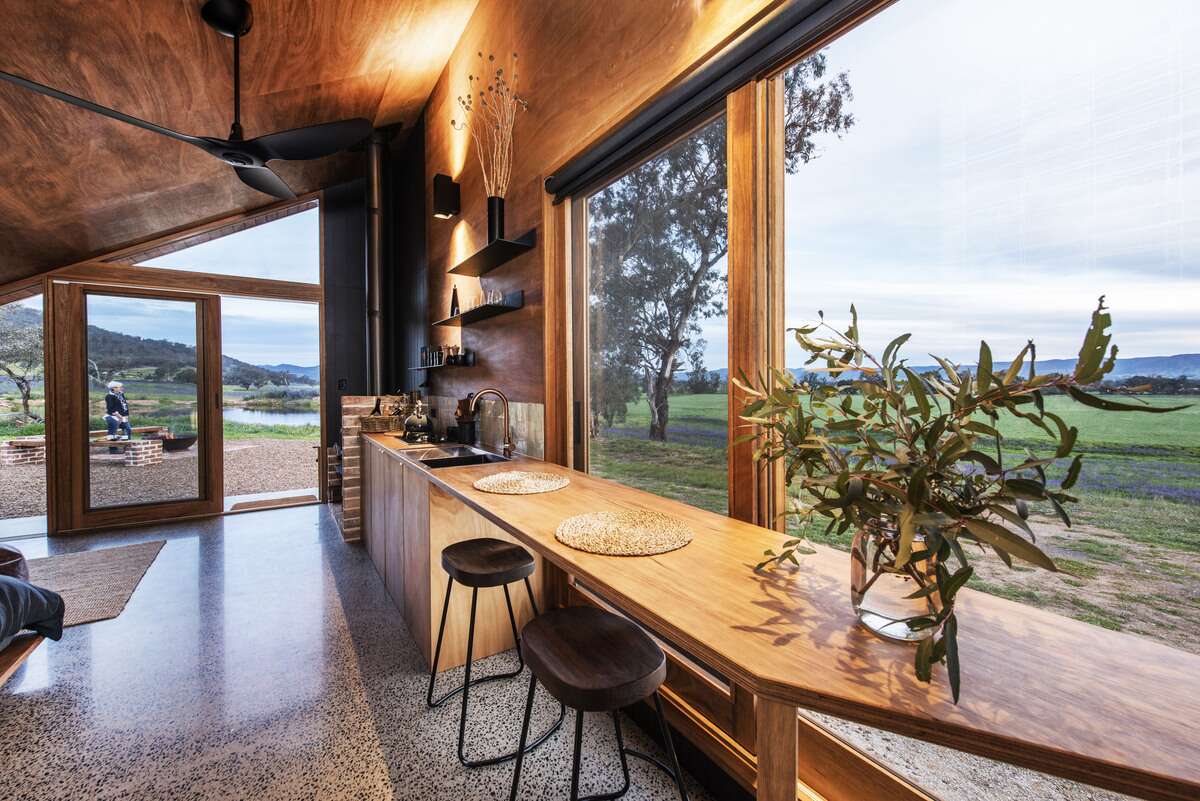
The settled site location was private and offered substantial rural views.
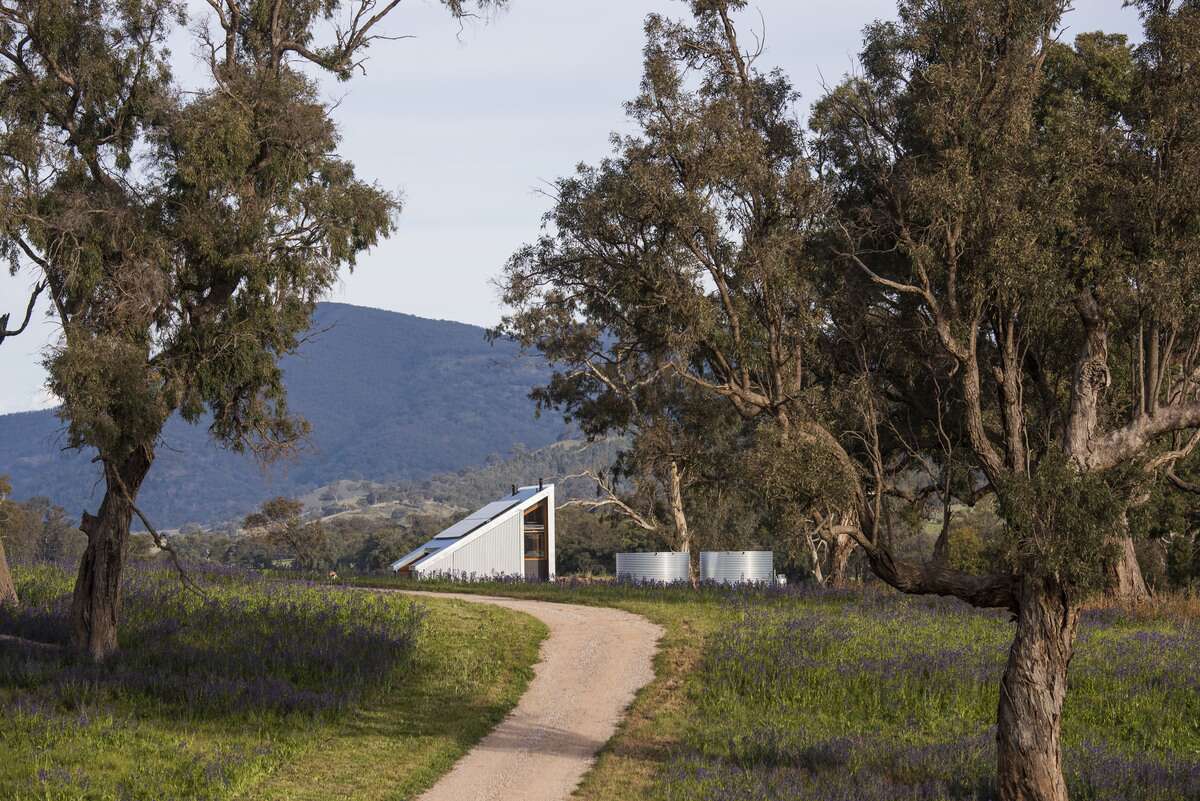
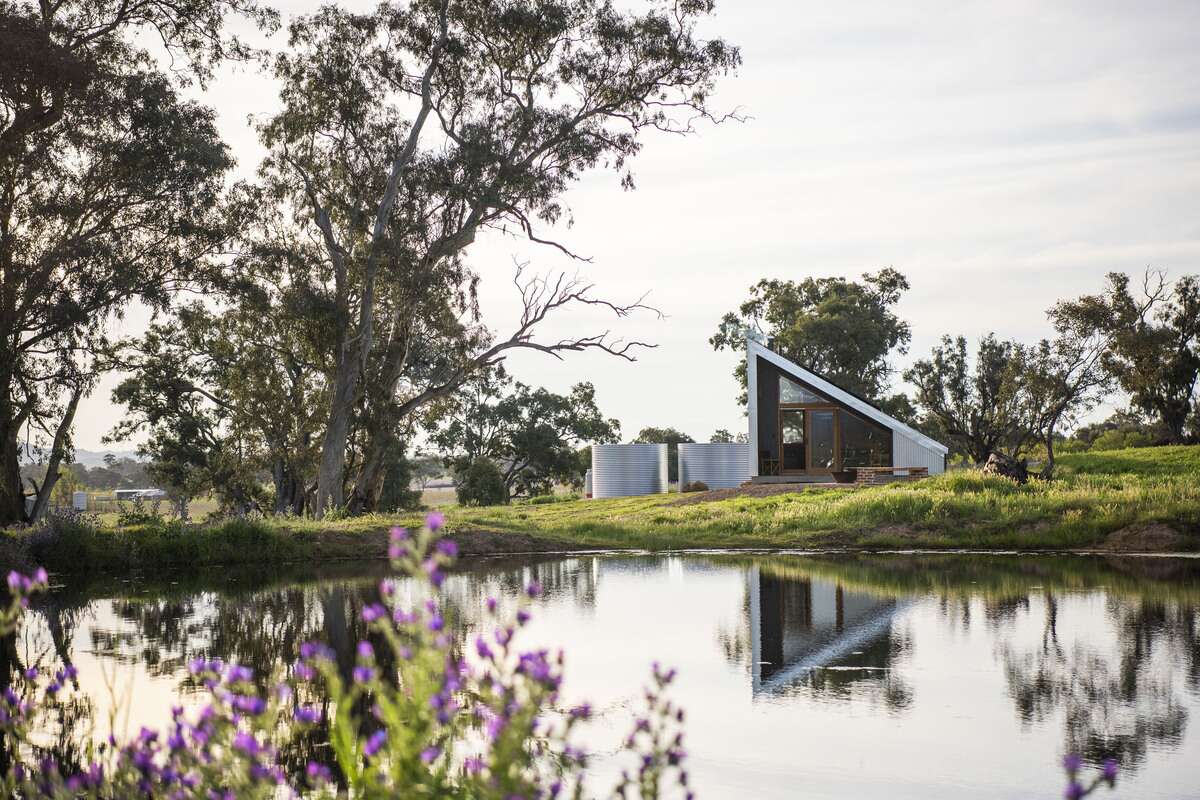
It was adjacent to an existing dam and accessible via a farm track which was upgraded to provide all-weather access.
Gawthorne’s Hut compliments the other buildings on this property which include the main homestead, a traditional cottage, and the recent conversion of a heritage-listed church.
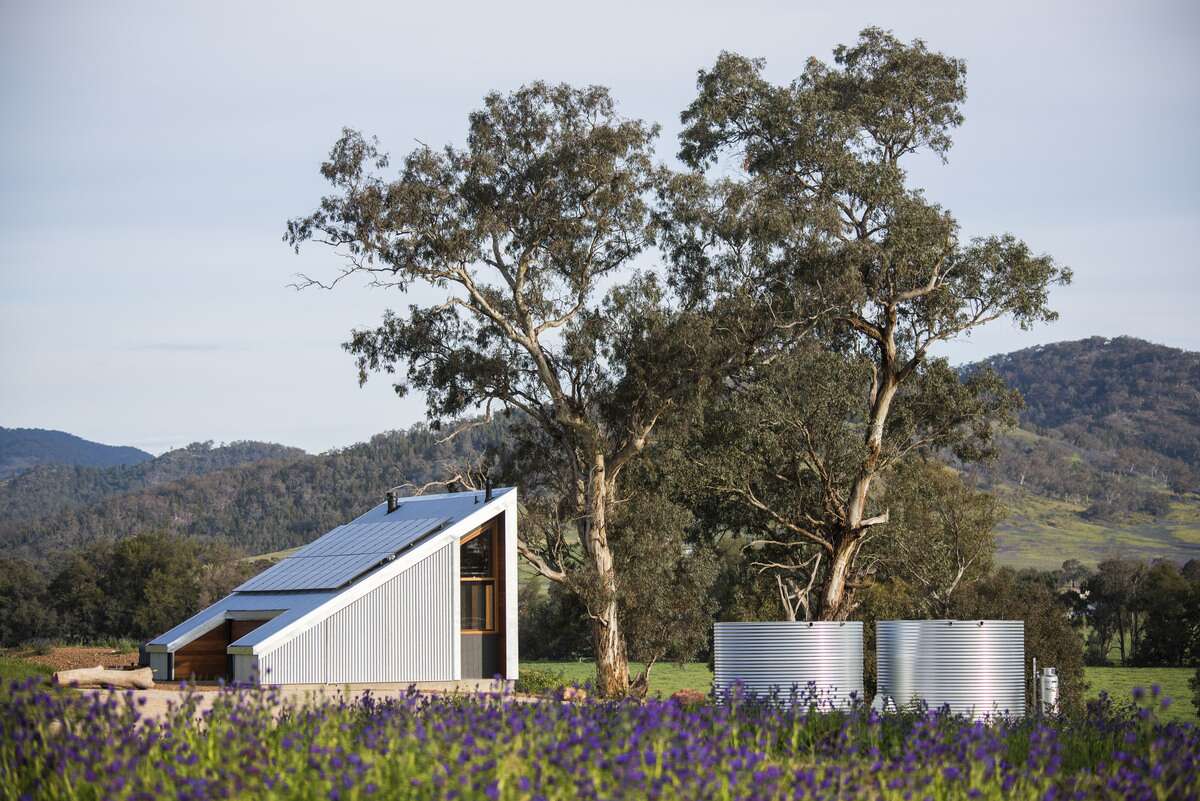
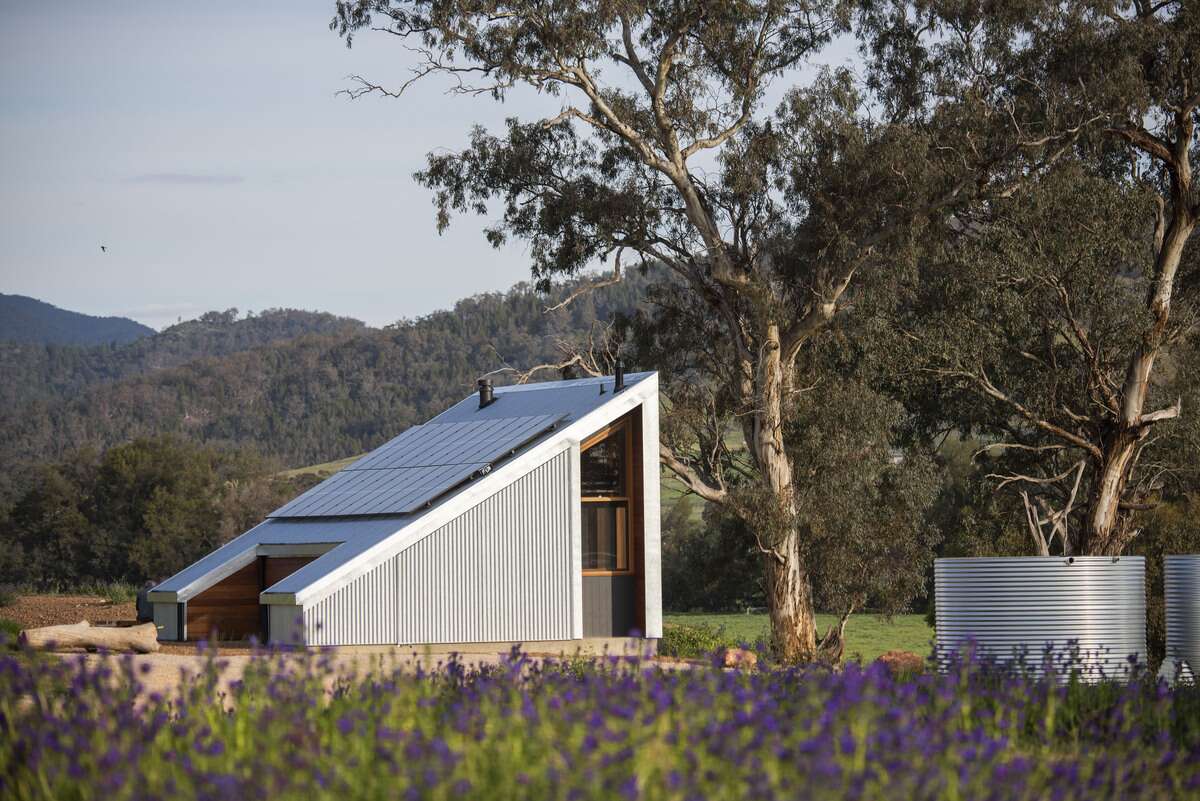
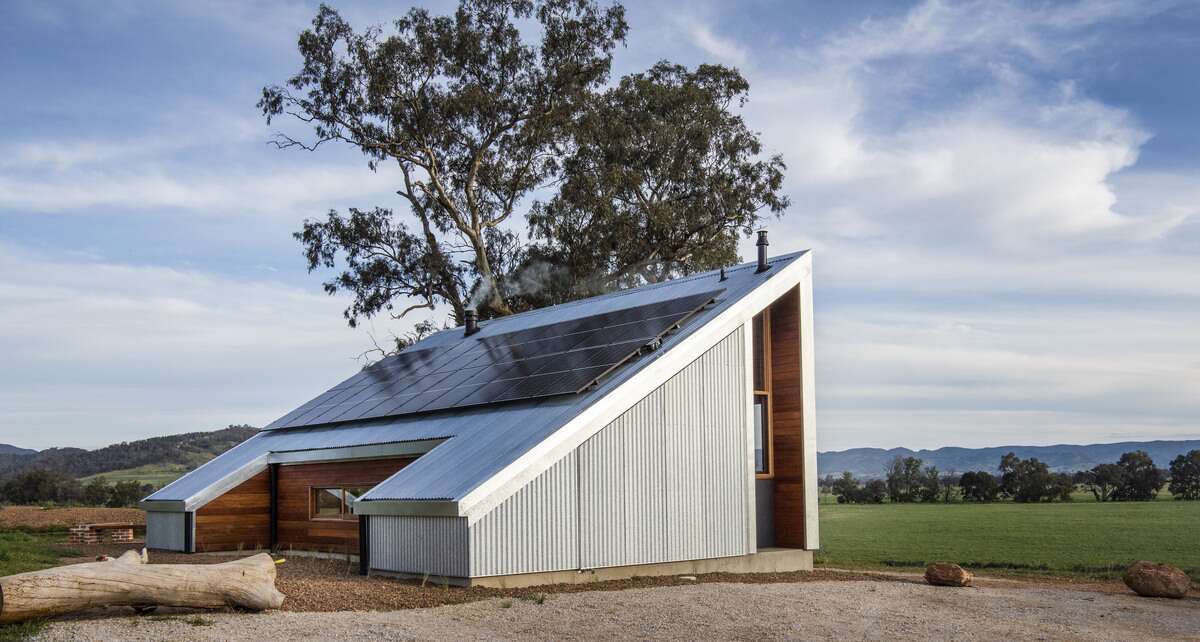
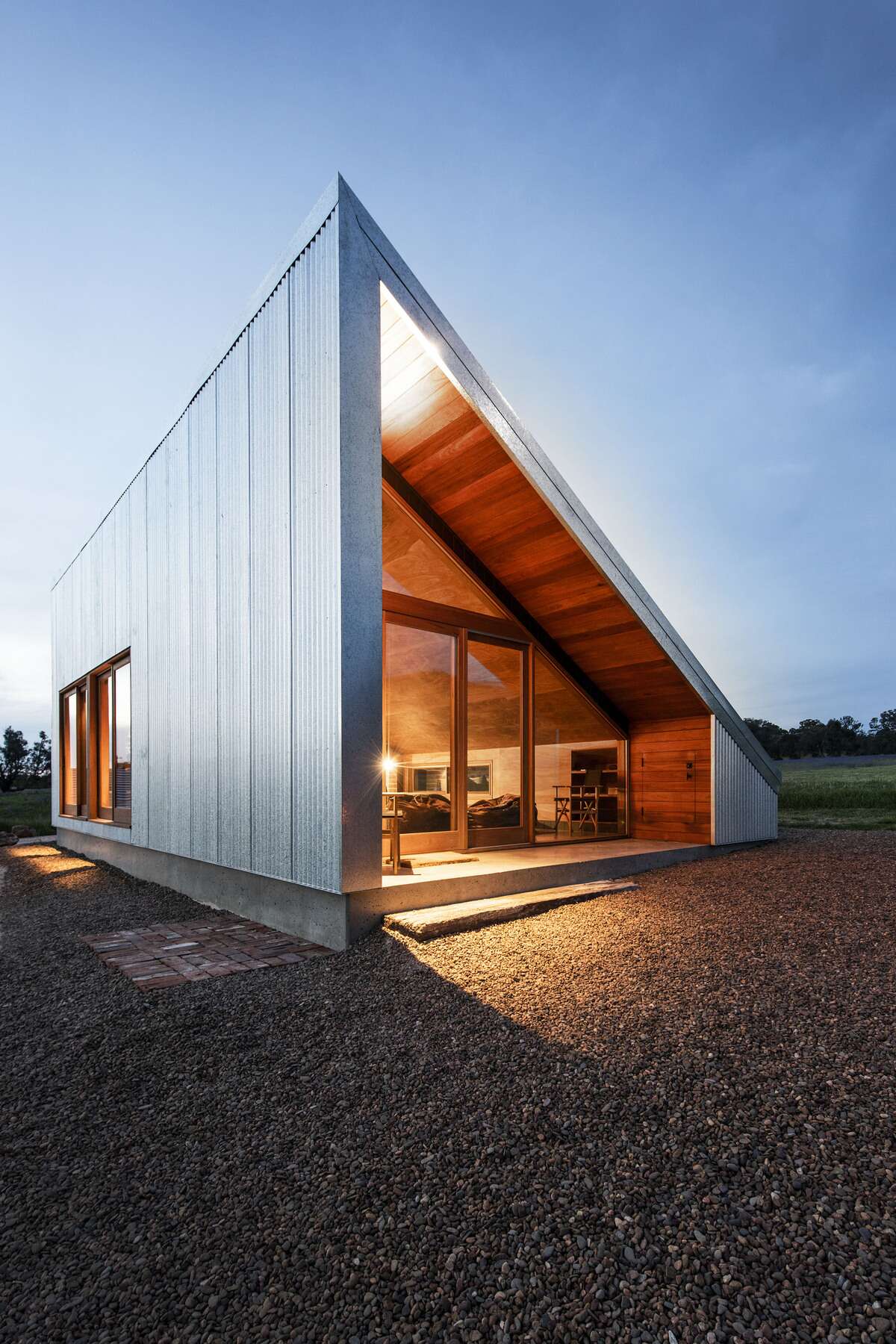
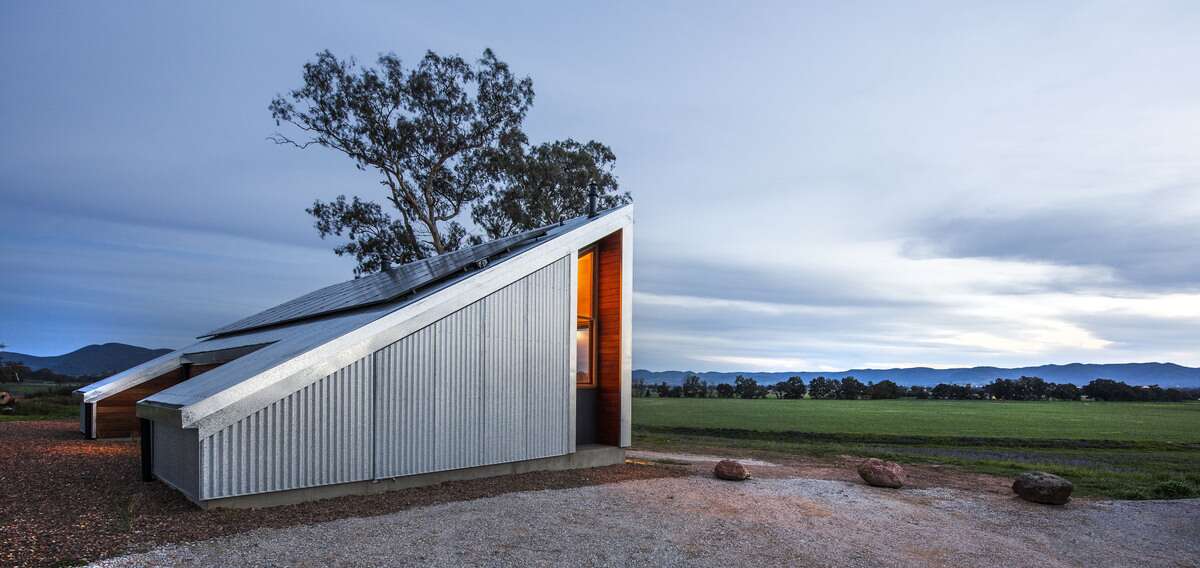
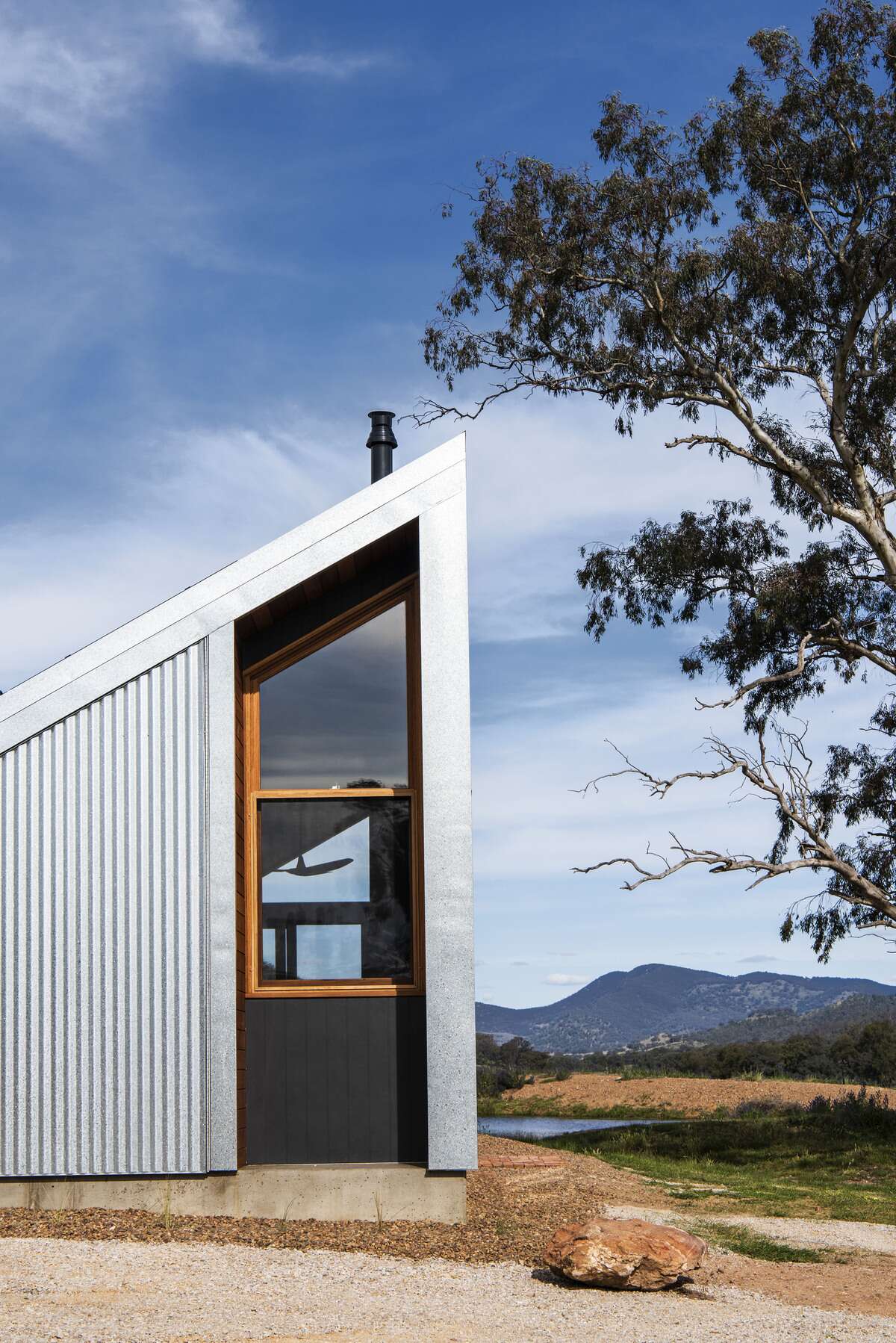
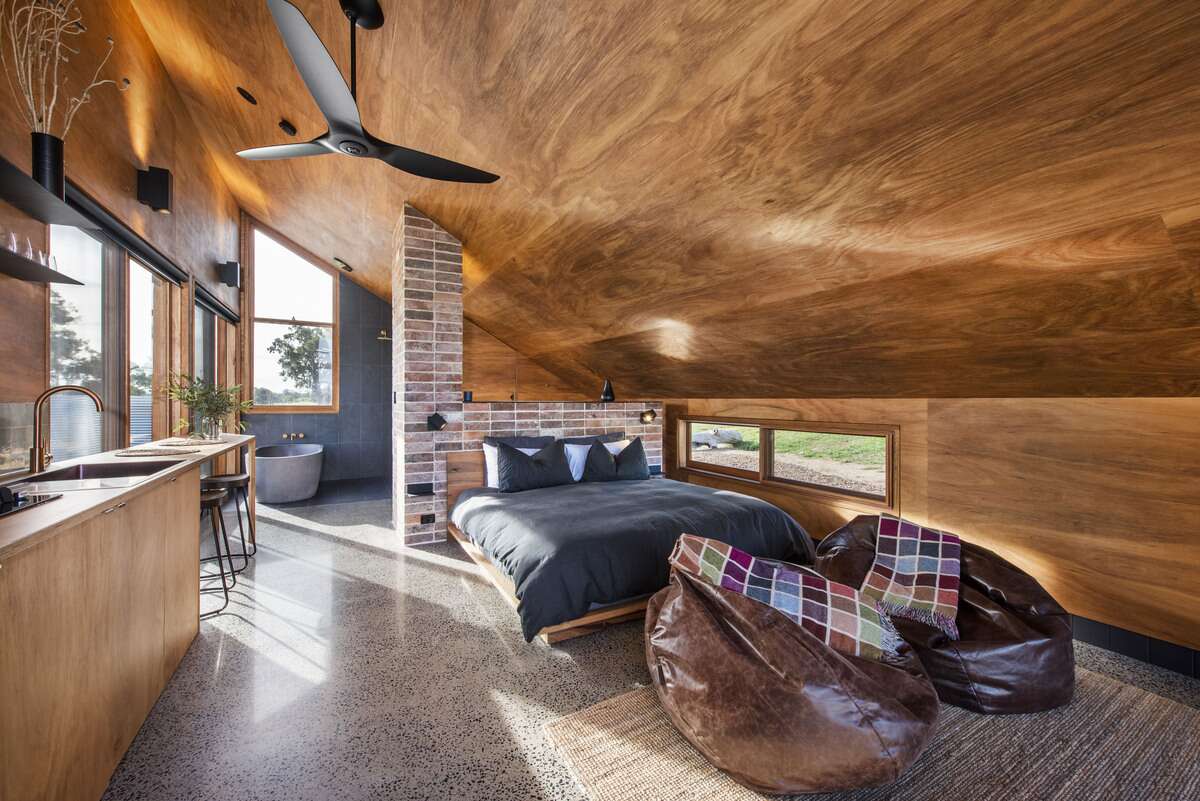
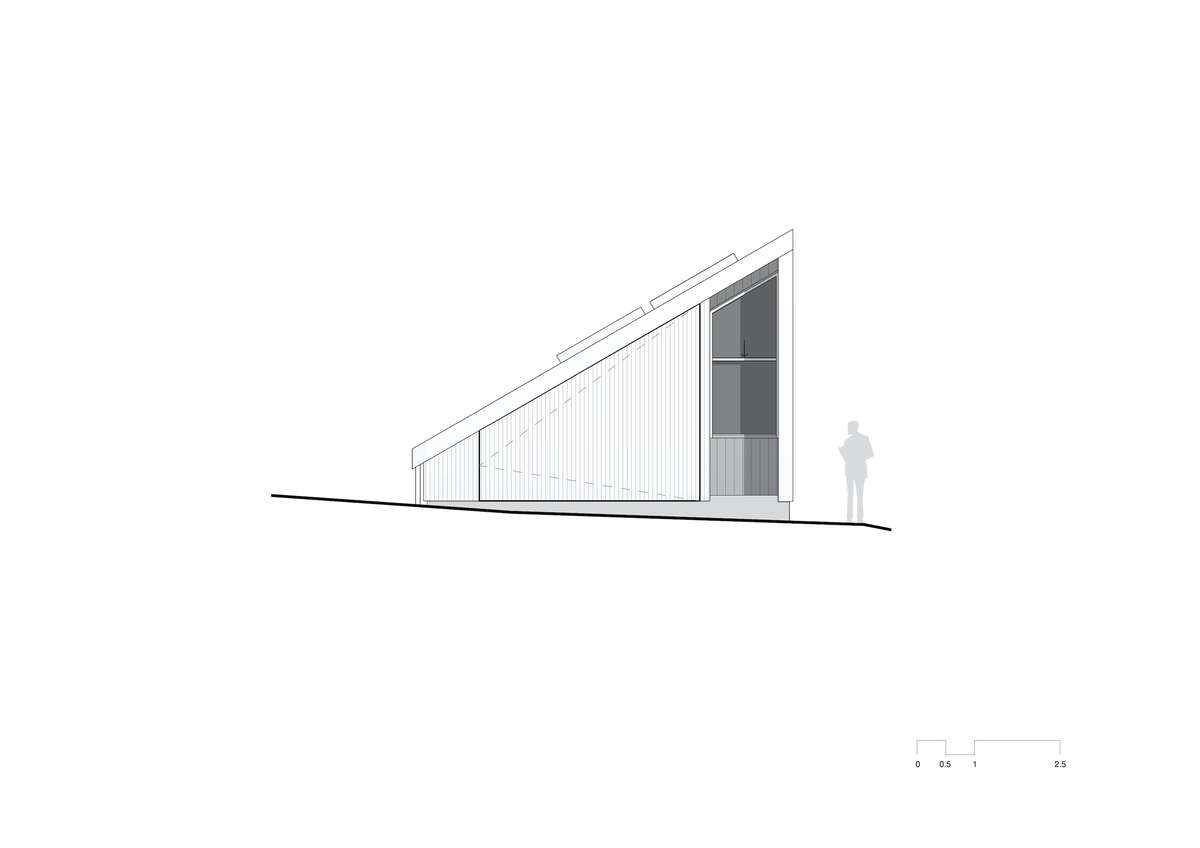
The hut’s angled galvanised clad shell and rich timber-lined interior reference the predominant rural vernacular of hay sheds and outbuildings found in this region.
It nods to a hay shed once found on the property but destroyed by a storm in 2017.
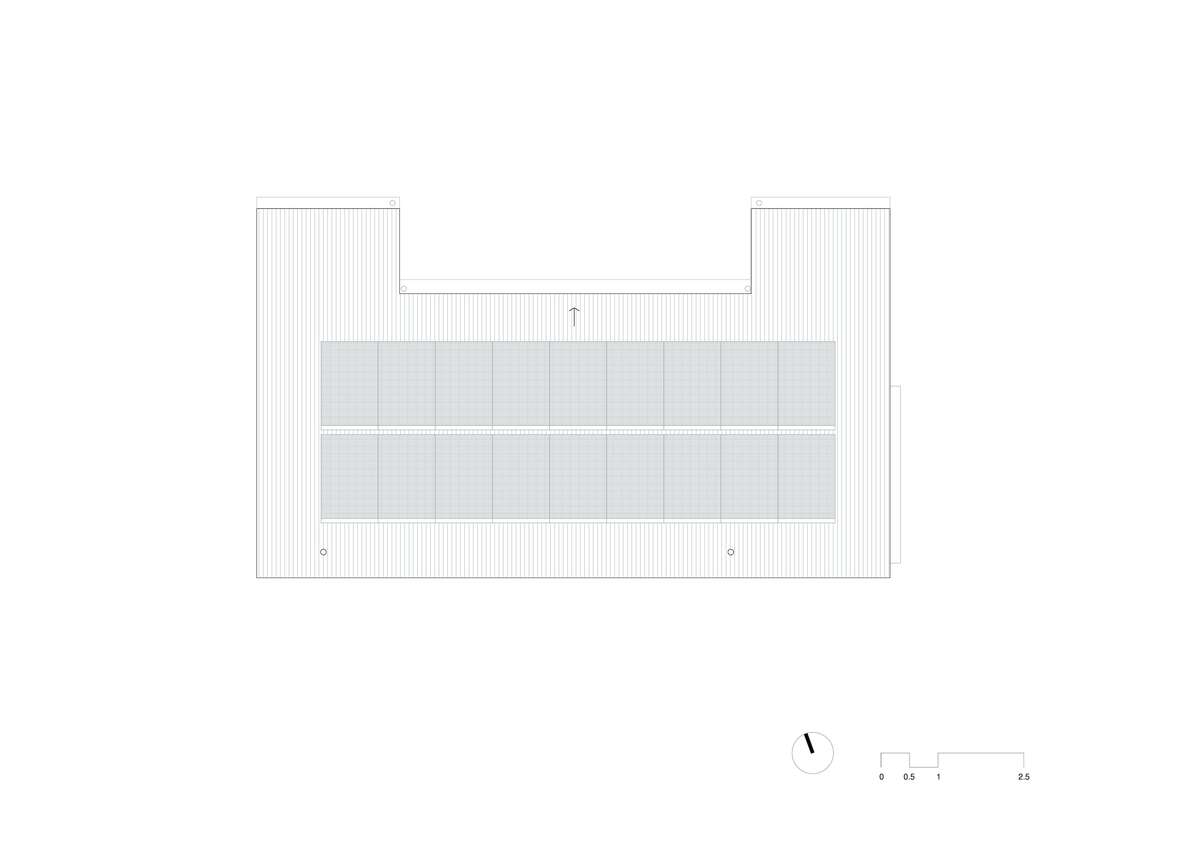
The angled roof form of galvanised steel is both a reference to the relic of the existing shed and also the client’s desire to accommodate the solar array on the building.
Accommodating the solar array meant the northern roof area had to be maximised.
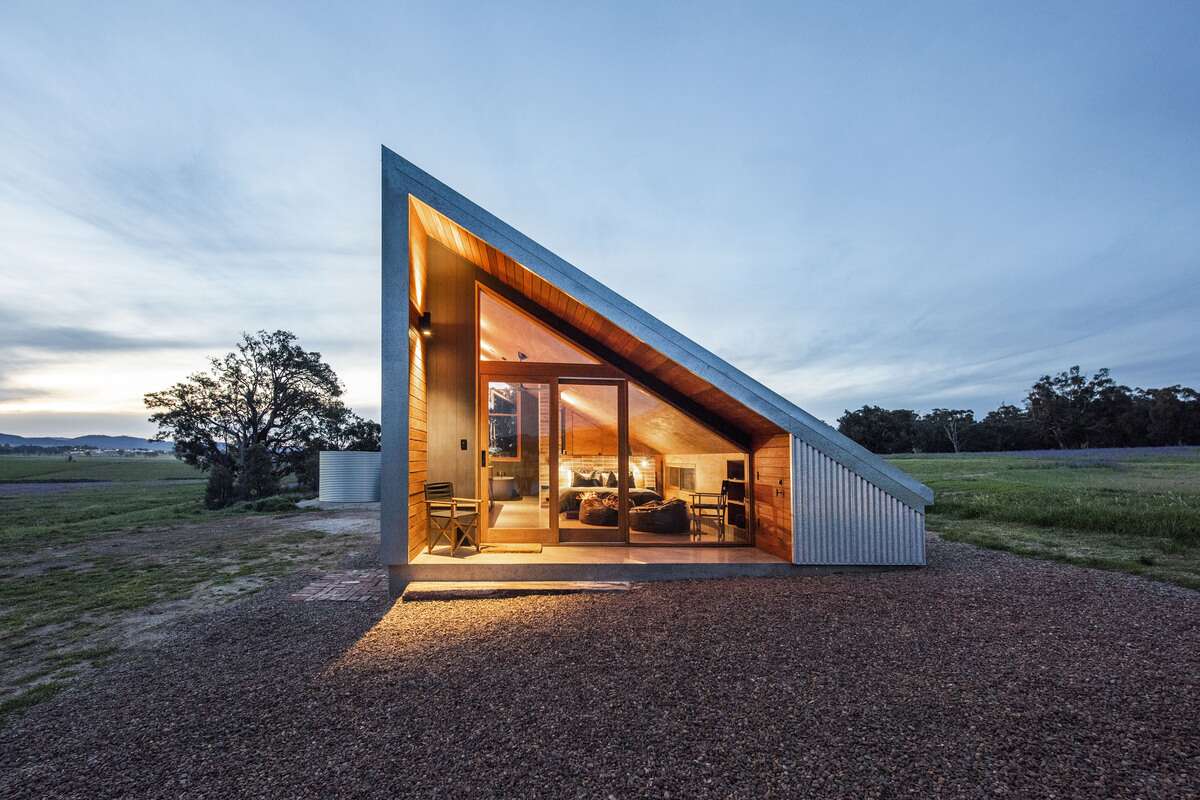
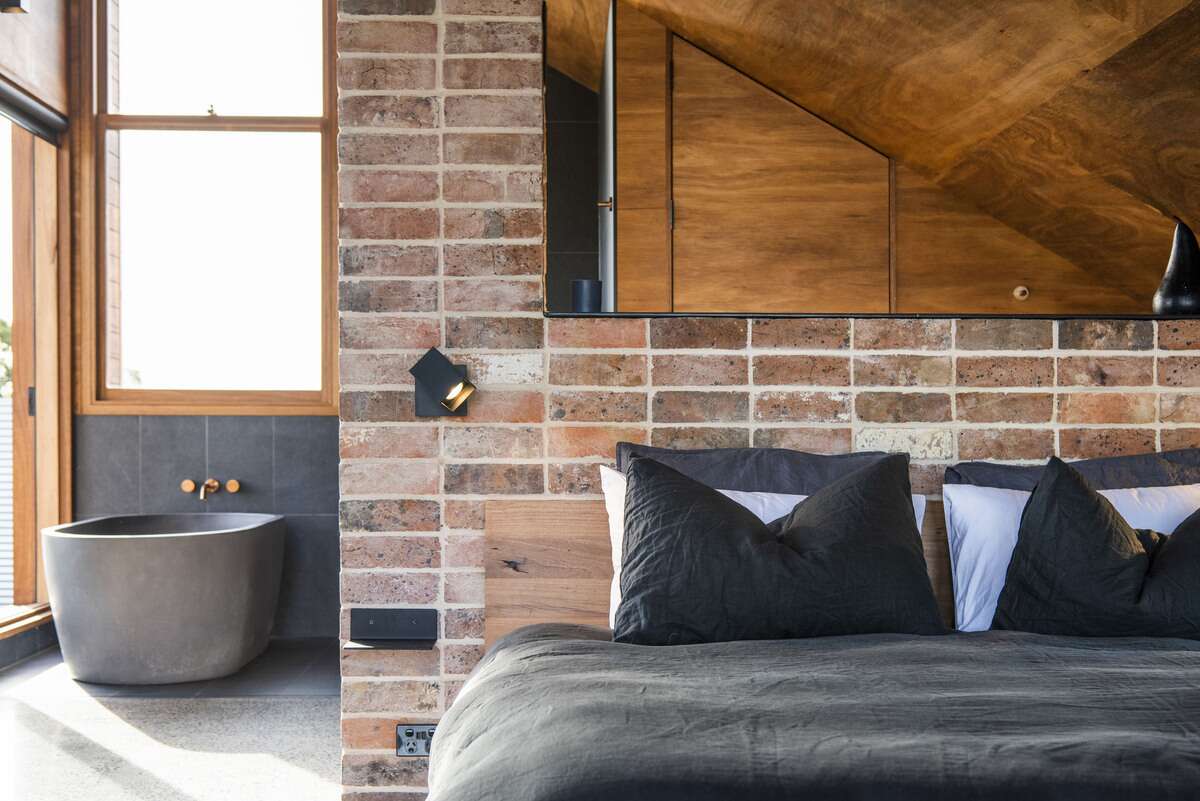
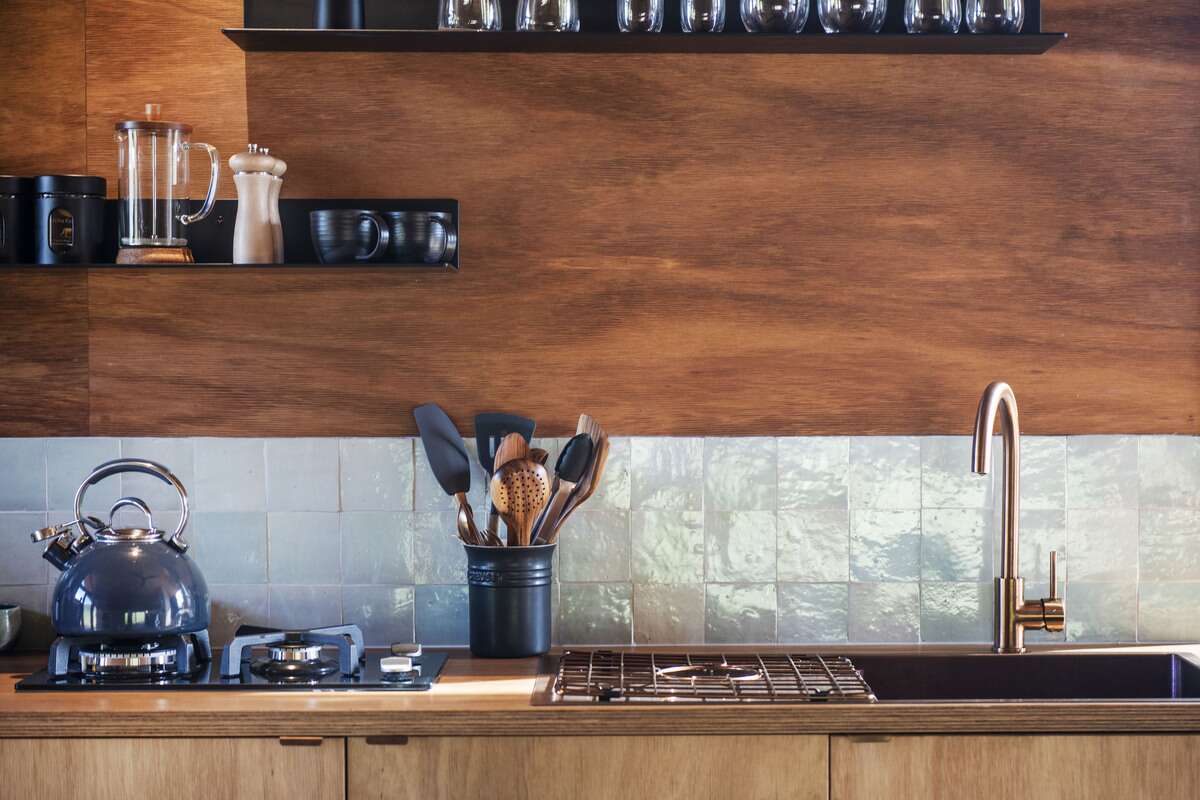
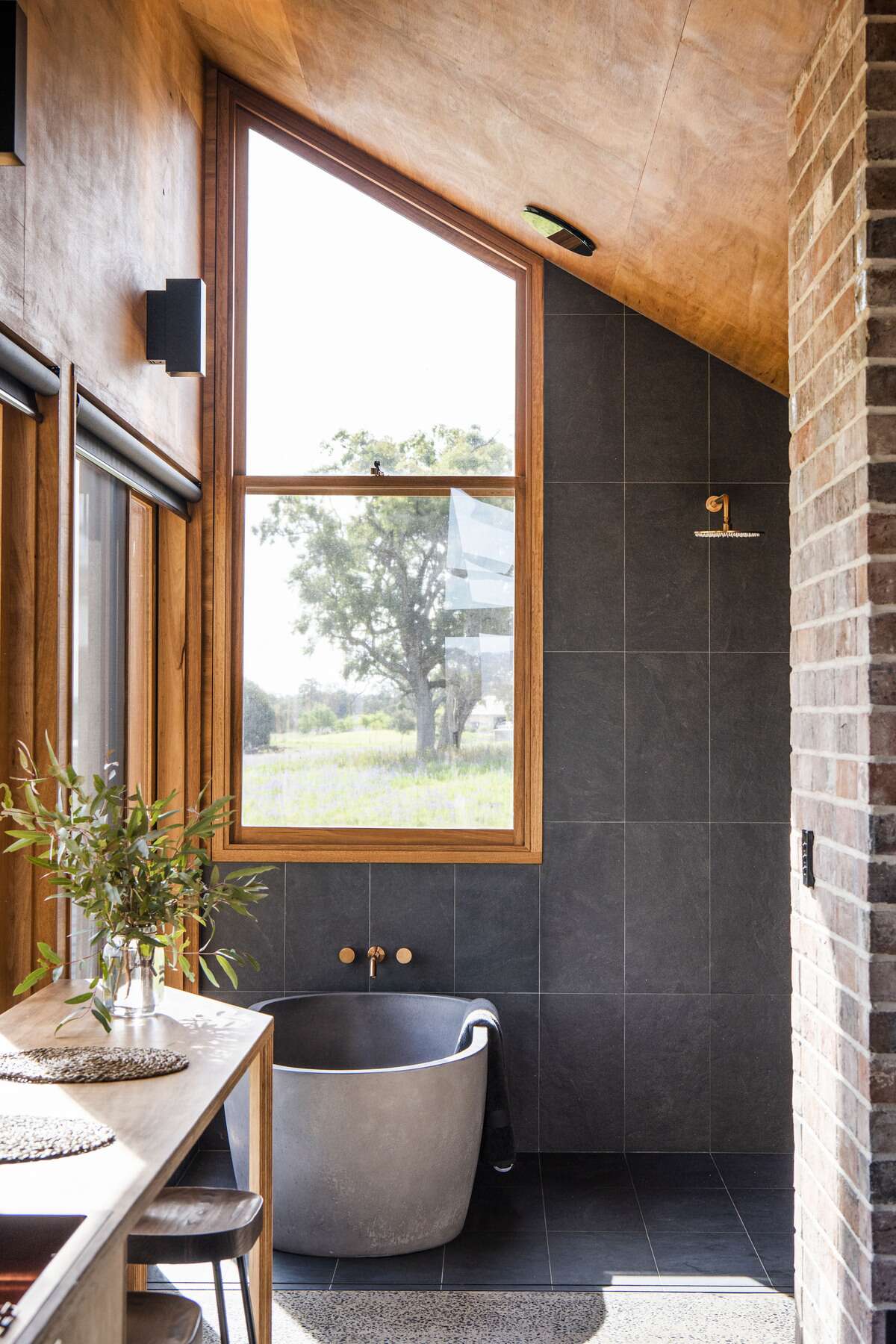
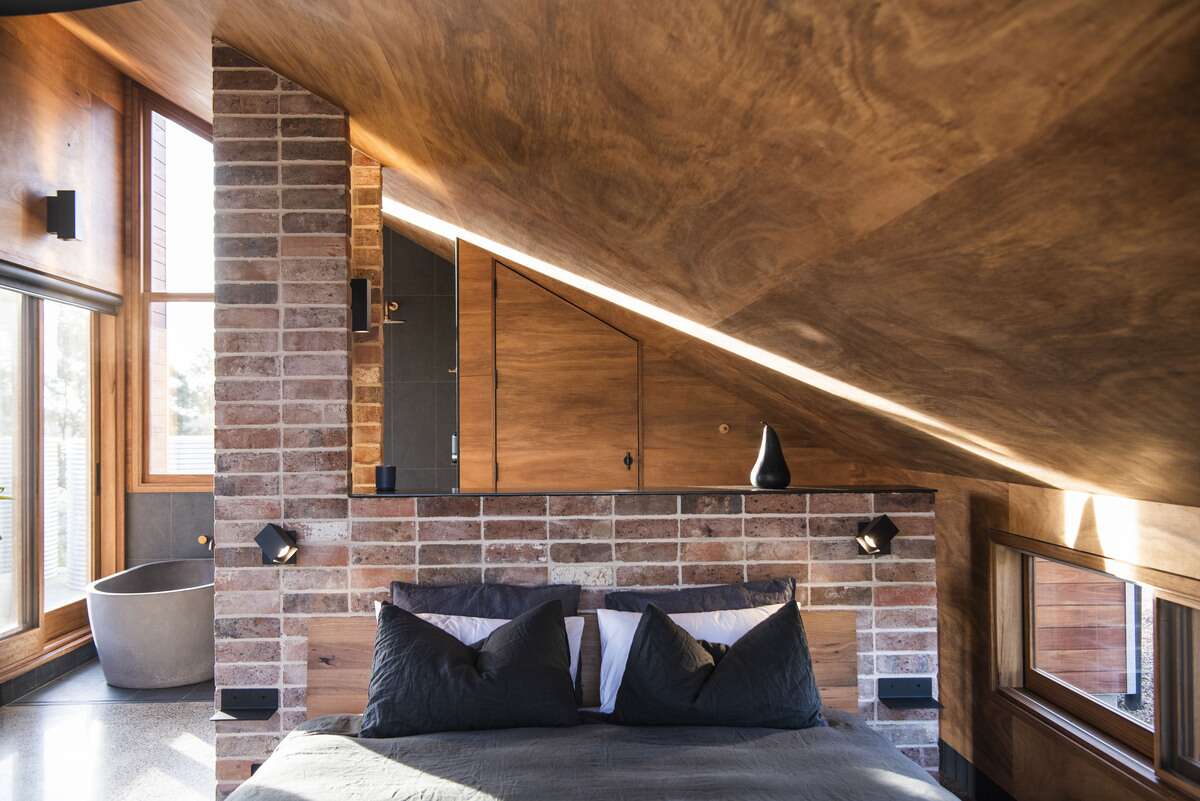
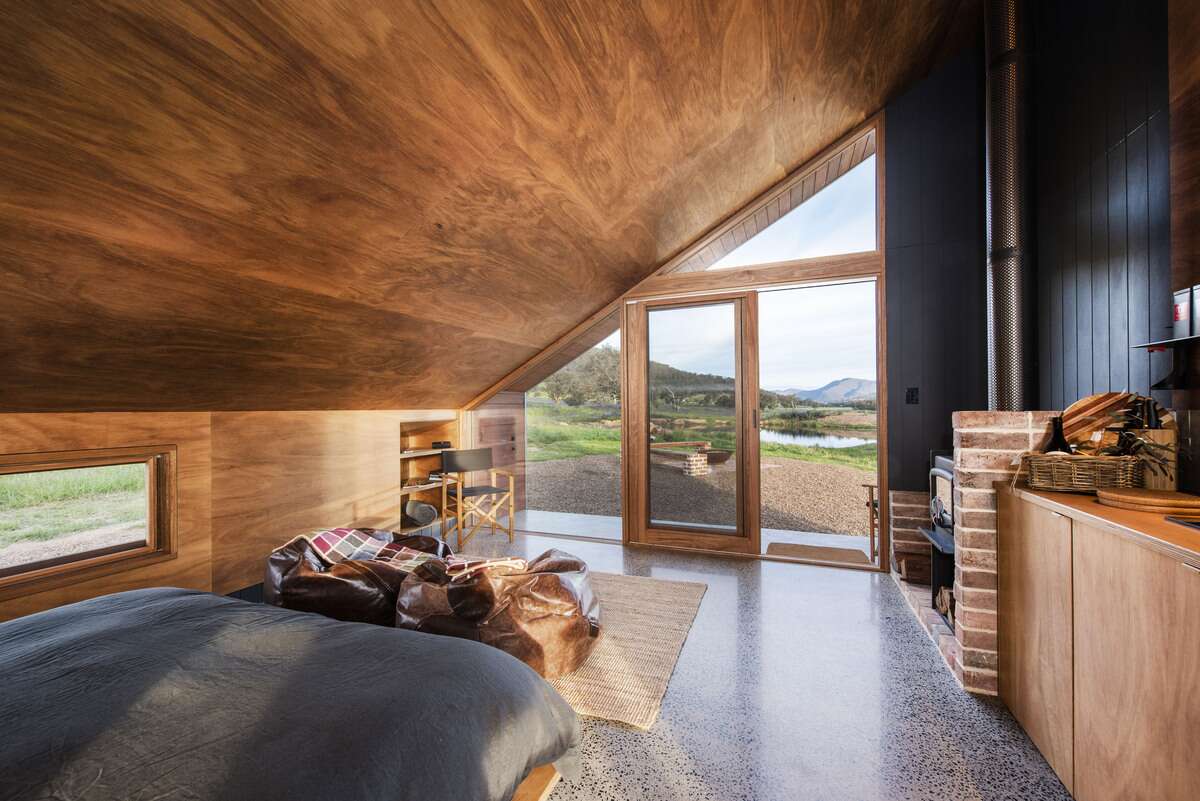
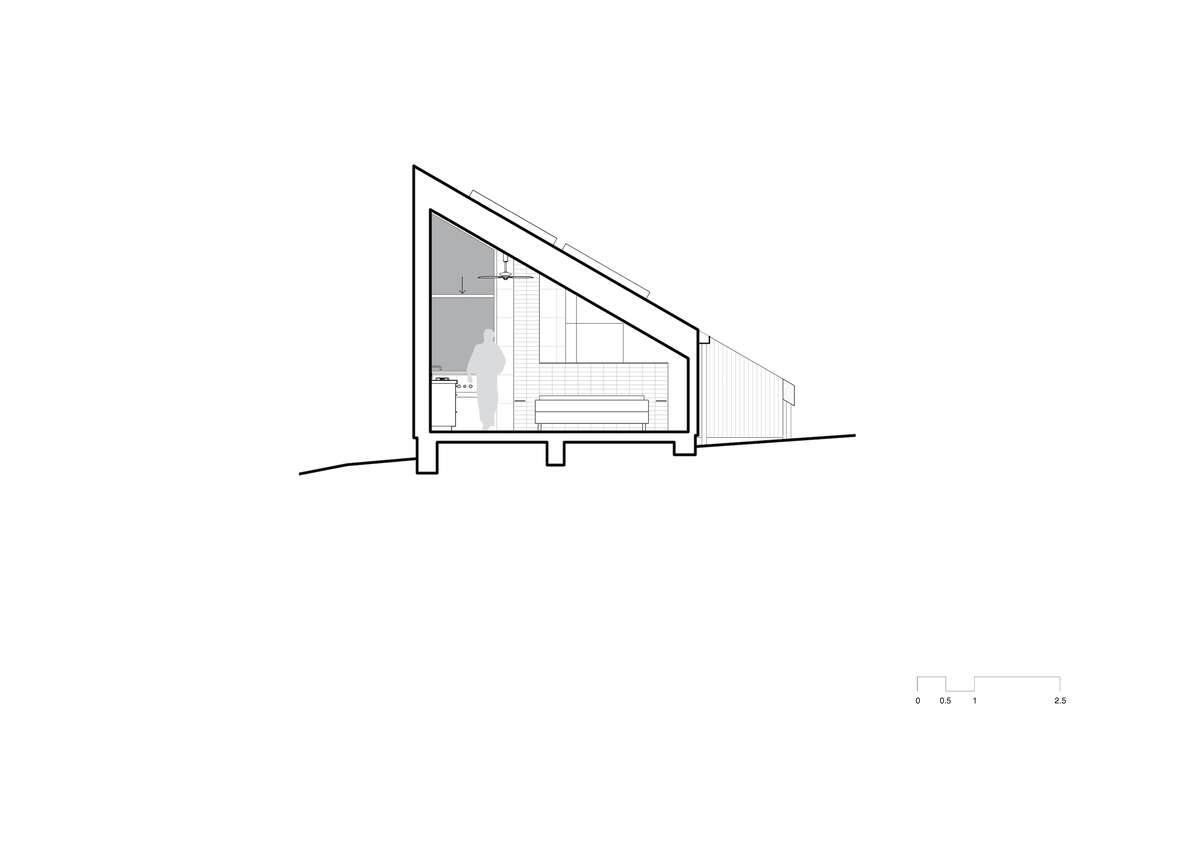
The hut’s angled form is emphasised internally through a blackbutt-lined ceiling which also frames the valley views to the east.
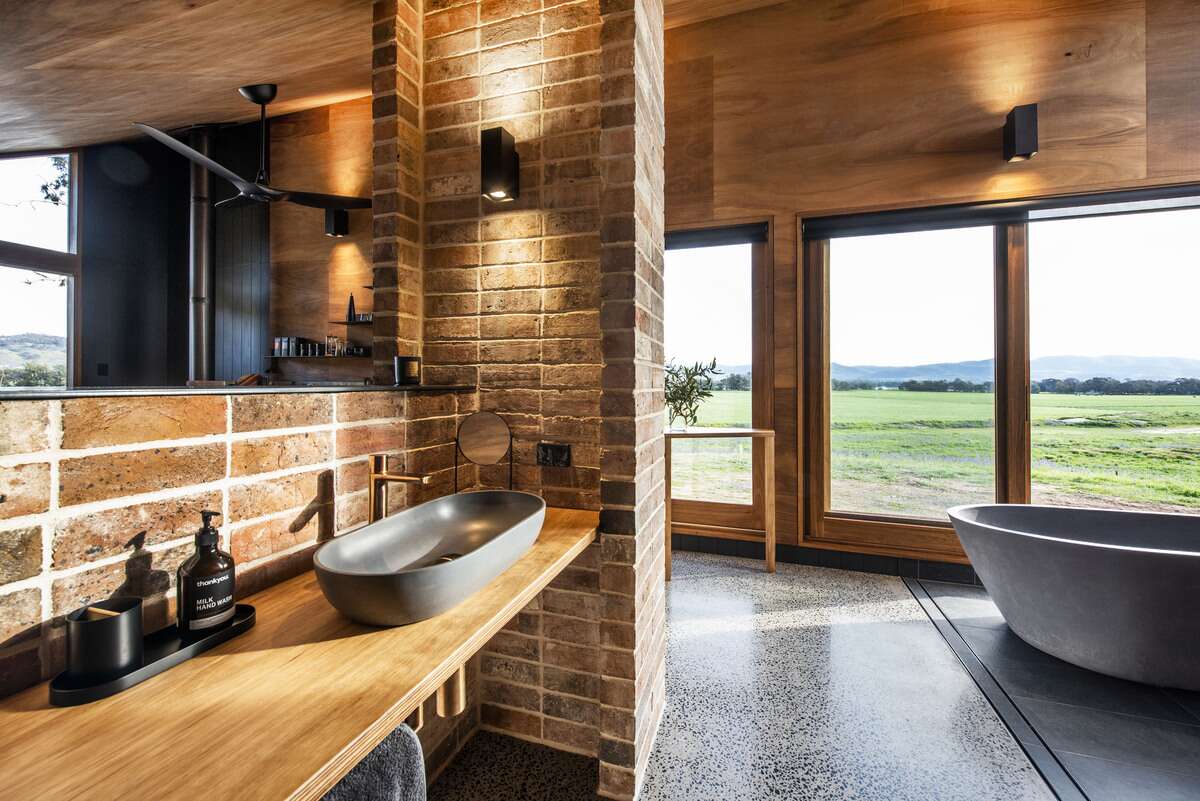
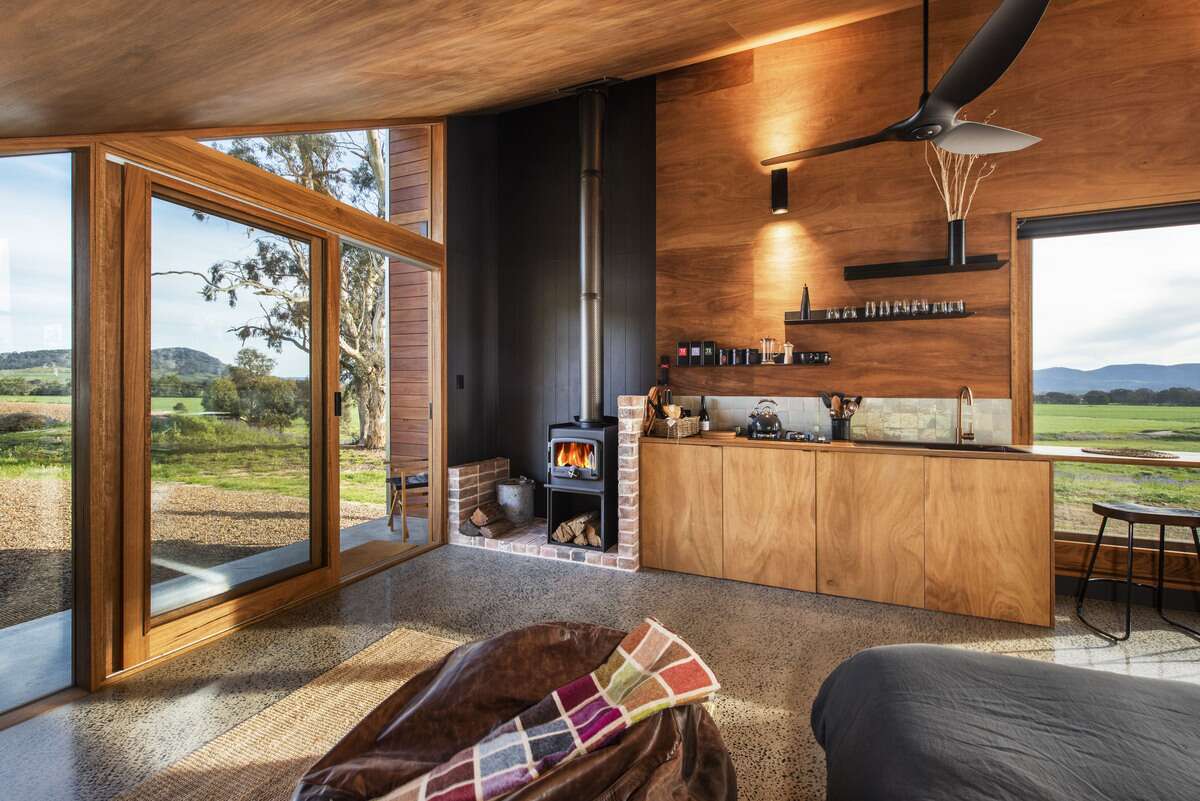
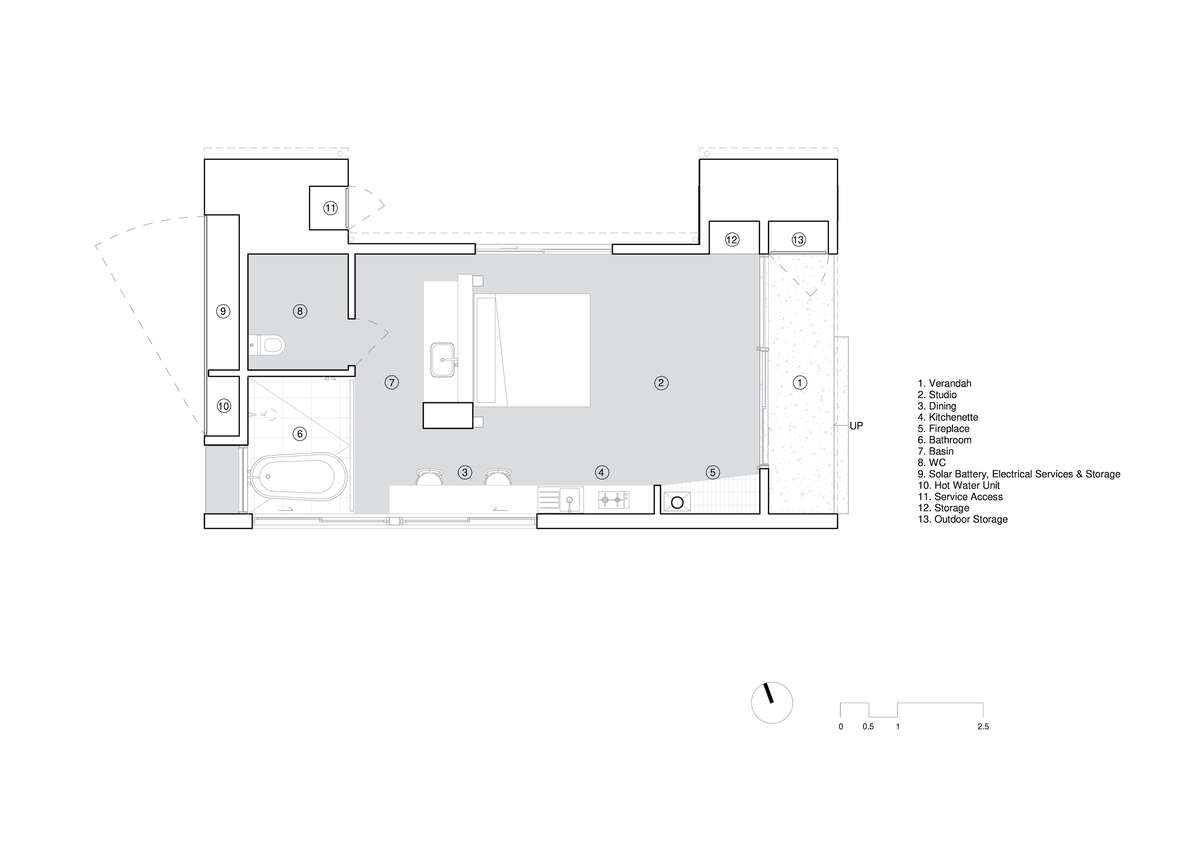
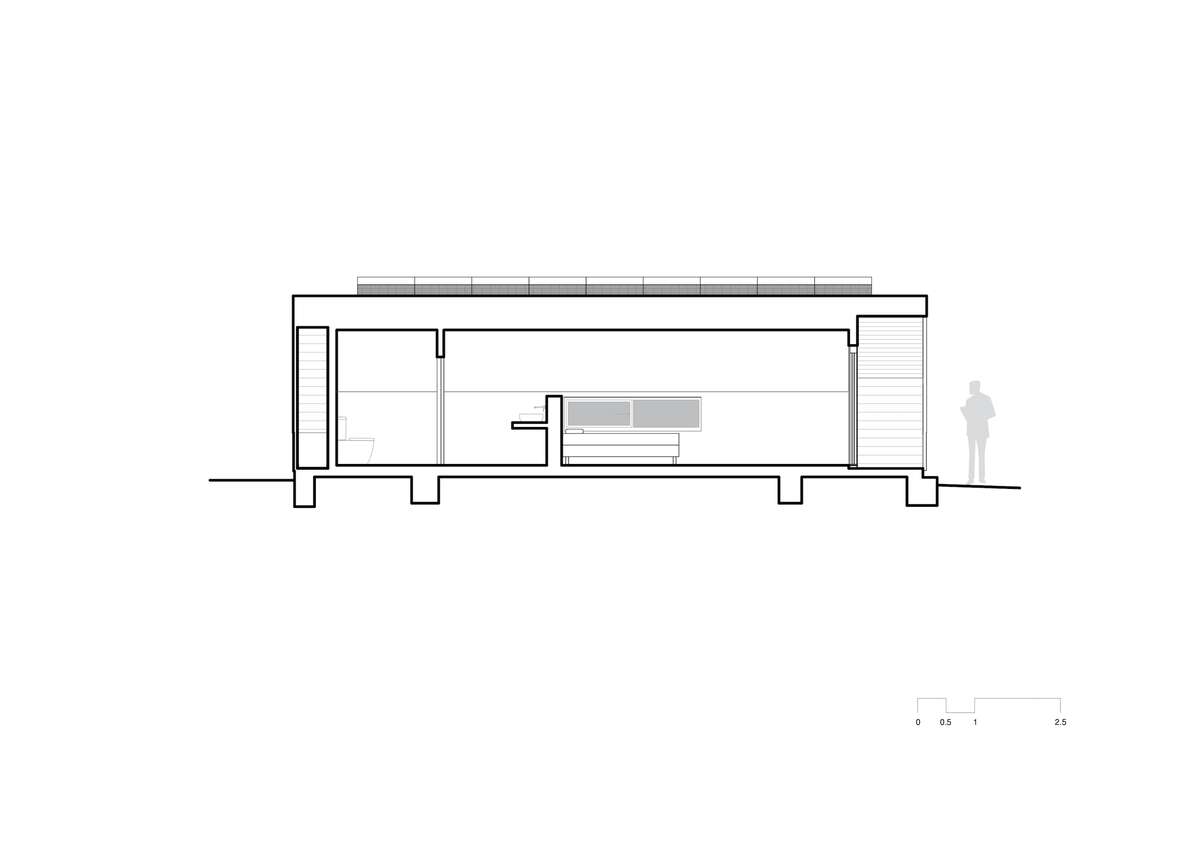
The micro floor plan of 40m2 internal area is maximised through the use of an open floor plan and minimal joinery, with the only enclosed area being the WC.
A low-height brick wall provides a small degree of separation to the bathroom functions.
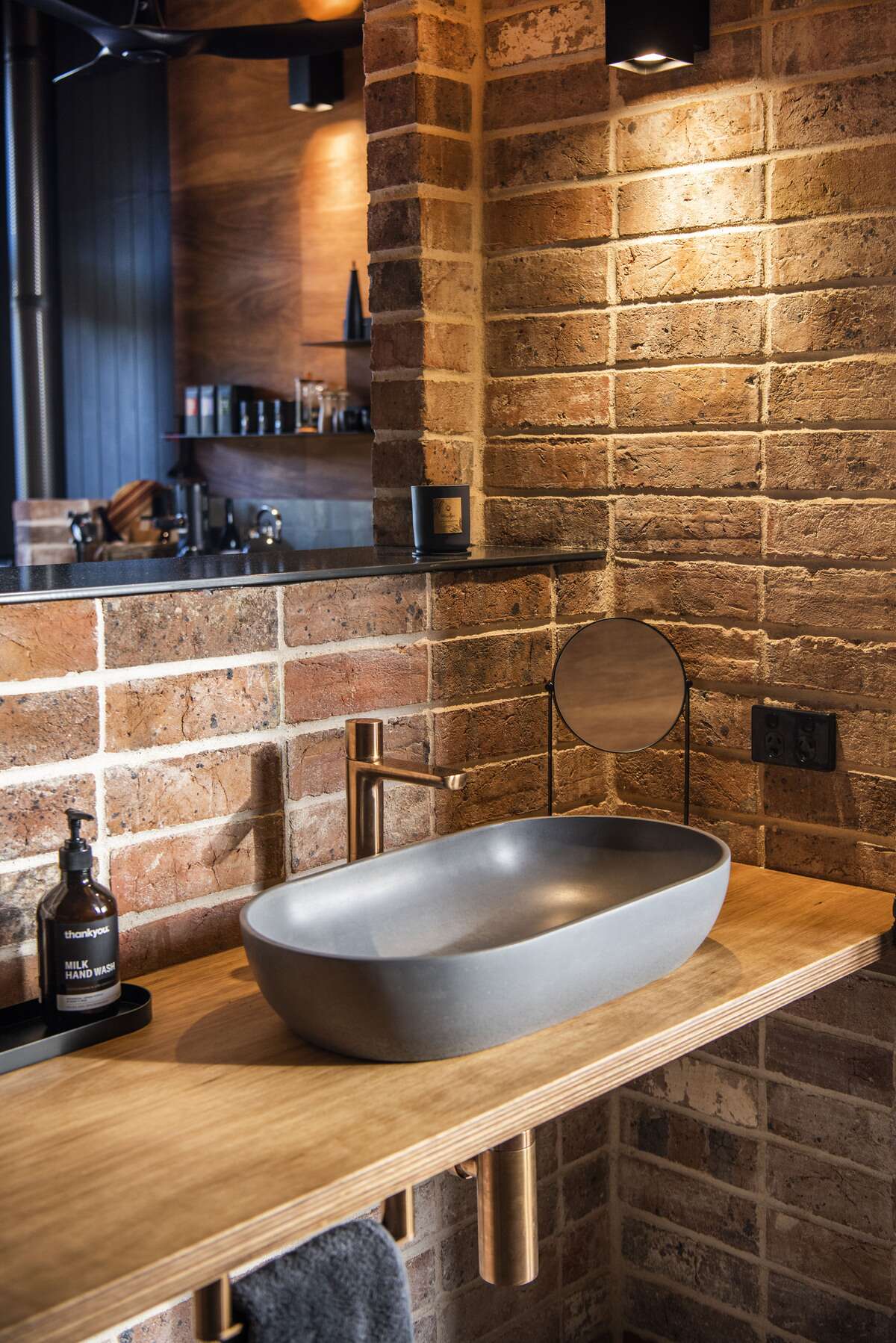
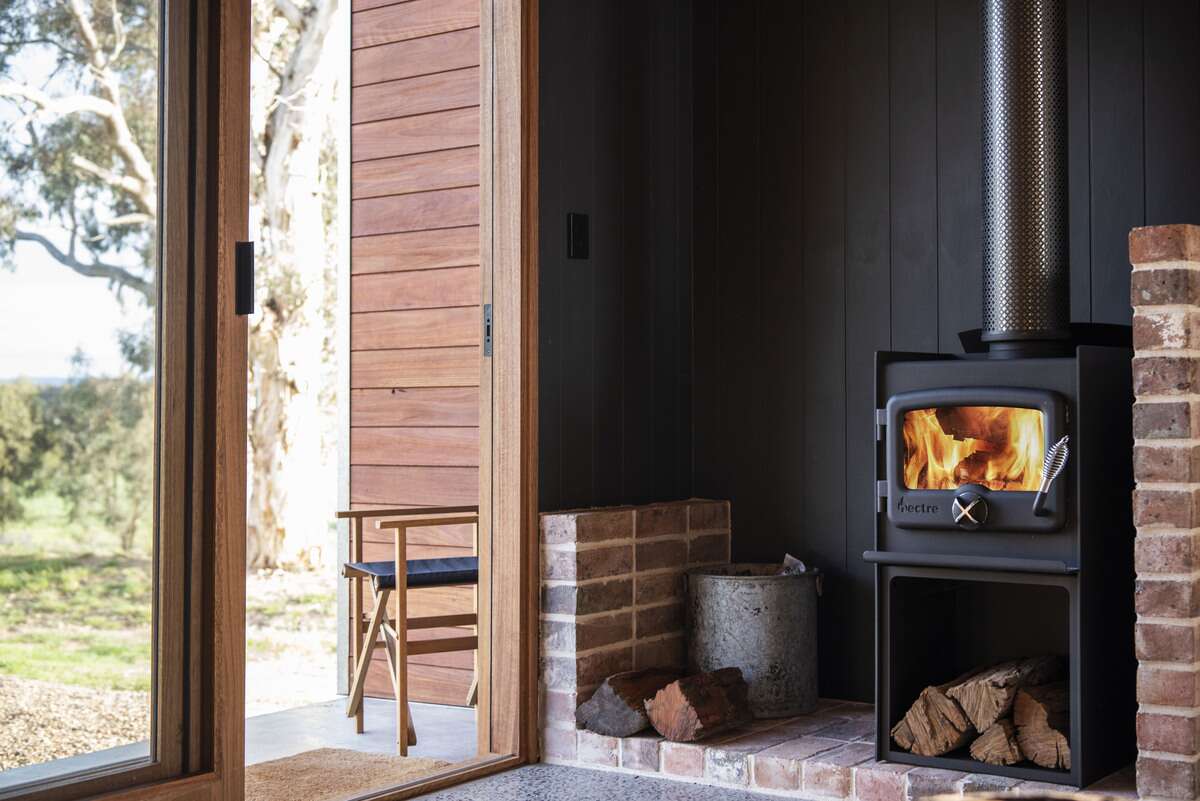
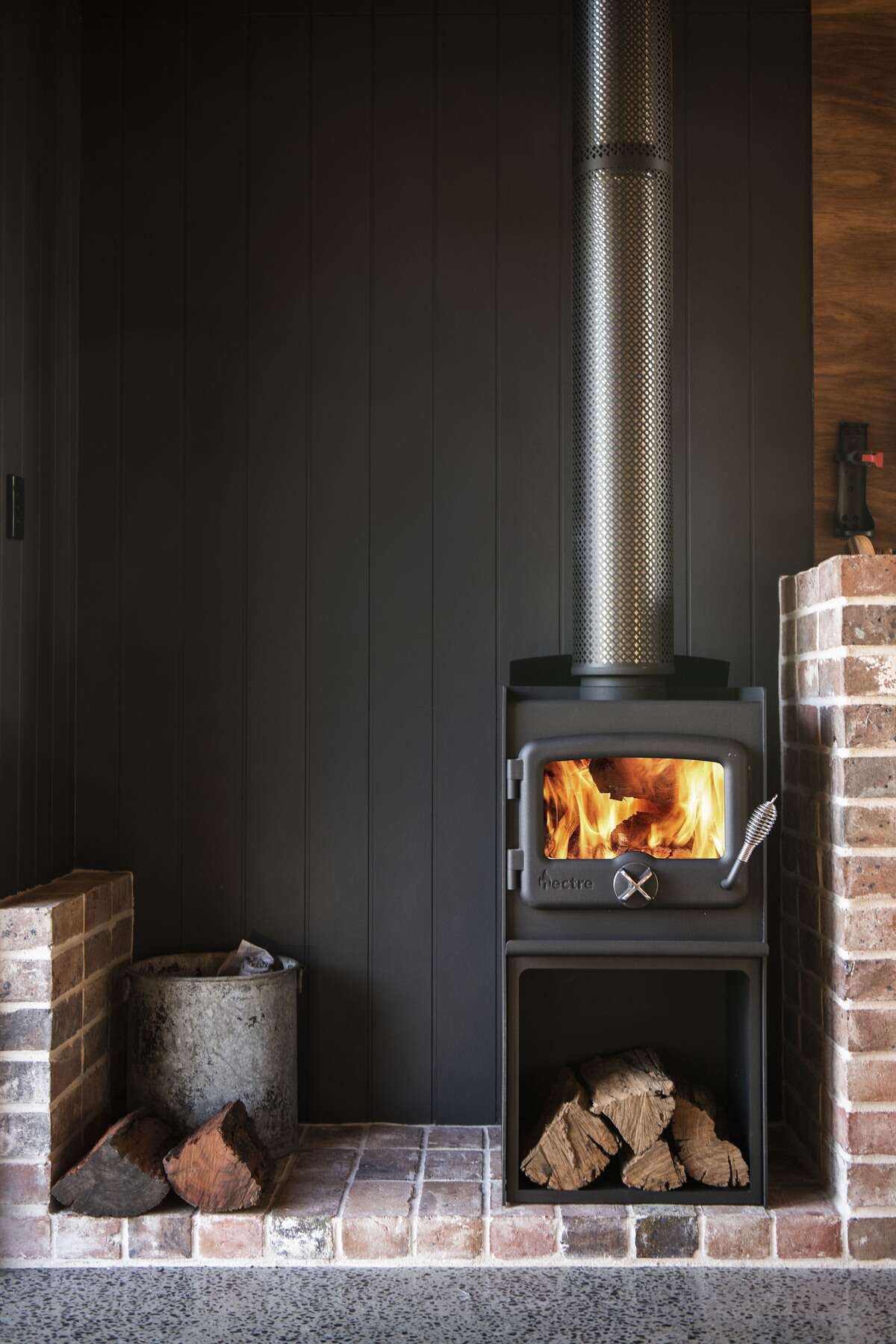
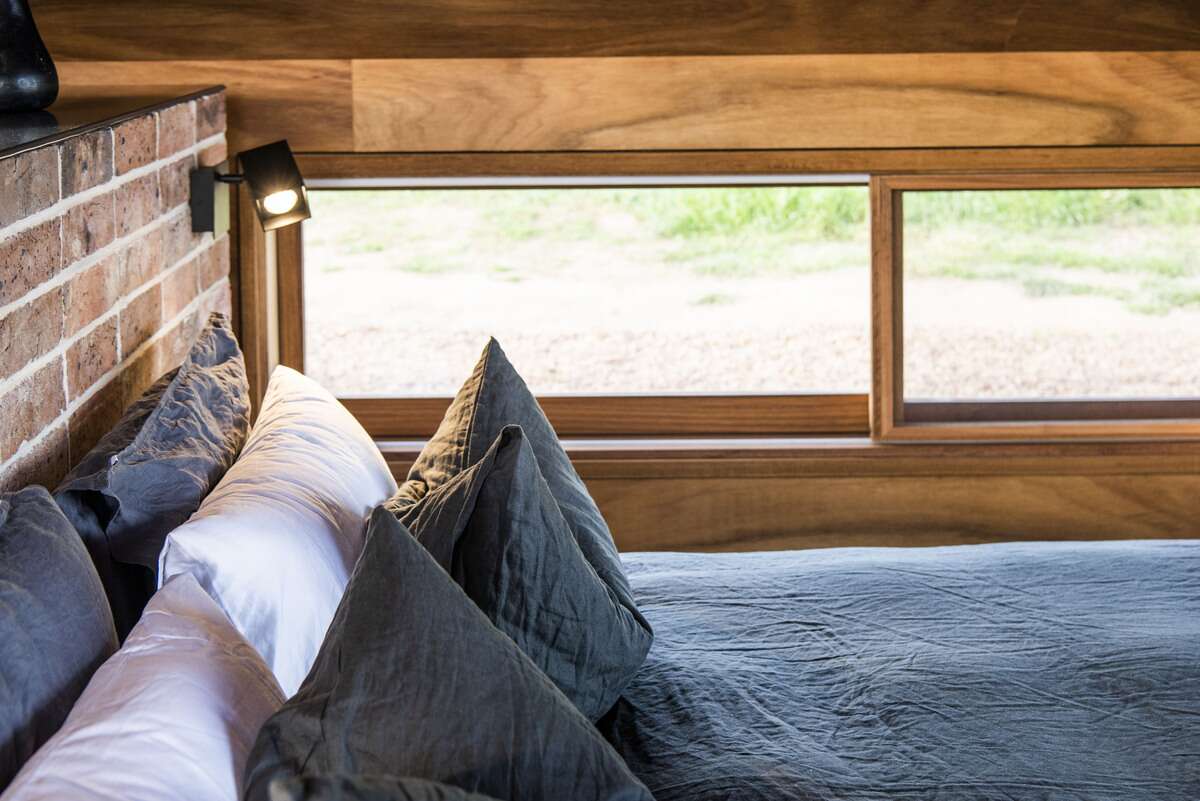
The recycled bricks have been meticulously repurposed from the only surviving part of the original cottage on the property, the fireplace.
Like many rural properties throughout regional New South Wales, the only sign of a previous building is the defiant existing chimney still standing strong after all around it has been destroyed.
The recycled brick wall within the hut, constructed of recycled bricks from the remains of the original cottage, is a tongue-in-cheek reference to the existing chimney.
The stack bond coursing emphasises the fact that the bricks are no longer load-bearing.
The arrangement also allows services to come down from the ceiling whilst providing a degree of separation to the bathroom.
Concealment of services was crucial.
Exposed services would have detracted from the picturesque rural setting and visitor experience.
So a large galvanised clad door to the western façade opening was used to conceal storage, solar batteries and inverter, electrical board, and a gas hot water unit.
The location of services here also provides a heavy buffer to the fierce western sun.
The project achieved a BAL 12.5 bushfire rating, important in this location.
Gawthorne’s Hut demonstrates to guests the opportunities of building smaller footprints and incorporating sustainable design elements.
Supporting this 100% off-grid building are:
- 6kw off-grid solar system
- 12kw battery storage
- 40,000 litres of rainwater storage
- double-glazed blackbutt windows and doors
- thermal mass via a polished concrete slab
- gas hot water
- efficient bathroom fixtures
- passive solar shading via the western buffer created by the services enclosure
Stage 2 will see the addition of shading to western and southern glazing however the client is looking to assess the thermal performance over 12 months first before completing the works.
Cameron Anderson Architects are developing a smaller, economical variation to this design which has garnered substantial international interest.
To be launched in early 2022, this small building design will comprise mainly prefabricated components and offer a cost-effective alternative to traditional housing forms that are unaffordable for many.
Project Awards
- Small Project Award – 2021 Australian Institute of Architects NSW Country Division Architecture Awards
- Airbnb Host Awards – Best Unique Stay Australia 2021
Project Details
Building Area – 40 m2
Project Budget – $252,000
Completion Date – 2020
Building Levels – 1
Project Team
Architecture
Cameron Anderson Architects
Cameron Anderson Architects are an award-winning architectural practice based in Mudgee NSW and currently undertaking projects throughout Central West NSW.
Structural Engineering
Barnson
Barnson operates in five regional and metropolitan centres employing over 60 professionals. With offices in Dubbo, Bathurst, Mudgee, Sydney, and Tamworth they service clients in both metropolitan Sydney and across regional New South Wales.
Construction
Callander Constructions
Based in Mudgee, New South Wales, Callander Constructions is a bespoke building company that specialises in heritage-listed property restoration and high-quality residential builds.
www.callanderconstructions.com.au
Solar Array
Blacklab Solar
BlackLab is owned by Paul and Davina Deegan. Paul is a licenced electrician with over 20 years experience and holds accreditation from the Clean Energy Council in all areas of solar.
Photography
Amber Creative
Amber Creative is a graphic design and photography based in Mudgee. They work with local and national brands and offer idea creation, copywriting, design, photography, and website design.
Photo Gallery
Click on a thumbnail image to enlarge.

Design © 2021 Cameron Anderson Architects. All Rights Reserved.| Images © 2021 Amber Creative. All Rights Reserved.
The Builtworks Quest
At Builtworks, we’re on a multi-year quest to document, showcase, and spotlight the best of Australia’s built environment.
That’s why we’re creating this comprehensive online archive and educational resource that showcases a diverse and eclectic range of project types and scales.
Together with showcasing older exemplars of enduring merit, we spotlight and celebrate the very best new and recent additions to Australia’s built environment.