
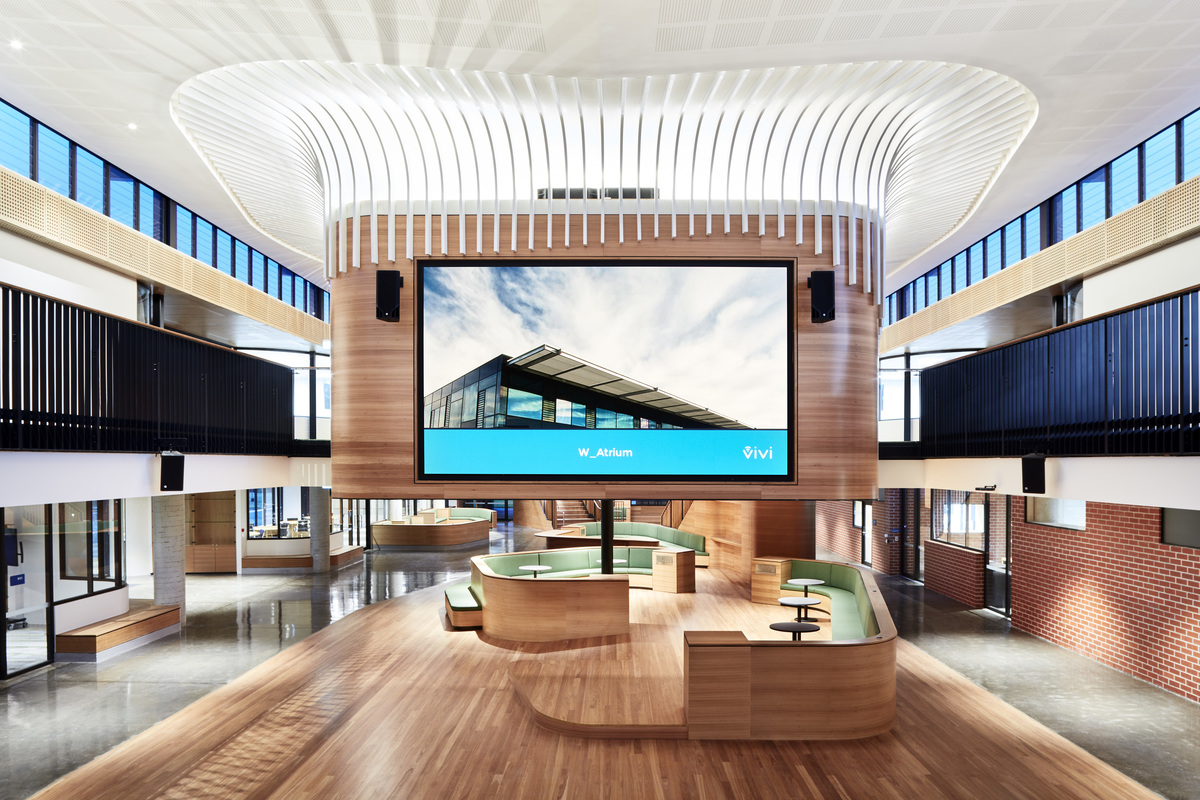
Luther College is a co-educational independent secondary school of the Lutheran Church of Australia located in the outer-eastern suburb of Croydon Hills in Melbourne, Victoria, Australia.
Cox Architecture’s scheme for the redevelopment of Luther College’s Middle School was designed to support the school’s approach to contemporary pedagogy.
The diverse range of educational environments enhance student education processes; addressing what, how, when, where, and with whom they learn.
The refurbished spaces and new learning landscapes invite varied forms of use where individual students are placed at the centre of learning.
This re-imagining of the existing school environment has allowed the process and outcomes of education to be ‘on show,’ celebrating effort and achievement whilst simultaneously provoking interest and participation among the entire student cohort.
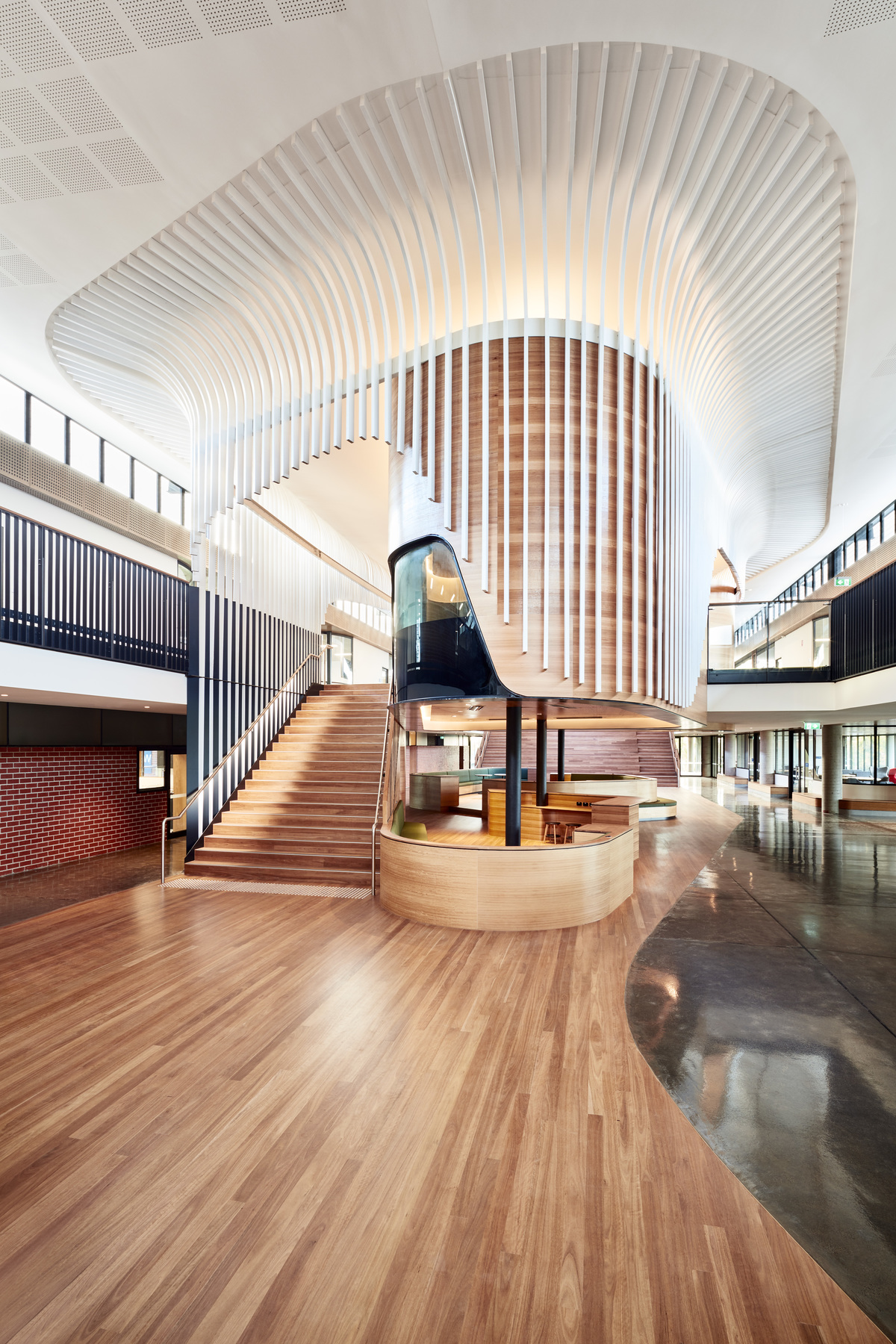
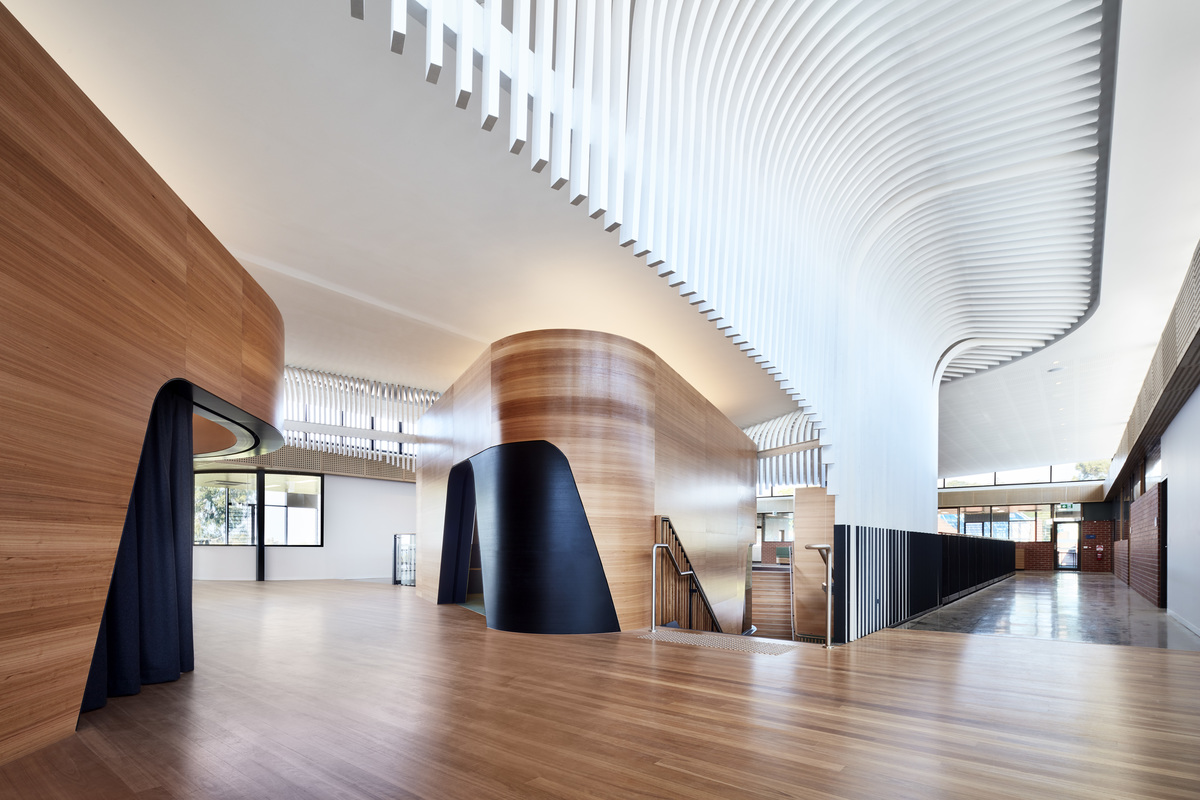
The project’s materiality achieves a complementary balance between the new design and the original building.
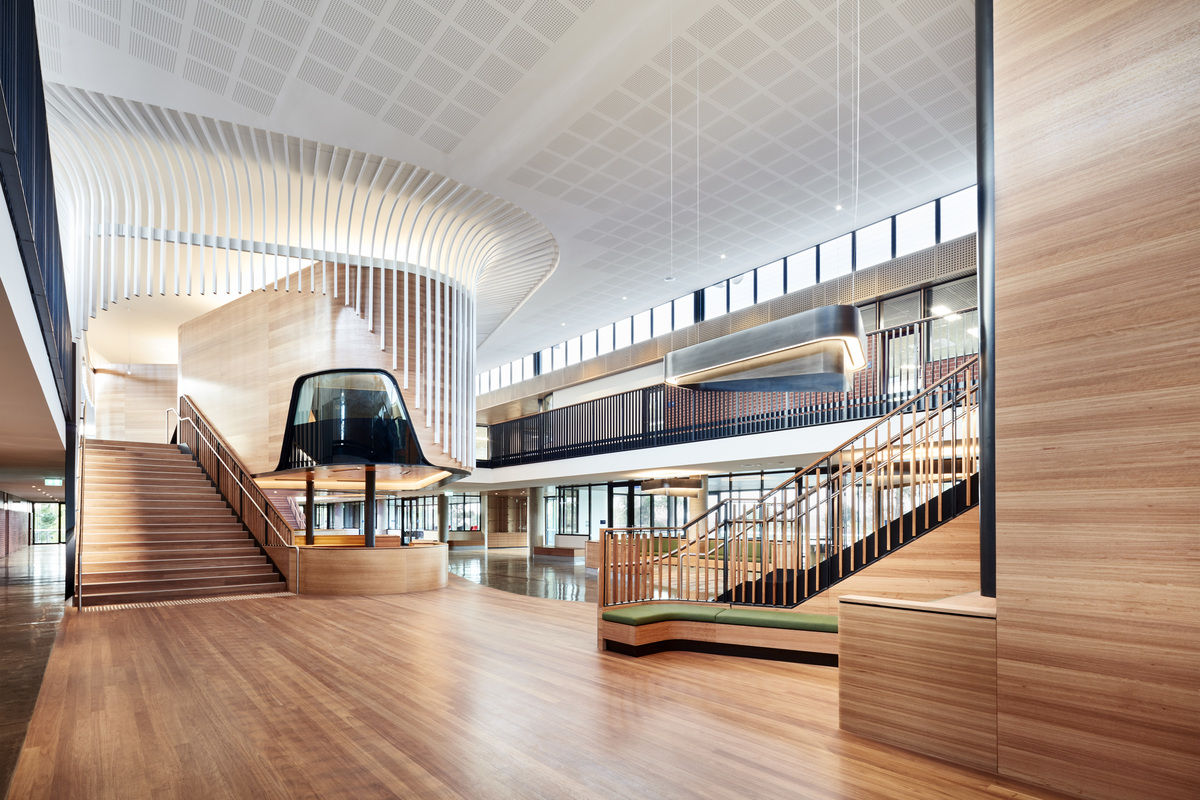
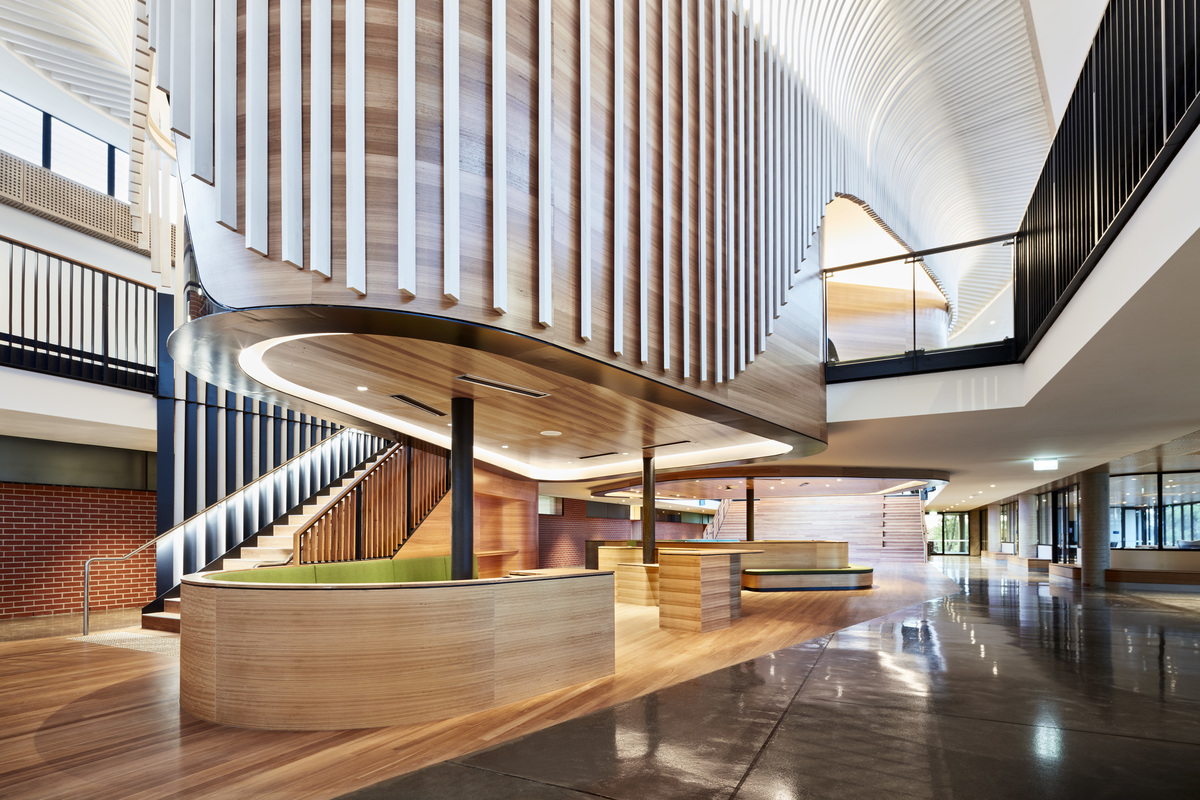
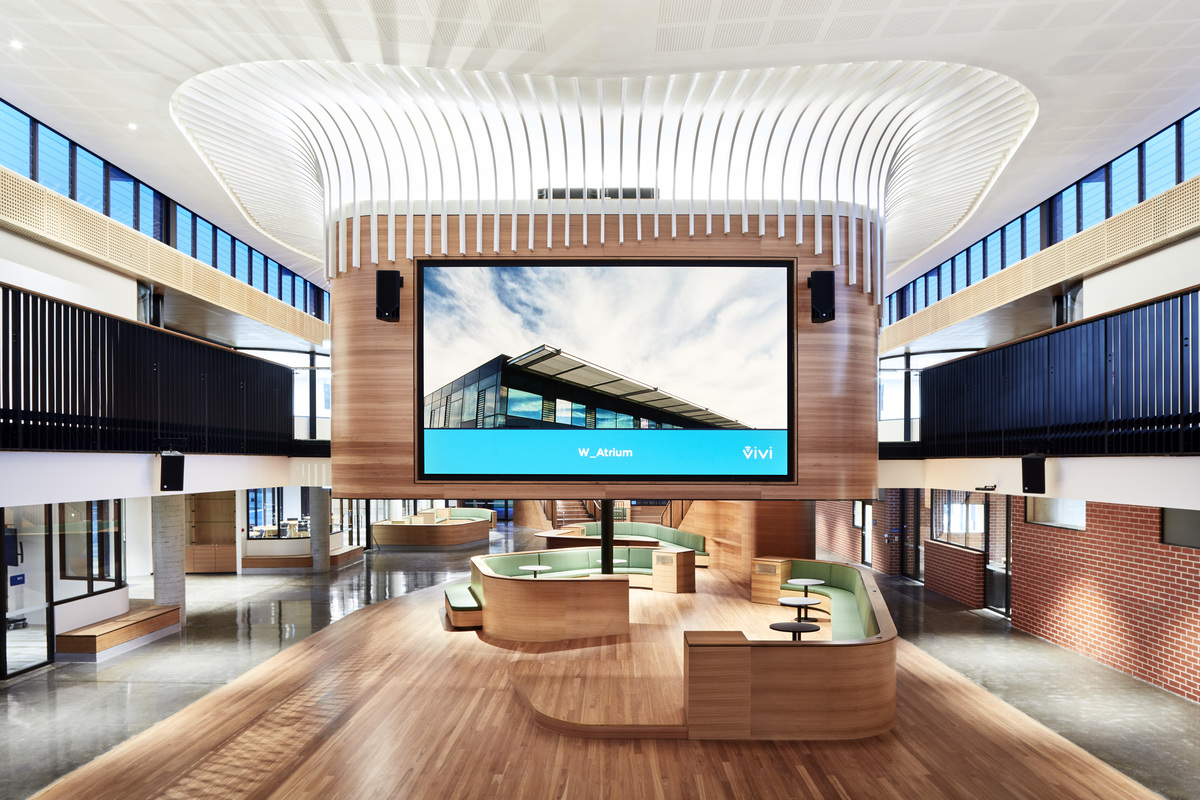
Selective interventions of colour and material denote a variety of pedagogical spaces, while being complemented by robust concrete flooring, bespoke timber seating, and striking batten elements.
The Cox design optimises functional connections between spaces, and creates transparency, enabling various types of activity and freedom of movement.
The project exemplifies contemporary learning environments, comprising a rich palette of spatial settings across a range of type and size, specifically designed to aid learning and support healthy social behaviour.
Luther College’s suite of enhanced classroom types support an expanding range of teaching and learning modes by enabling more active, collaborative, and engaged approaches to be readily implemented.
In this manner, the “classroom” is conceived as a technology or device to be utilised according to the demands of a developing and expanding curriculum program, the requirements of a particular teacher, or the needs of students, rather than as a passive, neutral setting for scheduled classes.
In particular, the classrooms enable increased physical movement and interaction by:
- Engaging and stimulating students through a design approach that acknowledges the need for a variety of spatial types to address individual differences and personal preferences amongst student cohorts.
- Varying in their configuration and functionality to provide a greater range of possible teaching modes and learning approaches. The spaces can collectively support presentations, seminars, individual and small-group tasks, active, collaborative and problem based approaches, and technology enabled learning.
- Promoting transparency into and between spaces to generate curiosity about student learning activity.
- Providing functional links to adjacent informal settings, extending the physical boundaries within which students can operate and provide complementary opportunities for other ways of working.
A visit to level 1’s information commons during a class or non-class time on any day will reveal it as the place where students can spend time learning outside the classroom by reading, exploring, creating, and communicating.
It is a space that develops community ownership, nurturing potential activities above by providing content in a variety of formats, technologies, and spaces (physical and virtual) built to encourage collaboration and interaction within a support structure that enhances learning outcomes.
A centralised community hub space generates a new social heart for the middle school. This provides a dynamic and socially vibrant collection of places and settings with the building’s existing atrium area and extended areas beyond.
This constructed public realm defines, enhances and begins to bind and orient the student experience and journey through the building’s interior.
The design concept reflects ideas about community space as well as informal social environments.
Construction
The project was built by Ireland Brown Constructions and procured via an Early Contractor Engagement (ECI) and Design and Construct (D and C) methodology.
The scope of works included the demolition of sections of the existing middle school building and providing new student areas; classrooms, kitchen, function rooms, locker hubs, reception, and learning environments together with roof and external works.
Key Products Used
The design strategy for material selection and distribution within the Middle School Enhancement Project revolved around:
- Balancing the contrast of the new design intervention whilst remaining complementary and sympathetic to the existing material conditions.
- Selective interventions of colour and material denote different pedagogy conditions.
- Incorporating appropriate materials and colours enhances the experience of the new ‘Learning Landscape’.
- Rubber flooring
- Timber Seating
- Glazed Working Environments to increase transparency and showcase learning
- Timber Batten Soffit and Screening (Used to define the new ‘learning terrain’)
Project Awards
The project won the 2019 Australian Timber Design Awards – Excellence in Timber Products, Veneer Category
Project Details
Project size – 5,000 m2
Project budget – $8,000,000
Completion date – 2018
Project Team
Architecture
Cox Architecture
COX is a design-focused contemporary architectural practice with studios located in every major Australian city and a history spanning 60 years.
Key to their ethos is supporting the public life of our cities. Cox does this by ensuring each project makes positive contributions to its public realm – giving more than it takes.
Construction
Ireland Brown Constructions
Ireland Brown Constructions consists of over 80 construction professionals committed to strategic planning and delivering excellence across a variety of sectors.
Specific sector expertise includes including education, correctional, health and multi-level residential projects.
Photography
Rhiannon Slatter
Rhiannon is a Melbourne based fine art, architecture, and interiors photographer.
Photo Gallery
Click on a thumbnail image to enlarge.


Design © 2020 Cox Architecture. All Rights Reserved.| Images © 2020 Rhiannon Slatter. All Rights Reserved.
Get the Builtworks Letter
In every edition of the Builtworks Letter, you’ll get the behind-the-scenes backstory as to how buildings are designed, built, and brought to life.
You’ll hear compelling stories, learn surprising ideas, meet engaging characters, and discover unique voices.