
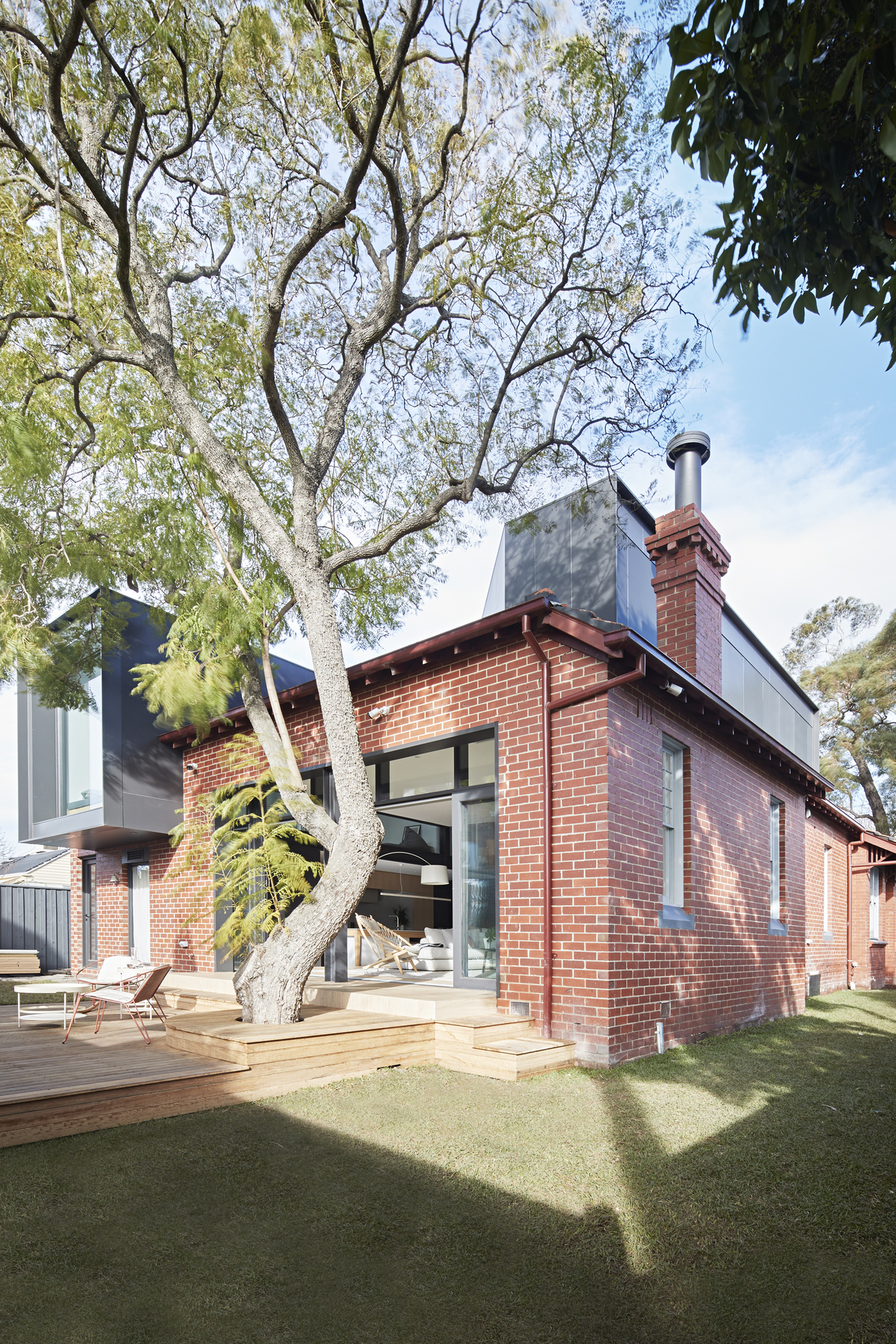
This large Edwardian family home was purchased with an eye on sub-division.
The pool, pool house and a large portion of the garden were lost to the second block.
Whiting Architects’ brief was to maintain the same level of amenity on the reduced site.
A pool, storage shed, off street parking and a workable garden were key aspects of the new build.
Internally, the existing house was large enough; it just needed to be updated and better utilised.
Whiting Architects liked the challenge of maintaining all the ingredients of a sprawling Brighton home on half the area.
It became an exercise in efficiencies, operational, spatial, and environmental.
Restraint became a driving aspect for the design.
It was also important to respect the existing building.
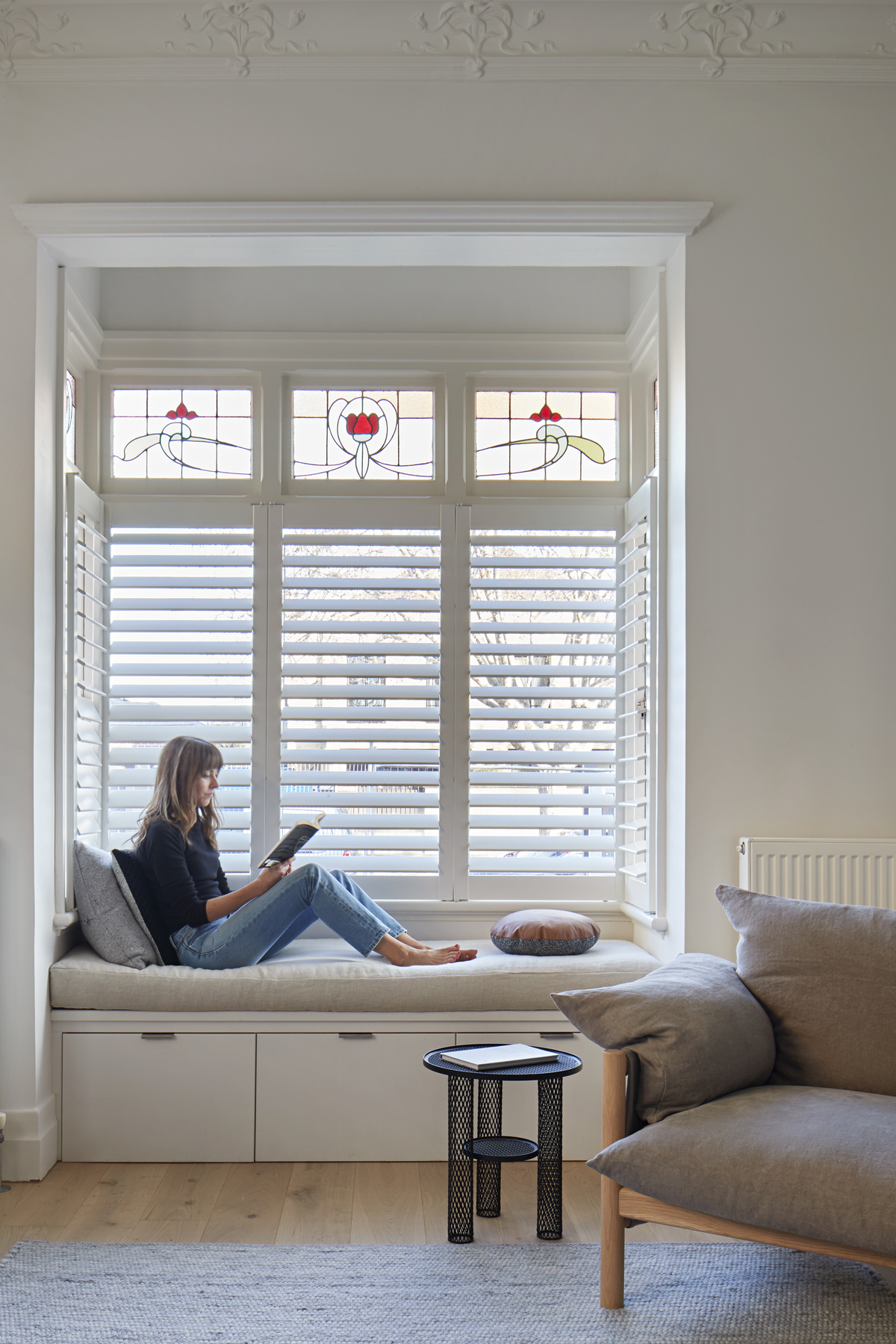
Being a prominent corner building meant the rear addition would be read in conjunction with the old.
Neither old nor new should dominate.
They should merge and belong as one coherent building.
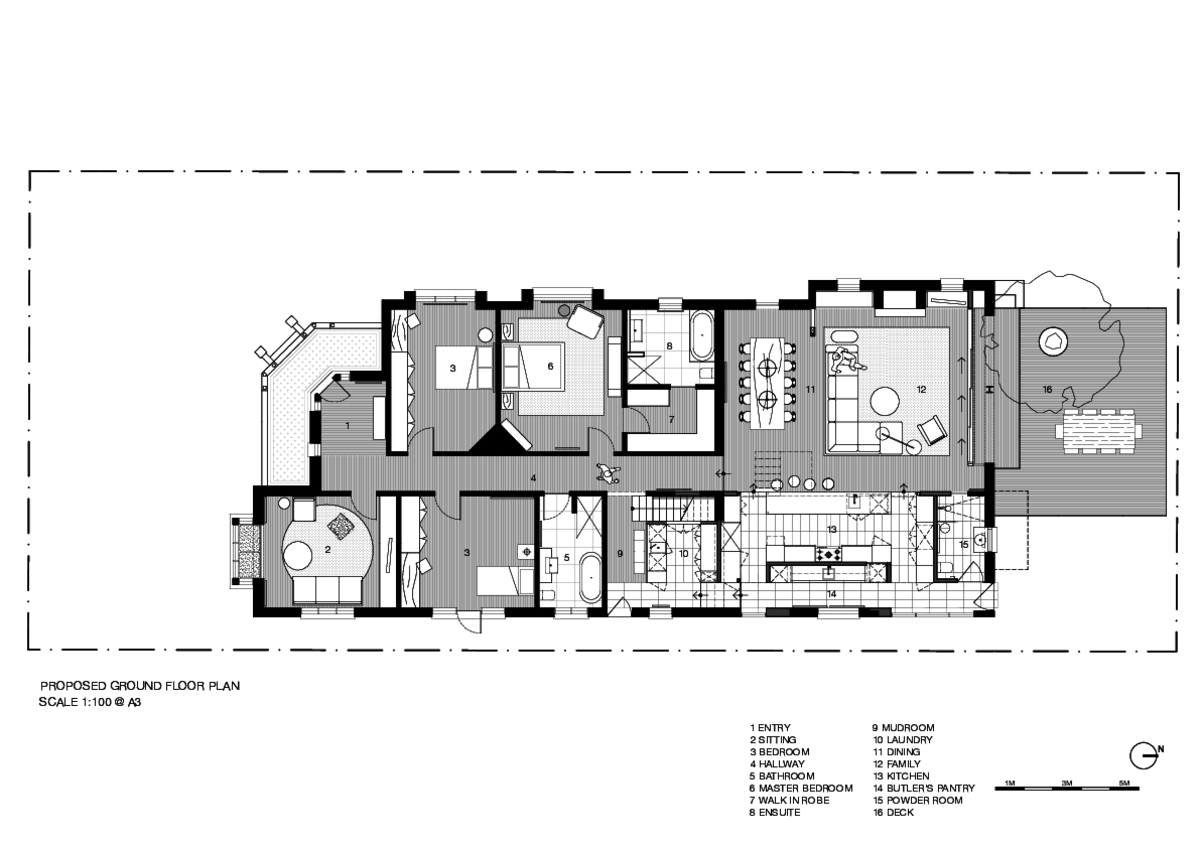
Whiting Architects framed the brief around consolidation and connection. They set about developing a client specific interior program of separation and connection to inform specific activity in defined precincts throughout the home.
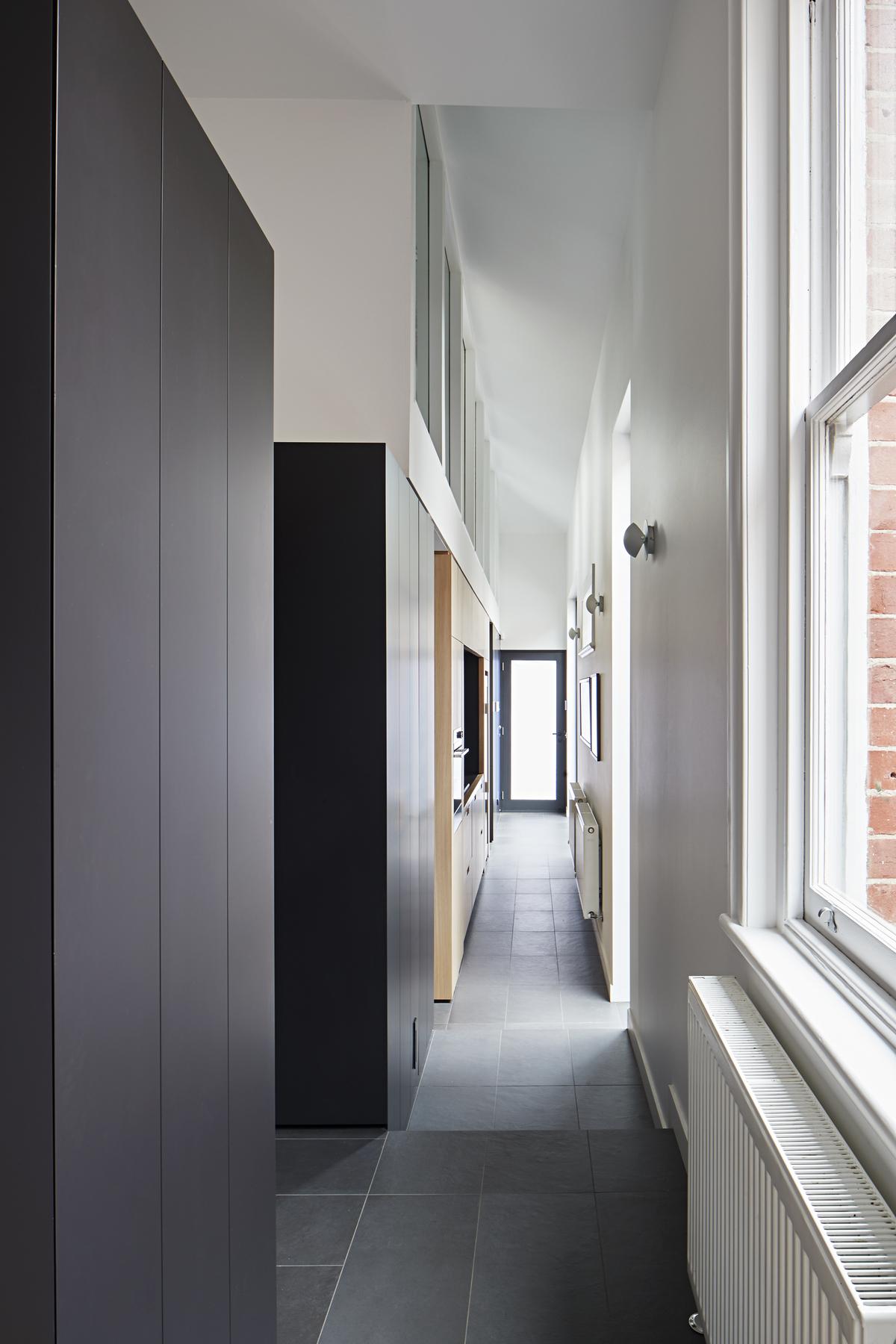
The kitchen was the heart of the home and an area for all to congregate.
From this focal point, visual access to key areas was considered to create a measured balance of privacy and engagement.
Specific use areas were defined by step-downs and reduced head heights.
Thresholds between areas were blurred to create a sense of space and flexibility.
Whiting Architects set out to sculpt a different quality of space for different areas.
The process started by looking at the building envelope.
Through penetrations in the envelope Whiting Architects worked to scoop out areas and insert new volumes into the space.
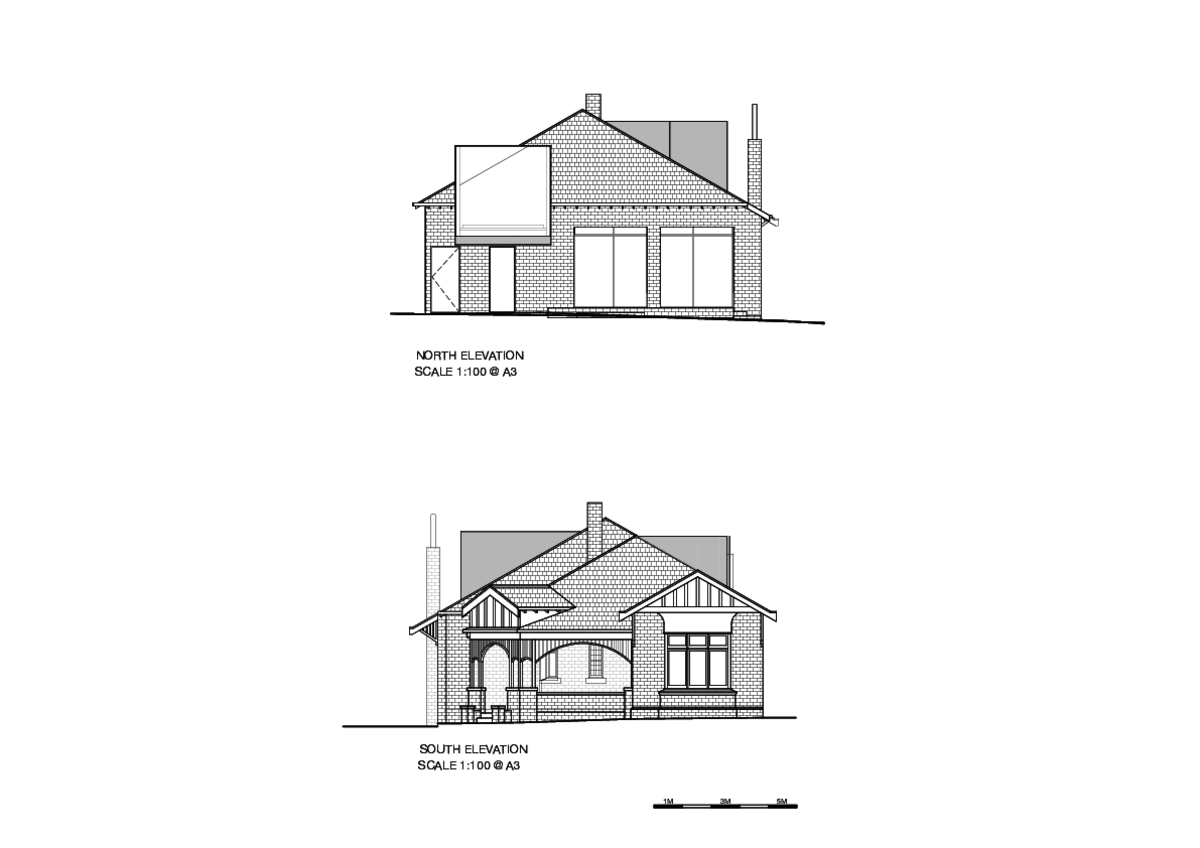
Any new addition evident from the outside was kept deliberately modest.
Whiting Architects tackled this as if the new had been inserted into the existing envelope to playfully imply that they could just as easily be slid out again.
Like the ‘sleep-outs’ of old, those verandas in-filled with louvers to find another bedroom, Whiting Architects’ ‘insertions’ suggest that the building is big enough, they just needed to pick up a little more space where possible.
This strategy served to minimise the impact of the new on the old.
This approach offered lightness.
The old building remains strong and well defined.
It’s clear to see where the old stops and new begins.
There is no competition, no single form battles for dominance.
The new insertions are monothematic metal boxes set in contrast to the traditional pitched terracotta tiled roof and red brick construction of the original house. They seem to belong.
Both aspects work together, complementing each other.
Whiting Architects hoped to inspire a process of discovery.
Glimpsing interesting elements and obtaining views through to unexpected spaces encourages curiosity and a desire to explore. This is further enhanced through the creation of a differing collection of interconnected spaces.
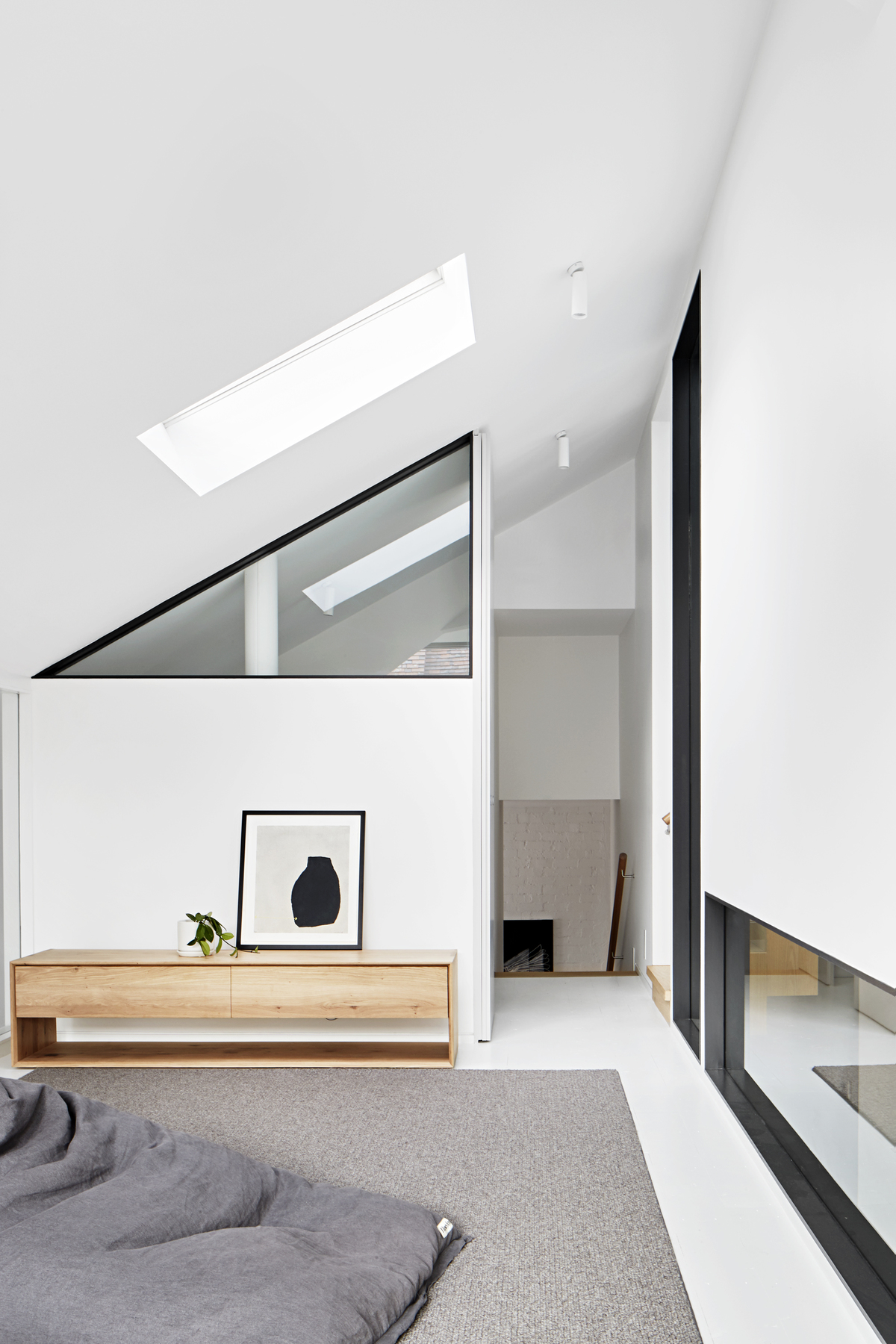
To emerge out of the lower more intimate space of the kitchen area into the relative soaring height of the living area and to view aspects of the long linear playroom area over with its raking and folding ceiling creates interest and drama throughout the interior landscape of the building.
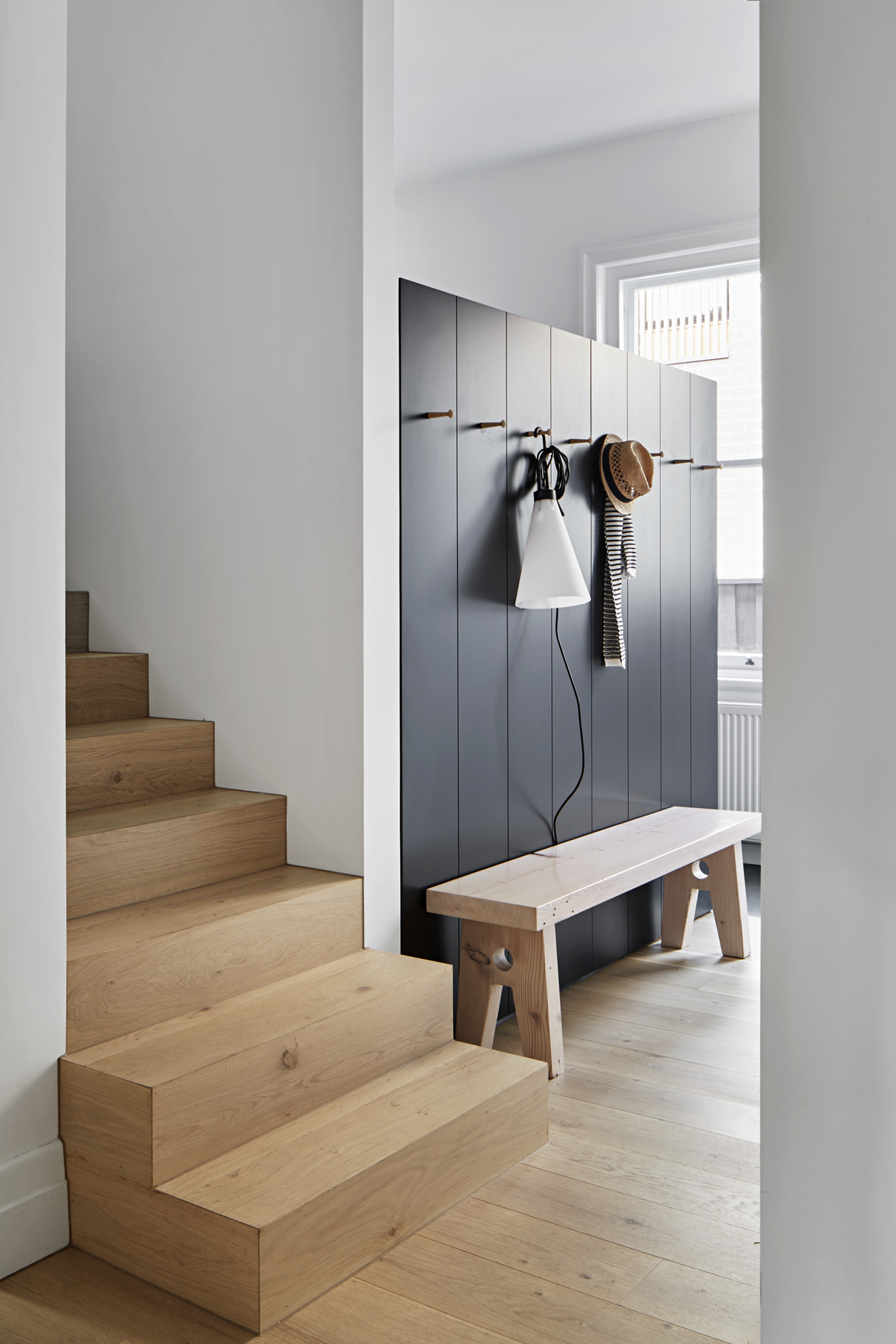
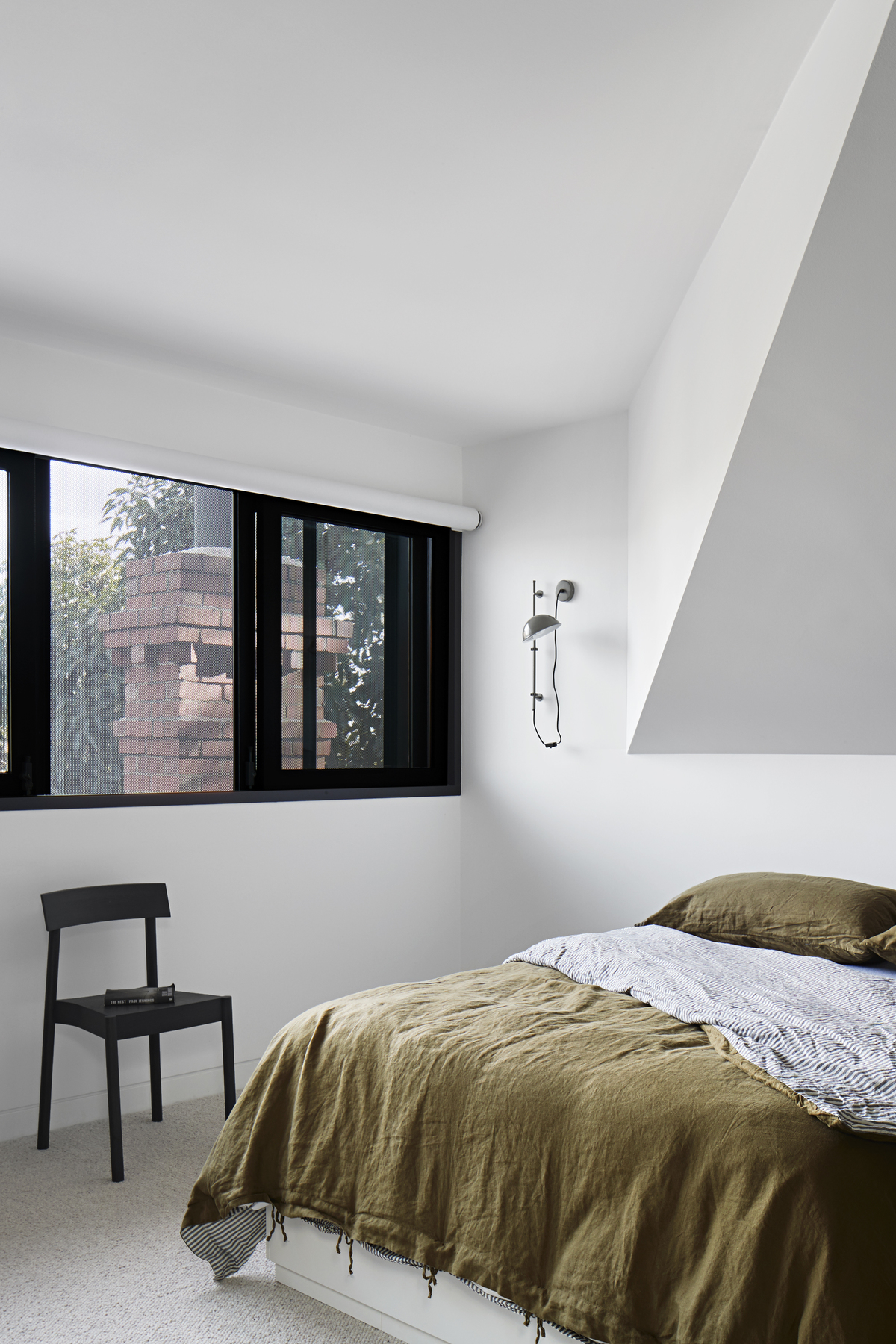
Offset from the central hallway, the stair up to the mezzanine playroom and boy’s bedrooms is deliberately discrete.
These sorts of Victorian villas had no second level, so the implosion of a new stair would have read as incongruous to the integrity of the existing building.
Here Whiting Architects decided to push the boundaries and incorporated the sculptural section of a floating stairway that hangs above the main hallway.
This moment of architectural expression offers clarity of concept: a confluence of new and old, creating intrigue and offering a visceral connection to activity within the house.
Project Details
Project Size – 362 m2
Site Area – 674 m2
Completion Date – 2018
Building Levels – 2
Project Team
Architecture and Interior Design
Whiting Architects
Whiting Architects is an Architecture and Interior Design studio with over 25 years’ experience.
Director Steven Whiting’s qualifications in both Interior Design and Architecture define the firms’ signature style and form a design philosophy that centres on the premise that there is no separation between disciplines.
Associate Directors Eleanor Eade and Josie Somerville have brought energy, passion and creative expertise to Whiting Architects over the last 6 years, providing a youthful and dynamic approach to the practice.
Photography
Shannon McGrath
Shannon McGrath has been photographing architecture and interior design works for 15 years.
She is commissioned by pre-eminent architects and designers around Australia for her ability to get under the skin of a project, and not only capture its pure essence but also her client’s formal design intent.
Passionate and professional, Shannon’s images are known for their beautiful portrayal of light and form, with a soft realism that celebrates the subject matter.
Photo Gallery
Click on a thumbnail image to enlarge.









Design © 2020 Whiting Architects. All Rights Reserved.| Images © 2020 Shannon McGrath. All Rights Reserved.
Get the Builtworks Letter
In every edition of the Builtworks Letter, you’ll get the behind-the-scenes backstory as to how buildings are designed, built, and brought to life.
You’ll hear compelling stories, learn surprising ideas, meet engaging characters, and discover unique voices.