
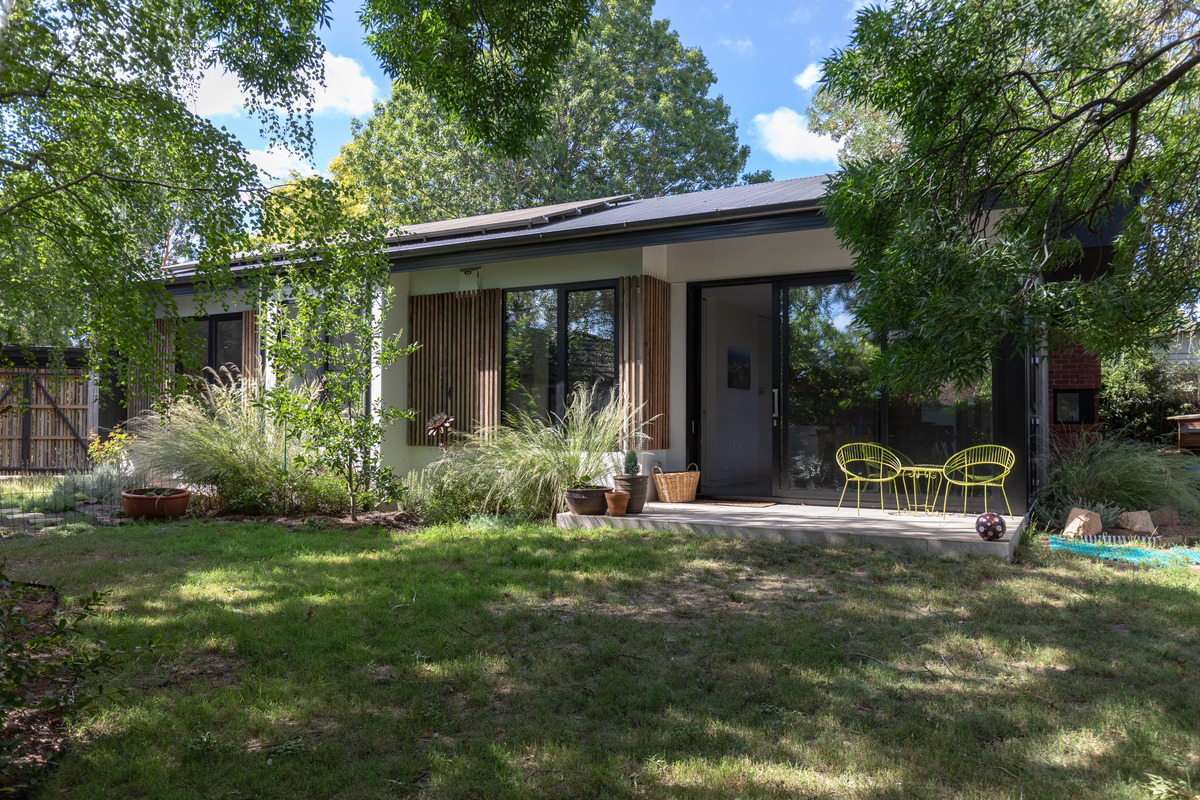
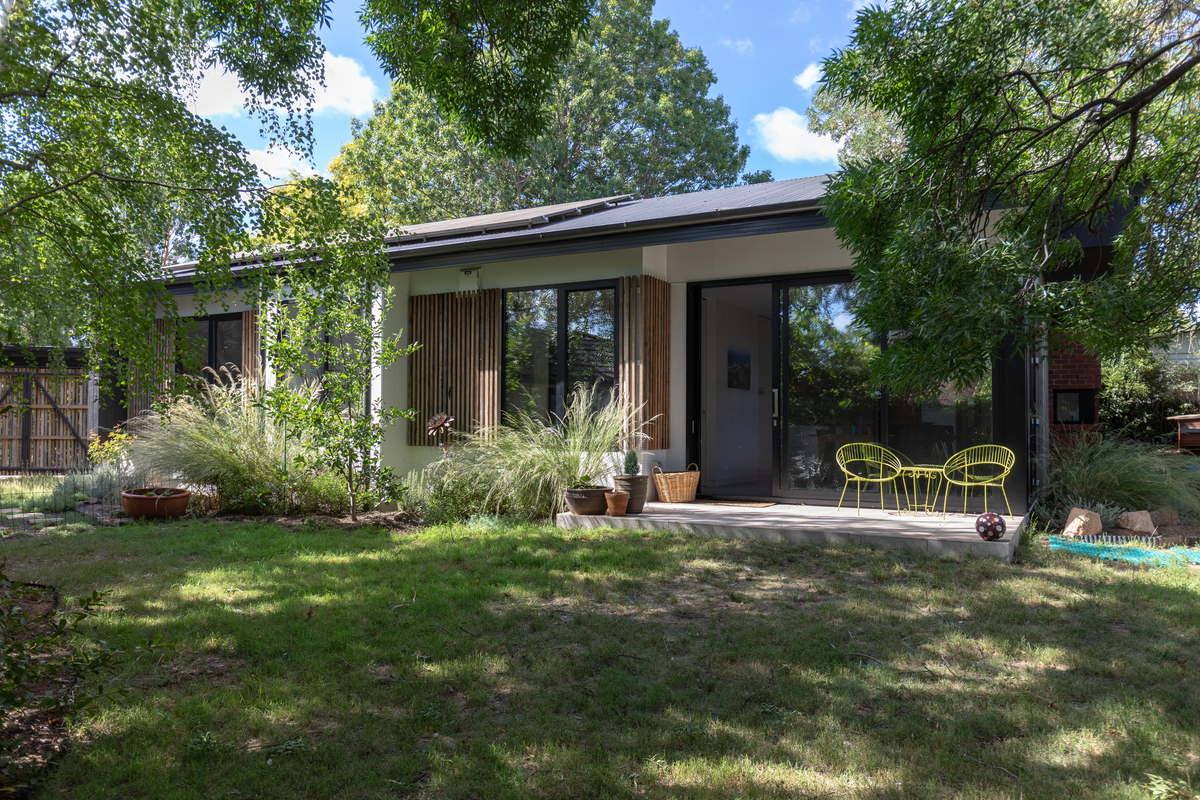
The Courtyard House is a modestly designed dwelling set in the leafy suburb of Curtin in Canberra.
The site sits at the end of a quiet cul-de-sac and features established trees.
Sounds idyllic.
But there were five regulated trees and another three highly valued trees on site that formed a ring around the existing east-west facing brick cottage.
With the existing dwelling being of low construction quality and the trees curtailing an expanded footprint, Rob Henry Architects‘ clients decided to demolish the existing building by hand (to preserve as many materials as possible) and build a new dwelling.
The design of the new dwelling was strongly influenced by site constraints and a desire to deliver a northerly orientation to all living areas and bedrooms.
The footprint is square in form, with a space carved out of its core.
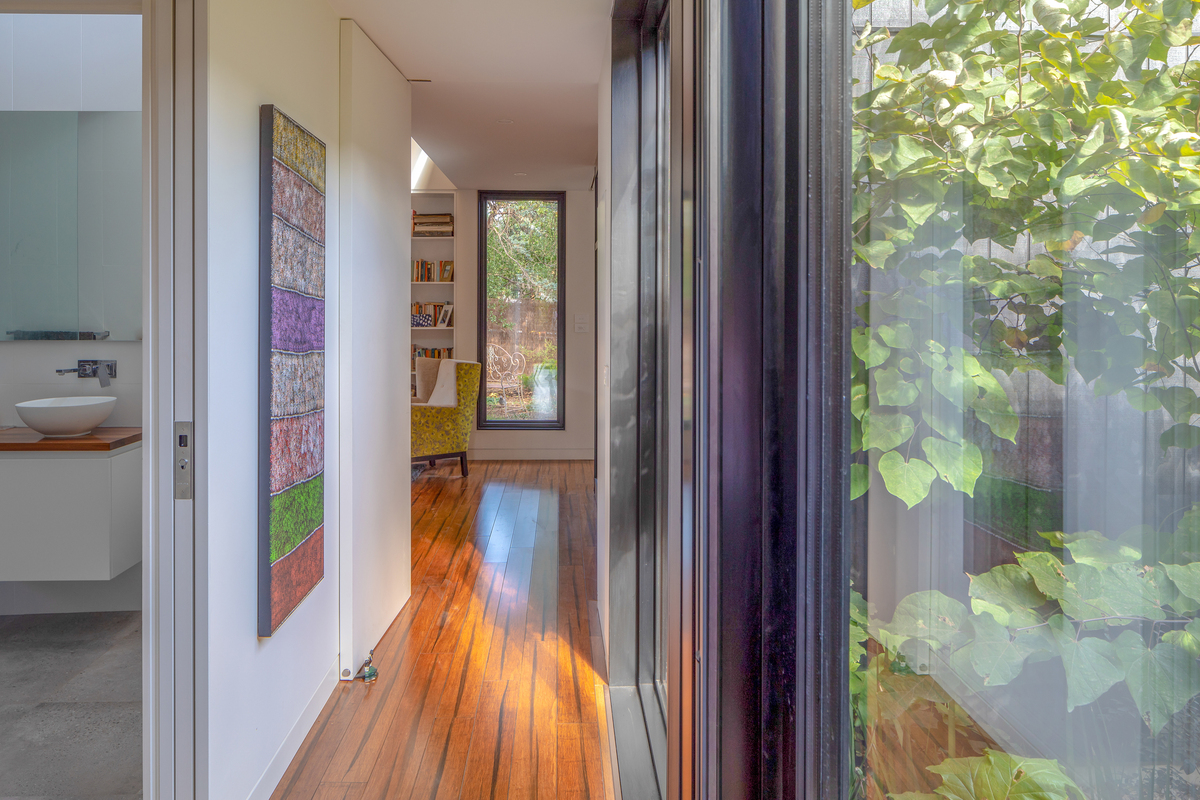
The central courtyard is integral to the light quality, natural ventilation and connectivity of spaces within the dwelling.
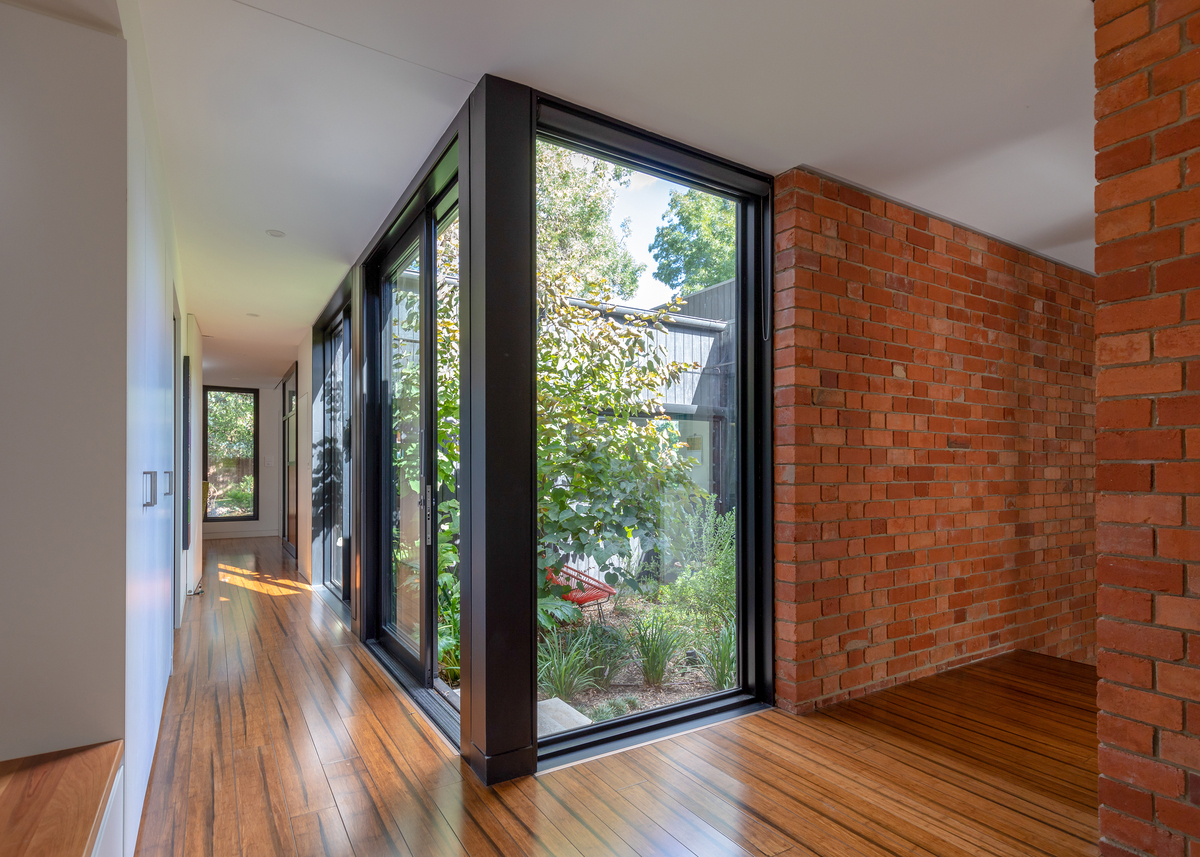
Glazing on all sides of the courtyard allows natural light to filter into living spaces throughout the day.
It also enhances night purging in summer.
And offers filtered views through greenery to other parts of the house.
So occupants feel connected to the outdoors as they move through the house and inhabit different areas.
The form is broken into two skillion roofed living/sleeping wings, linked together by two lower green roofed service wings.
The northern wing’s skillion roof pitches up the south to support a solar panel system, whilst the southern wing’s skillion roof pitches up to the north to allow northerly light to enter the spaces via clerestory windows.
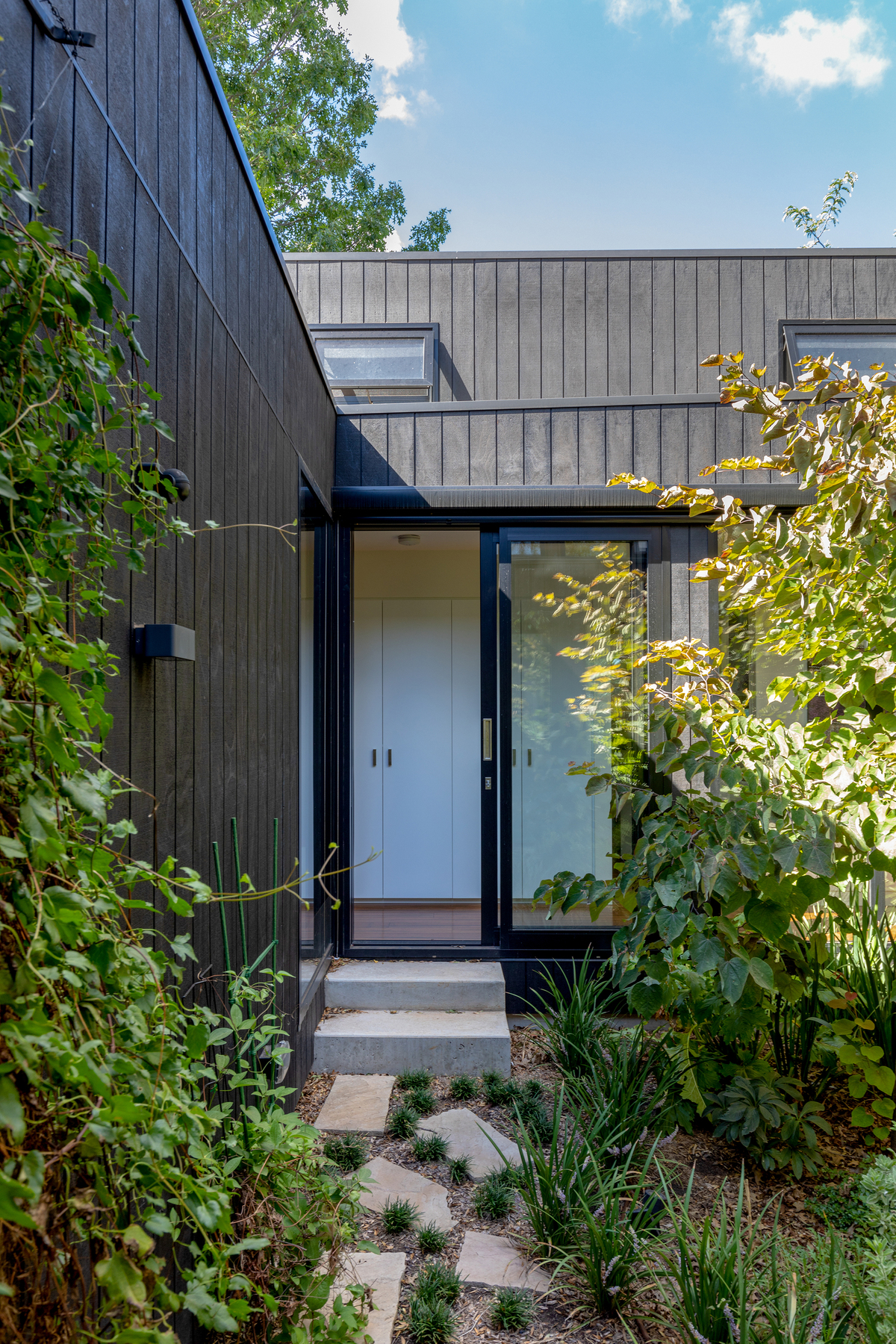
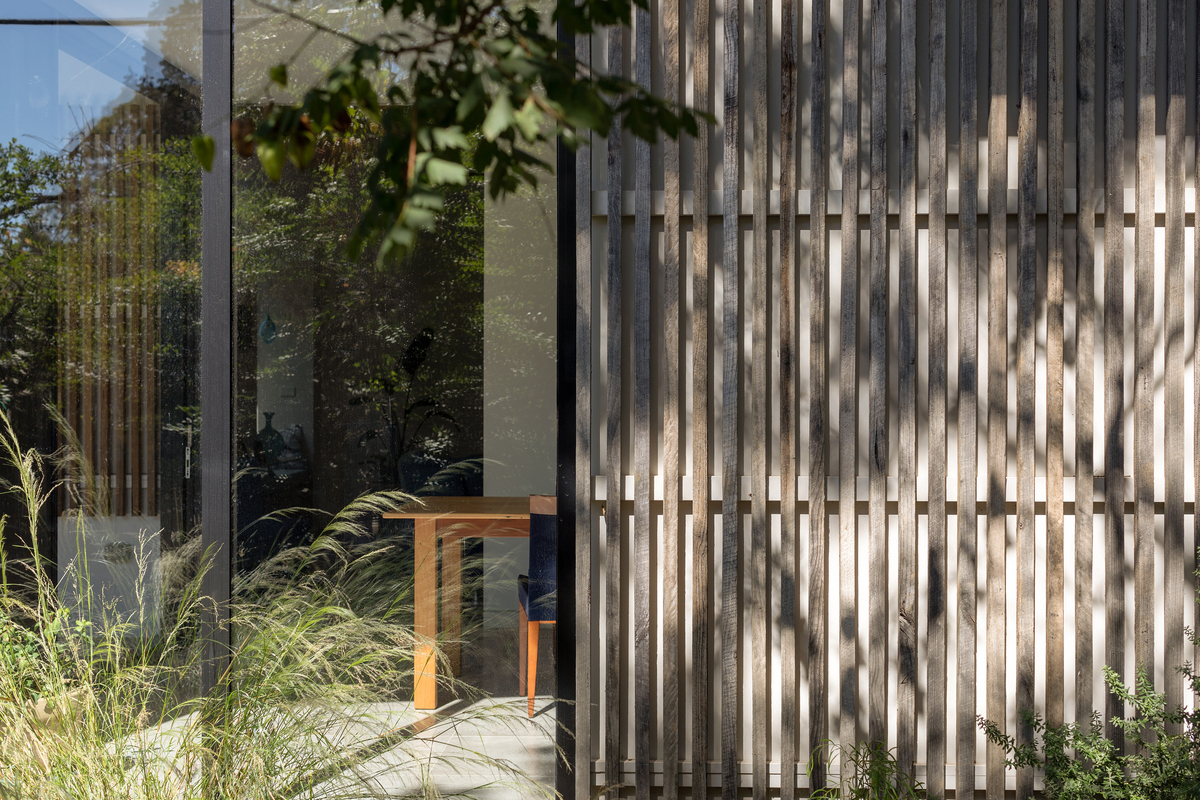
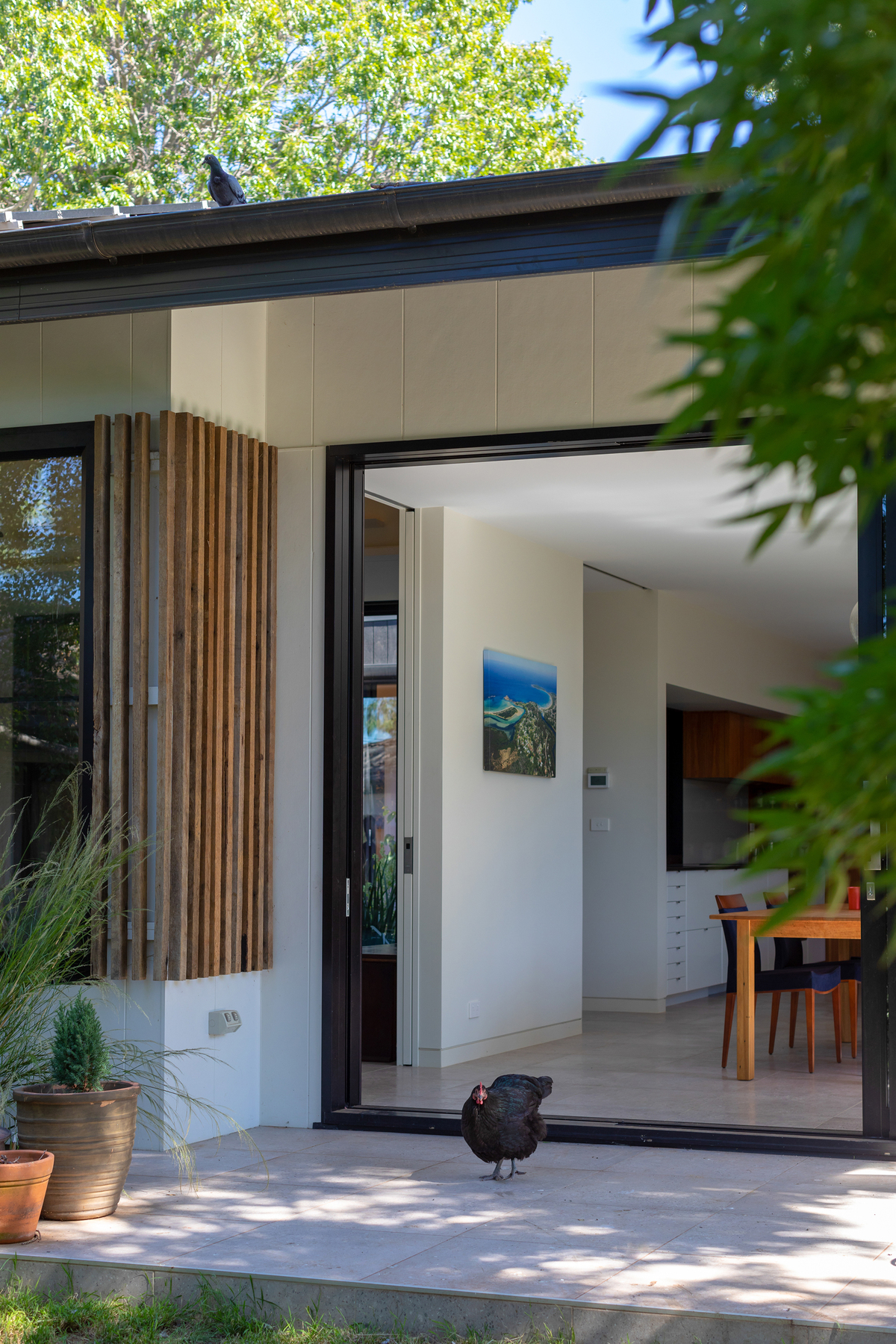
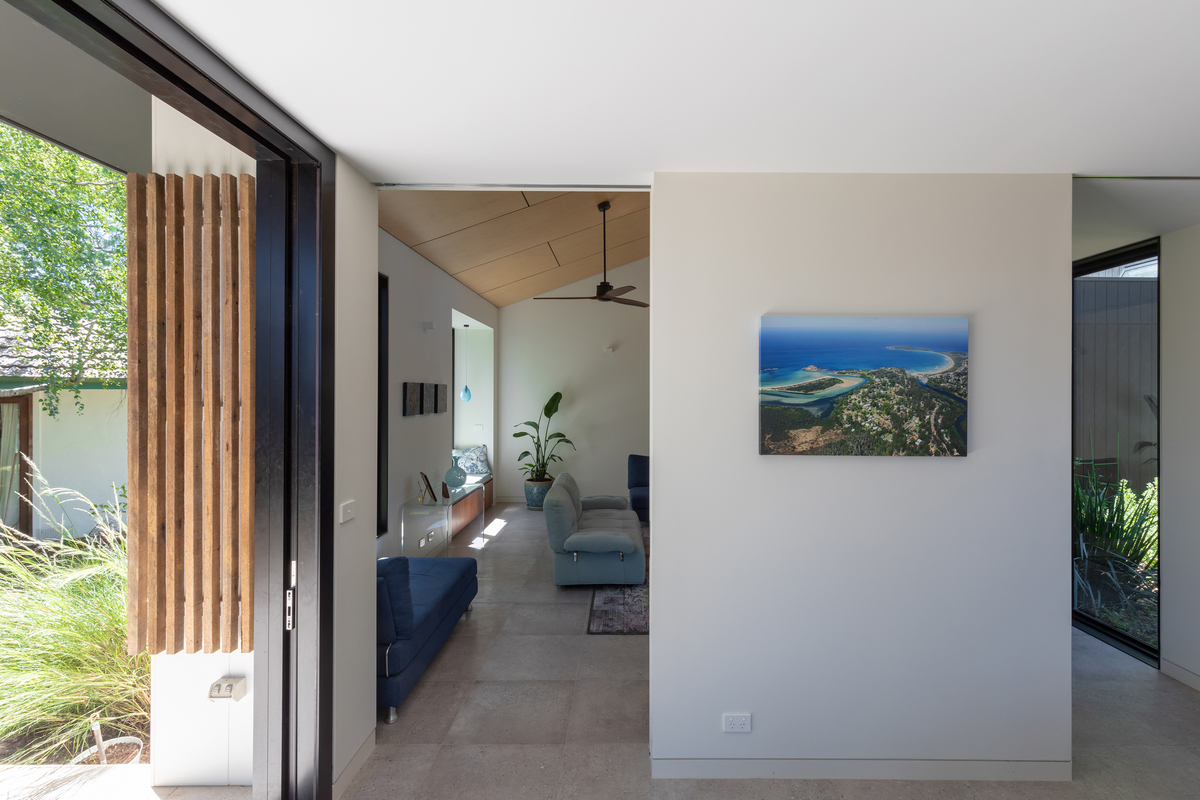
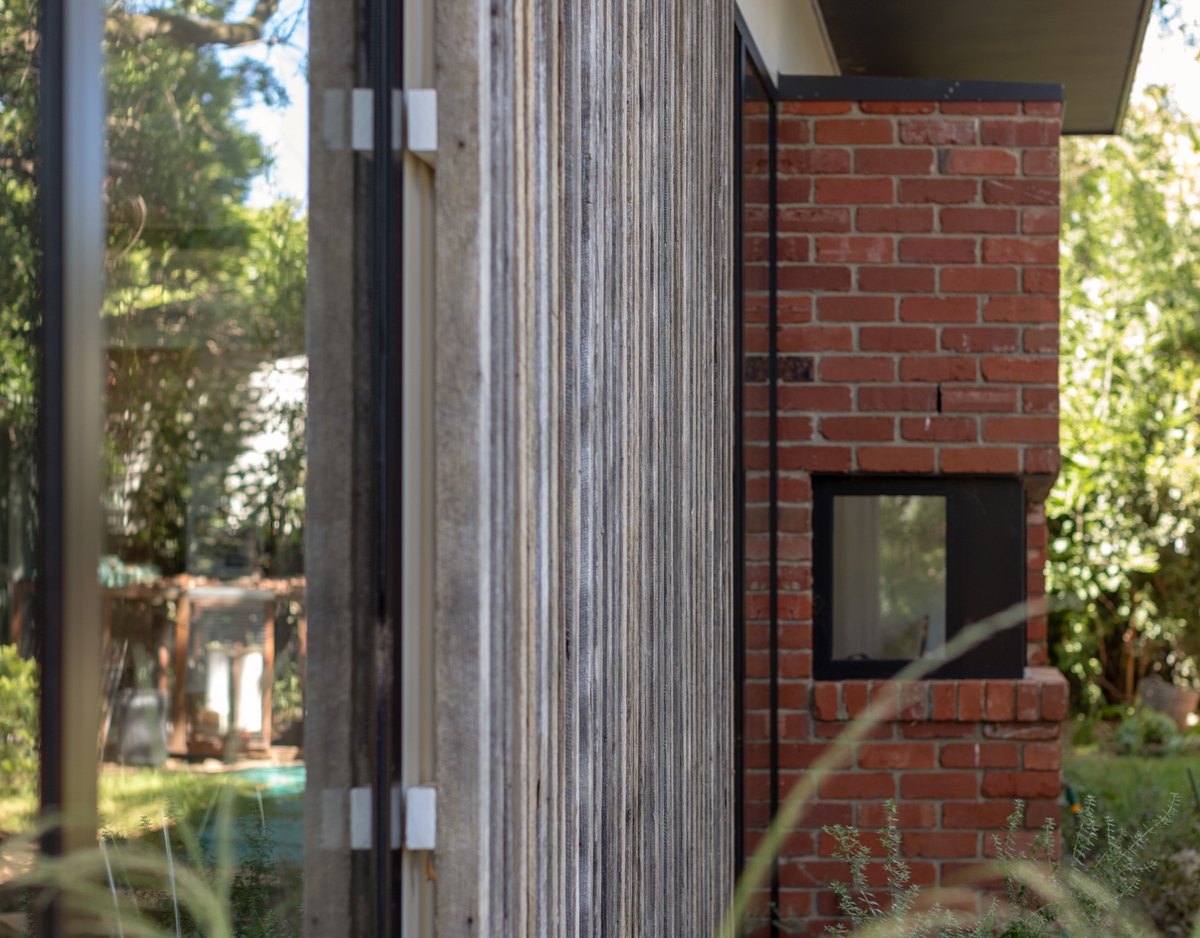
Clad predominantly in charcoal painted timber with insets of white painted FC cladding, the form has been embellished with slatted timber screens made from salvaged roof battens of the original cottage.
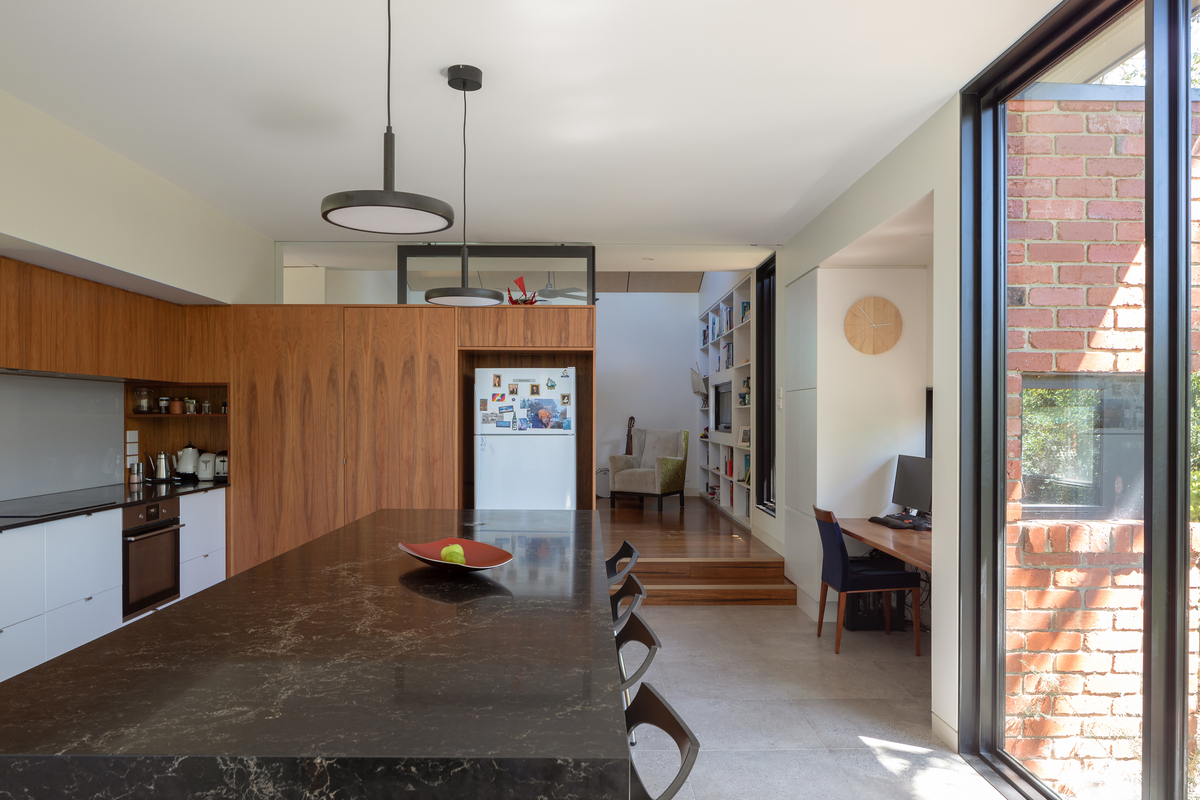
Recycled red bricks, another salvaged item, have been used in feature walls externally and internally.
Various brick bonds add a fine grain texture to the carport walls.
Recycled materials have also been used for slatted timber fencing and paving surrounding the house, settling the dwelling effortlessly into its environment.
The planning is compact, with circulation wrapping the courtyard.
Corridors are minimised and each journey offers a framed view to the external garden and treetops, or into the courtyard.
Every room has openable windows on both sides to maximise cross ventilation and provide alternative outlooks.
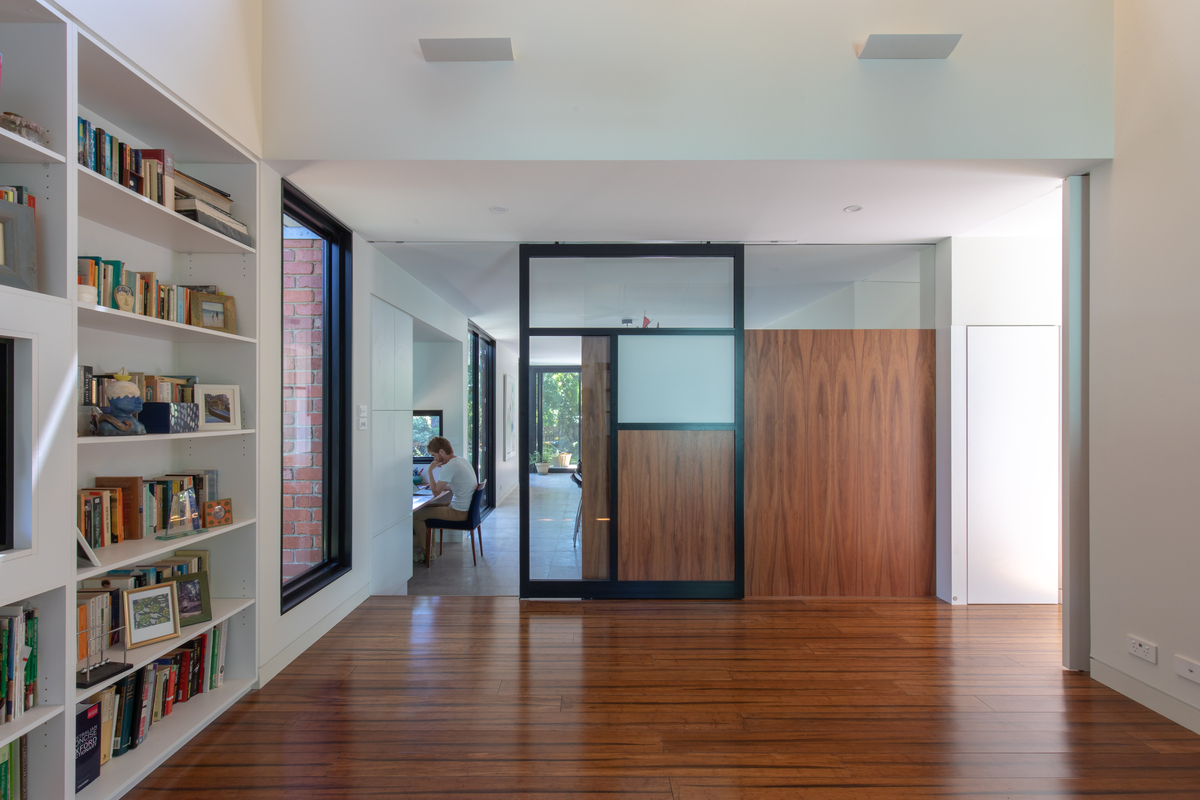
The public and private spaces are defined by subtle level changes.
Flexibility has been embedded in the planning to allow the current music room to be easily adapted into a forth bedroom.
Each internal space is efficient and simple, utilising low cost finishes and fixtures.
Prefabricated joinery units are enhanced with a few custom detailed elements, such as the Blackwood veneer pantry unit and the metal, glass, and veneered surface sliding door.
A highlight is the hoop pine plywood raked ceilings to living areas and bedrooms, providing a warm glow to an otherwise neutral palette.
Clues of the owner’s eclectic personality can be found in lighting and tile selections.
The Courtyard House illustrates that with ingenuity in material recycling and a strong underpinning of environmental principles, a new dwelling can address sustainability on a modest budget.
The Courtyard House is comfortable year-round, has low energy usage, and the recycling of numerous materials has significantly reduced the embodied energy of this new build.
The fundamental decision to deconstruct the existing house by hand had a dual purpose; to allow for the maximum retention of building materials for repurposing, and to ensure all existing regulated trees and established vegetation could be retained and protected.
The planning of the house integrates standard environmental principles of solar access and cross ventilation to every room, reducing the overall reliance on mechanical systems.
Whilst thermal mass floors provide heat capture for the mid-season, air-sourced heat pump hydronic heating has also been installed and runs off a solar panel system with battery storage.
No active cooling is required, with high and low windows openings maximising cross ventilation and night purging.
Project Awards
The Rob Henry Architects’ team were very pleased to receive two prestigious and keenly-contested awards for their work on Courtyard House.
Winner of the Australian Institute of Architects ACT Chapter 2019 Award for Residential Architecture – Houses New
Winner of the Australian Institute of Architects ACT Chapter 2019 Award for Residential Architecture – Sustainable Architecture
Project Details
Project Size – 272 m2
Site Area – 978 m2
Completion Date – 2017
Building Levels – 1
Project Team
Architecture
Rob Henry Architects
Rob Henry Architects is focused on creating architecture with an understanding of human scale, which is both socially and environmentally sustainable.
www.www.robhenryarchitects.com.au
Photography
LightStudies Photography
Aarthi Ayyar-Biddle | Canberra-based Architectural Photographer who loves capturing spaces, the way we inhabit them, and the people who help shape them.
Photo Gallery
Click on a thumbnail image to enlarge.




Design © 2021 Rob Henry Architects. All Rights Reserved.| Images © 2021 LightStudies Photography. All Rights Reserved.
Get the Builtworks Letter
In every edition of the Builtworks Letter, you’ll get the behind-the-scenes backstory as to how buildings are designed, built, and brought to life.
You’ll hear compelling stories, learn surprising ideas, meet engaging characters, and discover unique voices.