
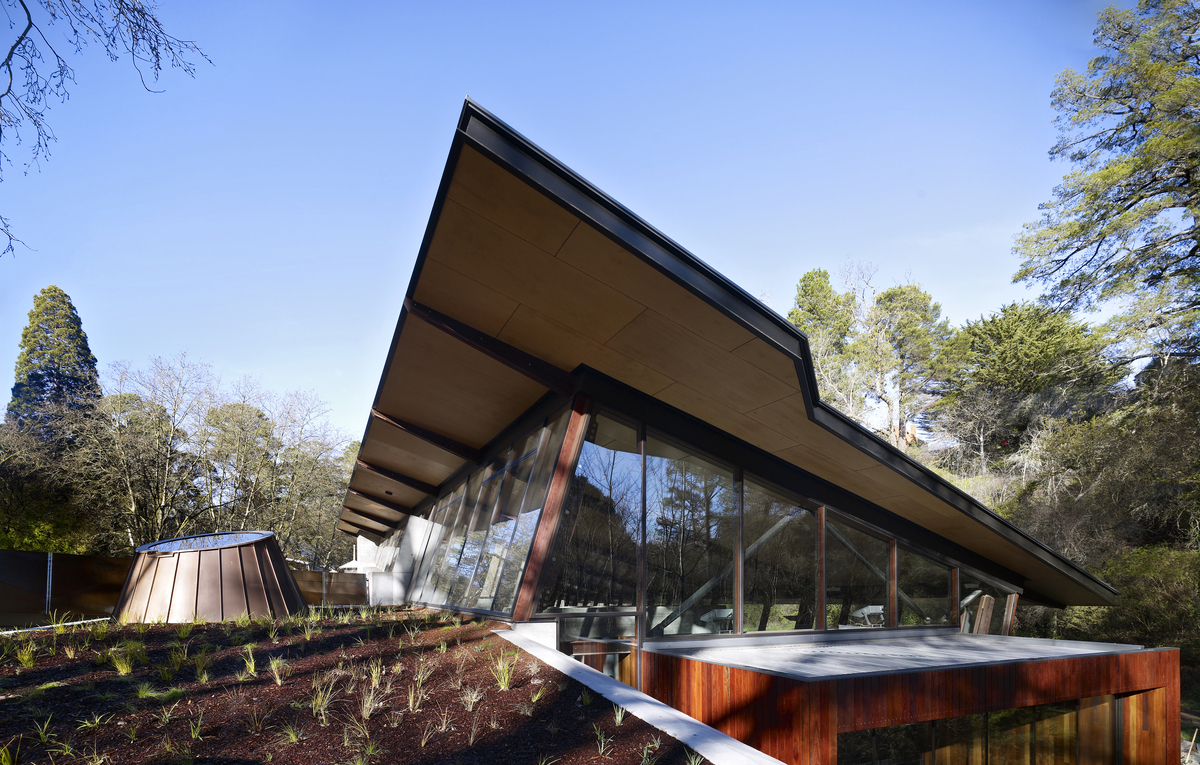
The redevelopment of Hepburn Bathhouse and Spa, designed by Cox, celebrates its prominence as an iconic local landmark and the continual use of the site as a therapeutic mineral spa centre.
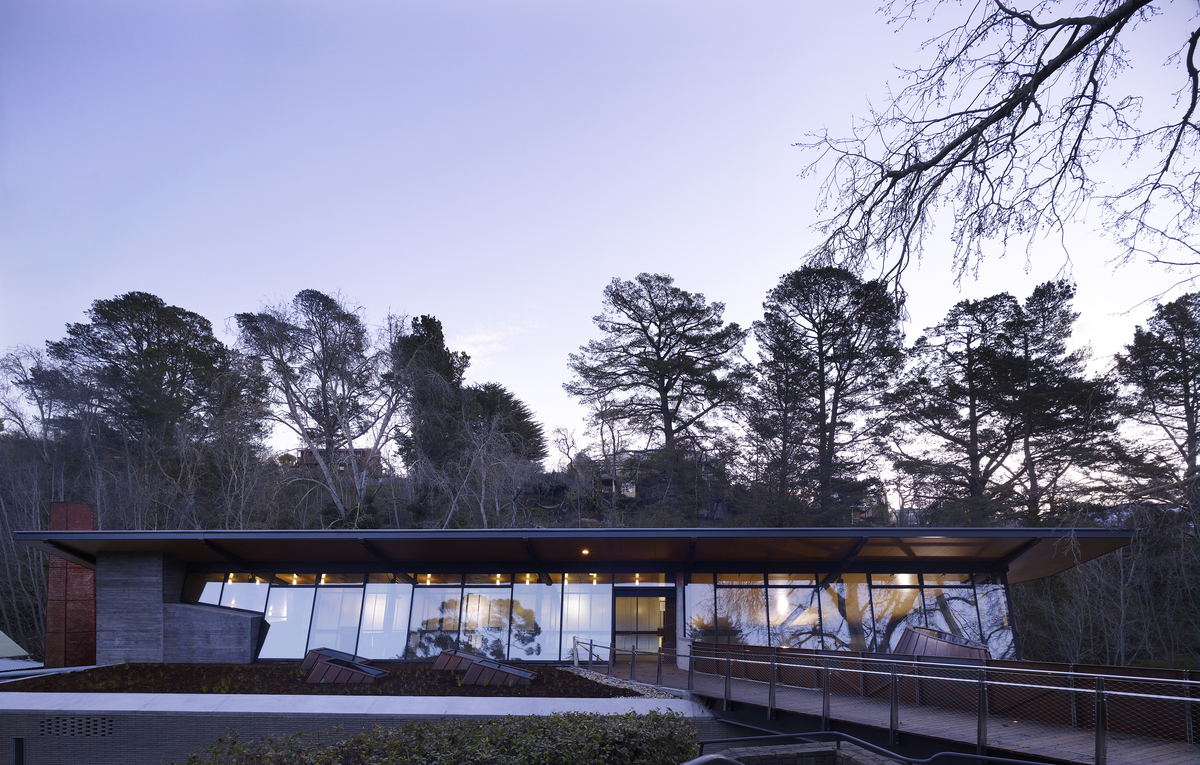
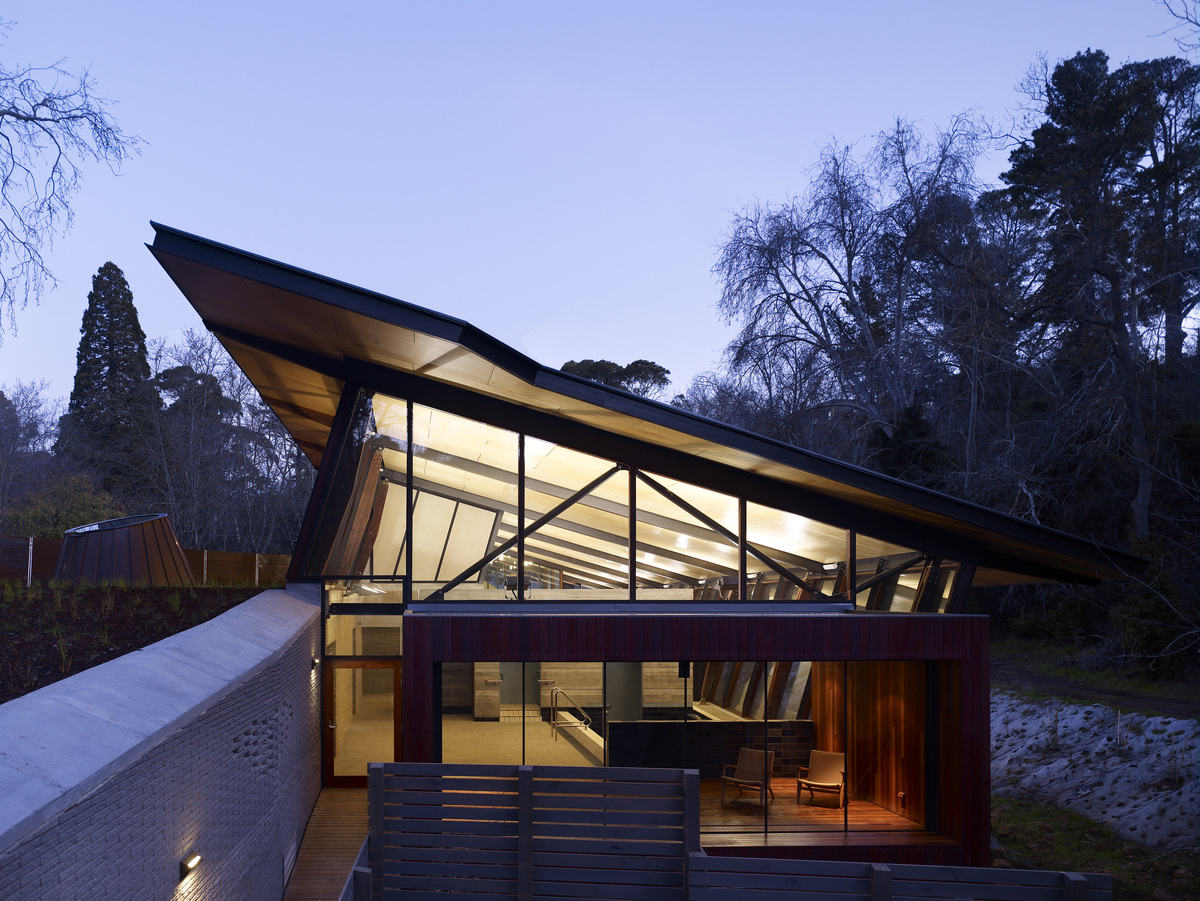
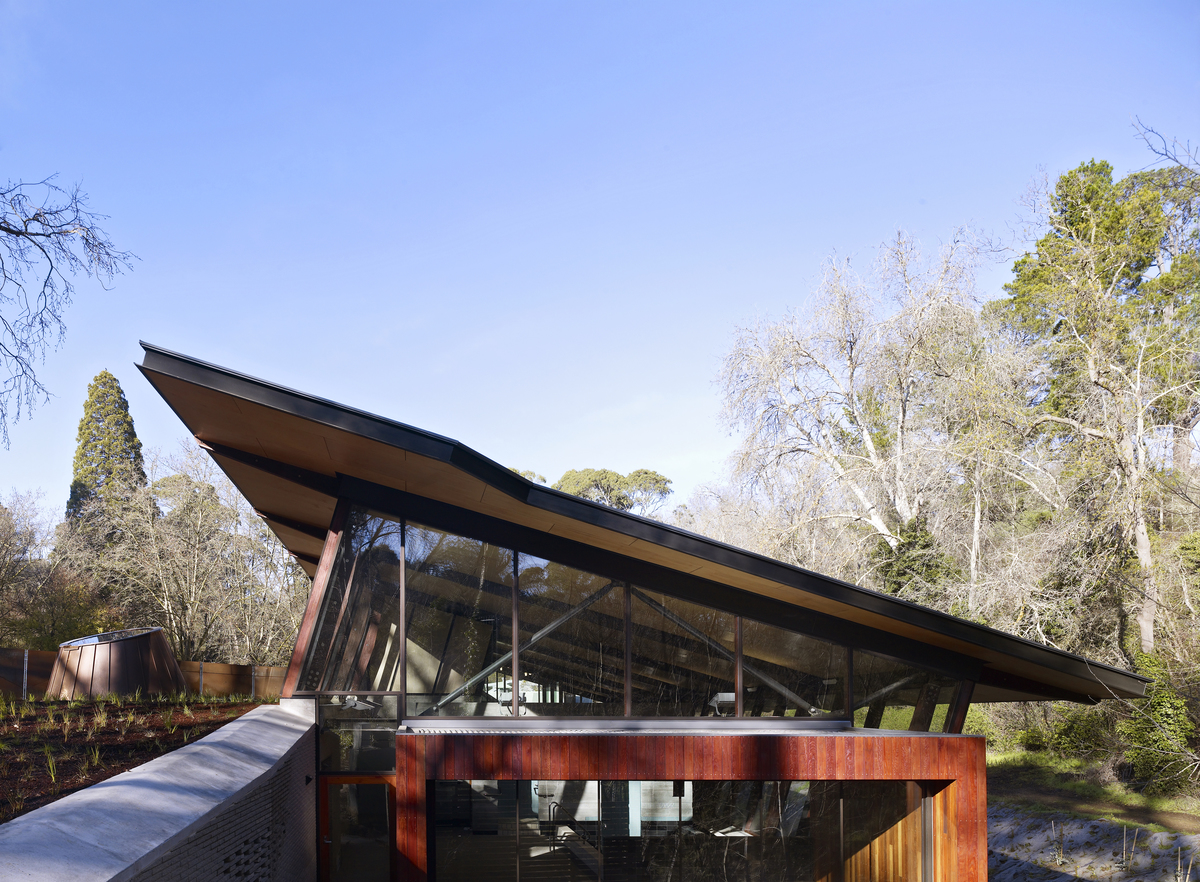
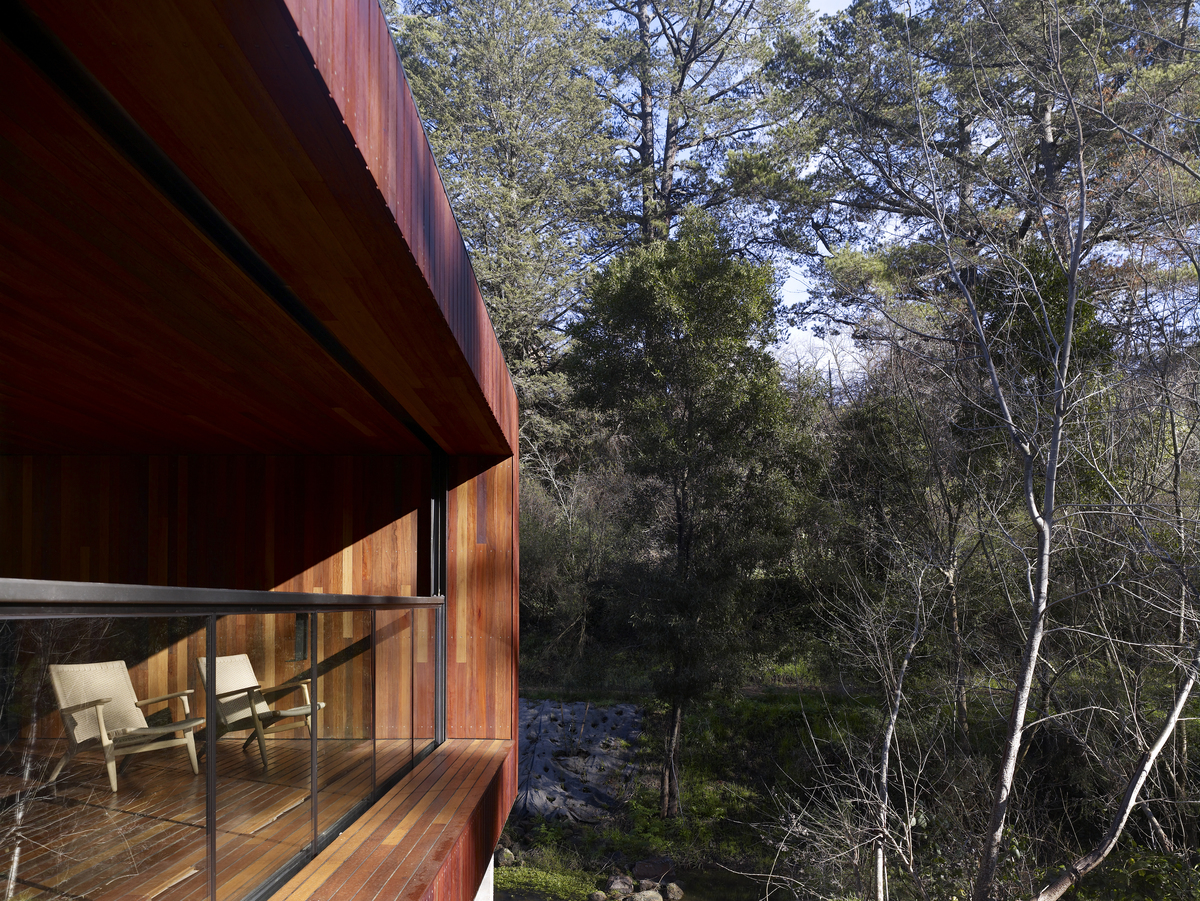
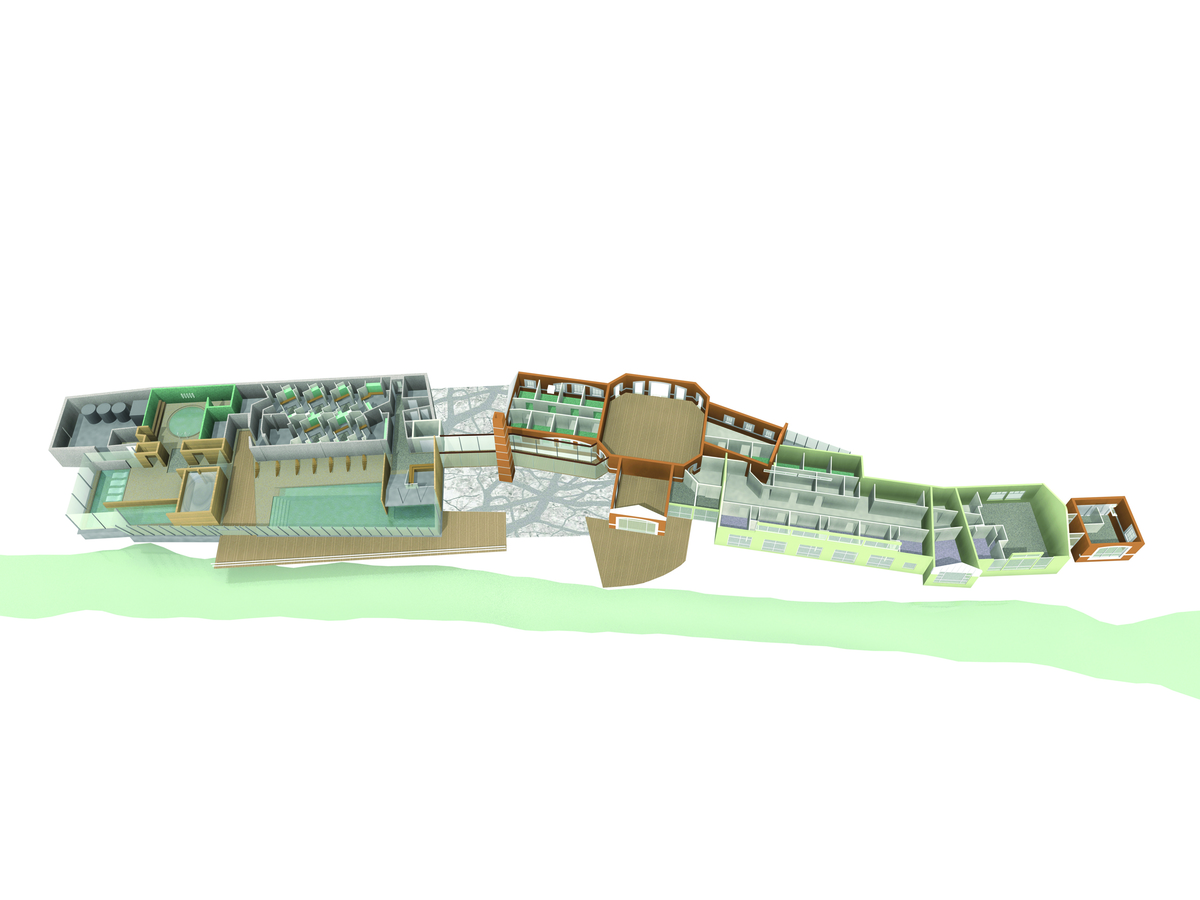
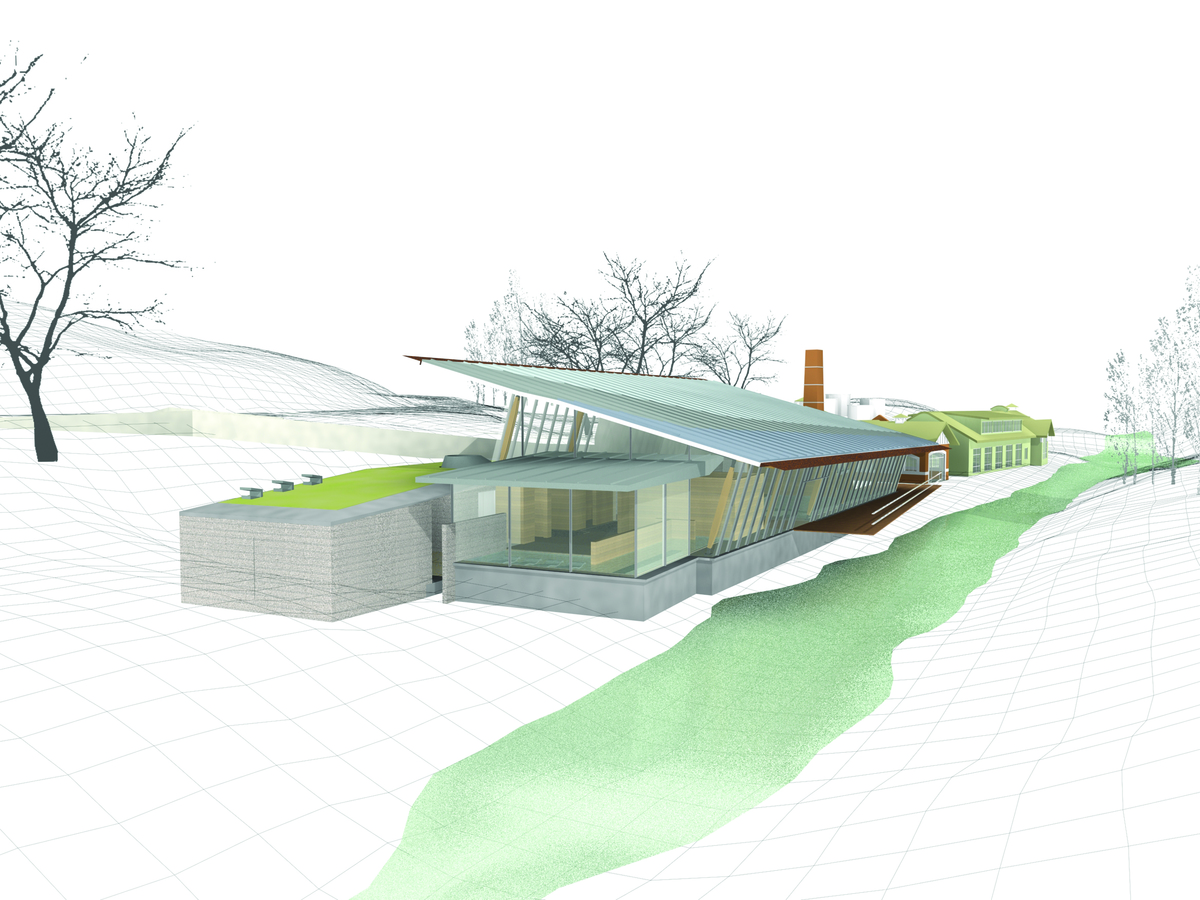
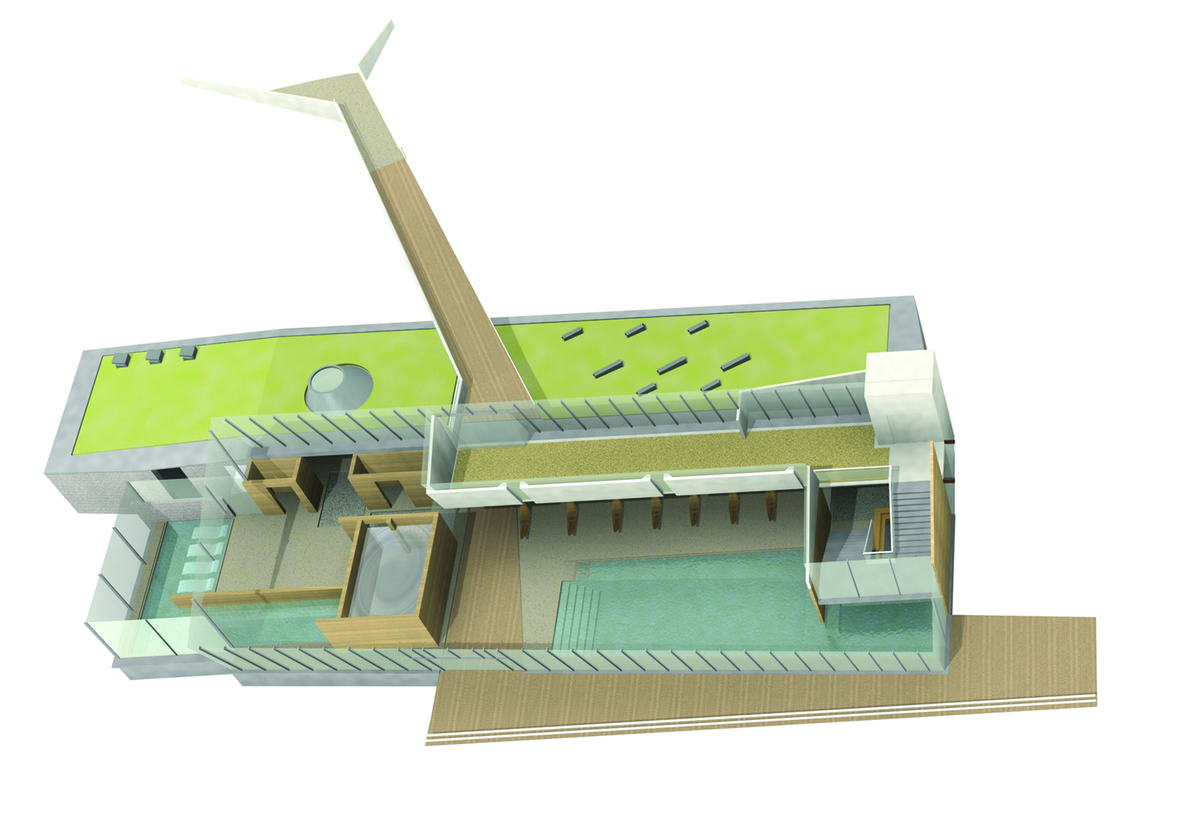
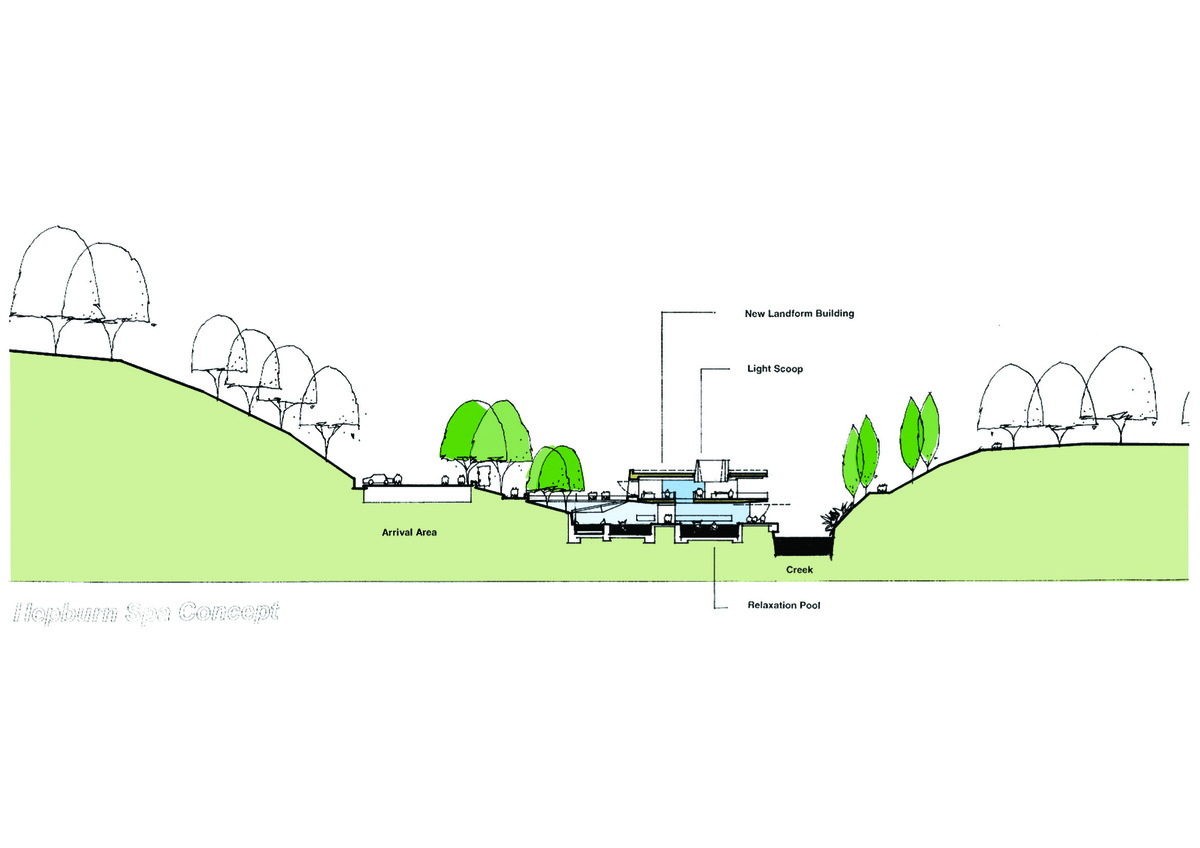
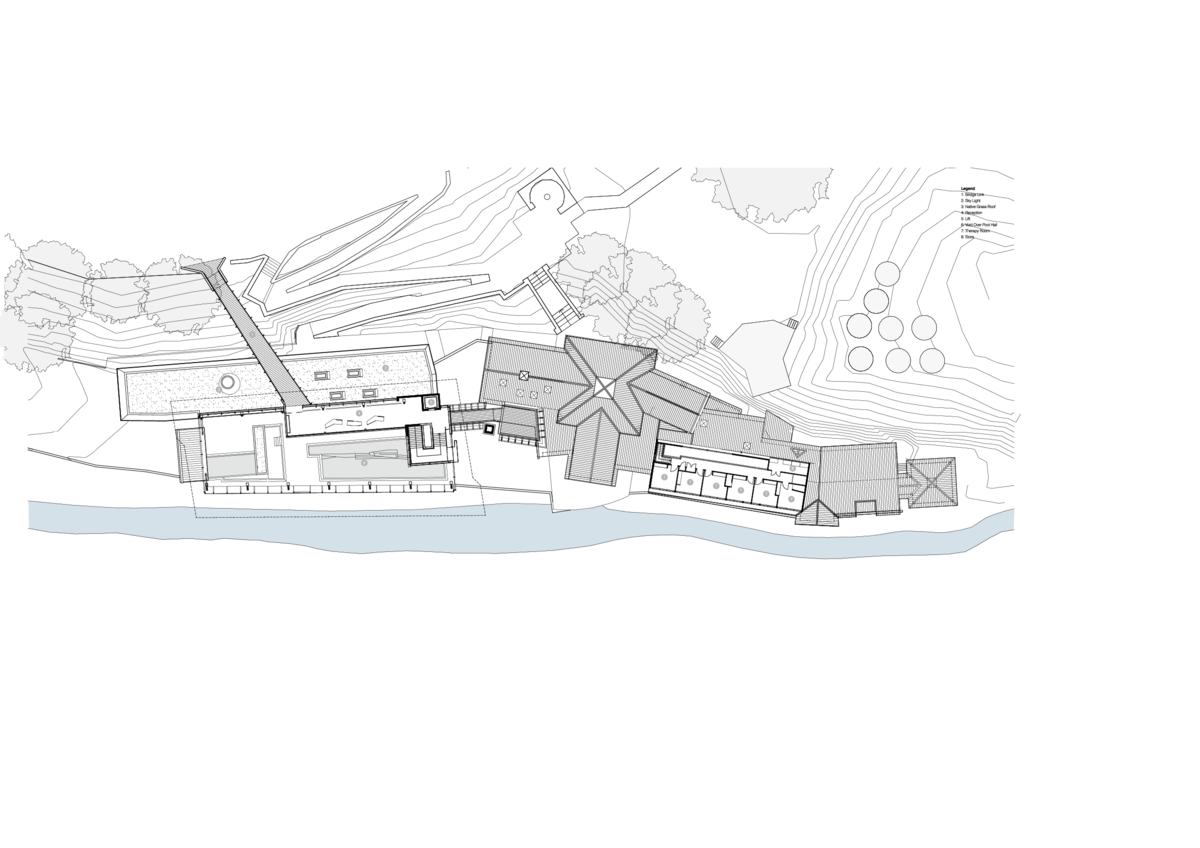
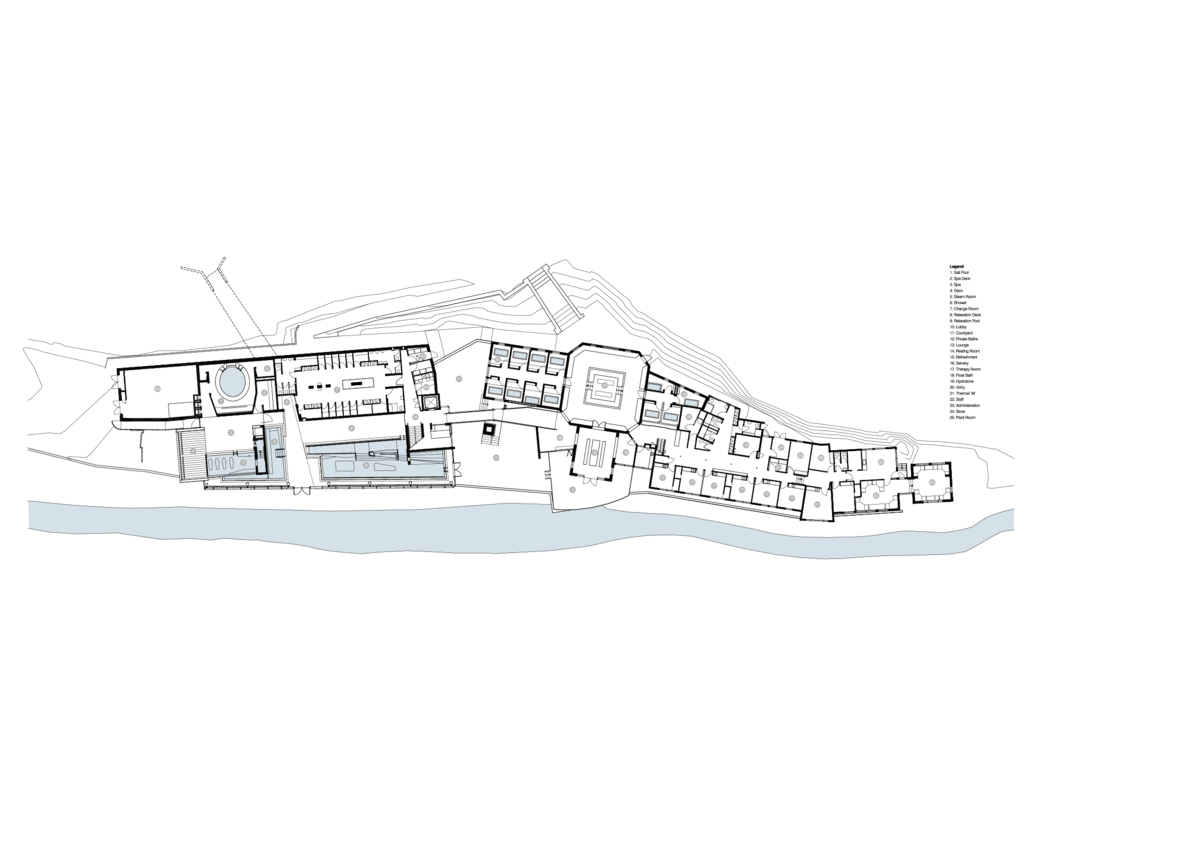
The northern pavilion is a striking single-storey structure containing the main public bathing pools as well as change facilities at creek level and reception above.
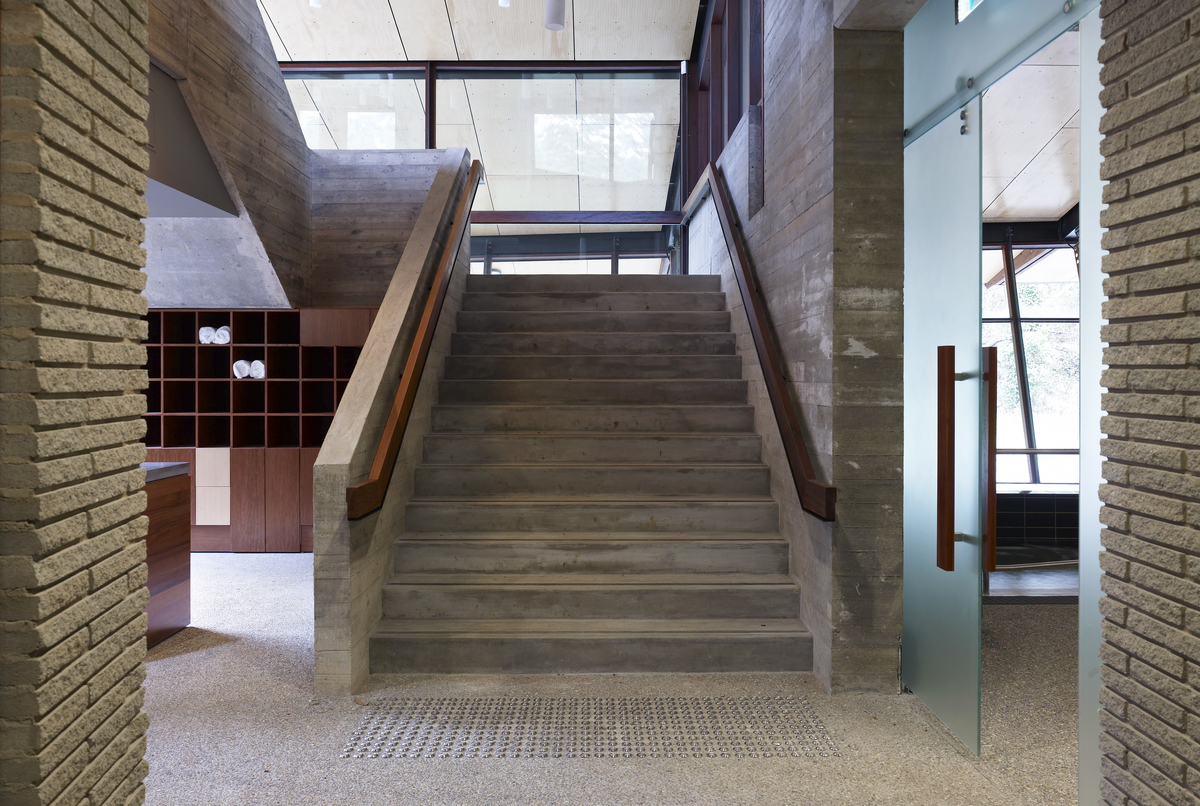
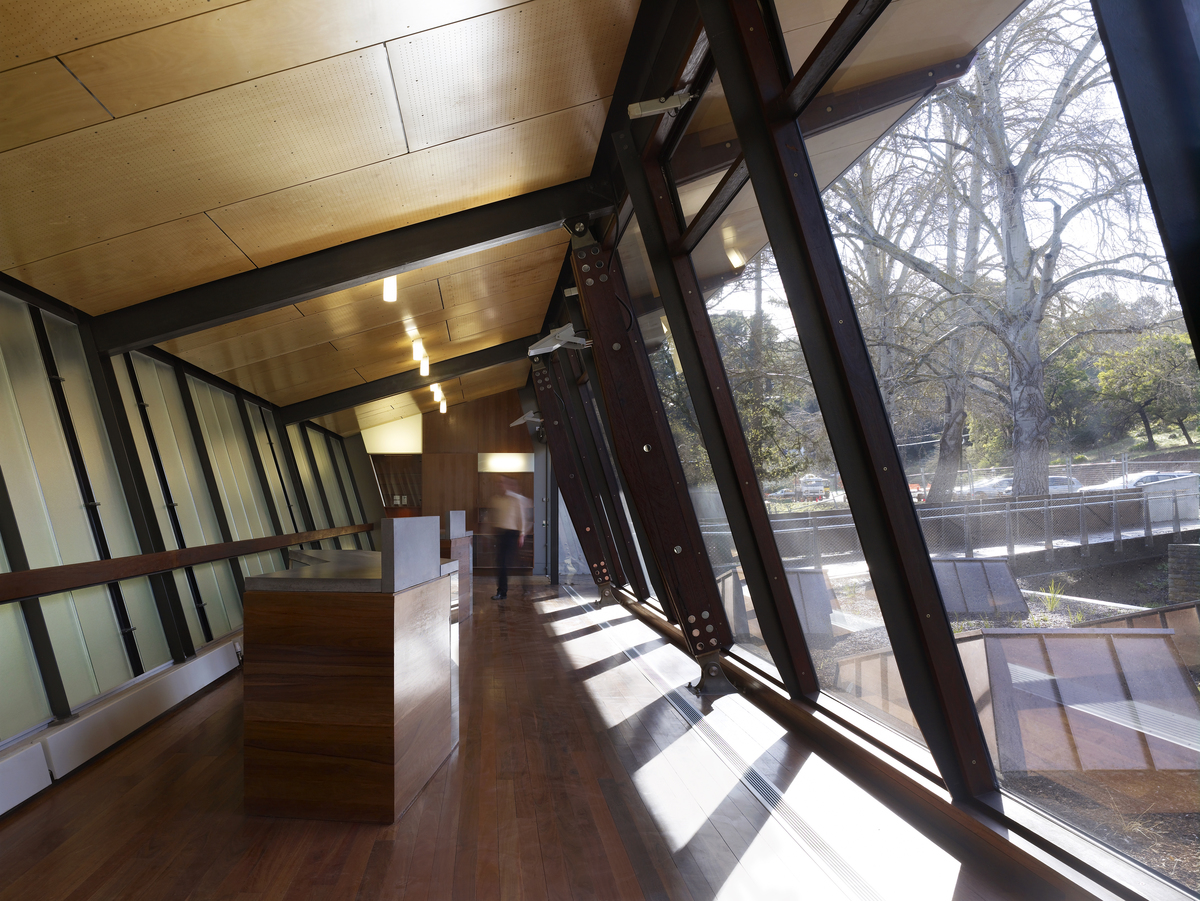
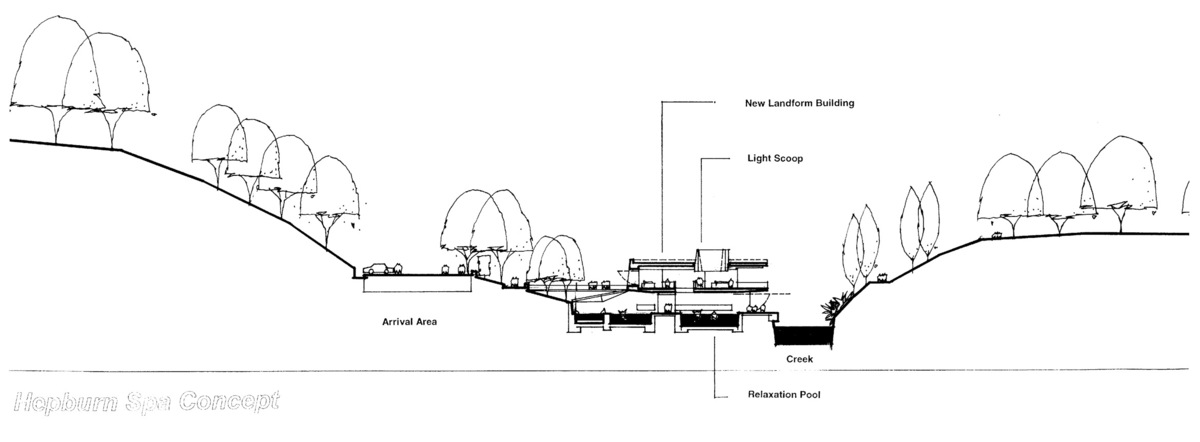
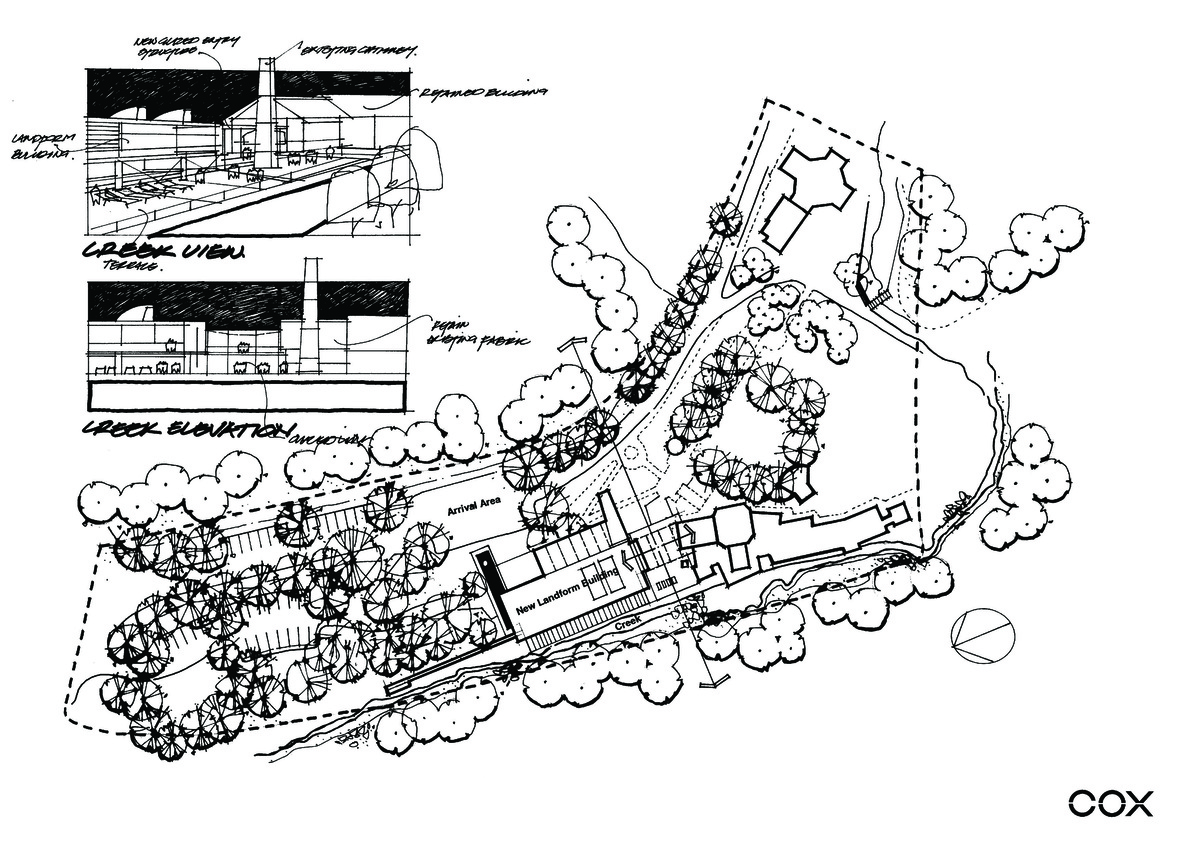
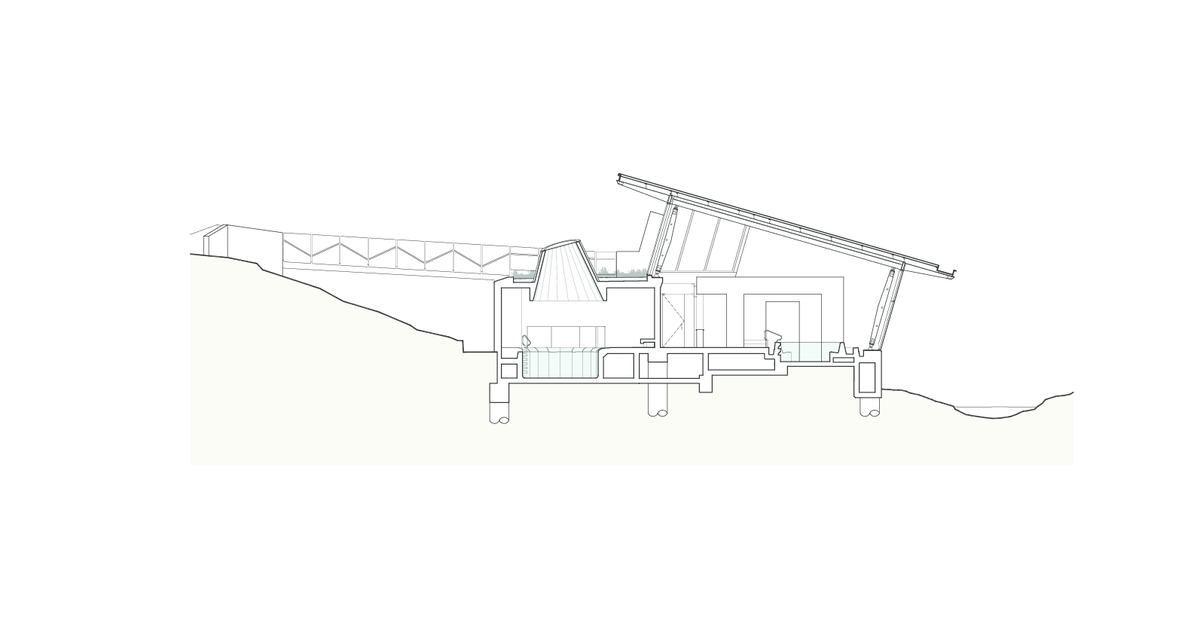
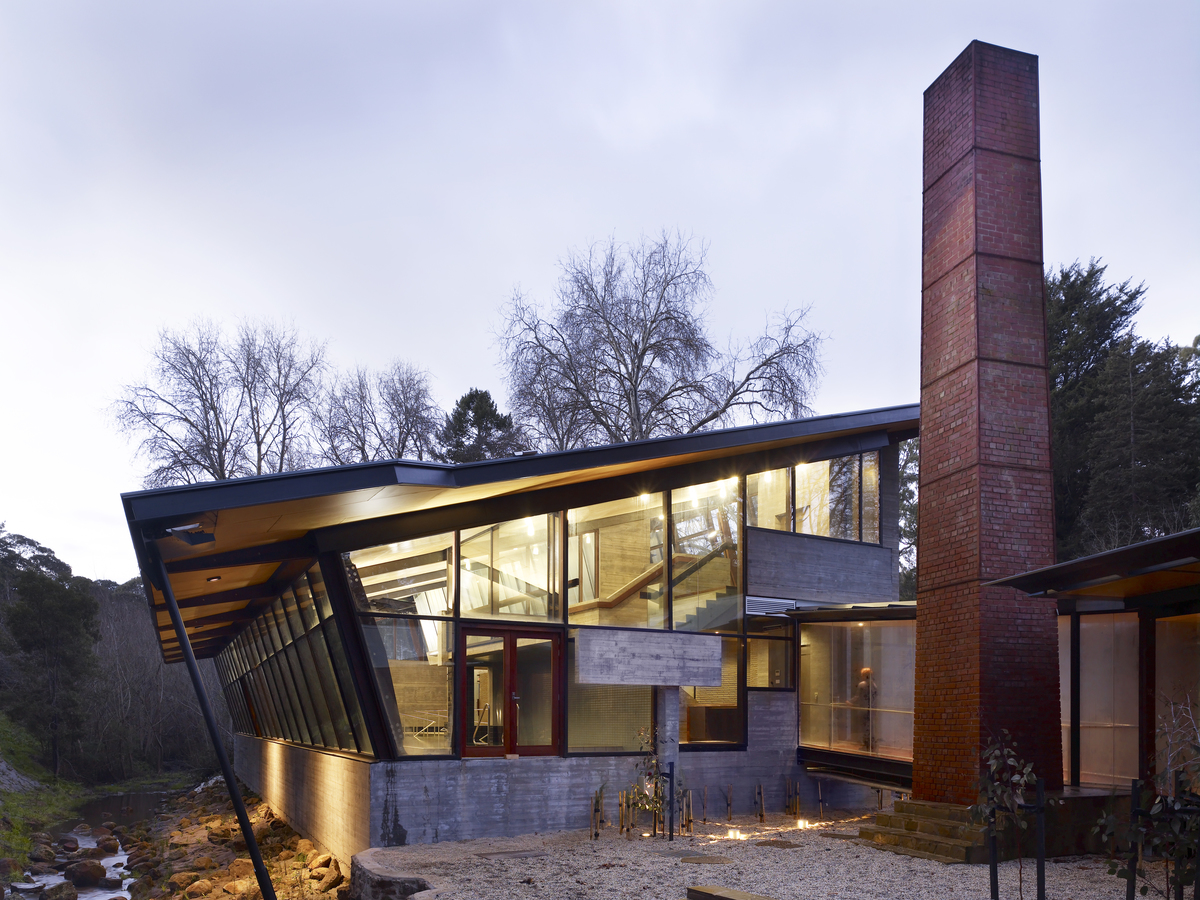
A bridge link from the car park provides entry to the building at mezzanine level within a long skillion roof and predominantly glazed walls that ensure a contextual intimacy.
Grass-roofed with distinctive protruding skylight elements, the building nestles gently into the surrounding creek gully.
The COX design concept for both the interior and exterior was equal and identical.
The design team consciously approached the facility as a whole, rather than an envelope and interior.
Materials and detailing from the exterior carry through to sculpt interior spaces, producing a seamless approach and expression.
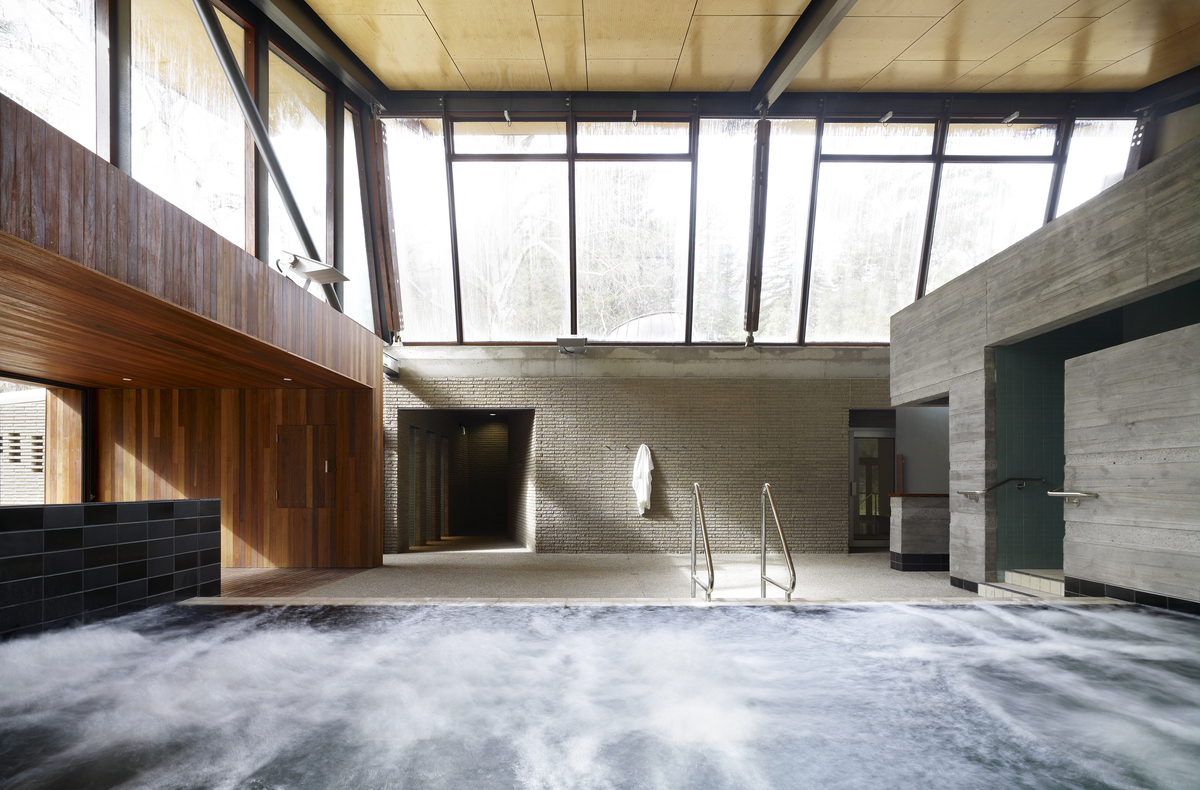
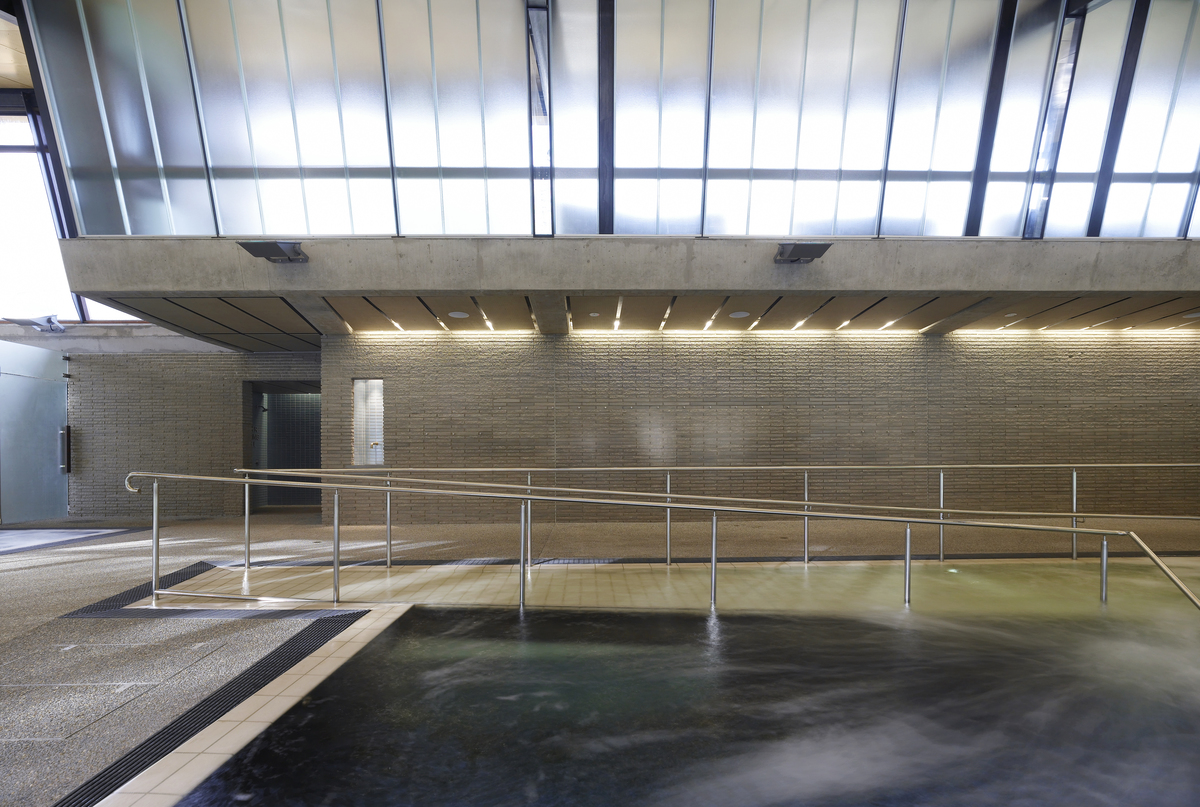
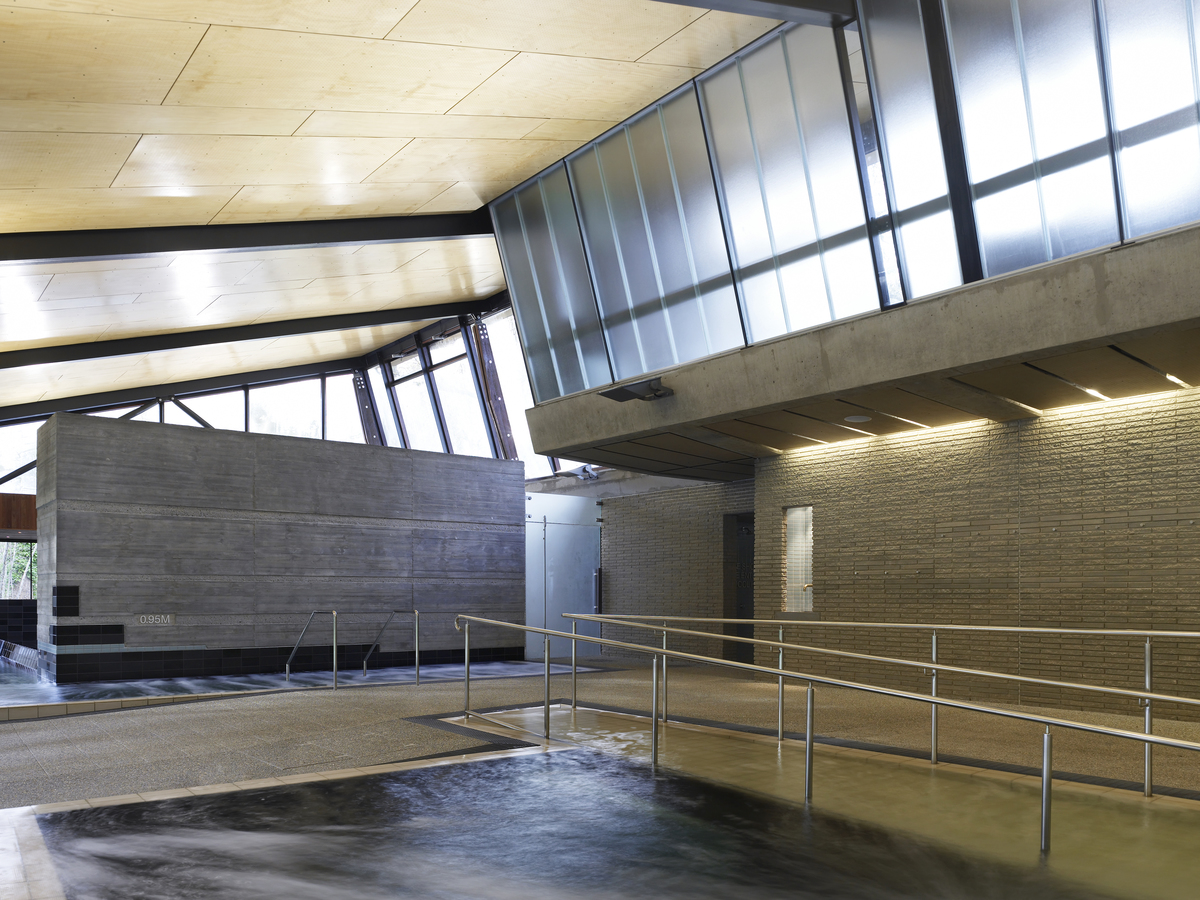
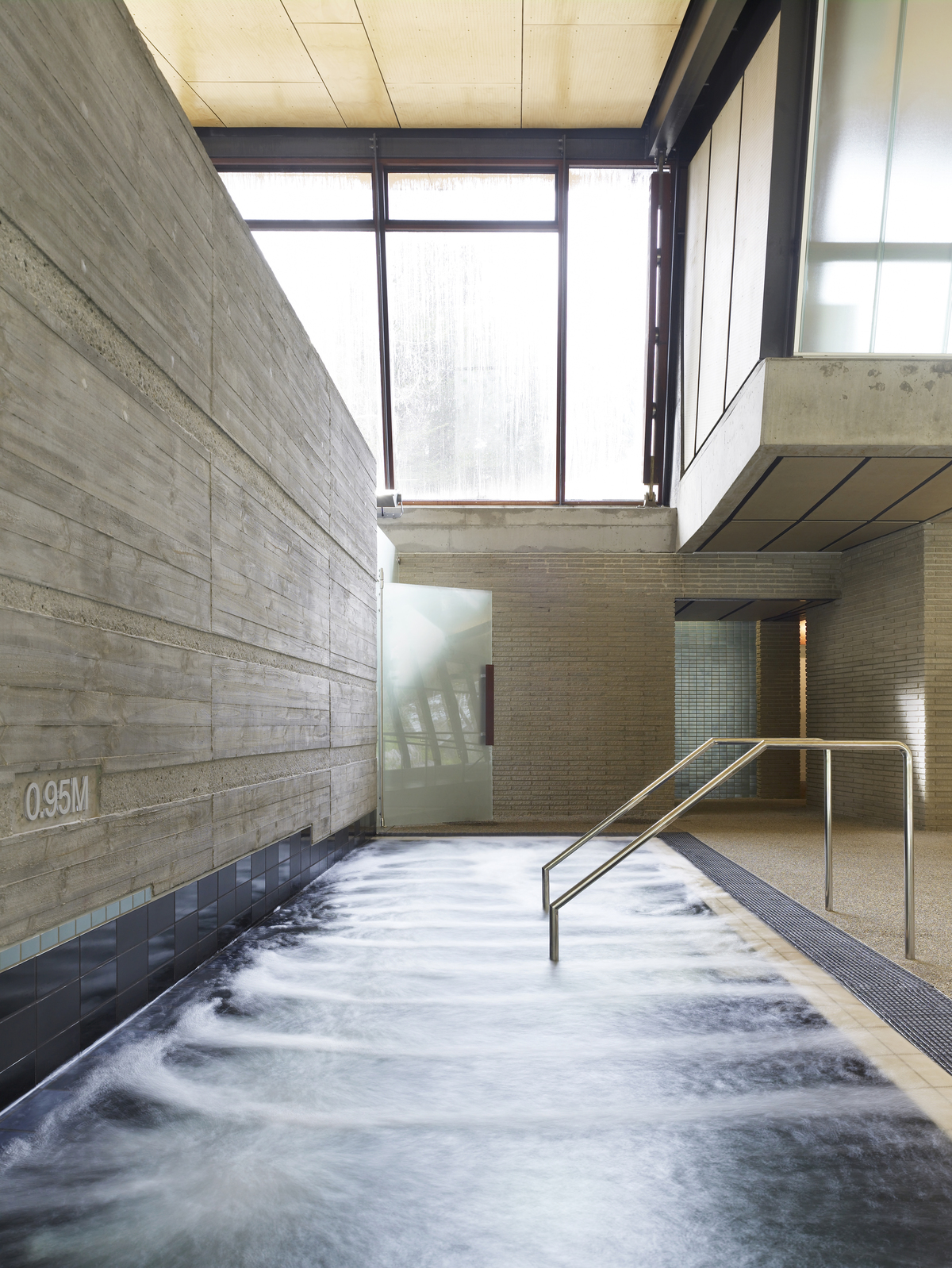
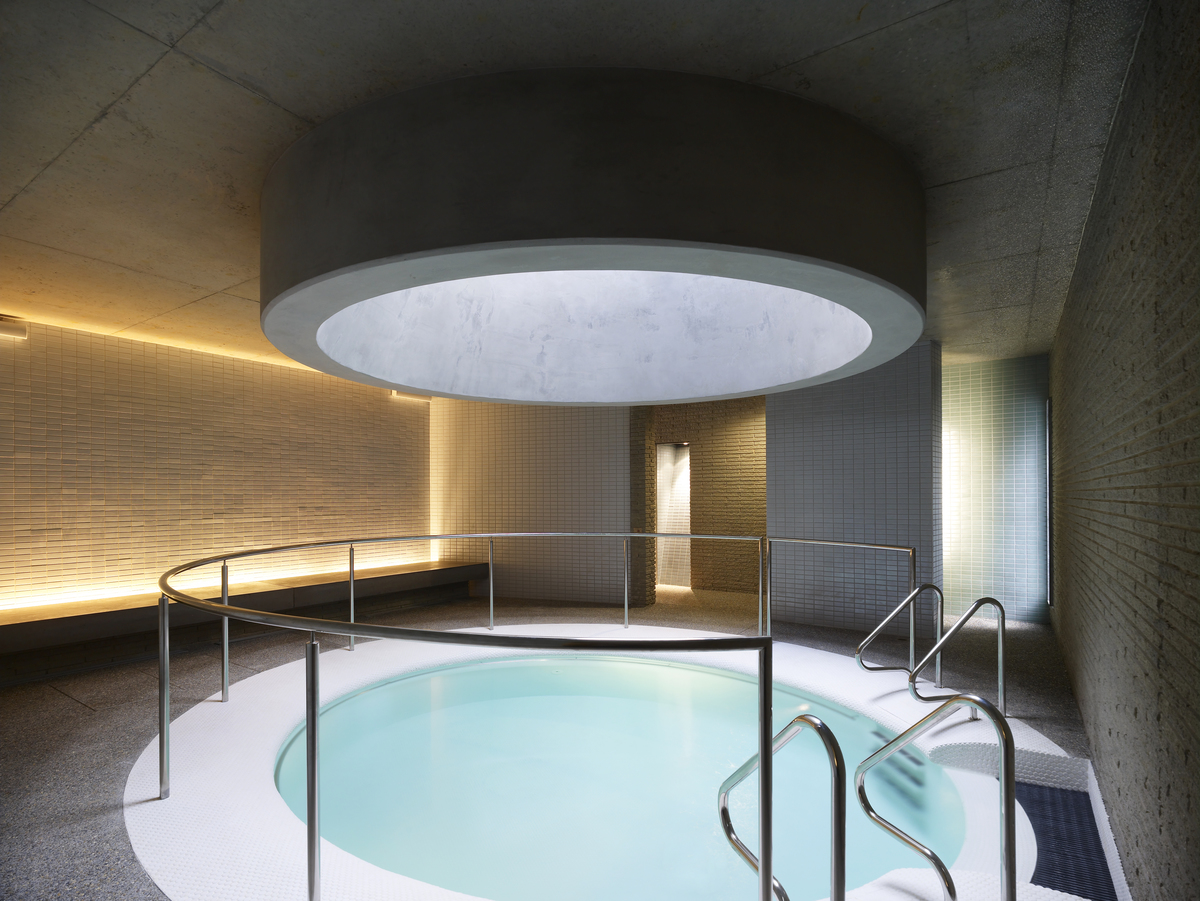
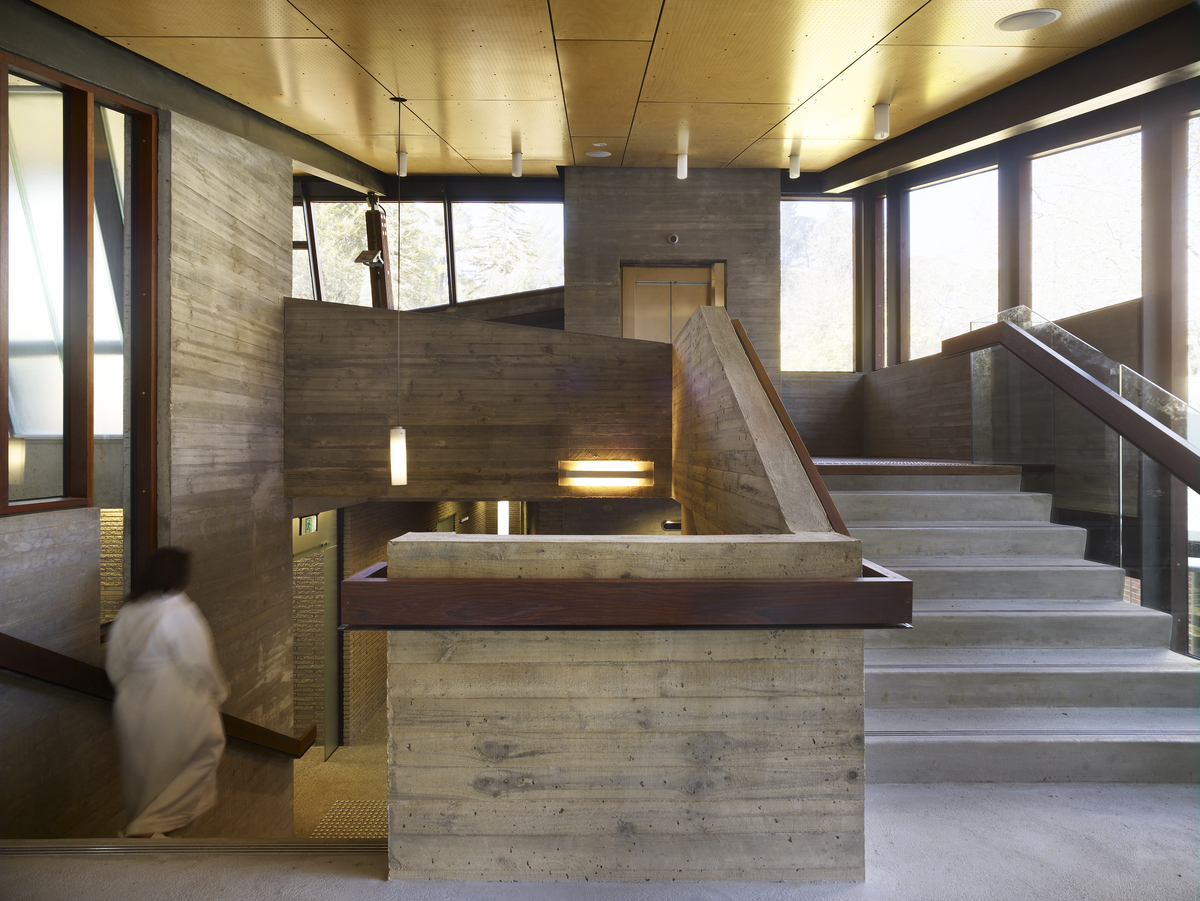
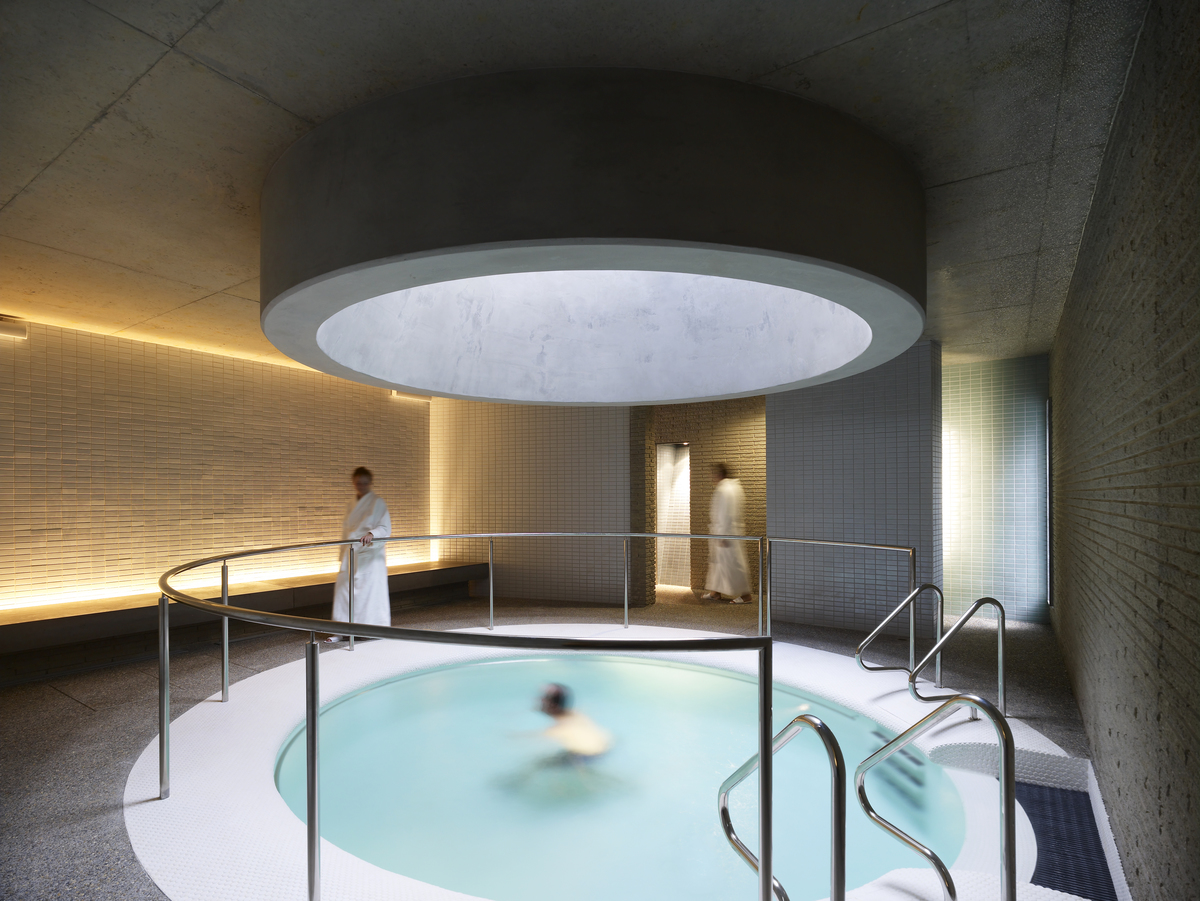
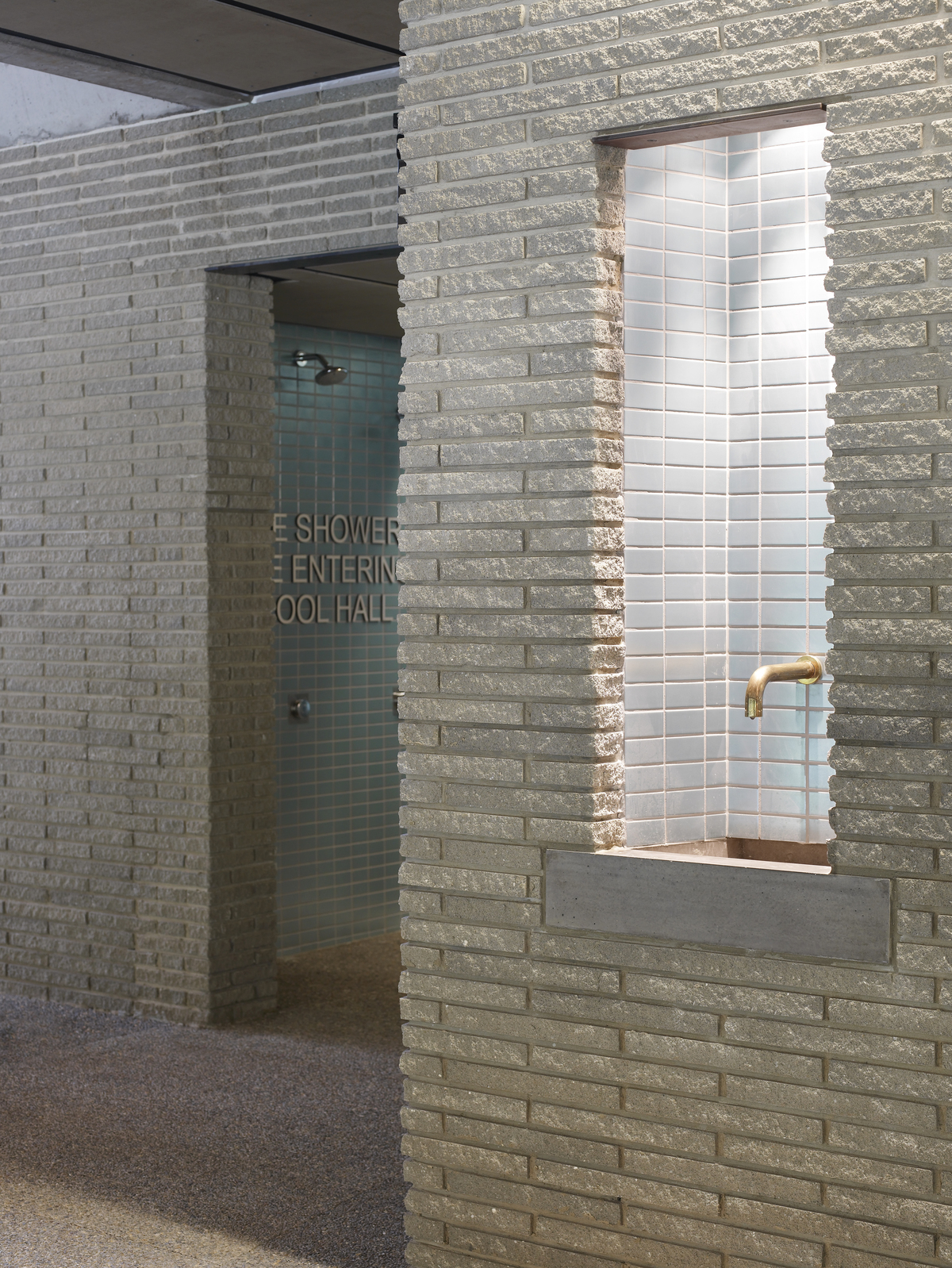
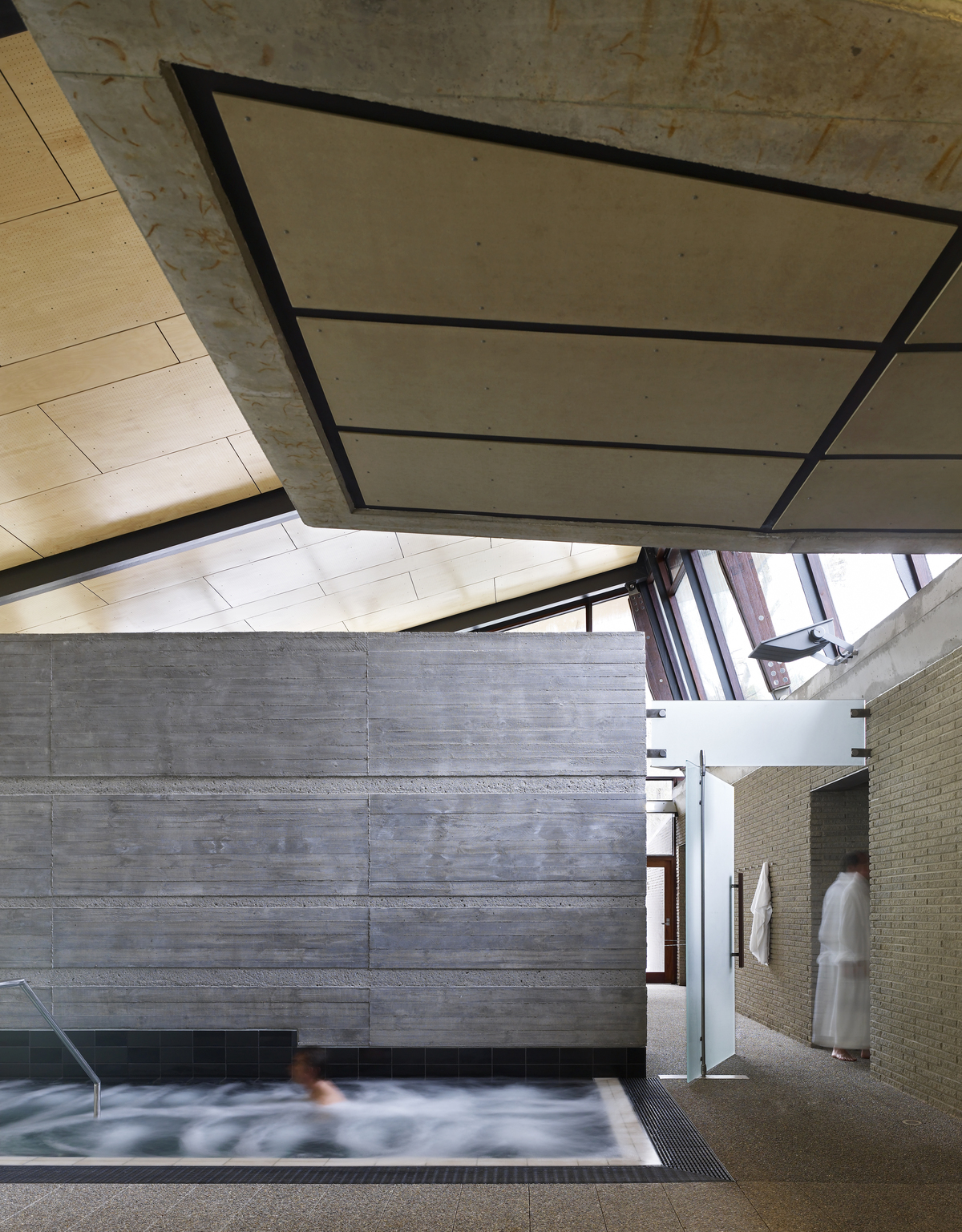
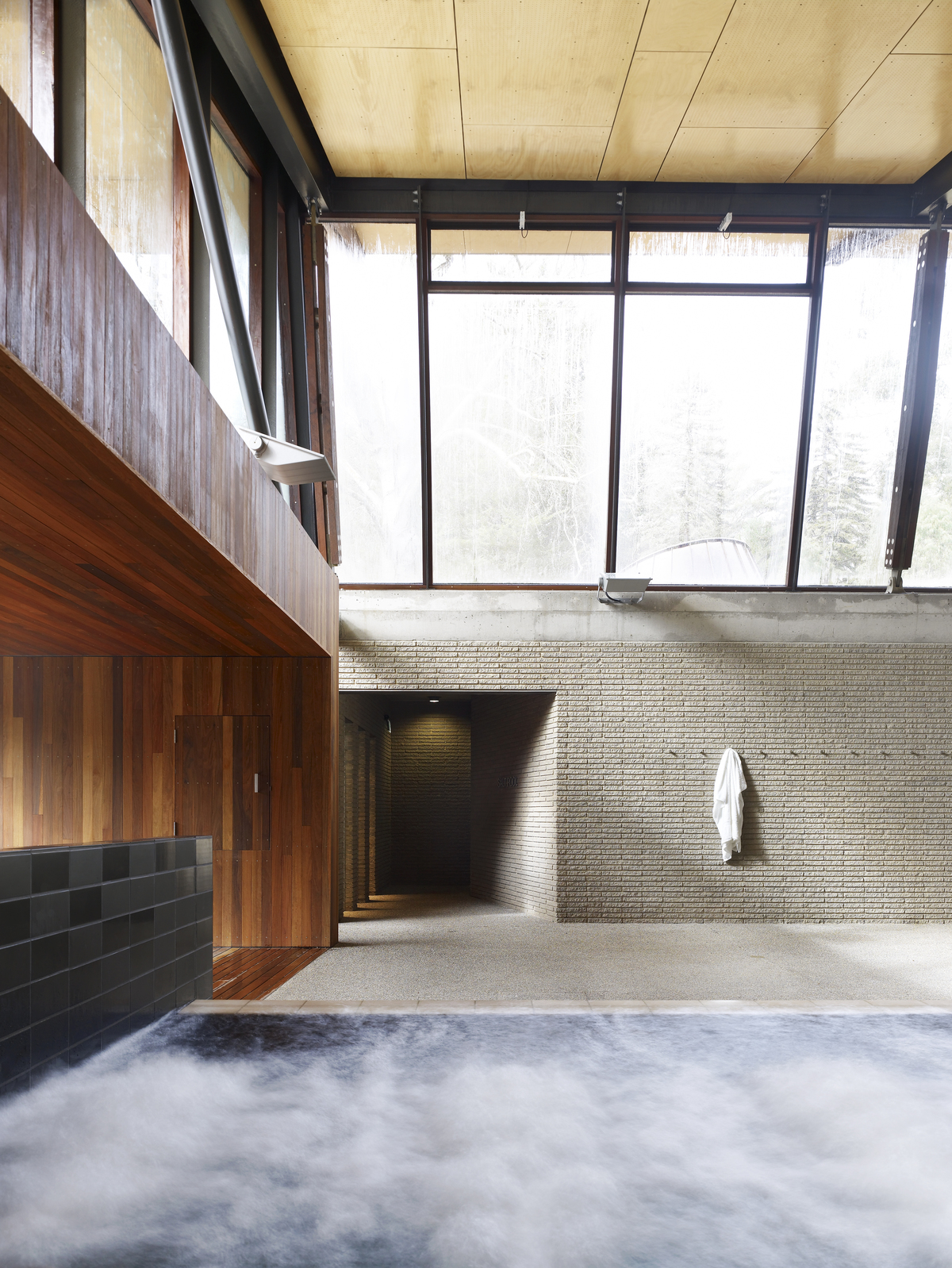
Cast concrete, exposed aggregate and split face brick are reflective of the context within which the bathhouse exists, while a series of internal pools are presented vessels or voids carved from the rock escarpment on which the facility is sited.
The redeveloped southern wing is connected via a glazed low-level link, creating a clear distinction between the contemporary architecture to the north and the heritage components that have been extensively refurbished, restoring the grandeur of the central pavilion and maintaining a link to past traditions.
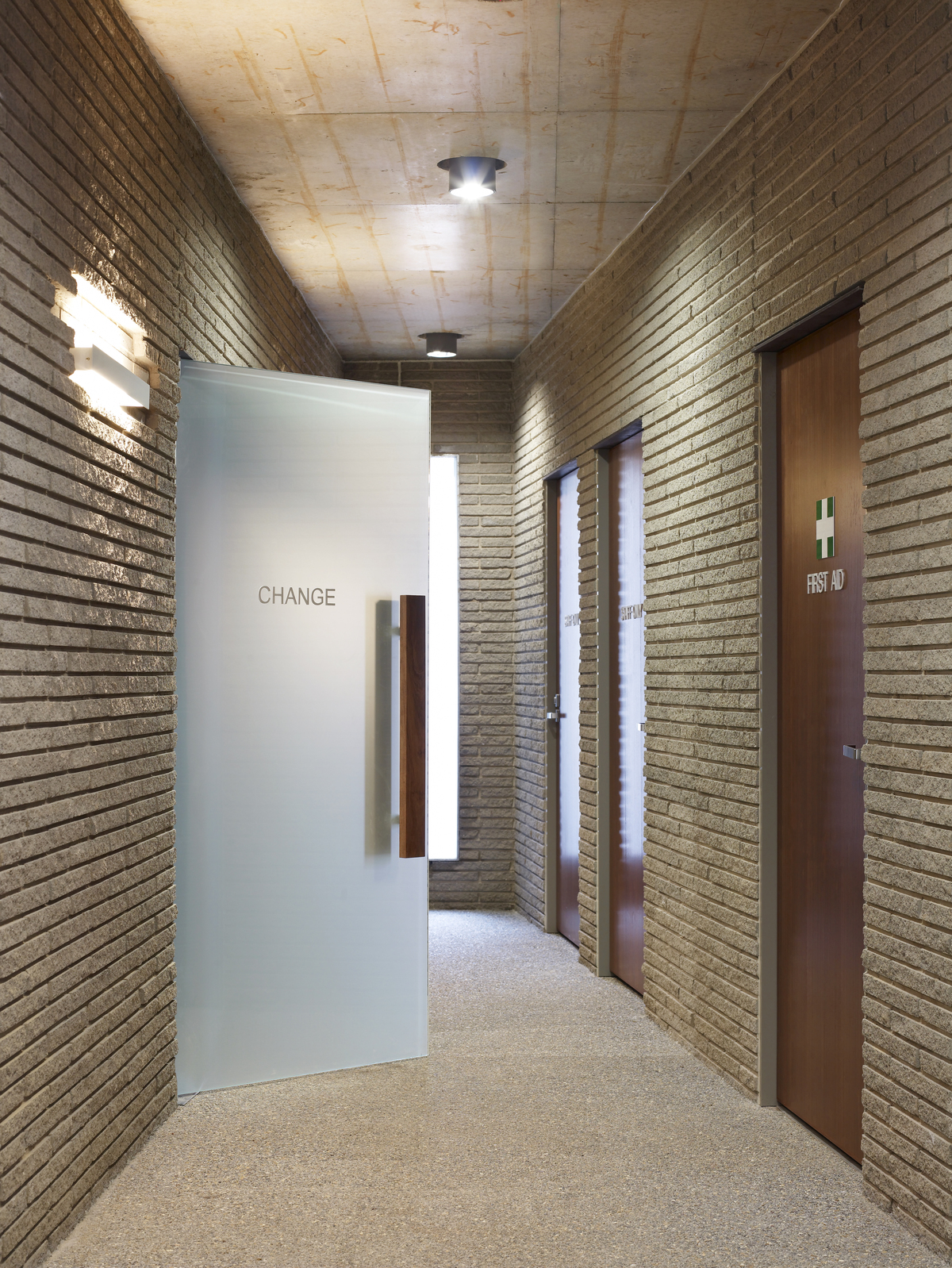
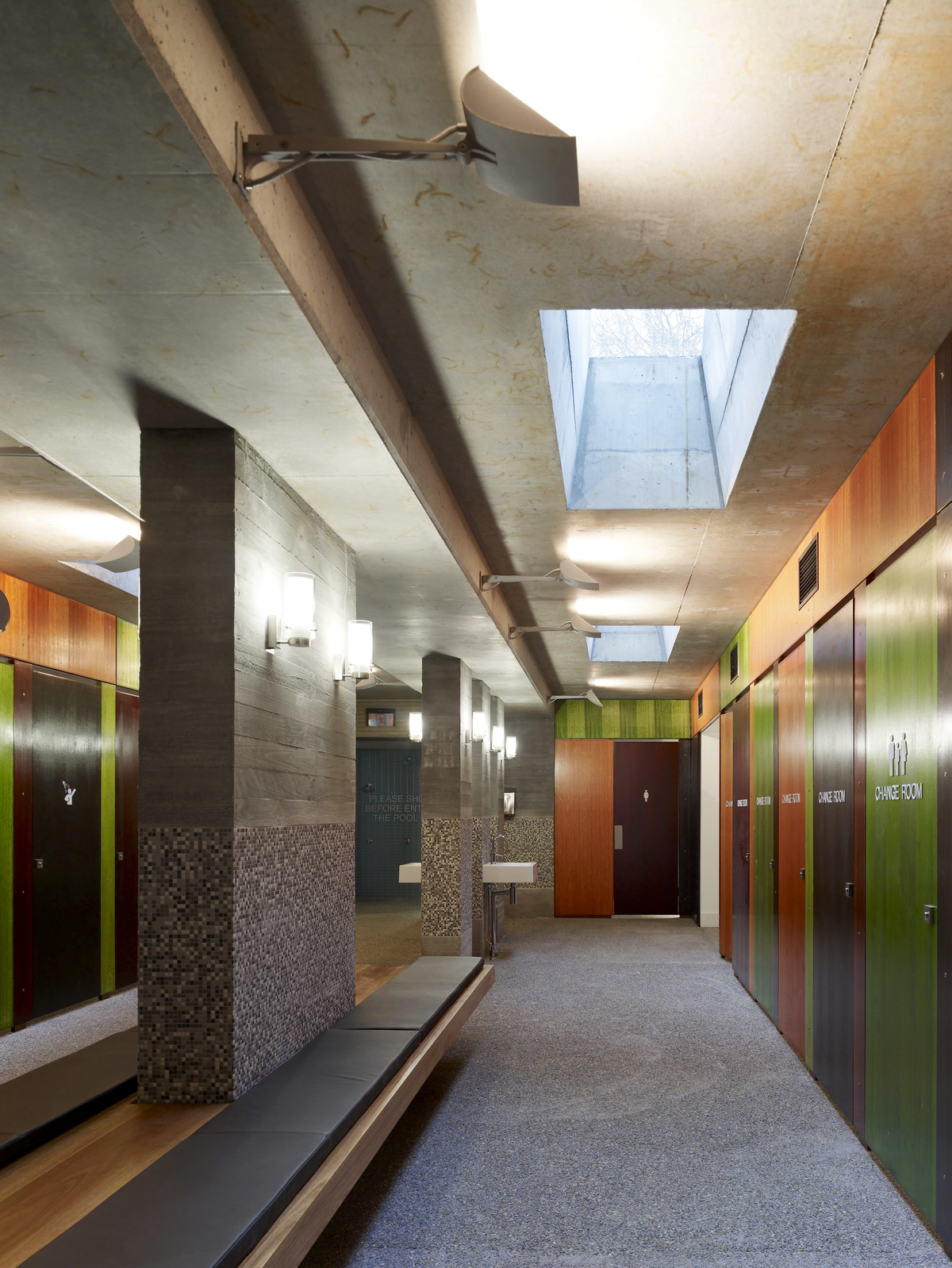
Consistent with the integration of exterior and interior, COX deliberately avoided applied finishes.
Materials are raw and honest, selected to patina with age and usage.
The structural timber is recycled and re-sawn, bearing marks and irregularities that celebrate its past use.
Once in the main pool hall the experience continues to unfold around corners and through grottos offering a circuit of experiences.
There is a clear separation between activities with materials and detailing used to clearly define function as well as delineating the heritage fabric and the contemporary elements unambiguously.
Fundamental to the function of the Bathhouse is its precious mineral water.
The goal of using no more than the previous facility while greatly increasing the capacity of the pools was achieved by redistributing the way the water is used, adopting filters to reduce losses, and reducing stress on the aquifer by spreading demand and reducing usage.
The project has won the following awards:
- Best Spa/Health Retreat Runner-up, GT Travel Awards, Readers’ Choice 2009
- State Award for Public Architecture (Alterations and Additions), AIA VIC 2009
- Public Interior Design Commendation, Interior Design Awards 2009
- Shortlisted in Leisure, Conde Nast Traveller Innovation & Design Awards 2009
- Best Use of Timber Flooring, Australian Timber Design Awards 2008
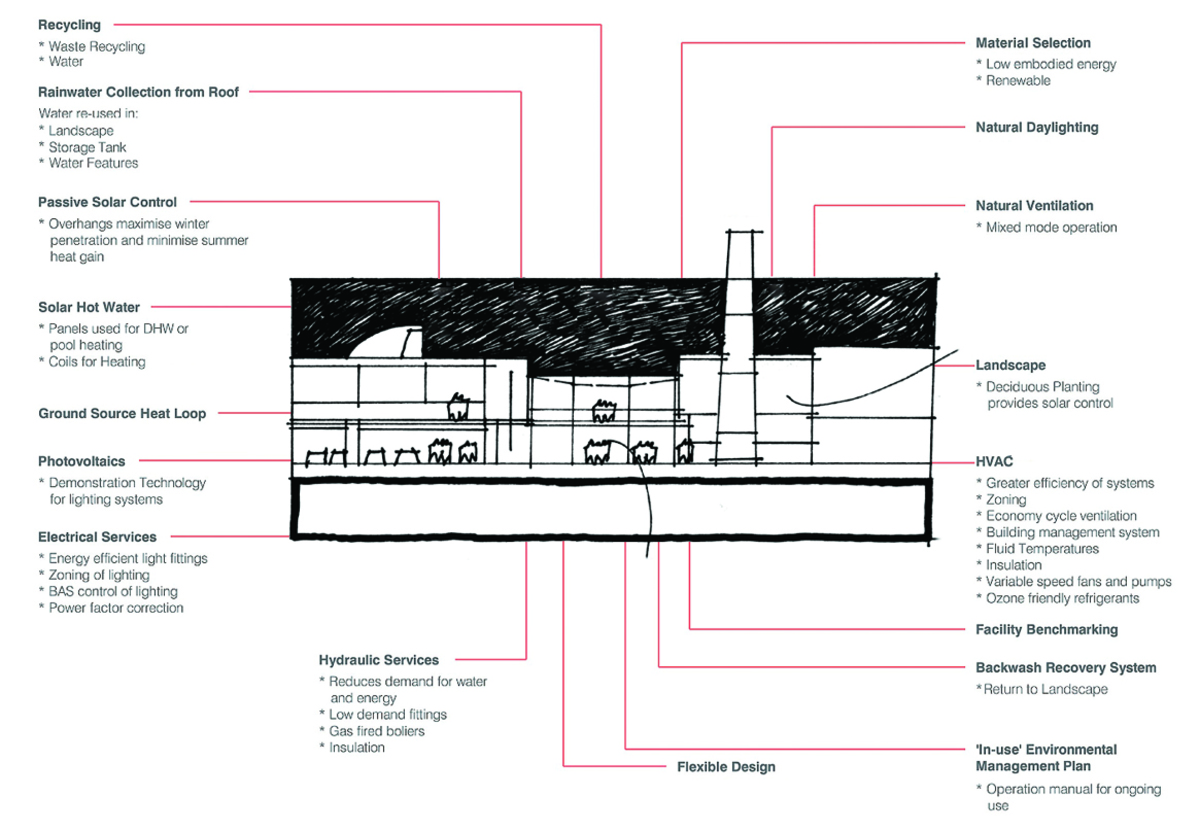
The uniqueness of the facility and its environment presented a number of challenges to a sustainable design solution.
Fundamental to the function of the Bathhouse is the mineral water.
The management of this precious resource was a key objective of the COX design team.
The goal was to use no more mineral water than the previous facility while greatly increasing the capacity of the water bodies.
This has been achieved by re distributing the way the mineral water is used, adopting filters which reduce back-wash losses and reducing stress on the aquifer by spreading the demand and reducing peak usage.
Rain water is also harvested and used for toilet flushing and irrigation offsetting the demand for town water.
The activities that occur at the bathhouse present environmental requirements that typically would require extremely high energy usage.
Through implementation of double glazing, insulation, heat exchangers, natural ventilation, and other design initiatives, the energy requirements of operations have been greatly reduced.
Local materials with low embodied energy from sustainable sources and crafted by local trades people have been used wherever possible.
The lifecycle of the previous works was in the order of only fifteen years.
The new facility has been designed from the ground up with consideration for longevity.
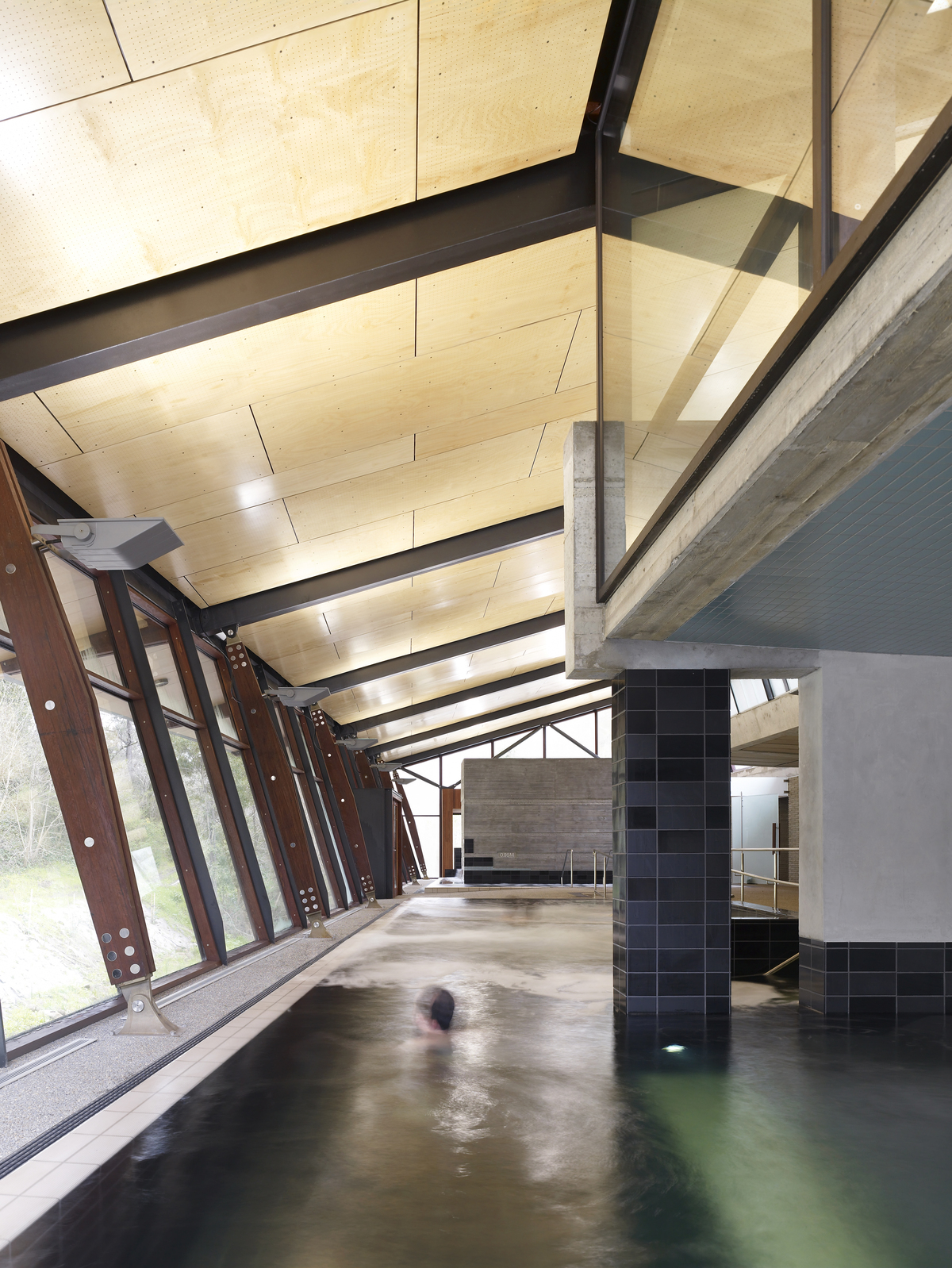
Under the pool deck is a service plenum which supplies warm air up the inclined glazed walls.
This plenum does away with the need for exposed duct work and greatly reduces condensation on the glazing an important aspect in creating the clear open space of the pool hall.
The plenum also permits access to the pool hydraulics which are susceptible to blockage from the build-up of mineral salts in the water.
The southern wings have been adapted and reused into the bath house complex in a complimentary and integral manner that saved both resources and energy.
The interior spaces have been designed to exploit day lighting as far as possible while avoiding glare and solar heat gain.
The aspirations of the client and the COX design team for the building far exceeded the available budget.
So a design approach was required that used economical and robust materials in an engaging and expressive manner.
Concrete, split faced block, recycled timber, and an exposed aggregate floor constitute the cost effective core of the building in which small areas of crafted detail highlight unique spaces.
Central to the interior design consideration was the long term durability of the facility.
The life cycle of the structure is fundamental to the cost effectiveness of the development.
A minimum of applied finishes and selection of materials for their ability to withstand the corrosive mineral water environment resulted in a facility that will age gracefully and last.
The uniqueness of the project meant that items that may not typically be cost effective were able to be considered.
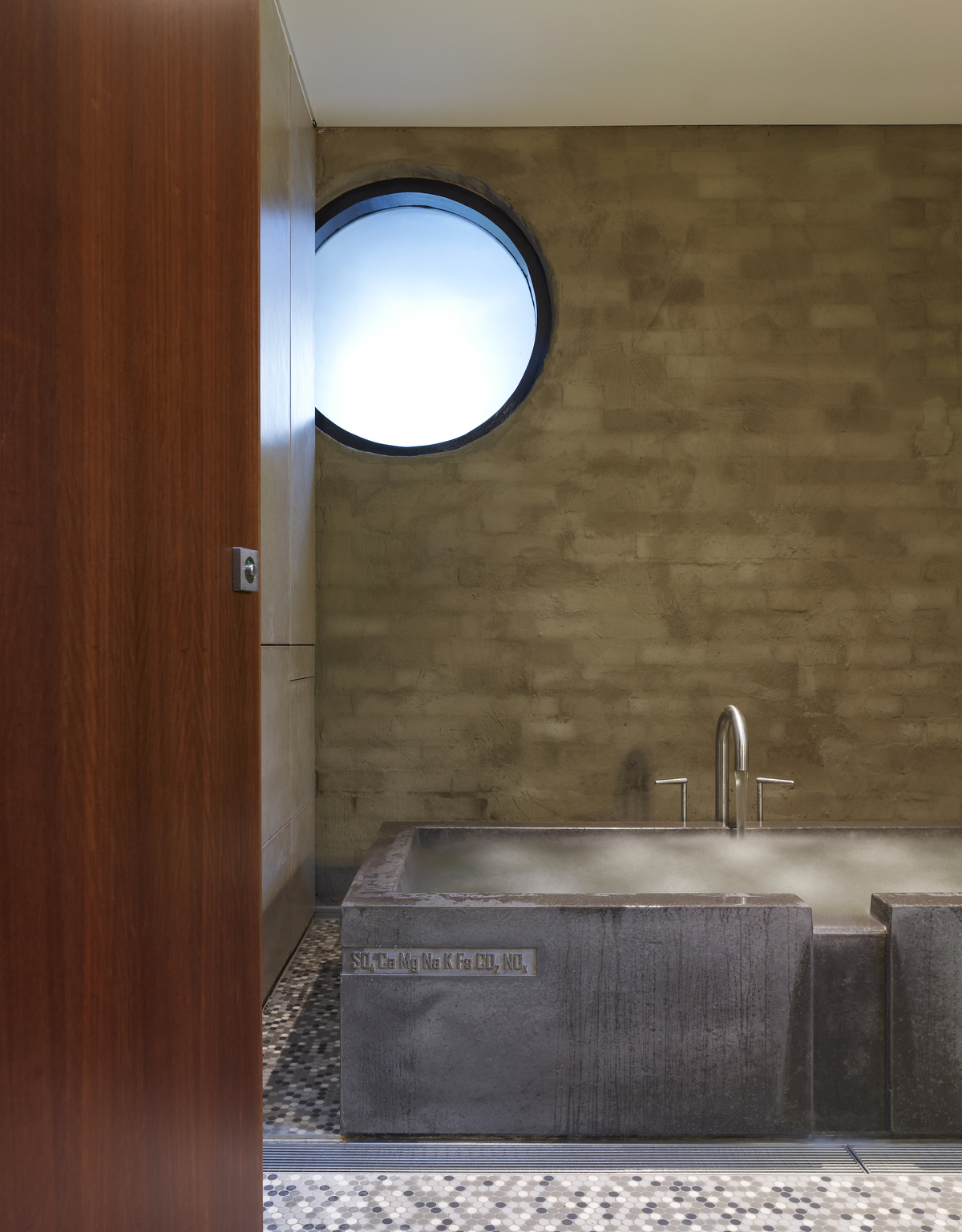
The number of private baths required created an economy of scale where it was more economical to cast bespoke items from concrete than to source manufactured items.
Likewise the maintenance requirements of the tapware for the baths made it more economical to fabricate unique assemblies than to modify available items.
The cast aluminum bronze column bases in the pool hall also yielded an unexpected economy.
The requirement for corrosion resistance and the complex shape meant it would have been more expensive to fabricate the item from plate steel.
The result is both sculptural and functional.
The reuse of existing building fabric and services also contributed to the cost effectiveness of the design.
The materials selected by COX were integral to the expression of the core design concept: the mineral water emerging from rock.
The nature of the bath house environment, a potentially corrosive atmosphere, and high humidity levels drove a response from the COX team which is both robust and integral to the buildings narrative and core design concept.
The concrete and split faced block form reflects the rock from which the mineral water flows.
All other function is addressed lightly above this datum with glass, steel, and timber.
In the corrosive mineral water environment it is inevitable that surfaces will stain and patina over time.
The rawness and simplicity of the chosen palette bears this patina well.
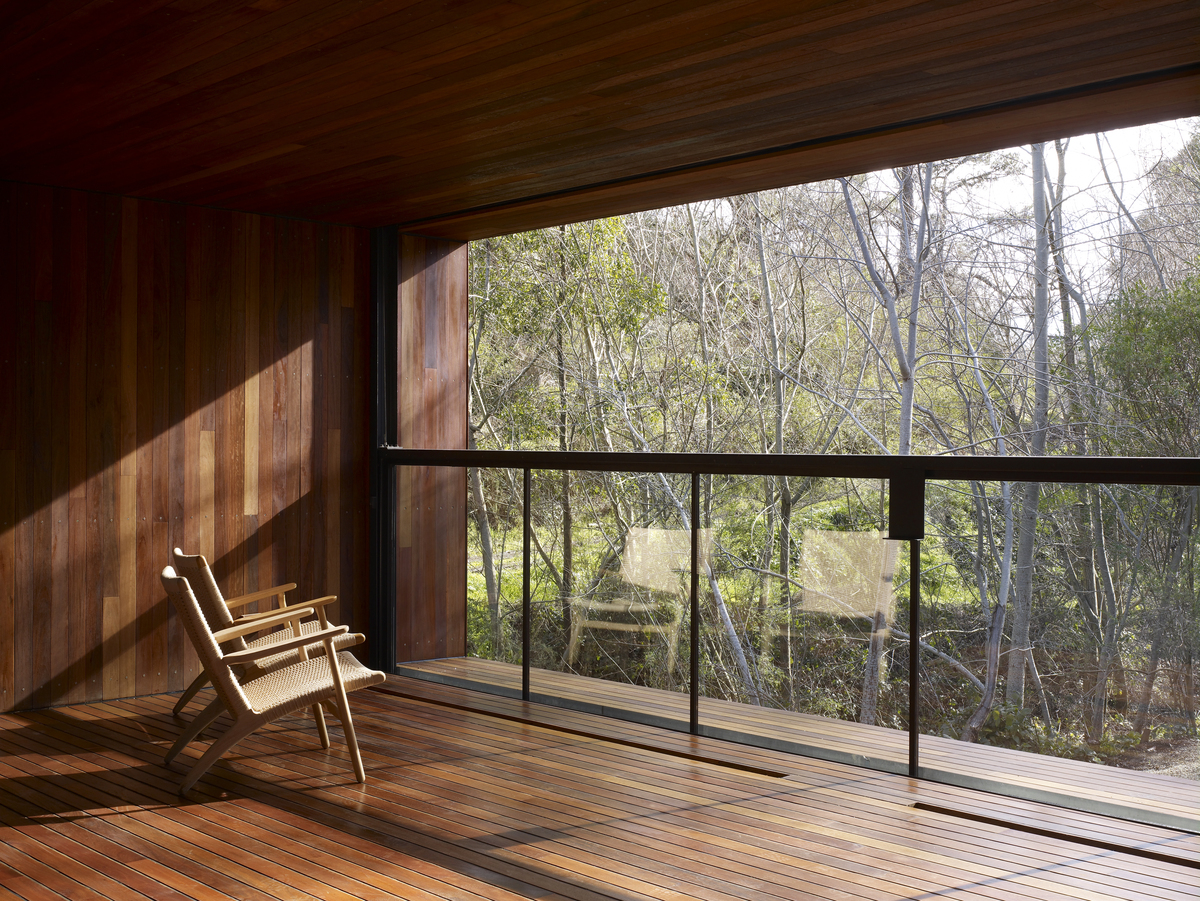
Recycled Iron bark has been utilised for the primary columns, outriggers, and window framing.
The recycled and re-sawn ironbark was sourced from a recently demolished 100 year old pier in Darling Harbour, Sydney.
The stability and durability of the timber makes it ideal for this application.
The column assembly is both functional and sculptural.
The crafted cast aluminum bronze feet celebrate the uniqueness of the materials used and respond to the often intimate relationship bathers have to what are typically structural elements.
Iron bark flooring is used as thematic link between areas in the new northern wing and the refurbished southern wings.
The floorboards are not contained to the floor alone, but flow up walls across ceilings and create recessed seats and benches.
Cast glass panels enclosing the reception area allow glimpses through to the pool hall whilst still affording a high level of personal privacy.
The use of materials and detailing clearly defines the separation between old and new work.
Both at a macro and detailed level, the delineation between the heritage fabric and the new elements is apparent and unambiguous.
Project Details
Project size – 2,000 m2
Project budget – $9,600,000
Completion date – 2007
Project Team
Architecture and Interior Design
COX
COX is a design-focused contemporary architectural practice with studios located in every major Australian city and a history spanning 60 years.
Key to their ethos is supporting the public life of our cities. Cox does this by ensuring each project makes positive contributions to its public realm – giving more than it takes.
Photography
Derek Swalwell
Derek is an architectural and editorial photographer from Melbourne, Australia. His name is synonymous with the photographic representation of the architectural landscape in Australia and beyond.
Having crossed the globe numerous times since starting out on his photographic journey over twenty years ago, Derek’s work documents some of the world’s most iconic built environments and visually articulates them in an entirely unique light.
For the past two decades, Derek’s commercial, editorial, fine art and lifestyle images have appeared in such notable design publications as Vogue Living, Habitus and Est Living, and in various international design stalwarts such as Wallpaper and Dezeen. His work resonates in both digital and print form and across numerous platforms ranging from online to large format art prints.
Having held numerous exhibitions of his diverse international collections, Derek’s photographic ensemble depicts a passionate and profound understanding of the technical and creative facets of the photographic profession.
Photo Gallery
Click on a thumbnail image to enlarge.





















Design © 2020 Cox Architecture. All Rights Reserved.| Images © 2020 Derek Swalwell. All Rights Reserved.
Get the Builtworks Letter
In every edition of the Builtworks Letter, you’ll get the behind-the-scenes backstory as to how buildings are designed, built, and brought to life.
You’ll hear compelling stories, learn surprising ideas, meet engaging characters, and discover unique voices.