

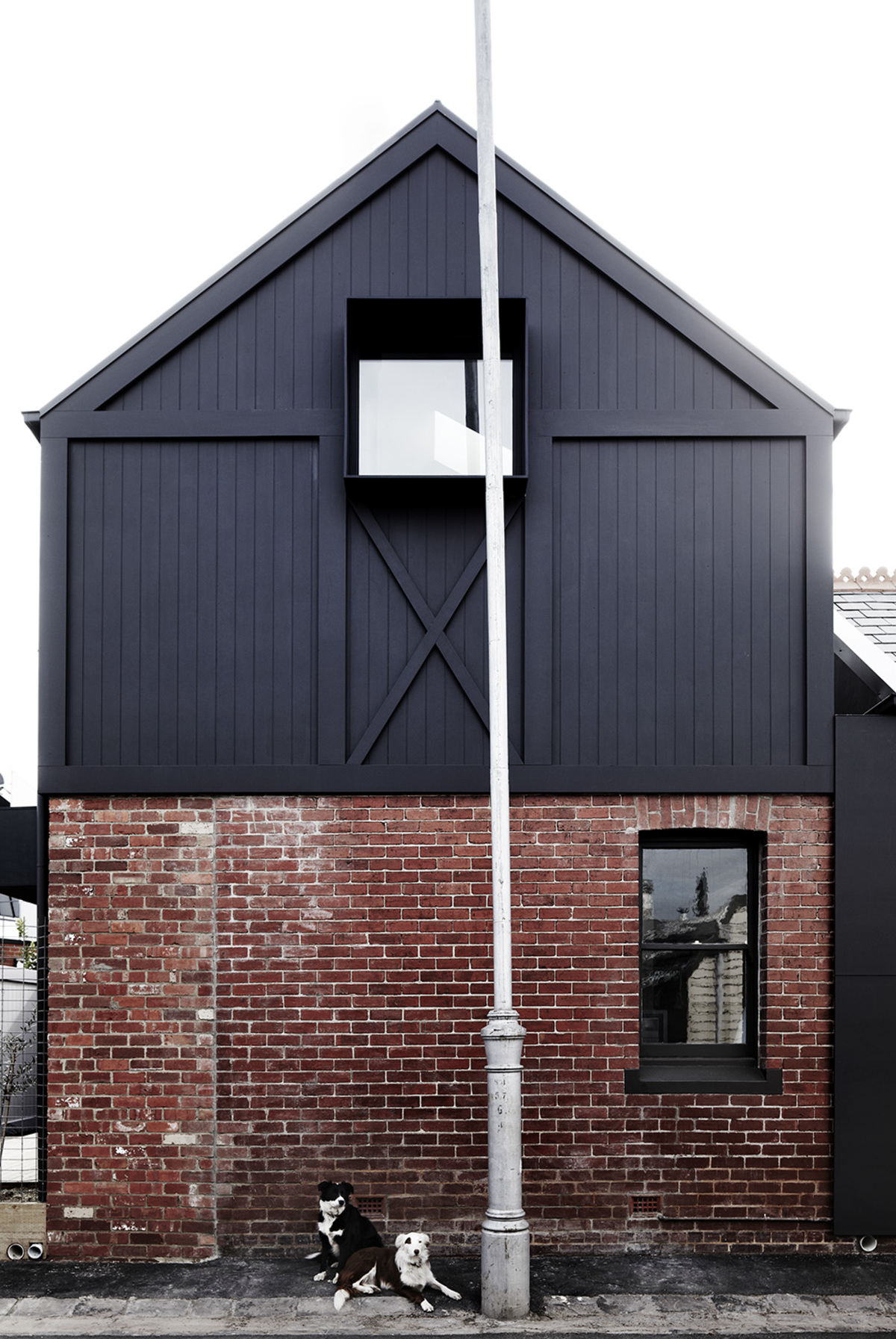
A utilitarian building: workshop or barn of simple geometry. Archetypal primary forms enable us to relate on a subconscious level putting us at ease instantly.
Whiting Architects’ brief called for ‘holiday house in the city’.
They aimed to infuse the relaxed weekender atmosphere into an urban family home.
The interior plays on primal themes of comfort and nesting, with texture and warmth foremost.
Archetypal primary forms enable us to relate on a subconscious level putting us at ease instantly.
The project’s features are complimentary-opposite, relating through height, scale, and proportion.
Whiting Architects avoided clichéd, typical flat-roof response at odds with site and in contrast to the surrounding built-environment which allowed the building to belong without replicating.
The interior is as profound as the exterior.
External and internal box-forms act as ordering-devices; they clad, screen, define specific-areas and usage and breakdown the facade.
They support kitchen appliances, house clothing, conceal walls, services and provide a unified theme binding interior to exterior, blurring the boundaries between, adding spatial multipurpose.
Internal joinery elements and walls are presented as objects. Elements appear possible to slide out, alluding to the impermanence of this urban environment and the transient nature of modern living.
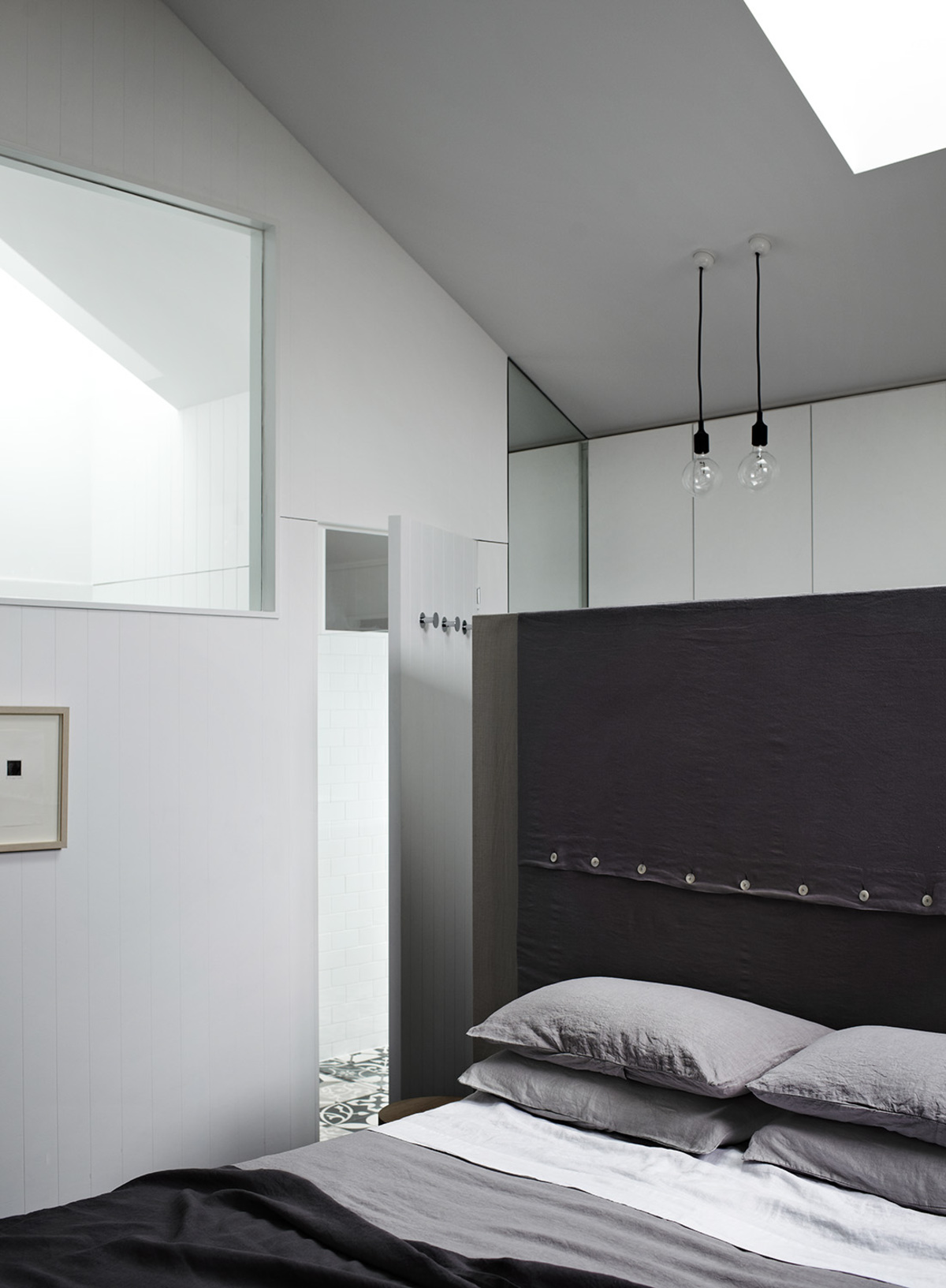
Doors and corridors are eliminated, creating a compact plan allowing for maximum amenity from minimal space. Views from unexpected areas allow light and connectivity without inhibiting privacy.
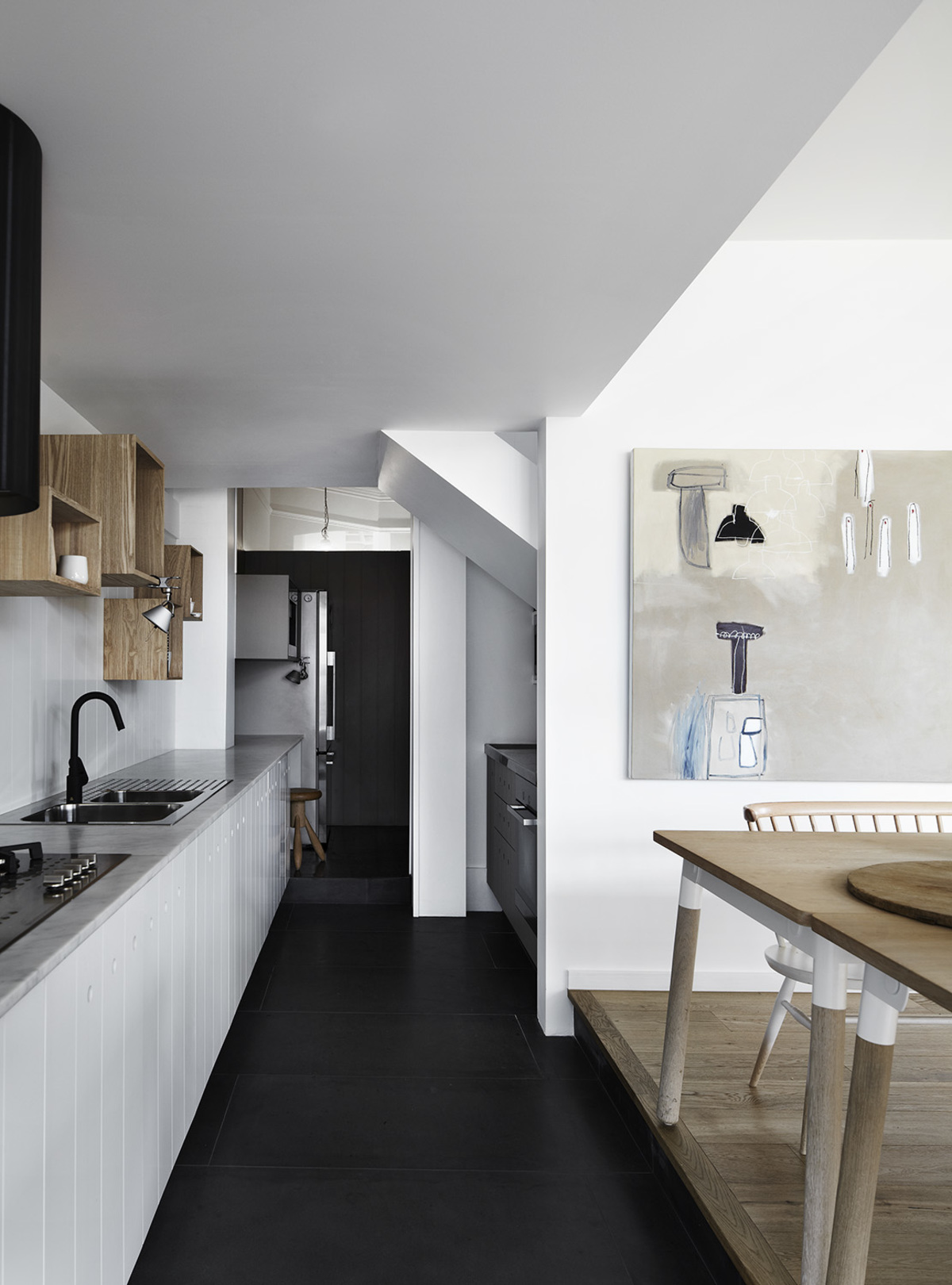
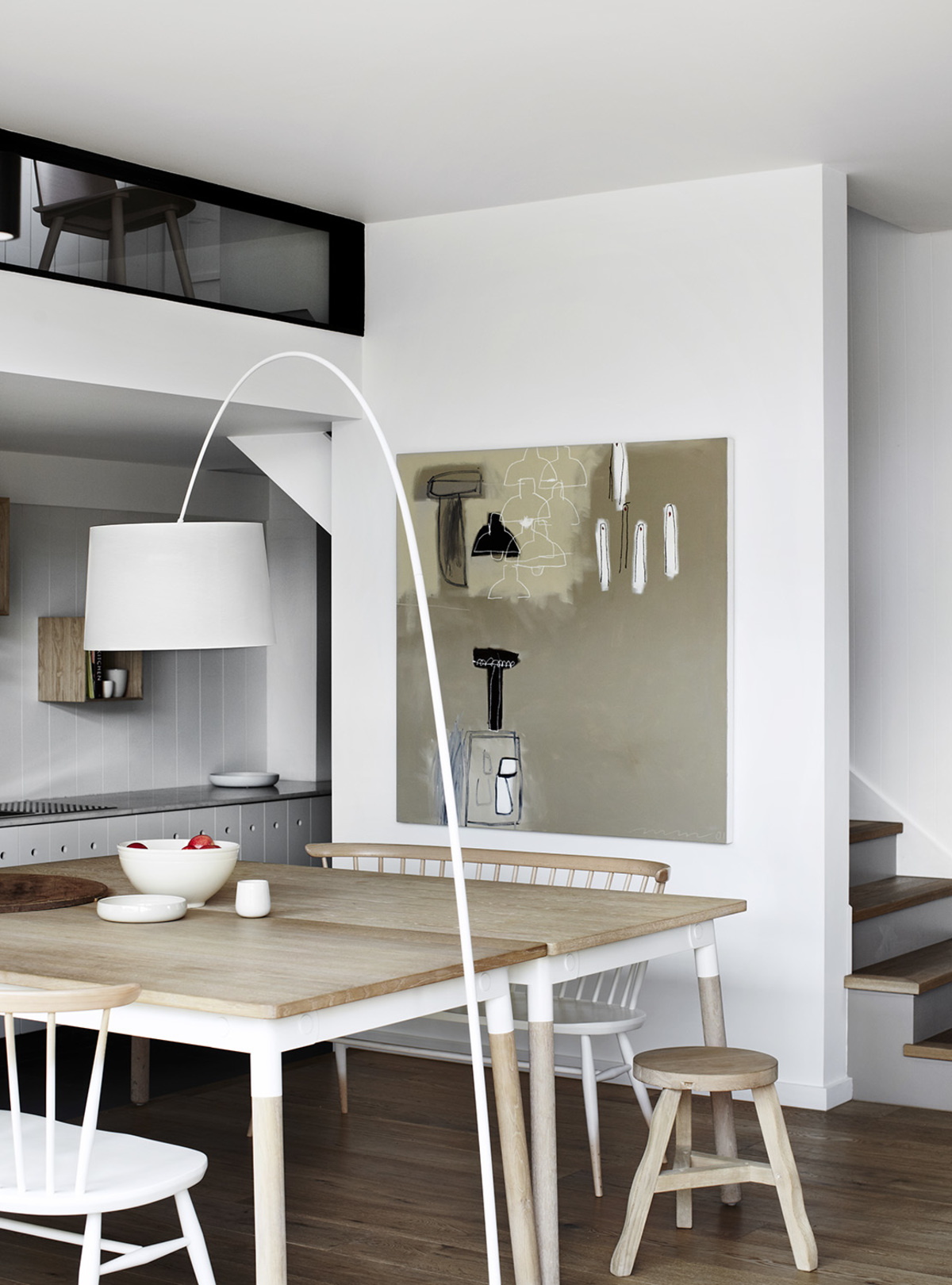
Kitchen/dining are merged through a step down at the table edge – an example of multi-purposing of space: doubling as workspace; encouraging interaction.
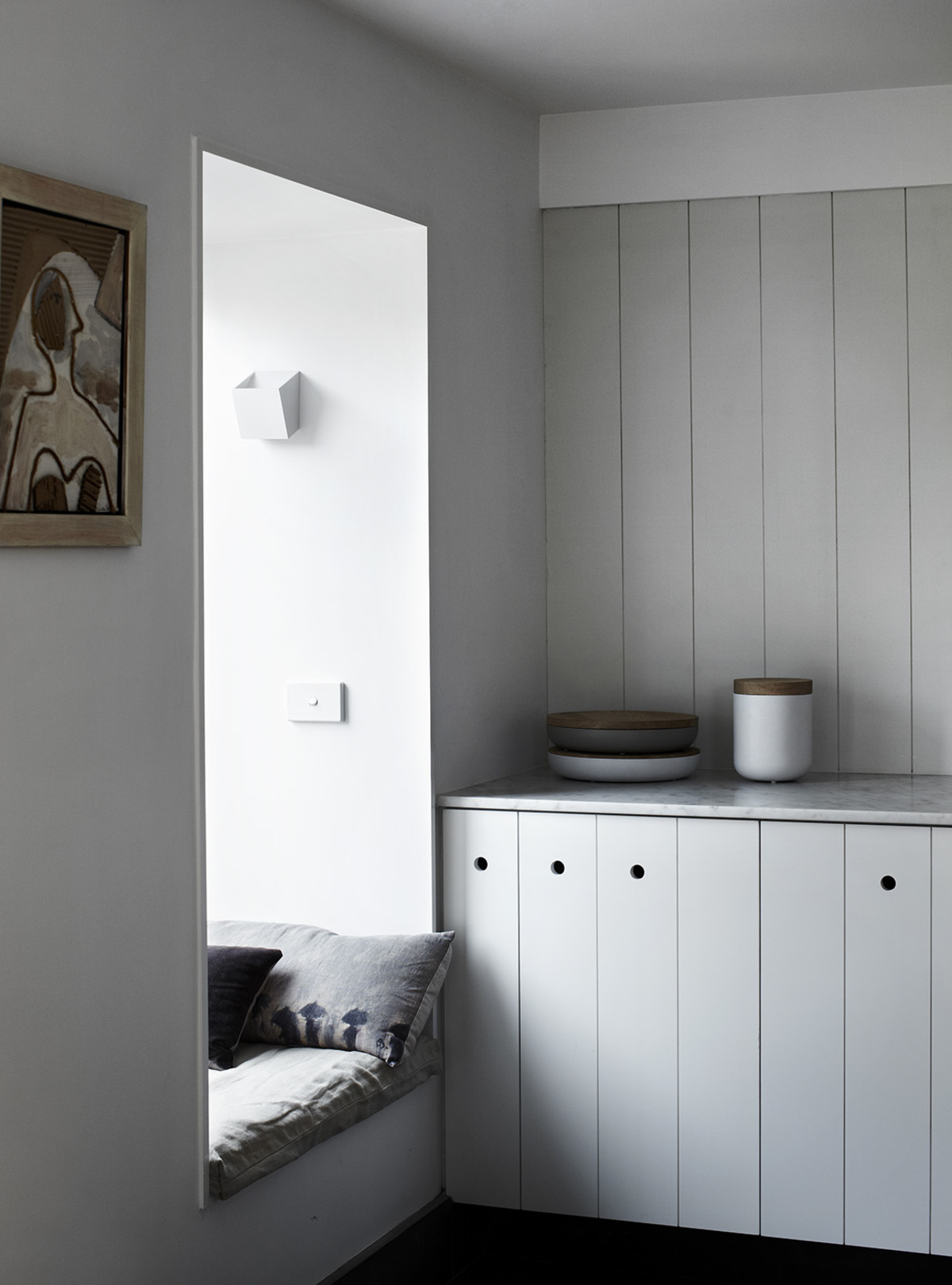
Unexpected private seating nooks intersperse allowing seclusion when required.
Throughout, lamps and spotlighting takes preference and is used to direct attention to specific design aspects.
The interior takes its cues from craft and informality.
Oversized knit pads and a rug reminiscent of a comfortable sock feature along with unfussy furnishings that recede into the atmosphere.
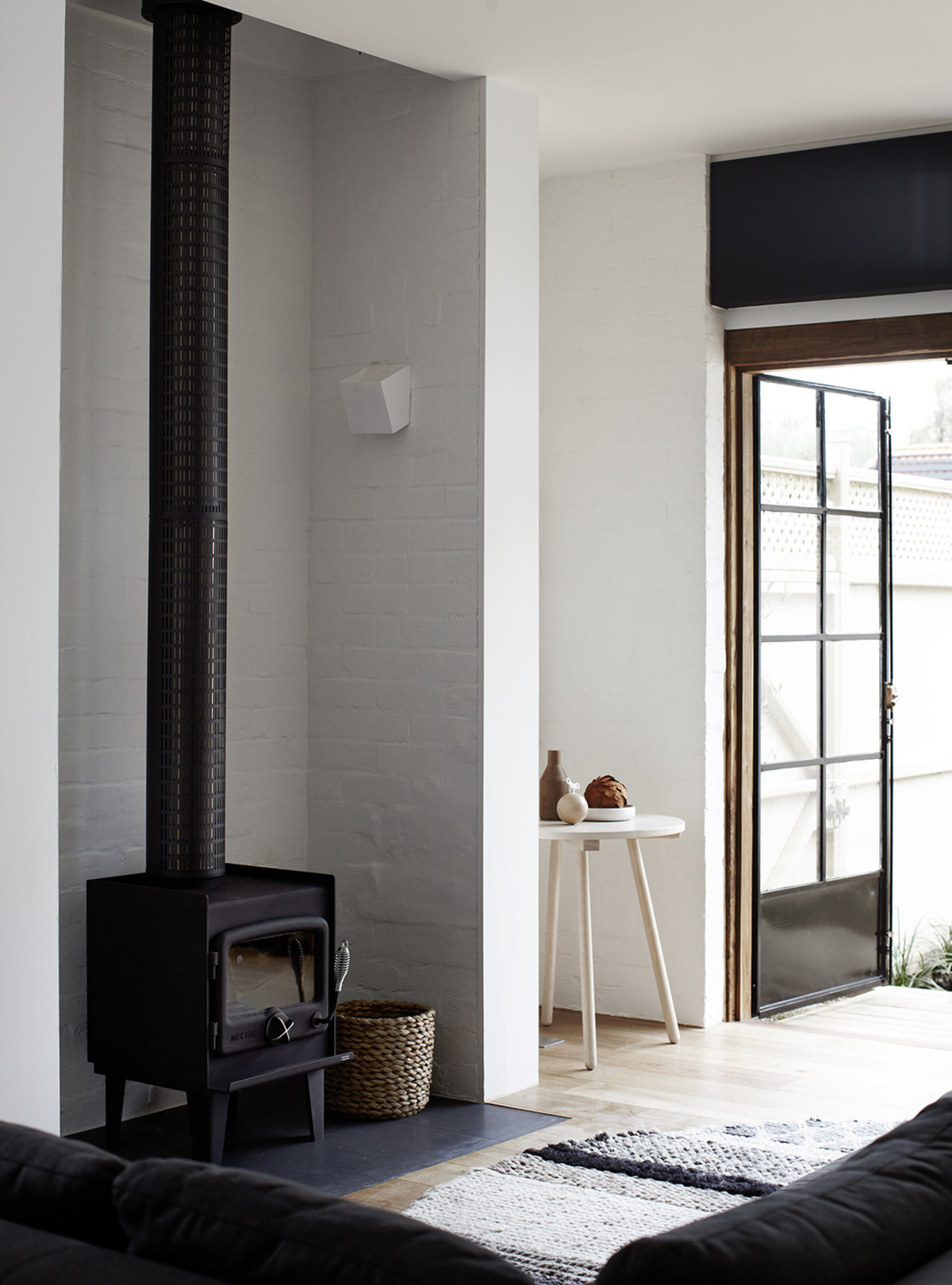
A pot belly stove features proudly invoking warmth and nurturing.
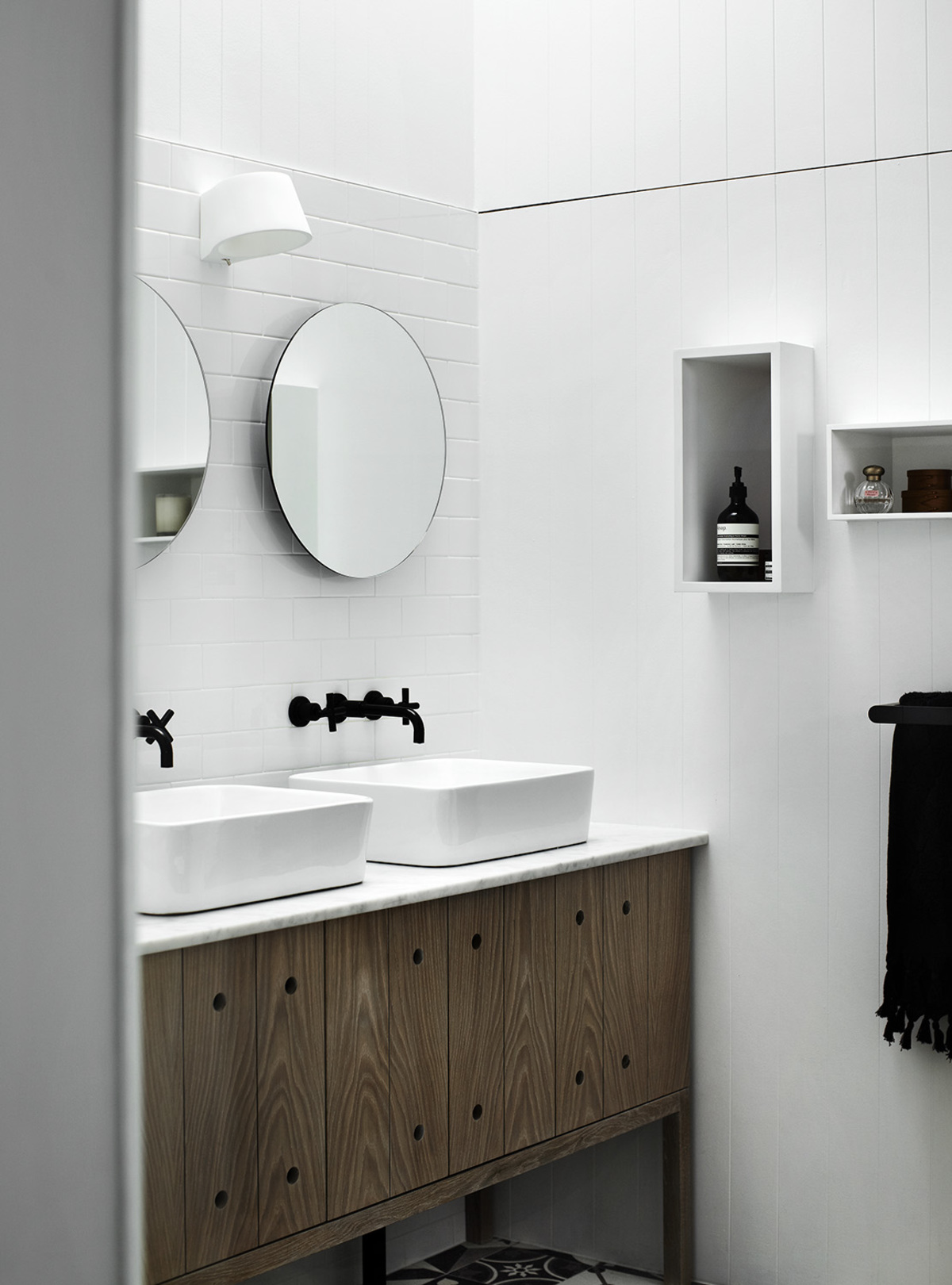
Simple materials and finishes sit within the environment quietly.
Hardware is minimal and recycled steel doors frame the living area as if they were always part of the home.
Sustainability concerns were addressed through the use of sustainable and recovered materials, as well as incorporating passive design ideas.
The use of recycled plastic joinery kitchen doors makes for no painting and little maintenance.
Salvaged bricks from the demolition of the existing dwelling are reused in the new extension.
The vintage 1930’s steel doors were sourced from the demolition of a commercial building.
Similarly, the stainless steel bench top featured in the kitchen was sourced from a commercial kitchen remodel.
Large box windows are inserted into the top floor of the house to make use of the northern sunlight, providing natural light, passive heat during cooler months and appropriate shading during warmer months through design.
With Kerford, Whiting Architects aimed to capture the informality of a holiday place – nothing precious, merely simple and practical.
They resolved budget restrictions and conceptual frameworks in innovative ways:
- Every square metre was dedicated and useful.
- Doors and corridors were eliminated.
- Views from unexpected areas allow light and connectivity without inhibiting privacy.
- Kitchen/dining are merged through a step down at the dining table edge – an example of the ‘multi-purposing’ of space.
- The butler’s pantry hides kitchen mess and seamlessly incorporates the fridge, laundry, a desk.
- Unexpected private seating nooks intersperse adding diversity, allowing separation when required.
This is a practical and informal home.
The type and quality of space is what is important.
Creating a home is a very personal thing and this house is a great reflection of its owners.
Furniture, decoration, and artwork sit comfortably within its context and is no more than it needs to be.
Project Details
Project size – 198 m2
Site area – 243 m2
Completion date – 2014
Building levels – 2
Project Team
Architecture and Interior Design
Whiting Architects
Whiting Architects is an Architecture and Interior Design studio with over 25 years’ experience.
Director Steven Whiting’s qualifications in both Interior Design and Architecture define the firms’ signature style and form a design philosophy that centres on the premise that there is no separation between disciplines.
Associate Directors Eleanor Eade and Josie Somerville have brought energy, passion and creative expertise to Whiting Architects over the last 6 years, providing a youthful and dynamic approach to the practice.
Photography
Sharyn Cairns
Sharyn is at the forefront of commercial photography in Australia, with a specialist portfolio spanning interiors, food, travel, and lifestyle. She is committed to creating beautiful images that capture a mood and an emotion, playing with light and shadows to create levels of depth and distinctive memorable scenes.
Her work is featured in notable international and local magazines: Gourmet Traveller, Vogue Living, Belle, Dwell, Kinfolk, Elle Decoration UK, House and Garden UK, Living Etc UK and many others.
Sharyn collaborates with architects, designers and creatives on unique projects and has photographed numerous cookbooks for well-known chefs such as Maggie Beer, Shane Delia, Guy Grossi, Tobie Puttock and Jacques Reymond.
Photo Gallery
Click on a thumbnail image to enlarge.











Design © 2020 Whiting Architects. All Rights Reserved.| Images © 2020 Sharyn Cairns. All Rights Reserved.
Get the Builtworks Letter
In every edition of the Builtworks Letter, you’ll get the behind-the-scenes backstory as to how buildings are designed, built, and brought to life.
You’ll hear compelling stories, learn surprising ideas, meet engaging characters, and discover unique voices.