
It’s been called the Toorak of the west, and Williamstown in Melbourne is the place to which the west’s establishment flock.
The views across Hobsons Bay to the city skyline in its twinkling glory are nothing short of aspirational, and the houses along the waterfront can alone justify a day trip to amble and admire.
A couple Mick and Felicity, their two teenage children Stella and Louisa, and dog Lucky live in Lucky House.
Located in the bayside suburb of Williamstown, Lucky House was purchased several years ago as the family’s “forever house”.
The renovation is very much a testament to the passion and perseverance of Felicity and Mick.
With a love of design, they had some very clear ideas about their dream home.
From the outset, they knew that they wanted to not only be involved in the design process but to enjoy it.
It took three distinct attempts (with various parties and changes in scope) and as many years, before the final design came to fruition, so three times lucky – Lucky House!
With the double-fronted Victorian growing tired and the girls growing up the house needed to be upgraded and expanded to accommodate the changing needs of the family and to better reflect the family’s lifestyle.
Kuzman Architecture was approached by the owners of Lucky House in Williamstown to transform this double fronted Victorian house into a welcoming and expansive home for their growing family.
The brief for this project was to …
- bring in more natural light
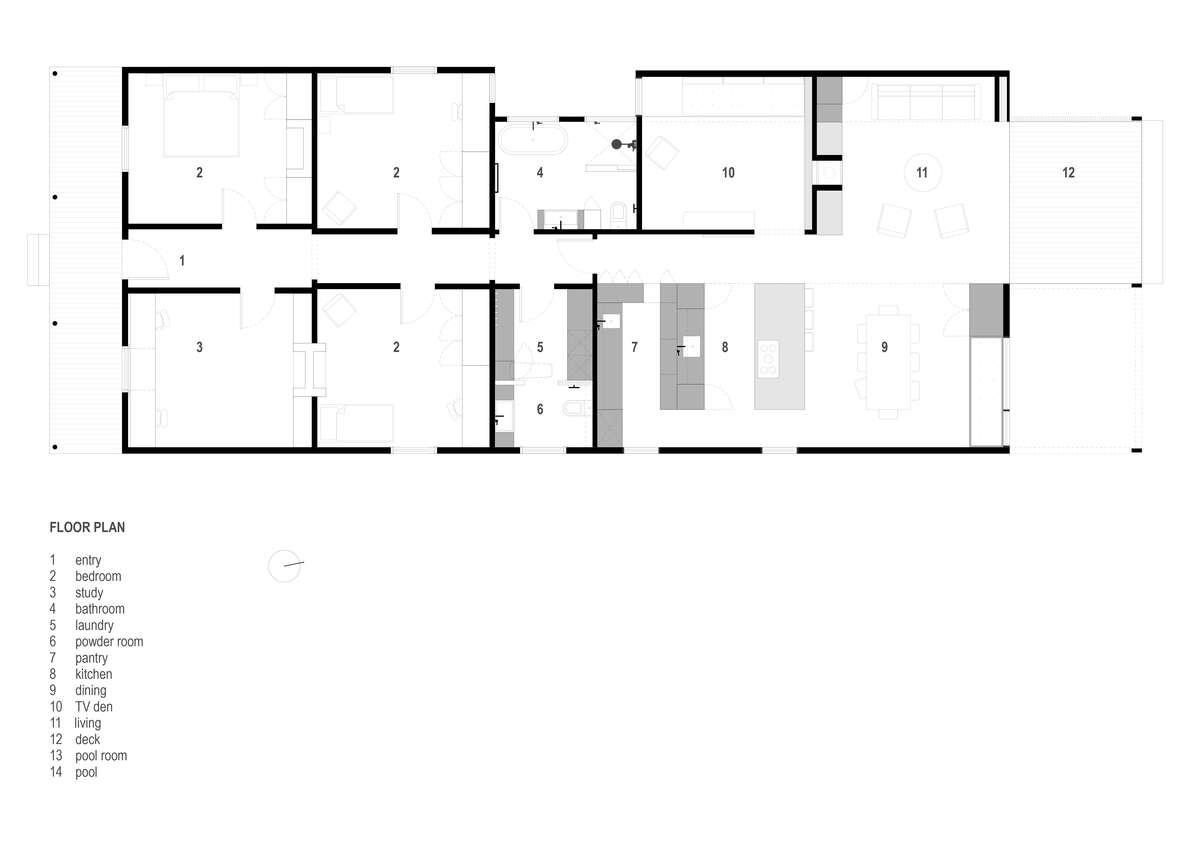
- make the communal spaces more liveable and connected
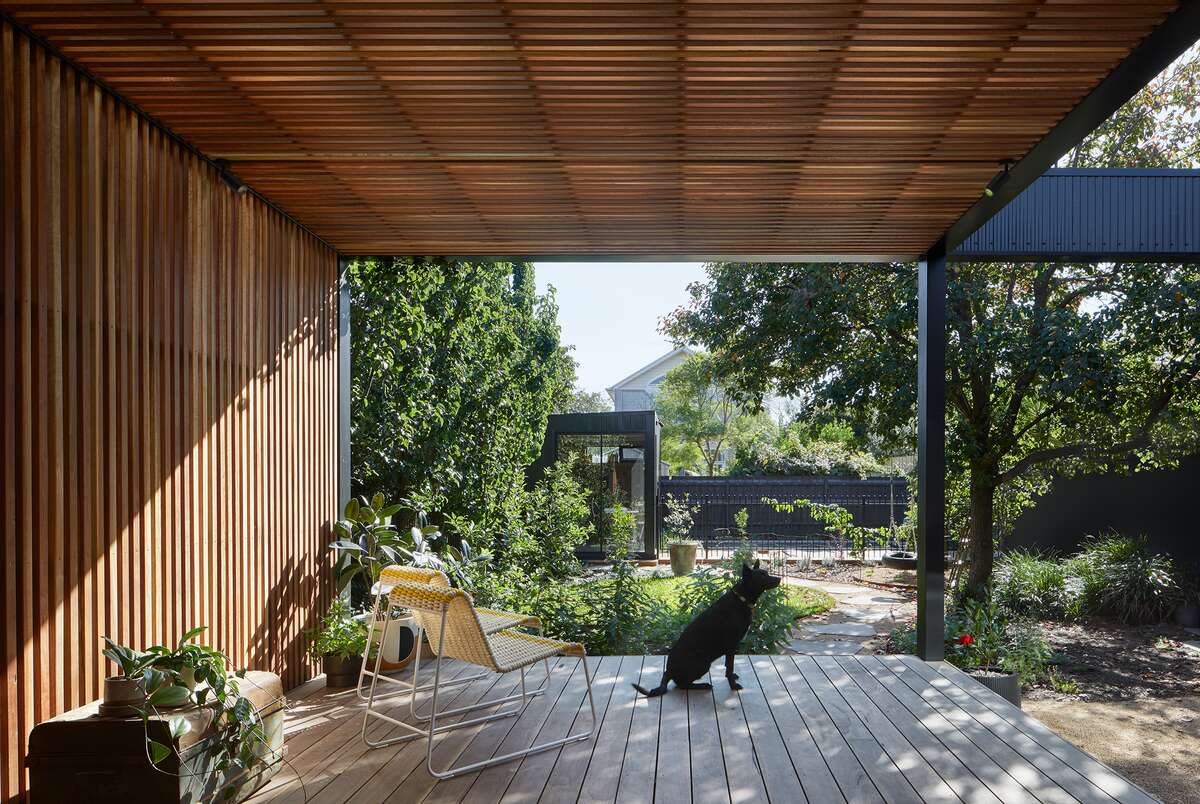
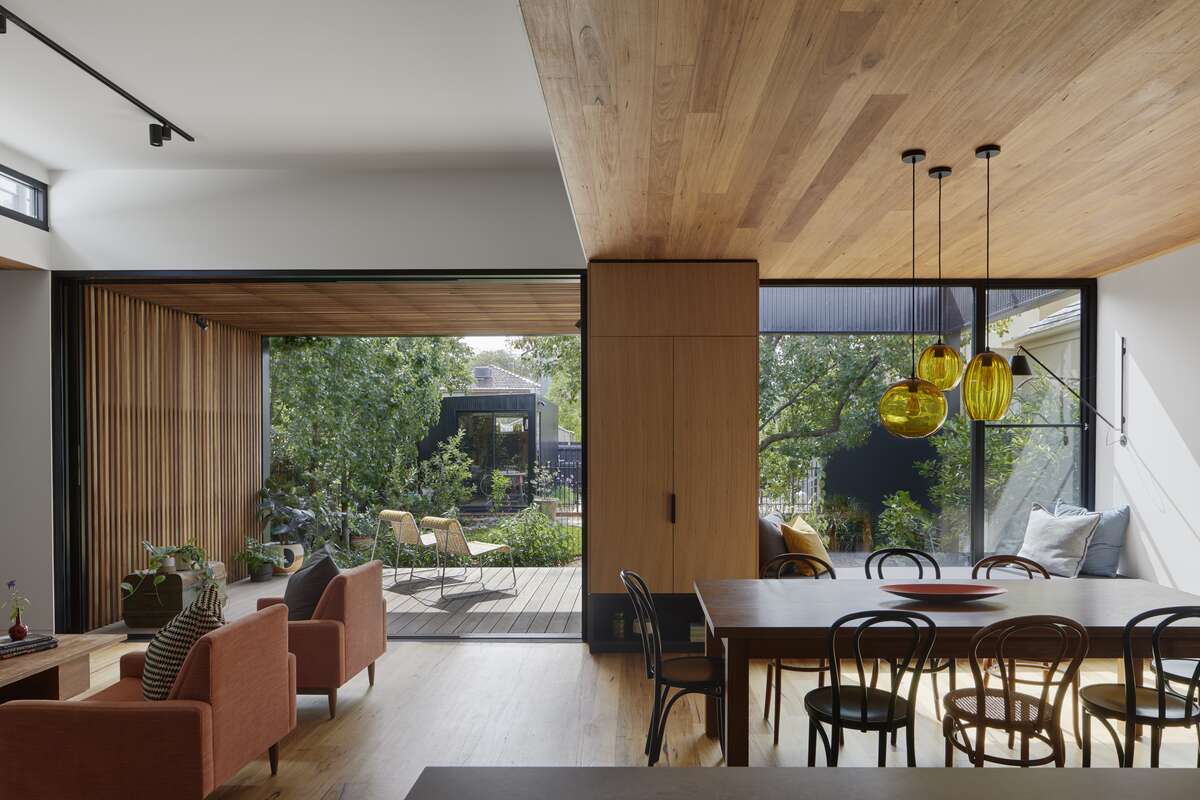
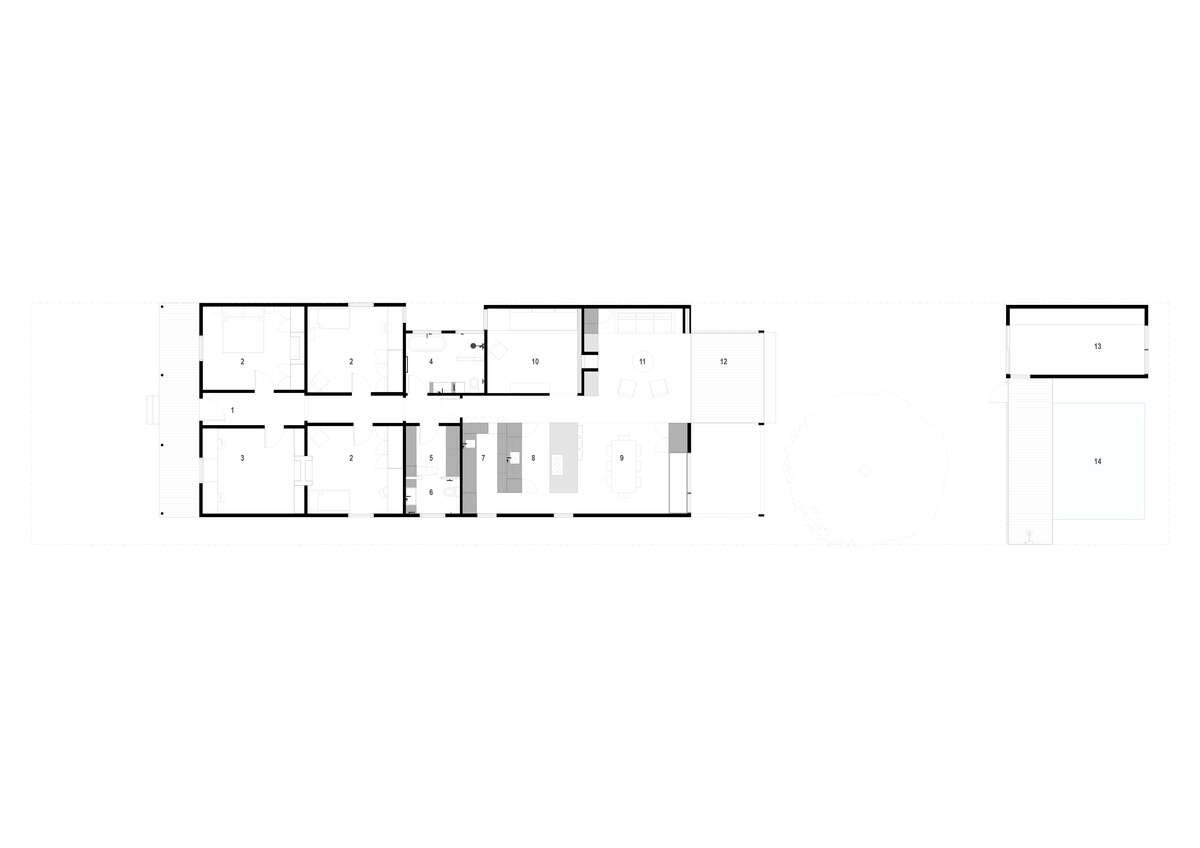
- create a strong relationship between the house and garden
- provide an environmentally responsive home
- maintain the heritage features of the original house
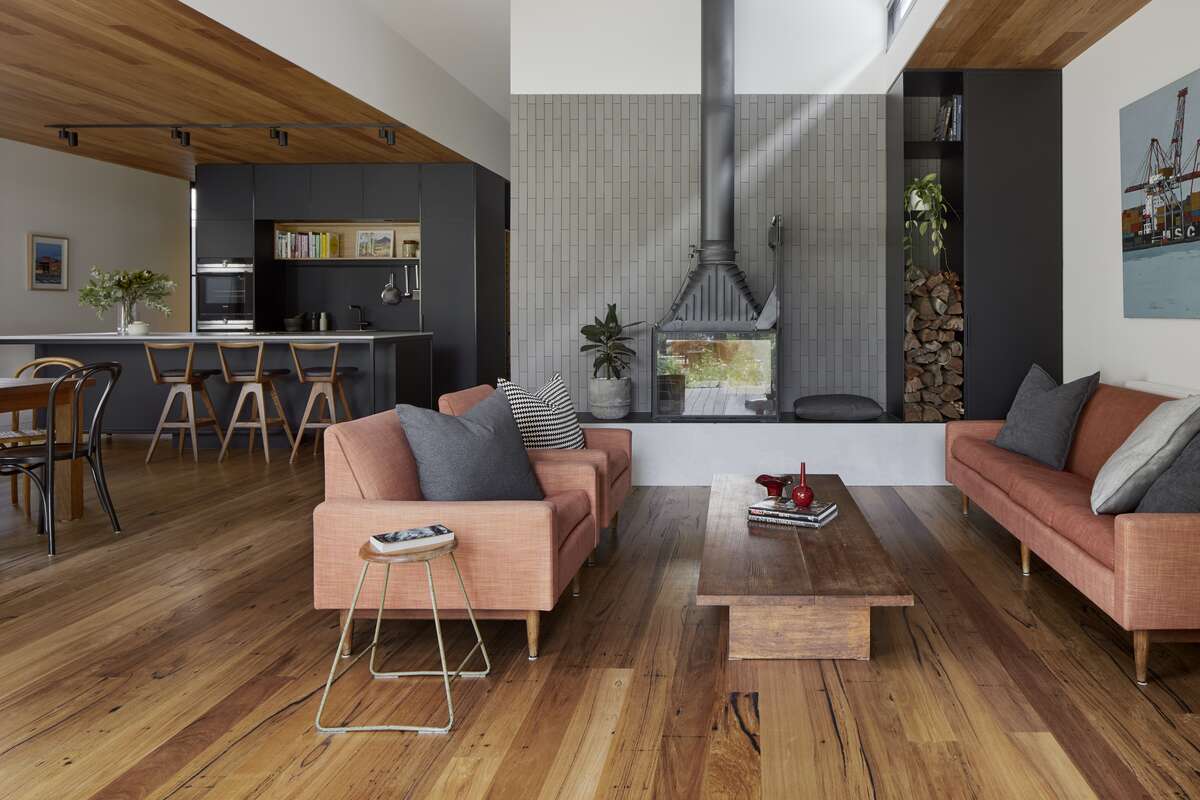
… and draw on Mick and Felicity’s love of mid-century design for the new expansive living areas.
The client was determined to bring the house up to meet modern energy efficiency standards while still maintaining the original Victorian features and character.
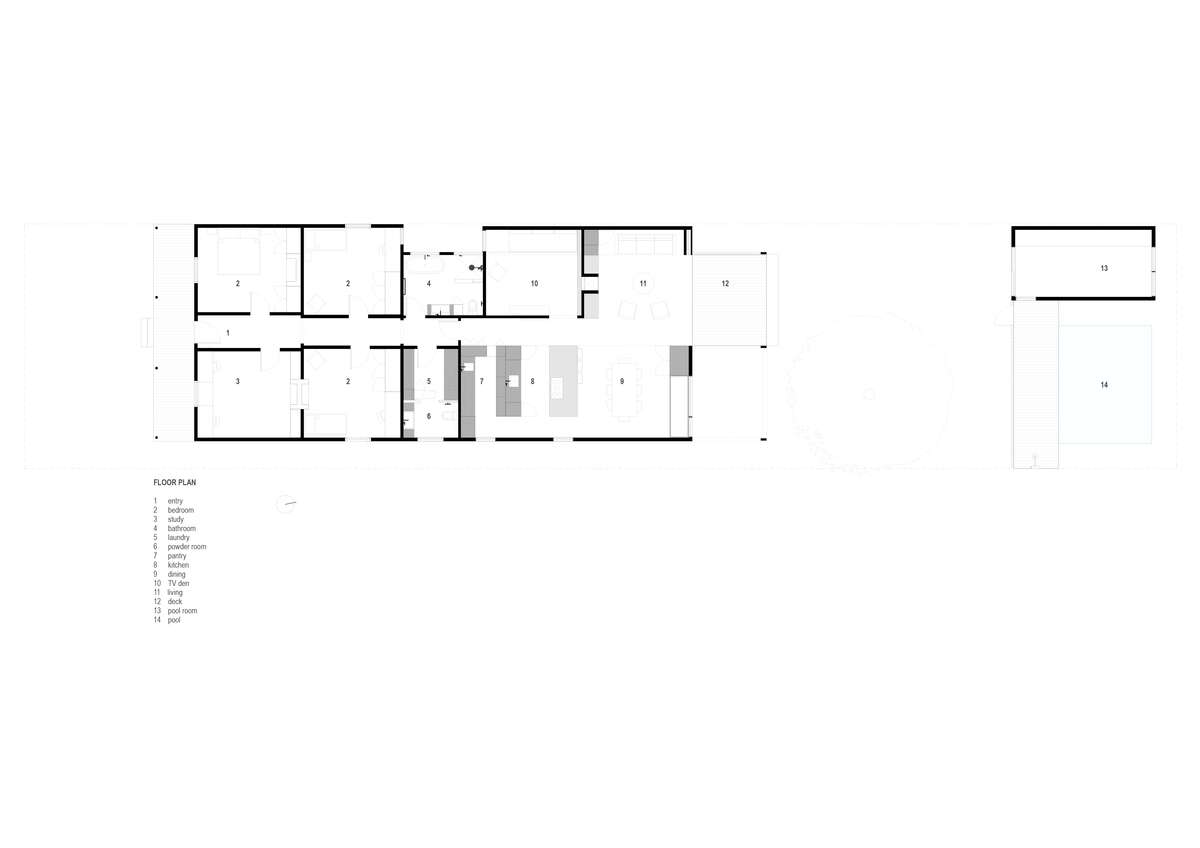
The scope included the restoration of the original heritage home and the addition of a new living wing that drew upon the clients’ love of mid-century design.
Connecting and blurring the boundaries between old and new, and inside and outside was essential in creating a perfect backdrop for this modern family.
The front heritage section of the house had become tired and required extensive renovations.
The rear living area of the house was a 1990’s addition that lacked spatial connections, had poor thermal qualities, little natural light, and minimal connection to the much-loved garden.
The living areas lacked atmosphere and did not reflect the family’s individual style.
Connecting and blurring the boundaries between old and new, inside and outside was essential for this modern family home.
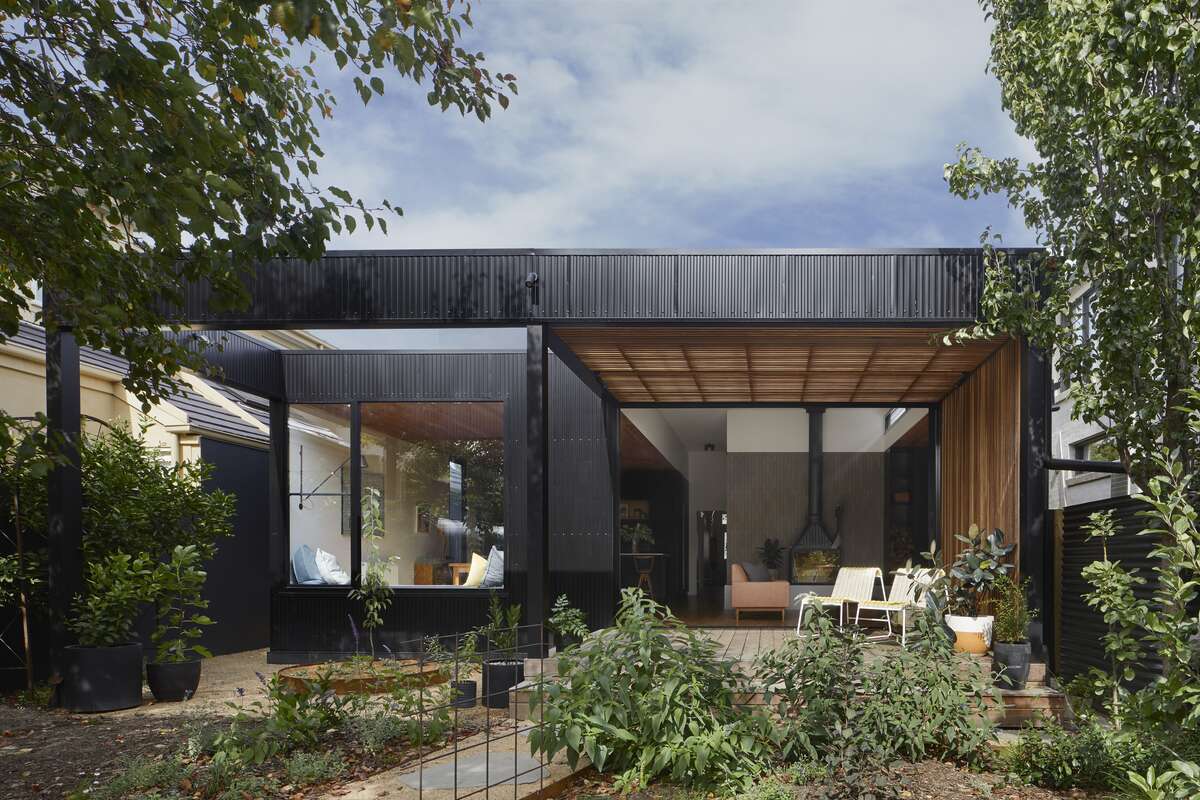
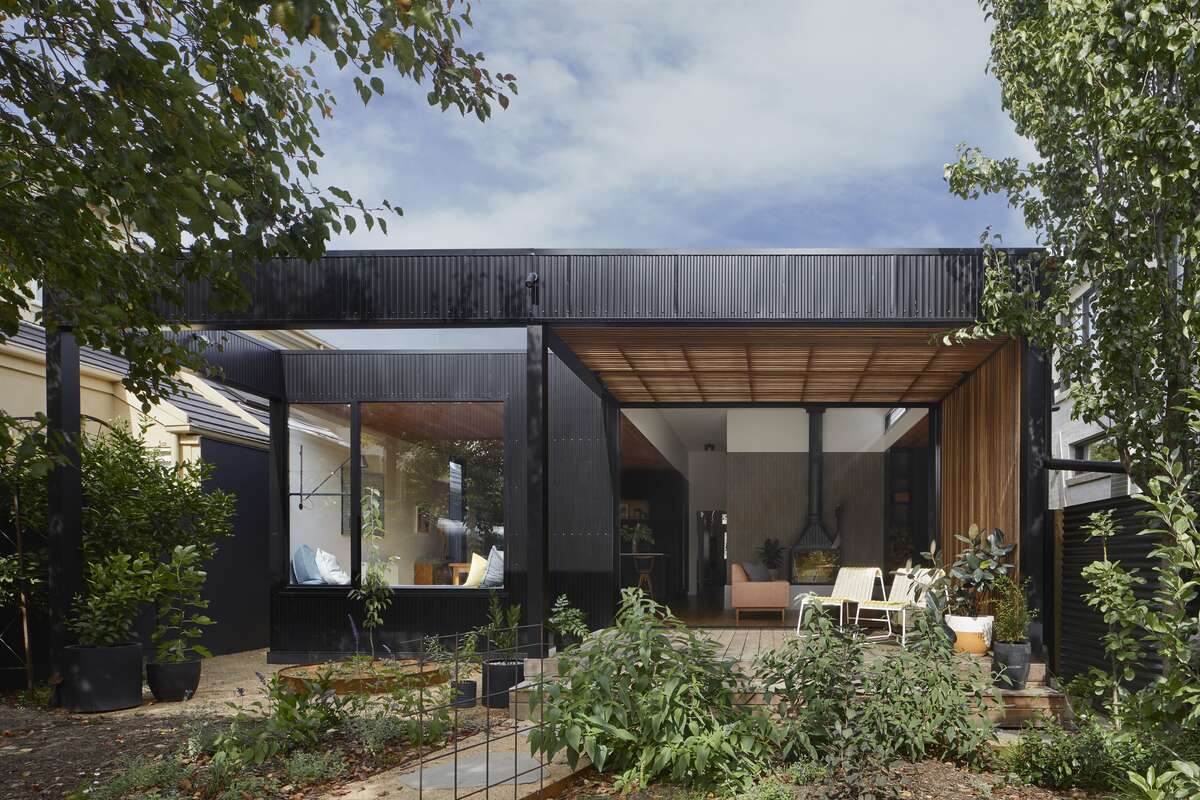
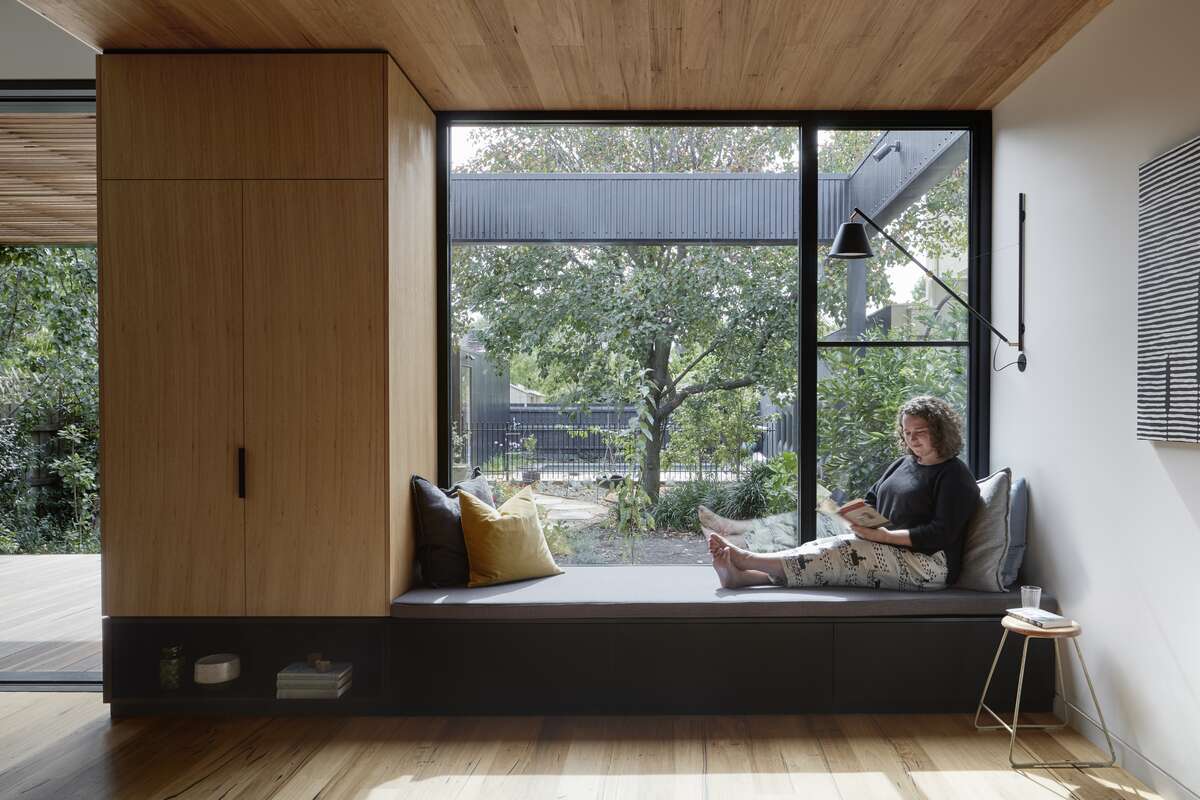
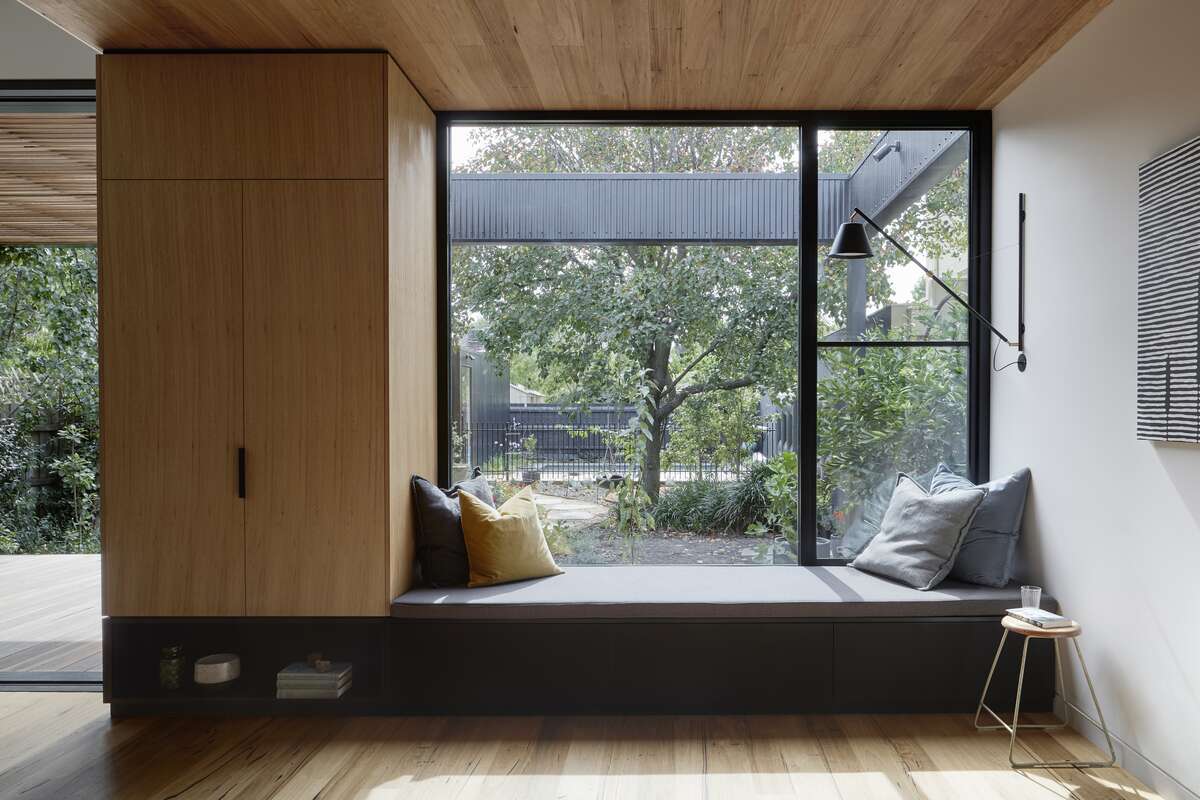
A concept developed around the creation of frames: framing spaces and framing views, internally and externally.
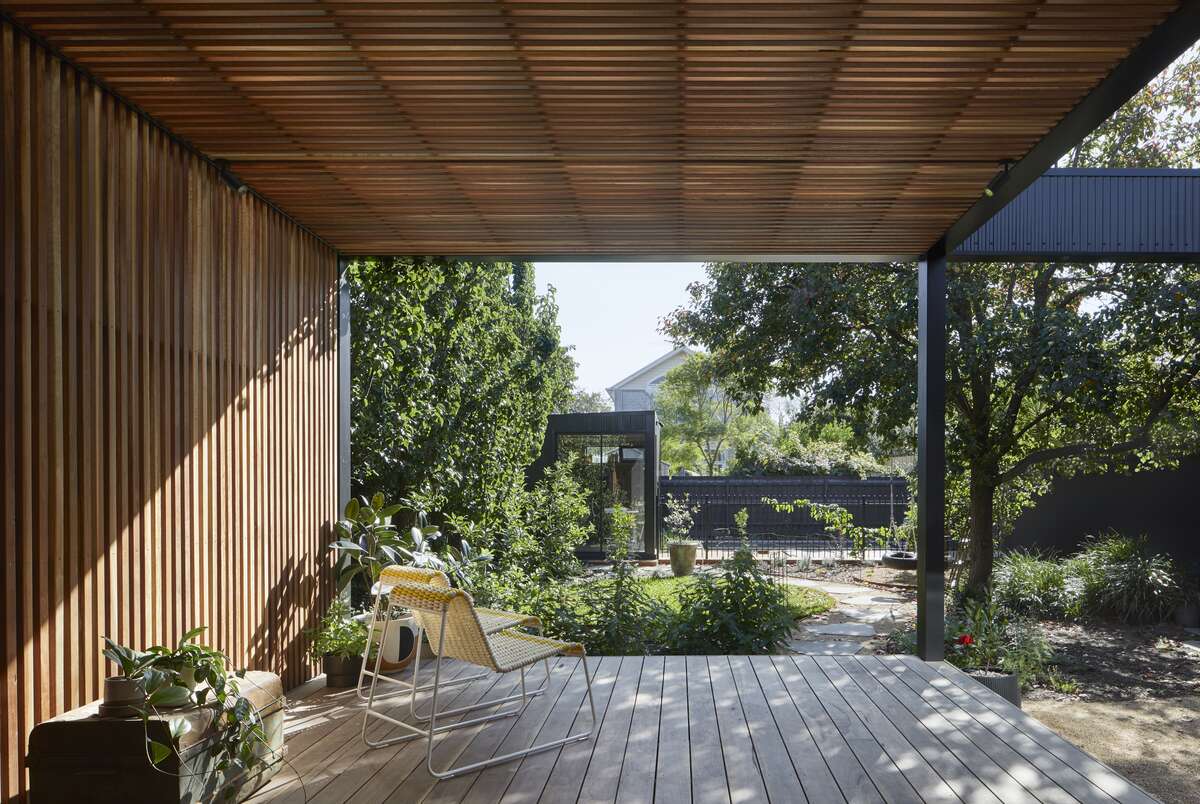
Simple black forms frame the much-loved old pear tree and an opening to the sky above.
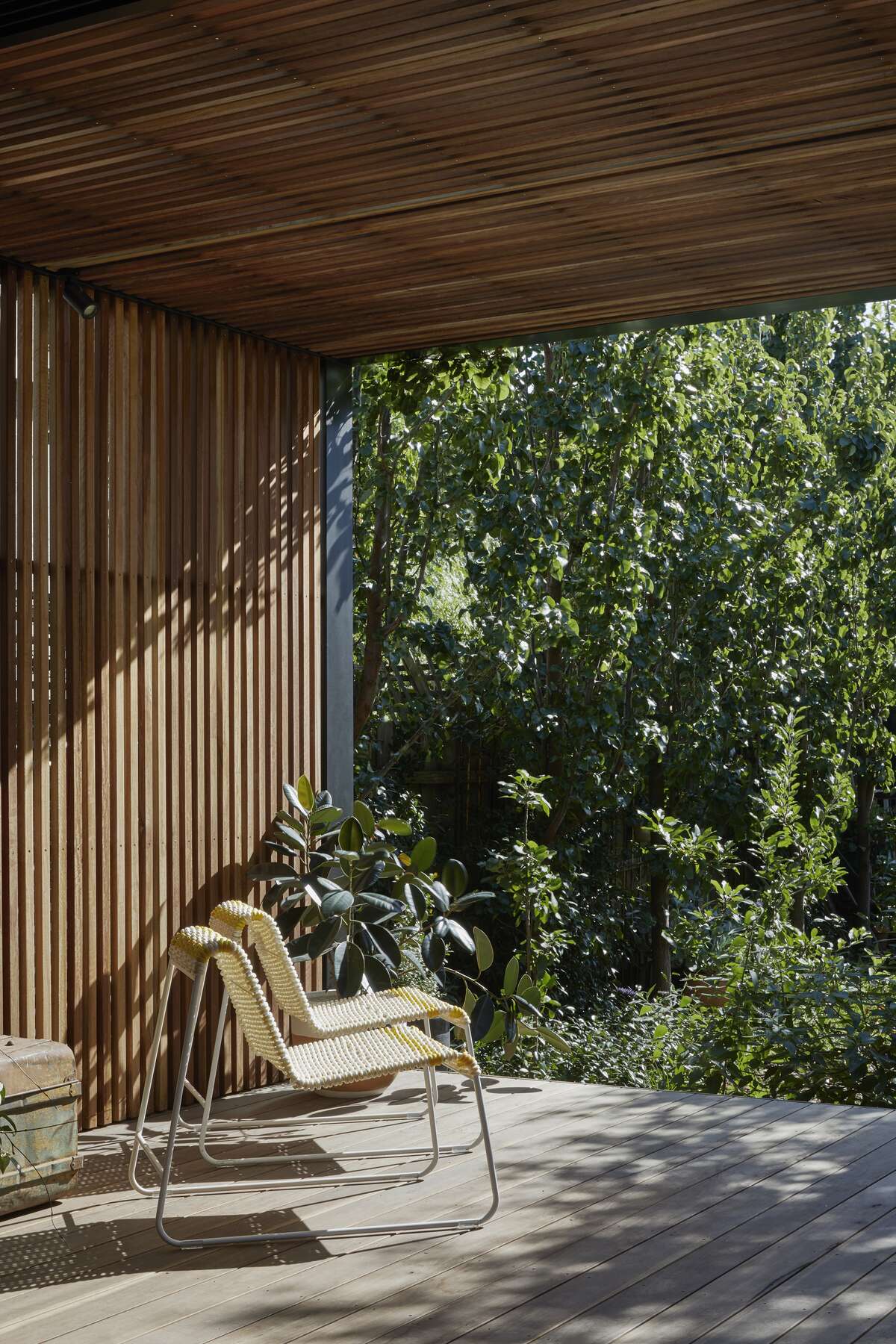
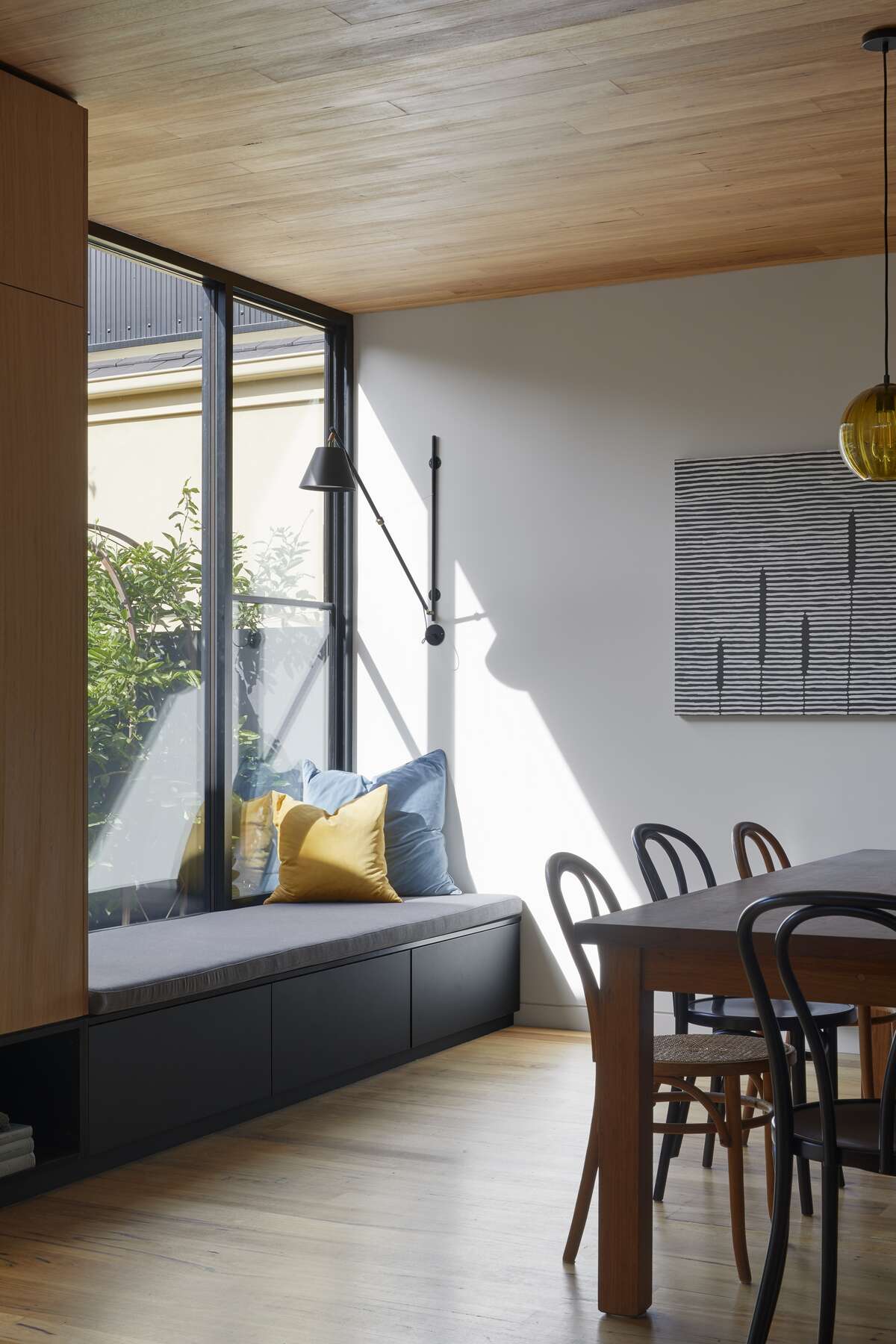
The window seat and timber battened deck are treated likewise, as the viewer looks from the outside in, and from the inside out.
These framed transitional spaces invite the inhabitants to rest between domains, enjoying the best of both worlds.
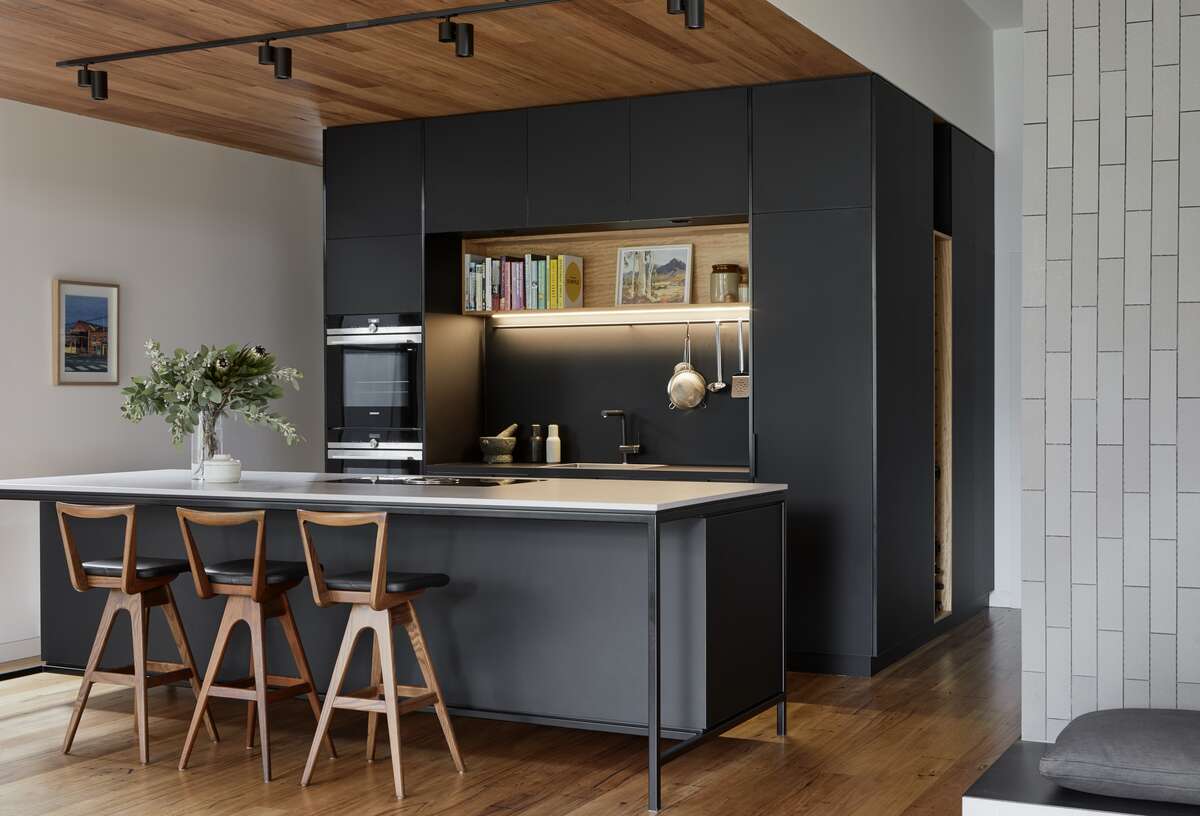
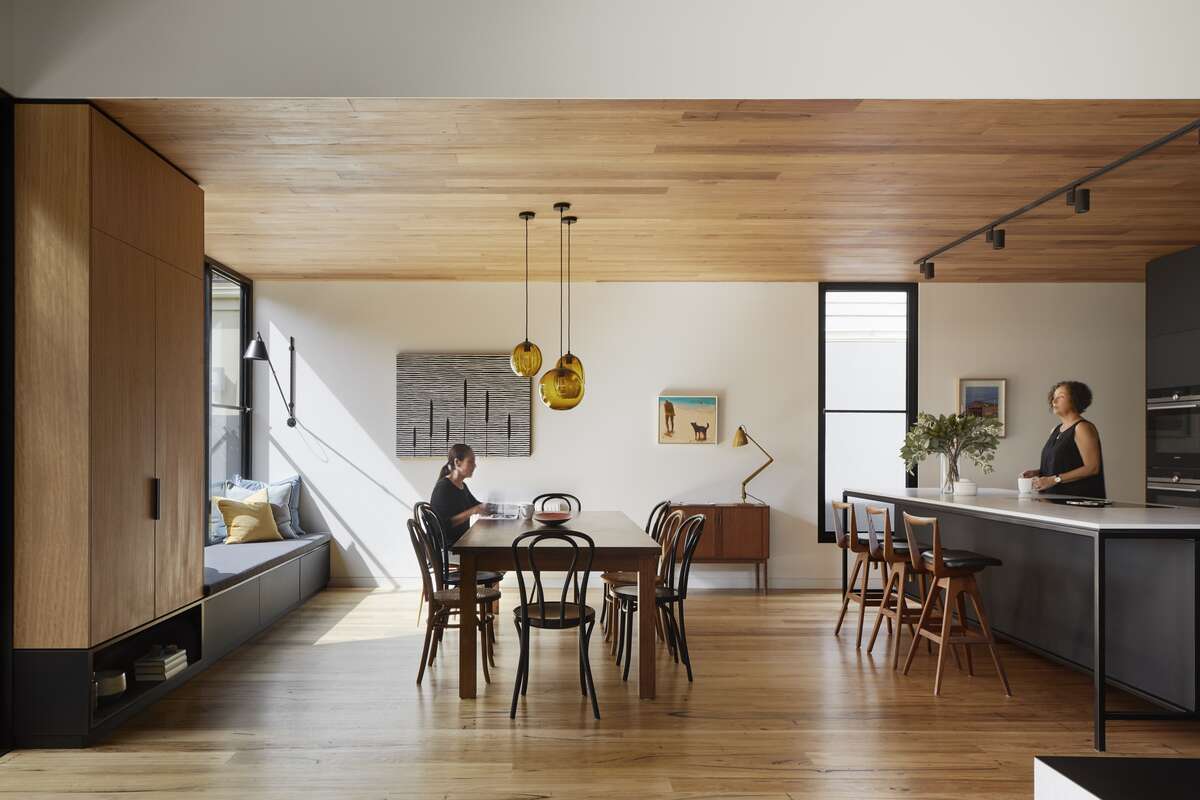
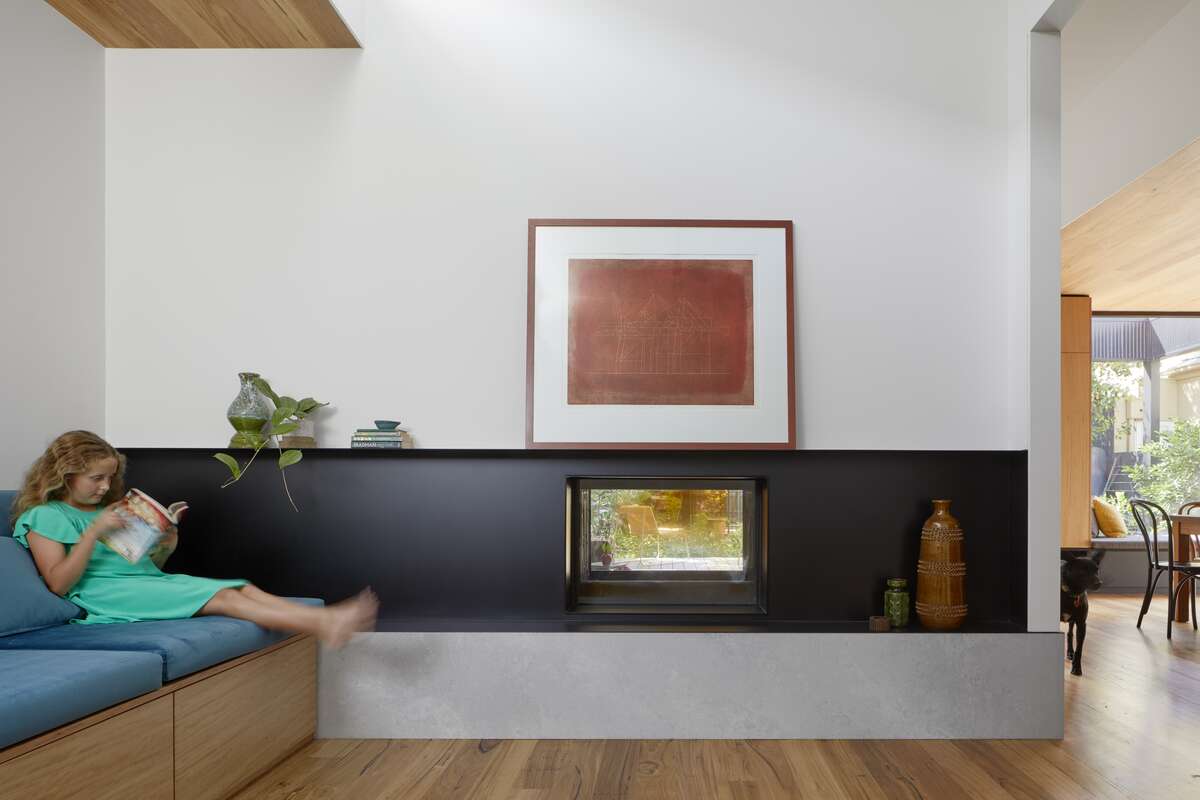
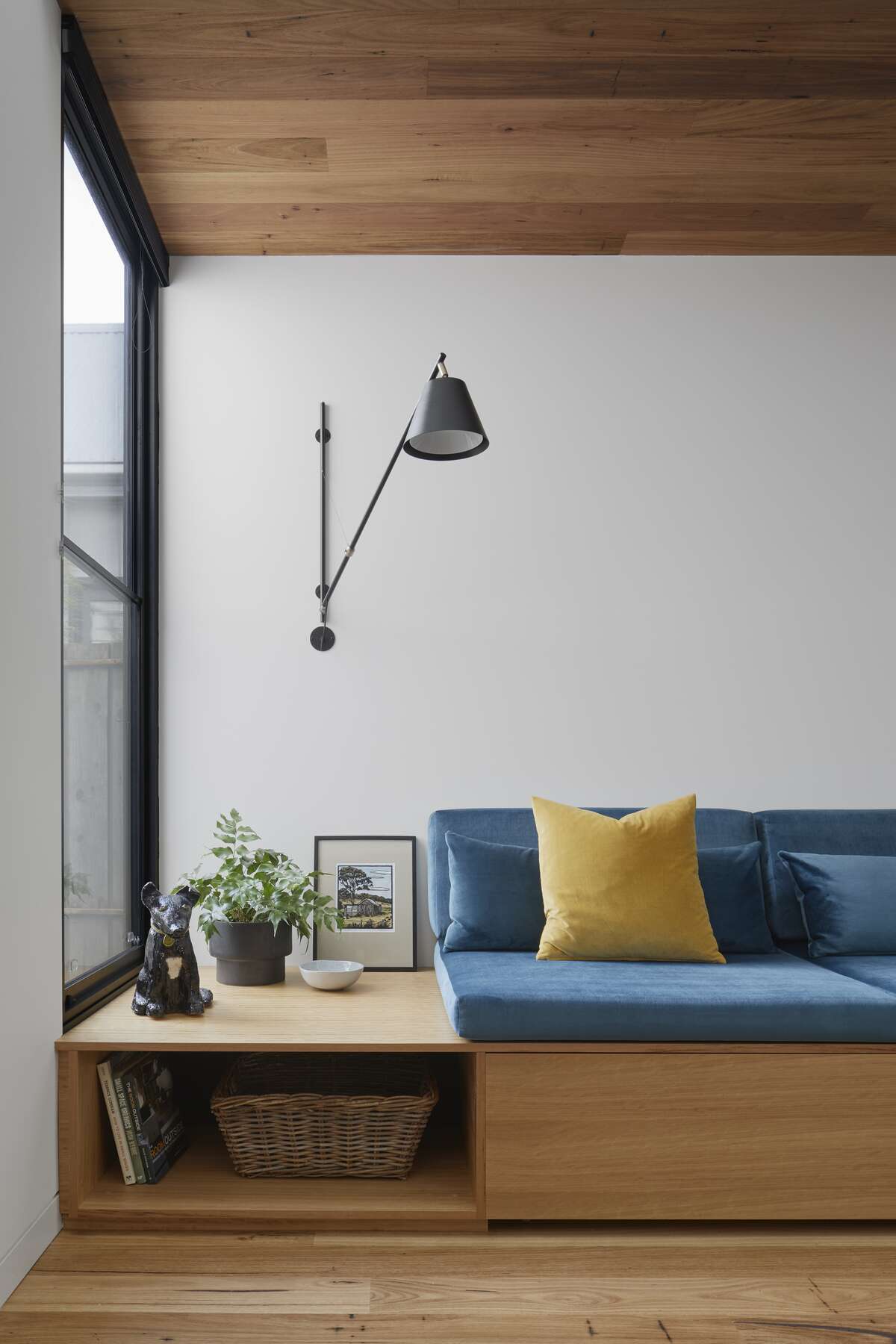
Internally new living additions were added but given lowered timber ceilings, creating warmth, but also helping to manipulate the volumes to identify different areas and create spatial variety: kitchen, dining, day beds, and window seats.
The lowered rooflines also provided an opportunity to bring in high-level shafts of natural light.
The expanses of glass change and transform the spaces throughout the various times of day and ensure leafy views from every room.
A restrained pallet of materials and simple forms creates an enduring and contemporary addition to a heritage house.
To provide an environmentally responsive home wall, ceiling, and underfloor insulation were added and double glazing was installed.
The living extension was opened up and expanses of glass were designed to capture the northern orientation and create cross ventilation.
Key Products Used
- Lysaght panel rib cladding in Night Sky
- Black Butt timber battens
- Stringy Bark strip timber flooring
- Stringy Bark strip timber ceiling lining
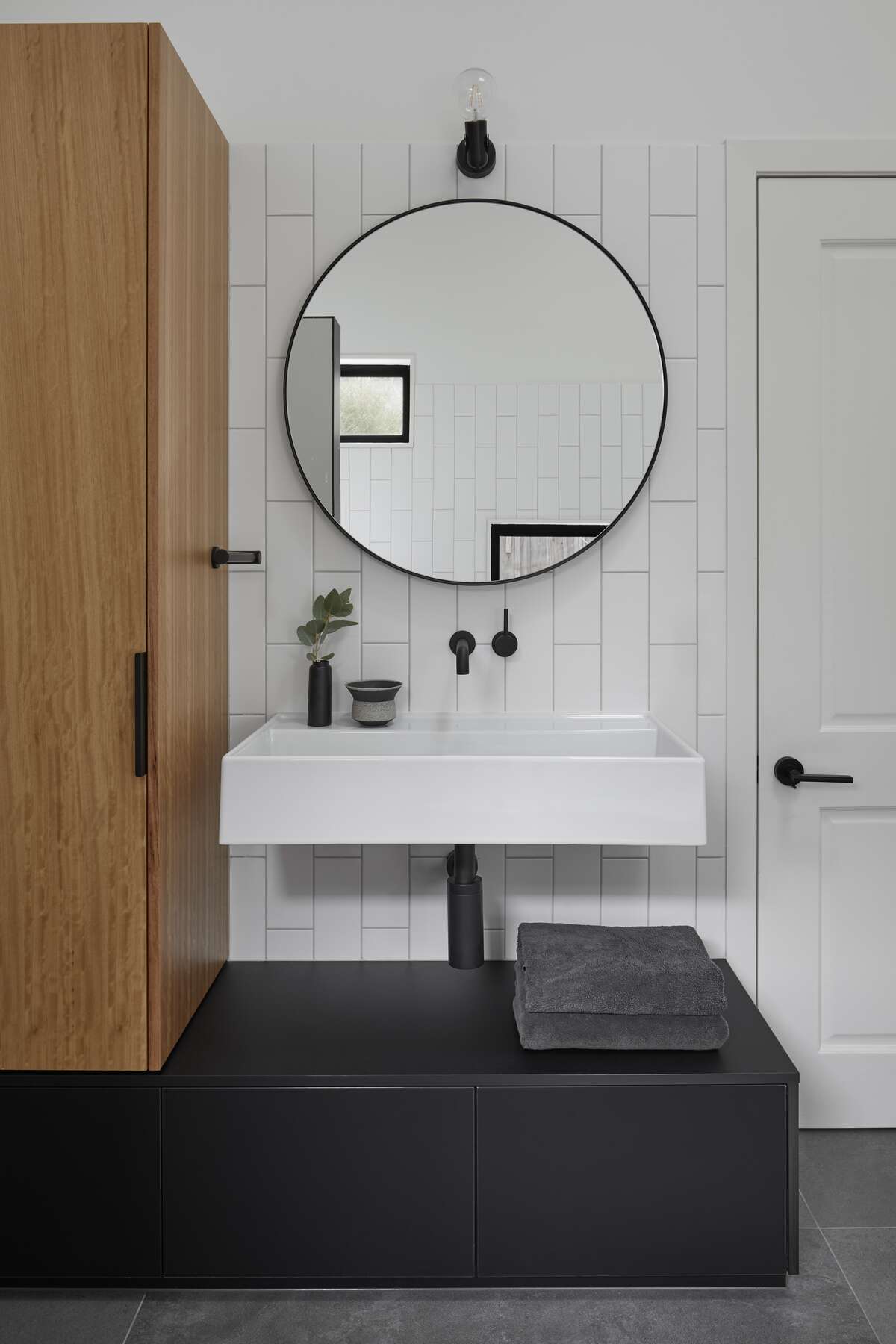
- Black Butt timber veneer joinery
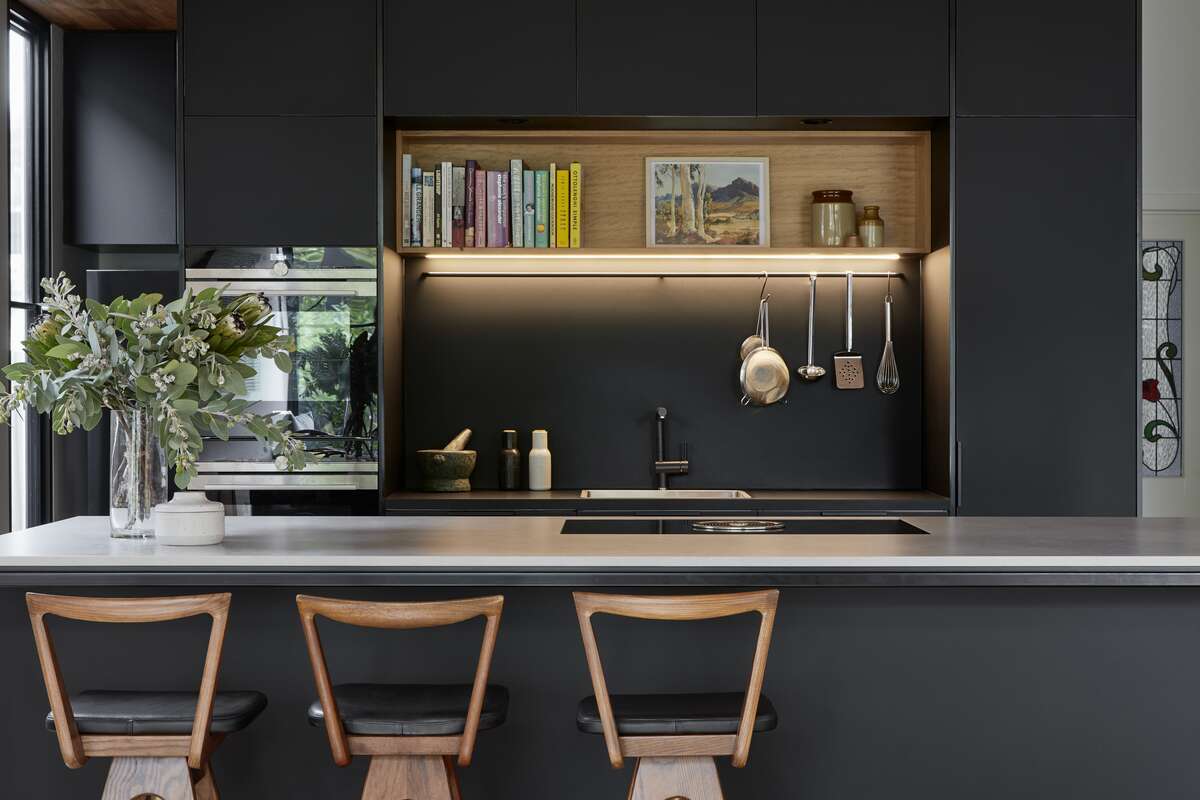
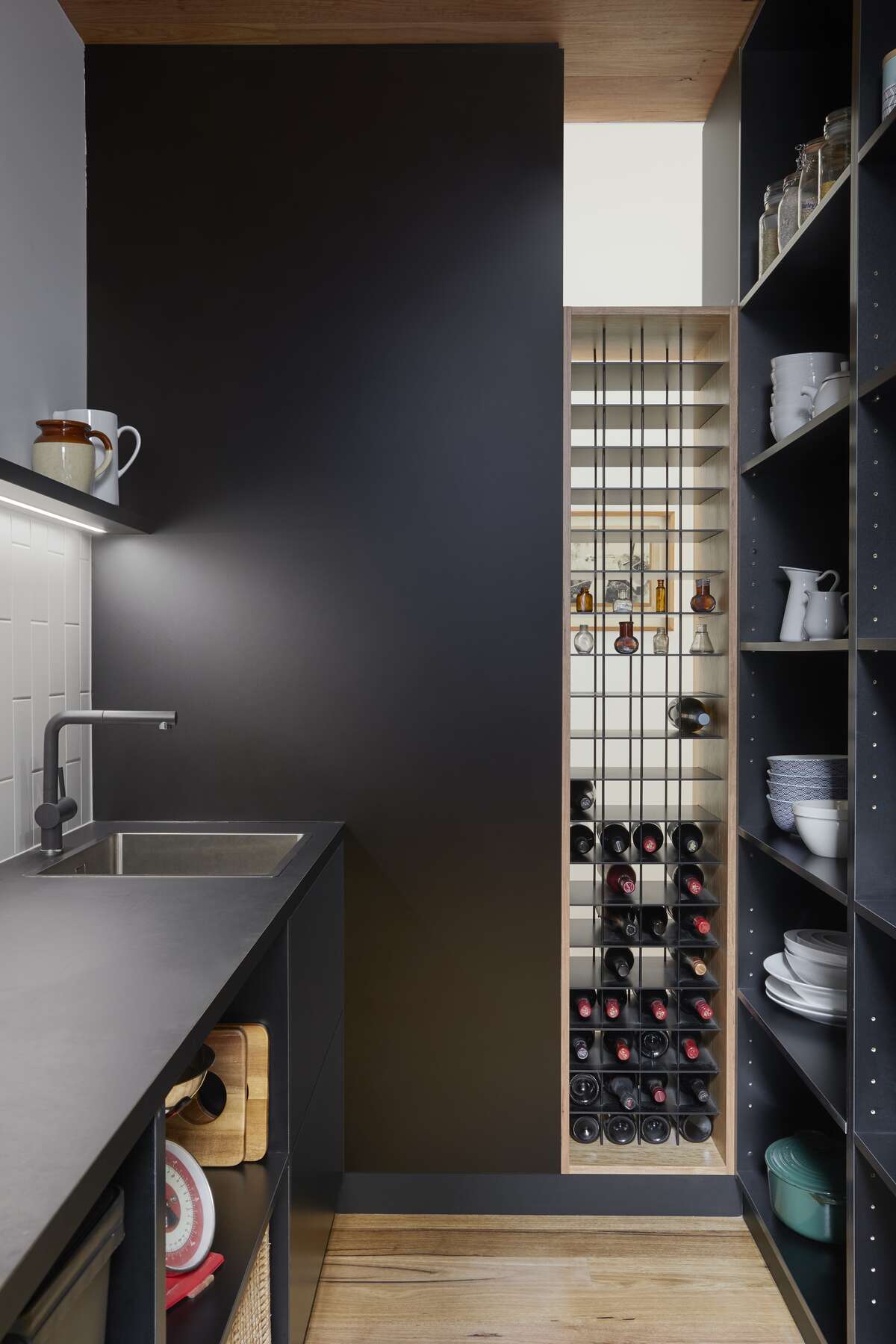
- Matte Black laminate joinery
- Inax Wall Tiles
- Custom architectural steelwork in matte black
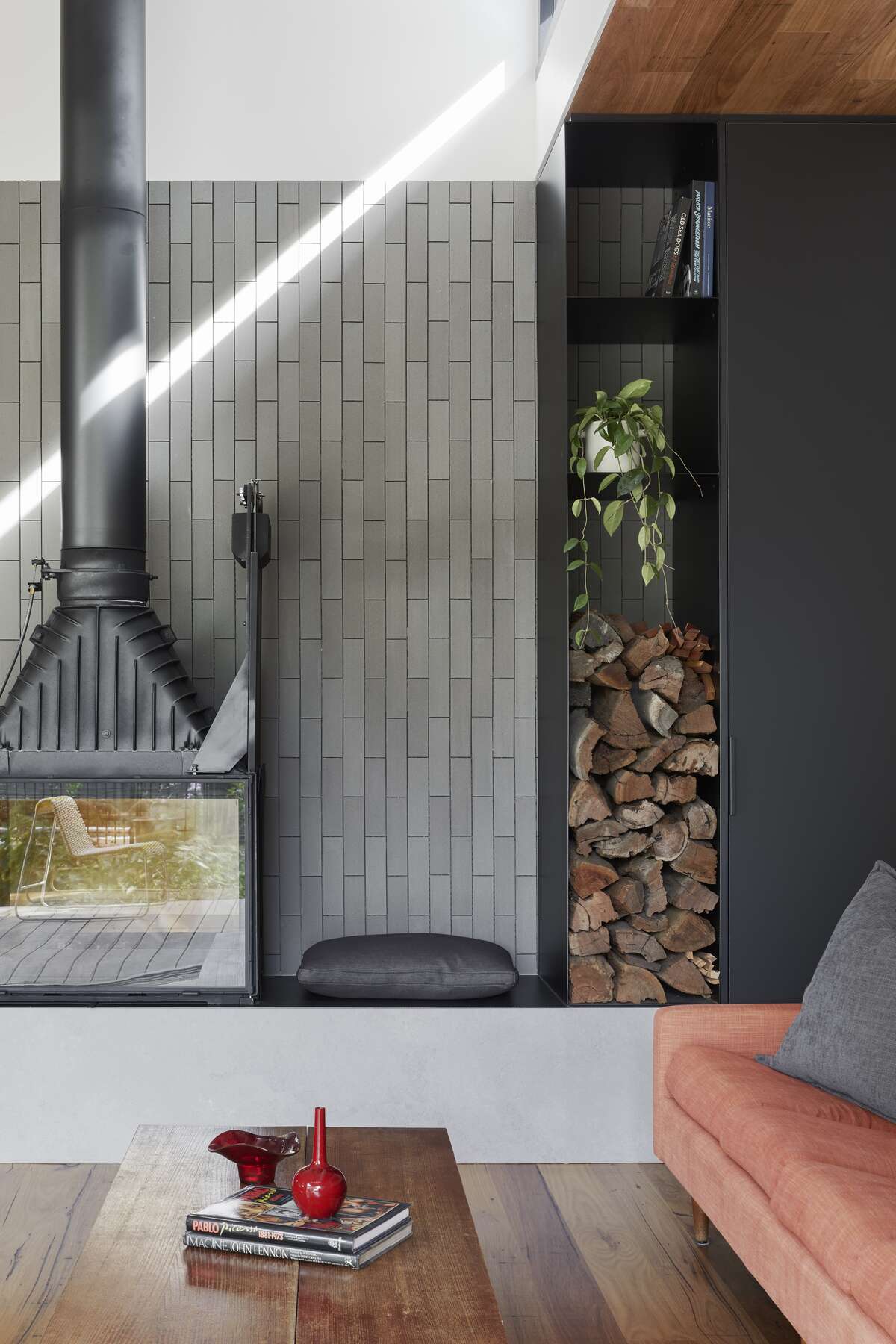
- Cheminess Philippe double-sided fireplace
- White subway tiles
- Faucet Strommen tapware
- AWS glazed stacking doors and retractable insect screens
- ISM Objects feature wall lighting
- M Douglass Design pendant light
Project Details
Project Size – 200 m2
Site Area – 500 m2
Completion Date – 2018
Building Levels – 1
Project Team
Architecture
Kuzman Architecture
Kuzman Architecture, established by Sandi Kuzman in 2016, is a small studio that packs a big punch. With over 25 years of experience in renowned national and international architectural practices, Sandi brings a diverse range of experience in both residential and community realm projects.
Photography
Tatjana Plitt
Tatjana is an award-winning artist and architecture/interiors photographer based in Melbourne.
Inspired by the power of architecture to shape how we feel, think, and behave, Tatjana creates images that capture the mood and emotion of spaces.
Photo Gallery
Click on a thumbnail image to enlarge.

Design © 2022 Kuzman Architecture. All Rights Reserved.| Images © 2022 Tatjana Plitt. All Rights Reserved.
The Builtworks Quest
At Builtworks, we’re on a multi-year quest to document, showcase, and spotlight the best of Australia’s built environment.
That’s why we’re creating this comprehensive online archive and educational resource that showcases a diverse and eclectic range of project types and scales.
Together with showcasing older exemplars of enduring merit, we spotlight and celebrate new and recent additions to Australia’s built environment.