
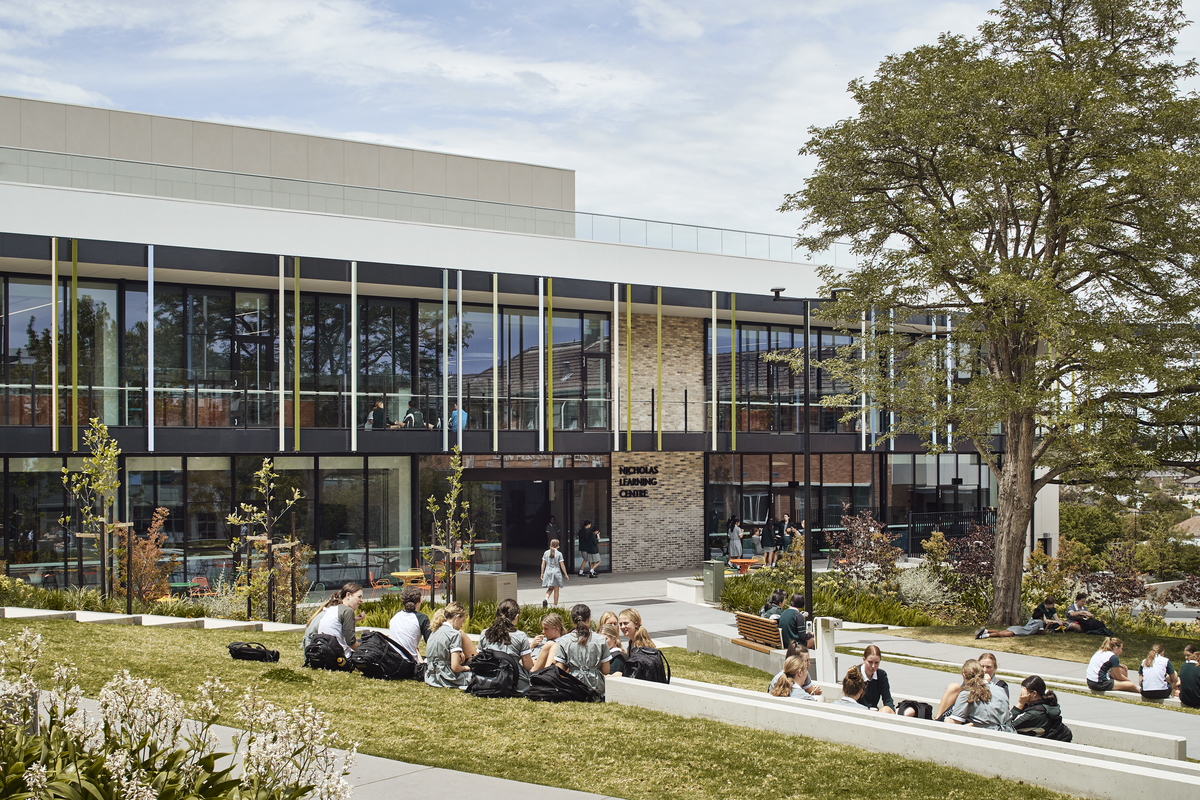
The Nicholas Learning Centre for Years 7 and 8 girls is the first project emerging from the 2015 College Masterplan – a vision for the 10-year development of the Kew campus of Methodist Ladies College, in Melbourne’s inner east.
Designed by architects McIldowie Partners and situated between MLC’s traditional primary and secondary schools, the new building brings together previously separated Years 7 and 8.
It creates a school within a school alongside the new landscape heart of the campus, the Principal’s Terrace.
Arising from the demolition of two cramped wings of the previous Nicholas building, the new Nicholas Learning Centre provides four levels of learning spaces.
There is a level each for Years 7 and 8, both with ten learning spaces or home rooms.
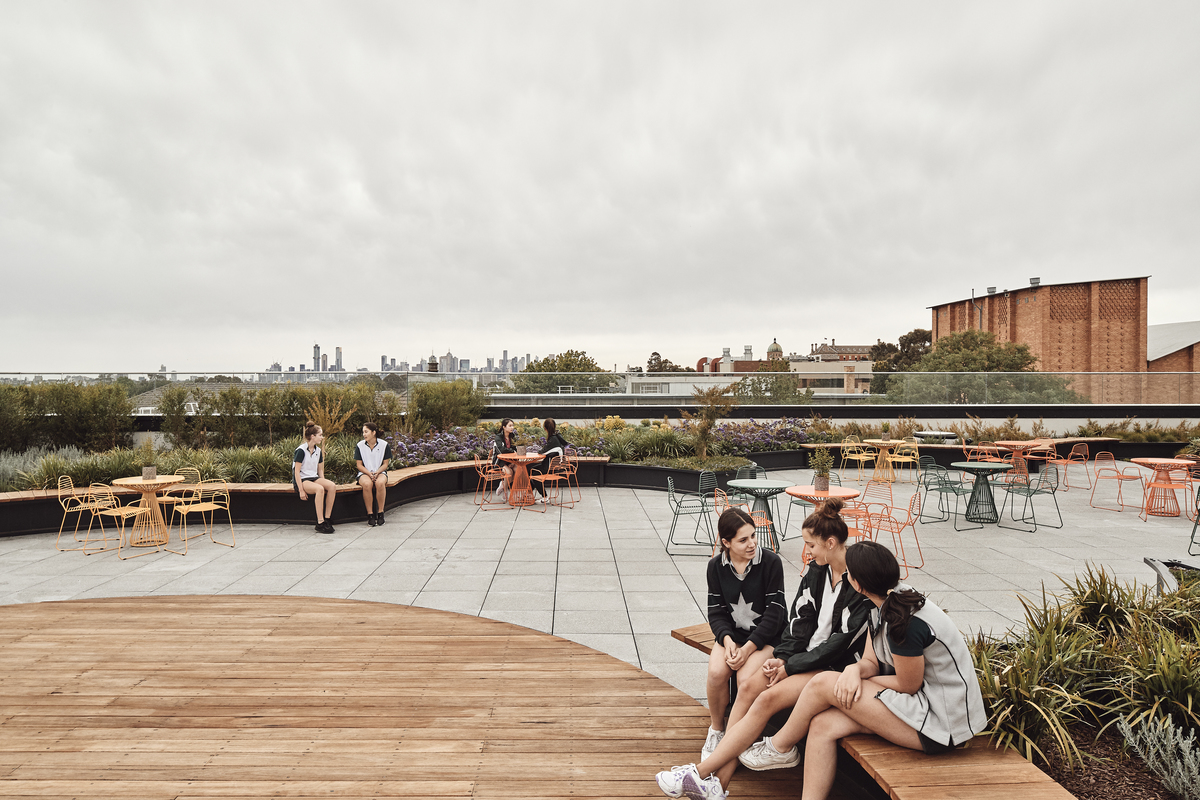
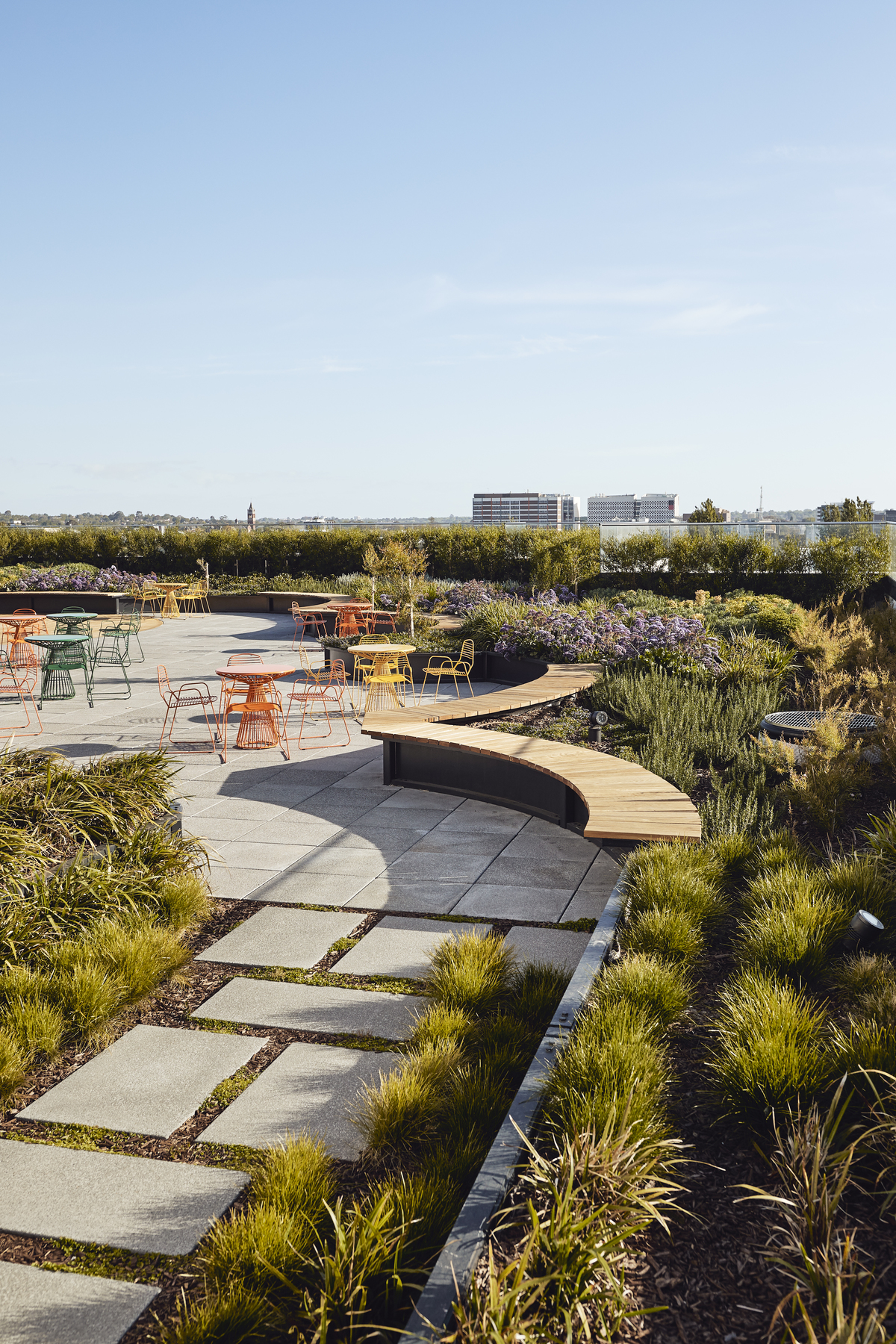
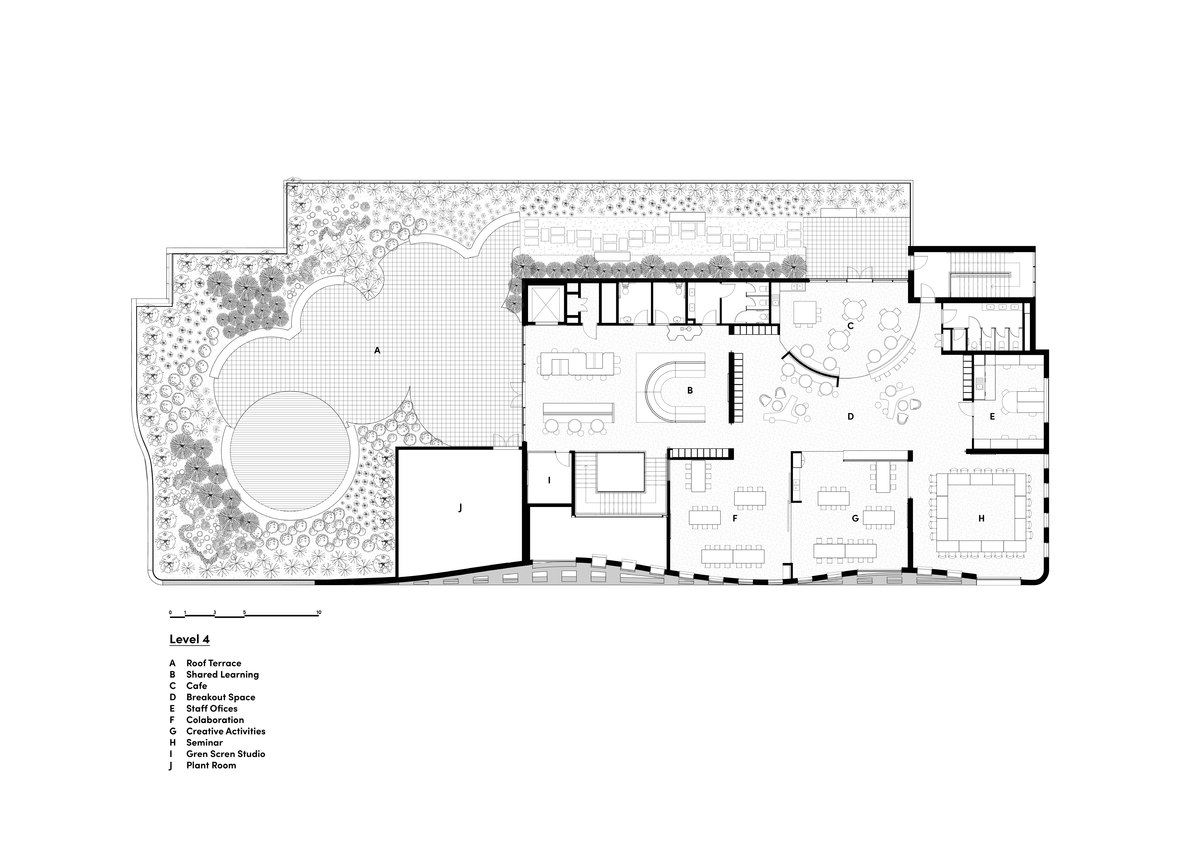
A shared innovative learning zone at the top of the building flows into the popular roof-garden for outdoor learning.
And at the building’s base, a formal administrative floor welcomes parent and visitors.
From a plinth of grey bluestone to the light and open roof garden, with sight lines in all directions, the eastern walls of MLC’s Nicholas Learning Centre are carefully and deliberately curved, softly scribed along the hard edge of the sporting oval.
The handcrafted brick ‘skin’ in pale shades and progressive tones brings warmth and connectivity between the formal and informal campus context.
From within, the curved skin is punctuated by a fenestration framing views, expressing open connection beyond the College, reflecting the MLC theme of educating world-ready women.
The western edge of the new building— once ‘Grove Avenue’ a remnant of the evolution of the campus from a suburban street—is softened and opened to provide a gracious welcome to a natural flow of students and visitors into the new heart of the campus, the Principal’s Terrace.
This has become a natural gathering place, overlooked by the Centre’s verandahs, providing shade, and an invitation to outdoor learning.
“The diversion of Grove Avenue into the heart of the campus, not only becomes the formational gesture of the building, but the key to unlocking the new landscaped heart as a destination on campus,” says John McIldowie from McIldowie Partners.
The west façade is predominantly glazed to take advantage of the garden setting beyond and to flood the learning spaces with natural light.
A series of coloured triangular aluminium battens emphasize the horizontal gesture of the balcony, such that the building engages intimately with the human scale of the terrace beyond.
Each batten also rotates, so students can participate in the architecture, creating a sense of playfulness appropriate for the middle years setting.
The deep overhanging balcony, as well as the natural stack ventilation system which provides fresh air to the learning spaces and ensure that comfortable temperatures are maintained throughout the day.
A series of display units in each learning space inform staff and students when conditions are suitable for natural ventilation, which has been embraced as a learning tool from staff and students alike.
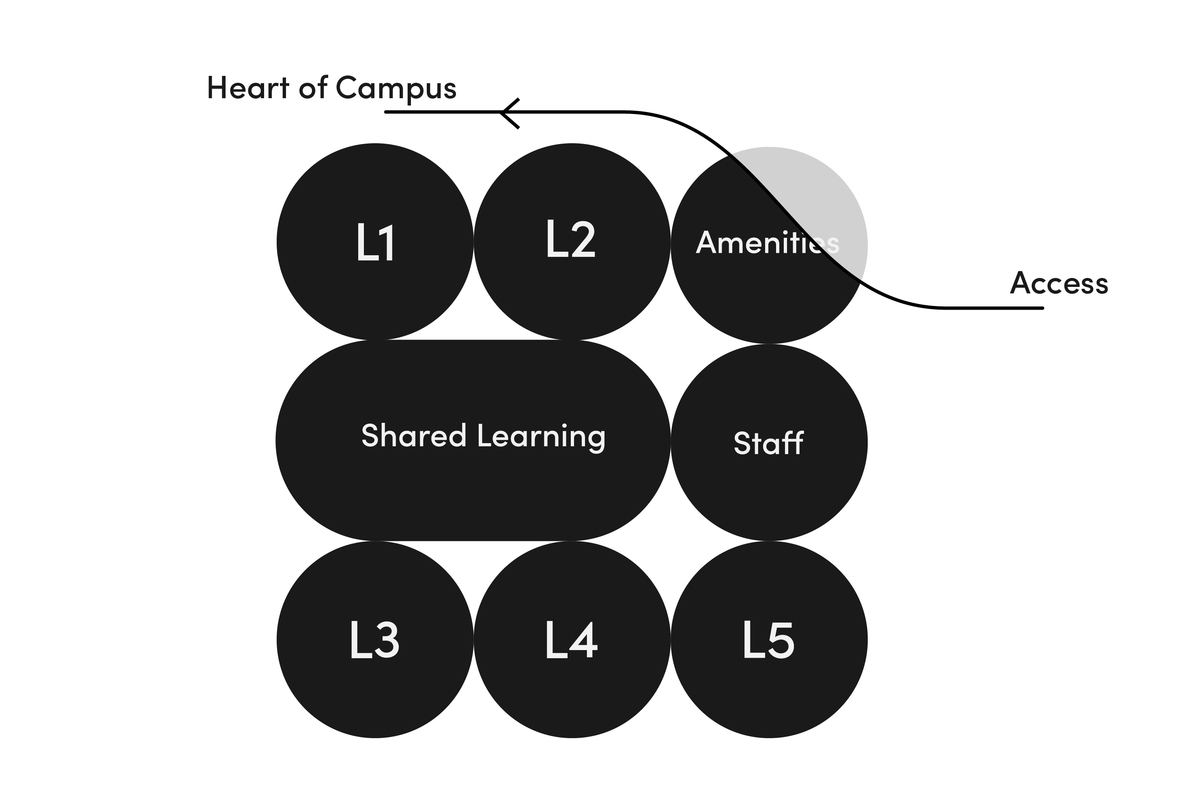
Working in close collaboration with the school’s academic staff, McIldowie Partners’ design of the learning spaces are driven by the concept of the learning community, which aims to balance access into the heart of the campus with wellbeing and best practice learning.
As a result, the building is broken down into a series clusters, five learning spaces around a shared breakout space, nurturing students in the transition from junior to secondary schools by building strong bonds between peers and staff through a homeroom based well-being model, strengthening a sense of identity and ownership over the spaces.
Playfulness throughout the McIldowie Partners’ design encourages the girls to enter the new environment with a sense of wonder as well as purpose.
Colour is used to bring spaces together, and to provide a contrast between floor levels.
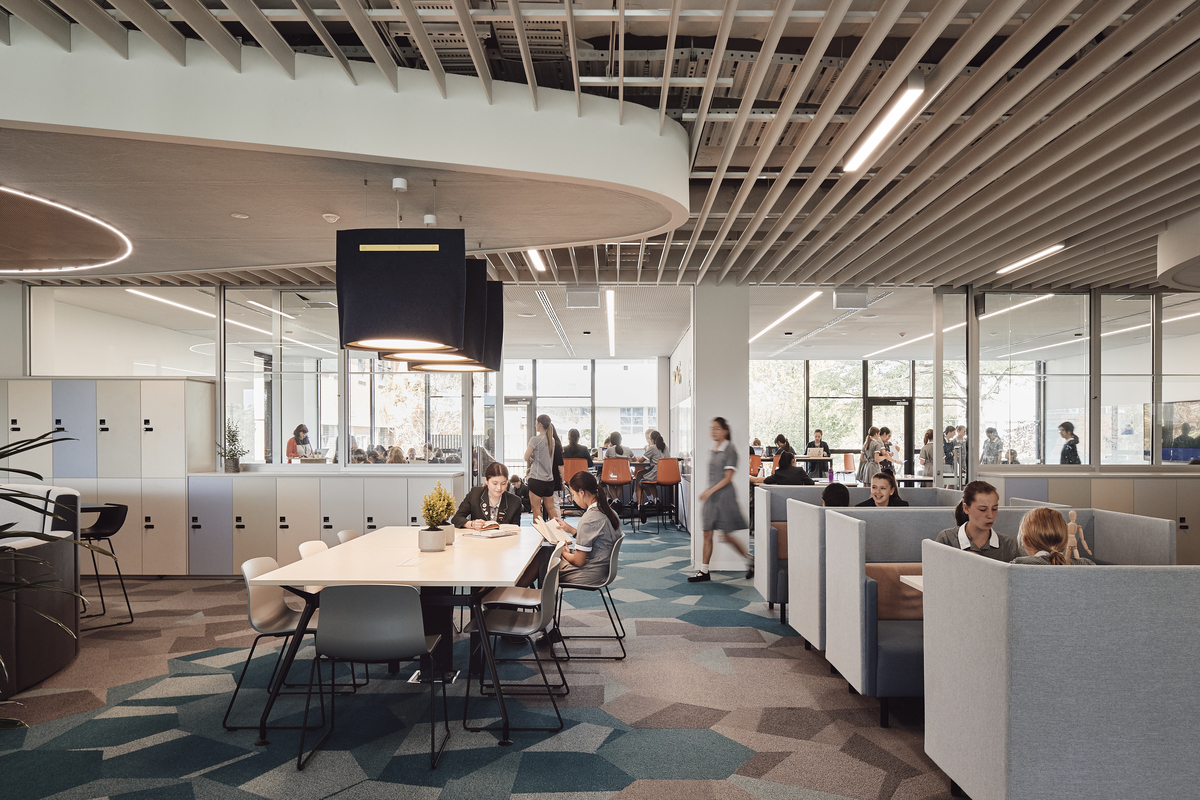
At the micro level, intimate nooks open up for private reflection and research, contiguous with the broader learning environment.
Levels 2 amd 3 for Year 7 and 8 learning spaces respectively, focus on delivering flexible and reconfigurable spaces that place students at the centre of the learning environment.
The McIldowie Partners’ design supports a variety of learning settings through agile furniture and provides porosity between spaces through oversized glass sliding doors and operable walls.
This enables students to access multiple areas within the learning environment and to shift seamlessly between different modes of learning.
From independent learning to collaborative group work, or from more directed learning to reflection.
By encouraging students to choose where and how they learn, the design aims to empower students to be the authors of their own learning.
In contrast to the Year 7 and 8 learning spaces across Levels 2 and 3, the innovative zone on Level 4 is aimed at encouraging groups to learn in an increasingly less structured interdisciplinary format.
Purposeful learning settings such as presentation booths with video conferencing, a green screen filming studio, maker spaces, and a seminar room are provided in a more open manner.
The roof terrace flows seamless from this collection of spaces to form a hub for project based collaborative work and provides a platform for innovative teaching and learning practices as distinct from the flexible spaces provided below.
Ultimately, it is the collection of these ambitious, student centered learning spaces that matter.
Determined to improve student learning outcomes and teacher practices, this McIldowie Partners designed building sits at the heart of a growing field, delivering innovative architecture through the lens of innovative learning.
Project Details
Project size – 4,500 m2
Completion date – 2019
Building levels – 4
Design
Architecture
McIldowie Partners
McIldowie Partners is a Melbourne-based, medium-sized architectural and interior design practice with extensive history and experience in a wide range of education, hospitality, corporate, and commercial projects.
They have a commitment to developing innovative, unique solutions for individual clients and projects which has resulted in creating a diverse body of work across multiple sectors in communities throughout Australia and New Zealand.
Consultant Team
Quantity Surveying – Prowse
Accessibility Consultant – Before Compliance
Acoustic Engineering – Marshall Day Acoustic Engineers
Structural Engineering and Services Consultant – Arup
Landscape Architecture – Taylor Cullity Lethlean
Photography
Peter Bennetts
Peter’s work regularly features in the Australian publications Architecture Australia, Artichoke, Belle, Inside, AR, Monument, inside, and Vogue.
He is a frequent contributor to Wallpaper*, Frame, Mark, Dwell, Domus, Casabella, and other international publications too.
Peter’s photography has appeared in numerous books including four monographs and the two volumes of the Phaidon Atlas of Contemporary World Architecture.
Peter’s architectural images have been described as having “a remarkable crystalline stillness” and he is known for his “straight-shooting” style of architectural photography, focusing on the formal, material and atmospheric qualities of a project.
Photo Gallery
Click on a thumbnail image to enlarge.










Design © 2020 McIldowie Partners. All Rights Reserved.| Images © 2020 Peter Bennetts. All Rights Reserved.
Get the Builtworks Letter
In every edition of the Builtworks Letter, you’ll get the behind-the-scenes backstory as to how buildings are designed, built, and brought to life.
You’ll hear compelling stories, learn surprising ideas, meet engaging characters, and discover unique voices.