
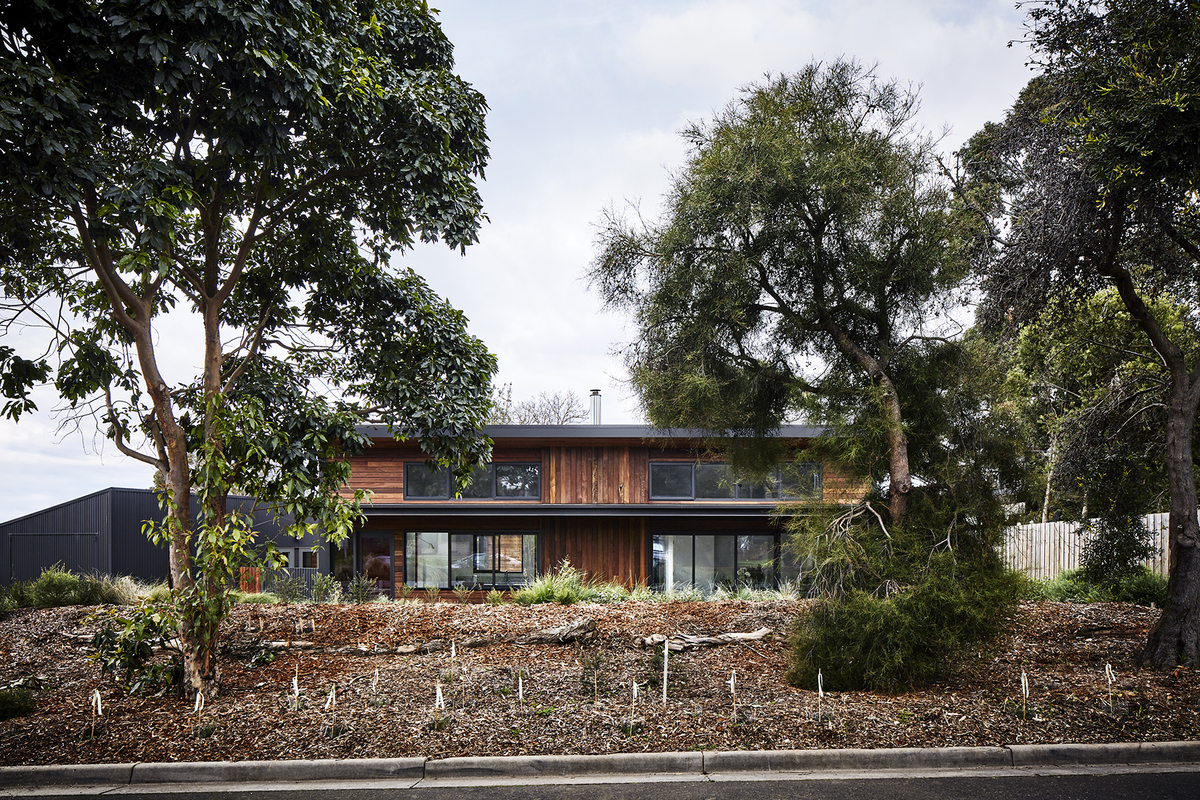
Situated in the coastal town of Balnarring, this family home designed by Atlas Architects embodies the environment and lifestyle of the Mornington Peninsula in Victoria, Australia.
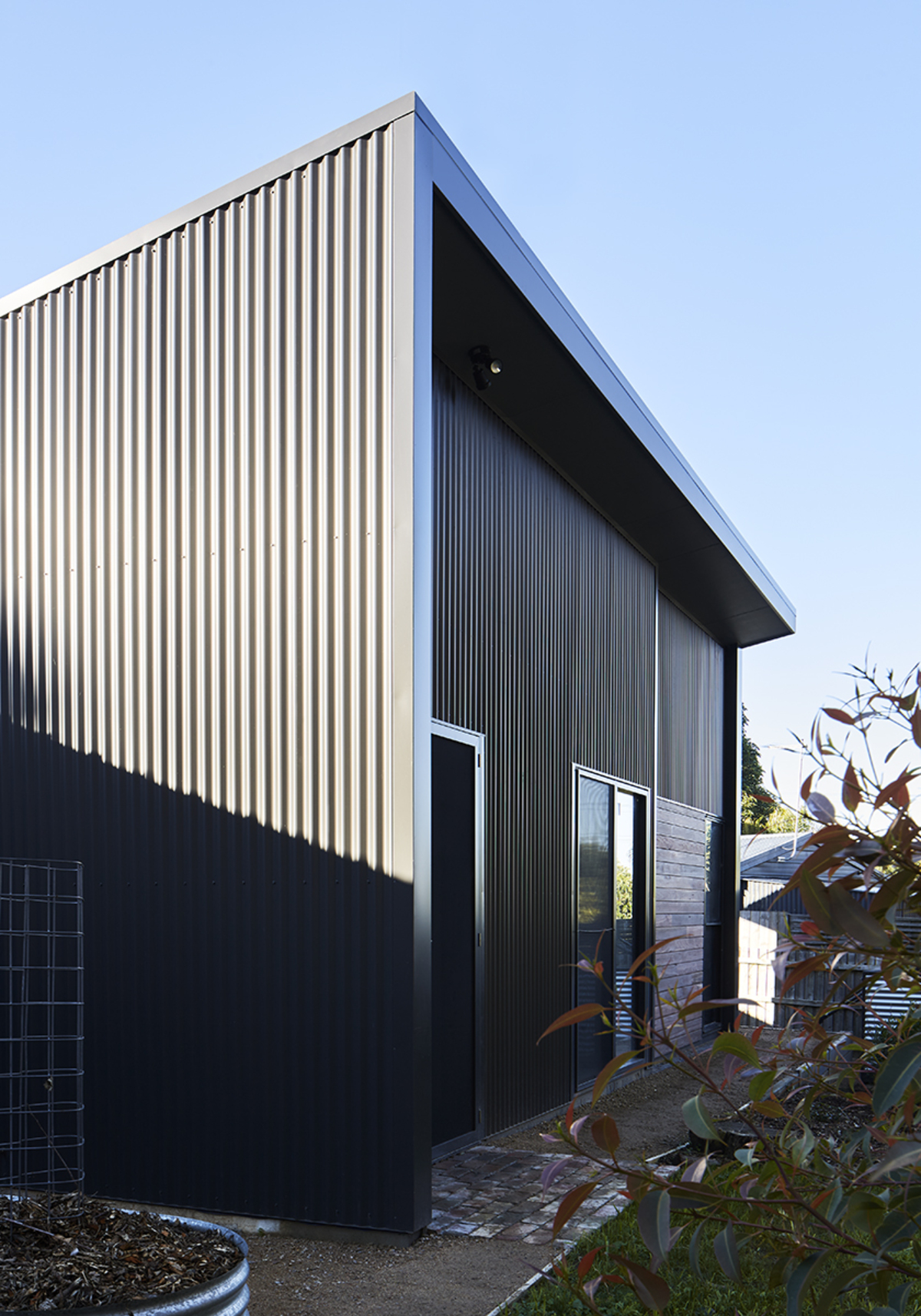
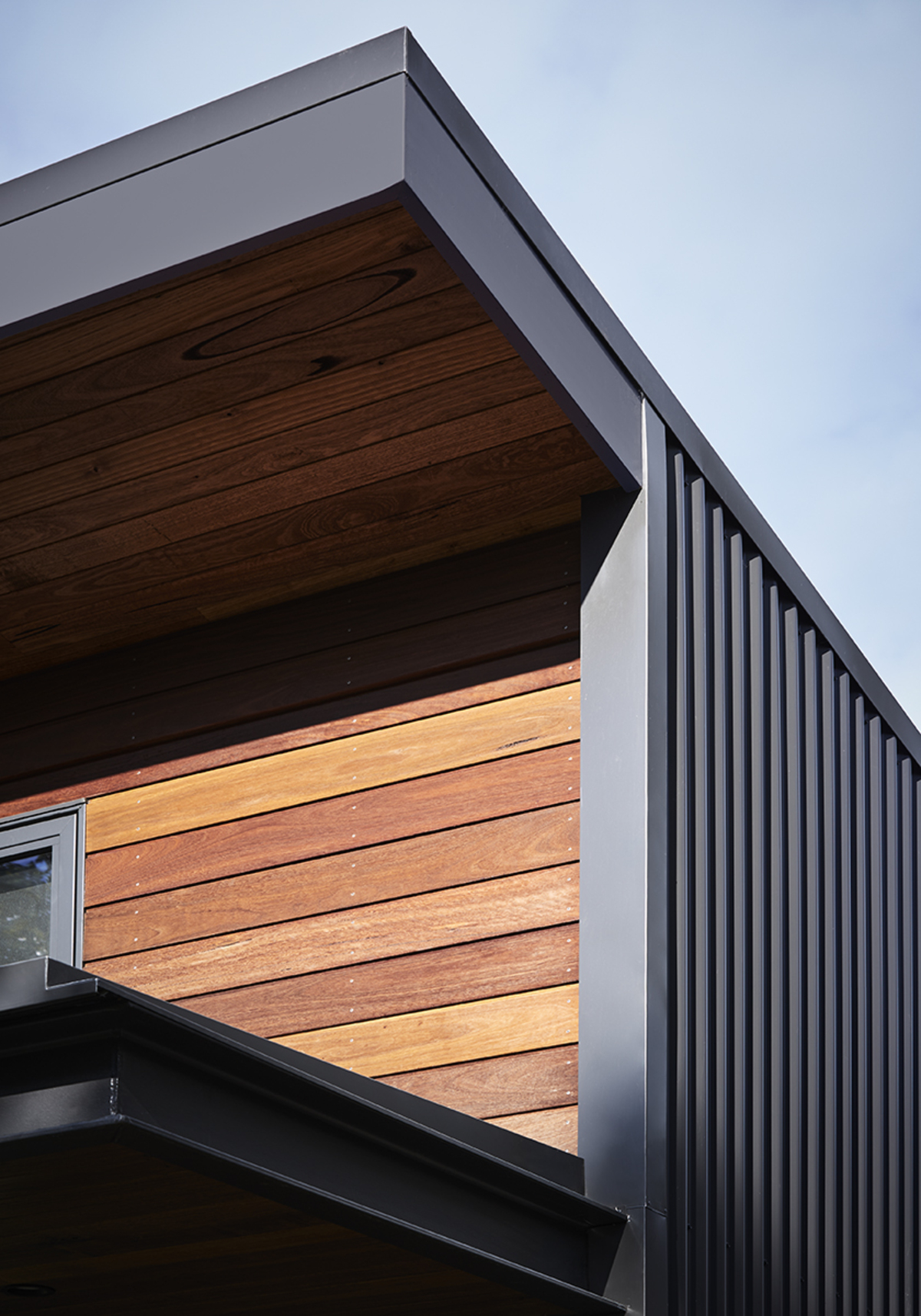
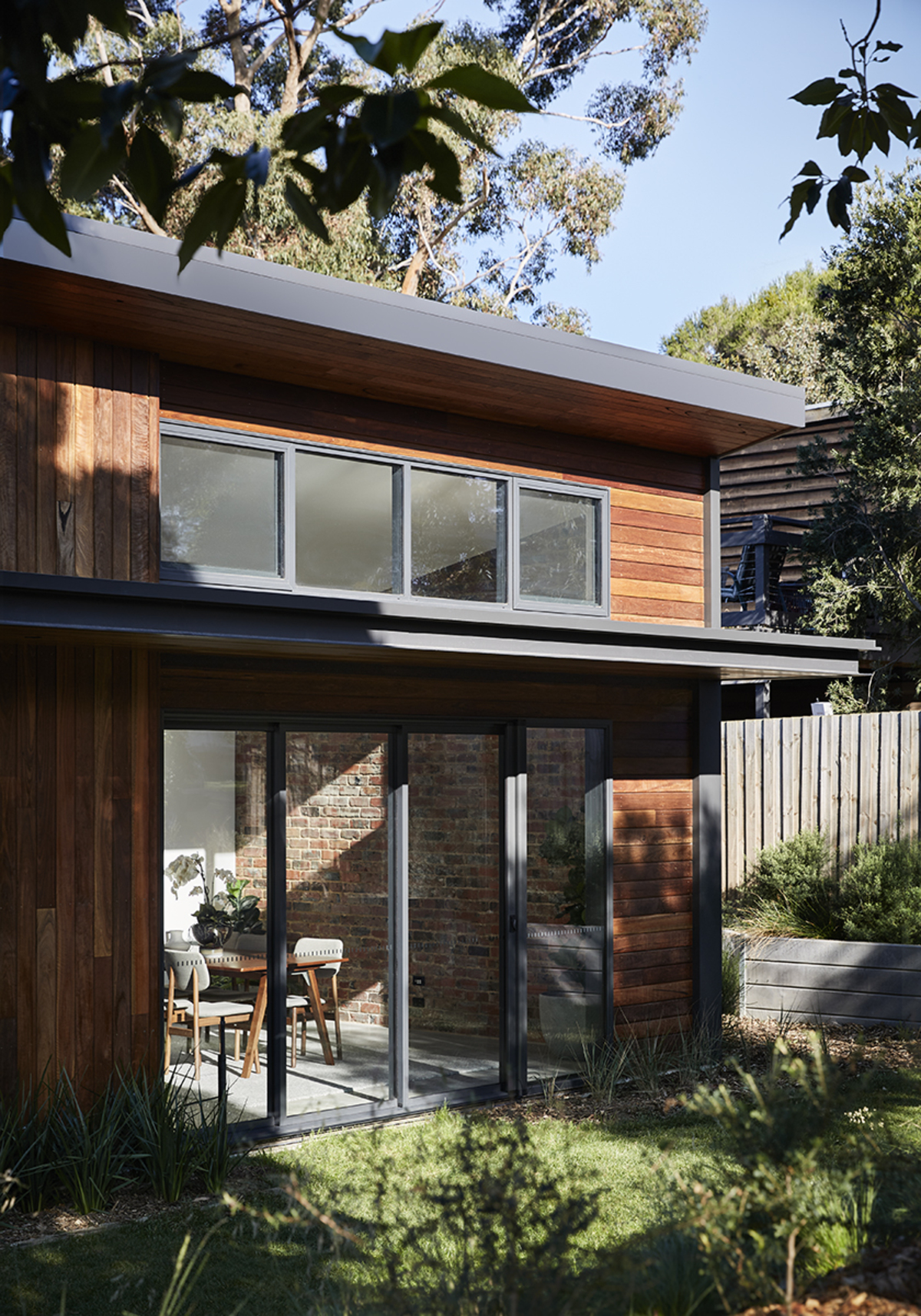
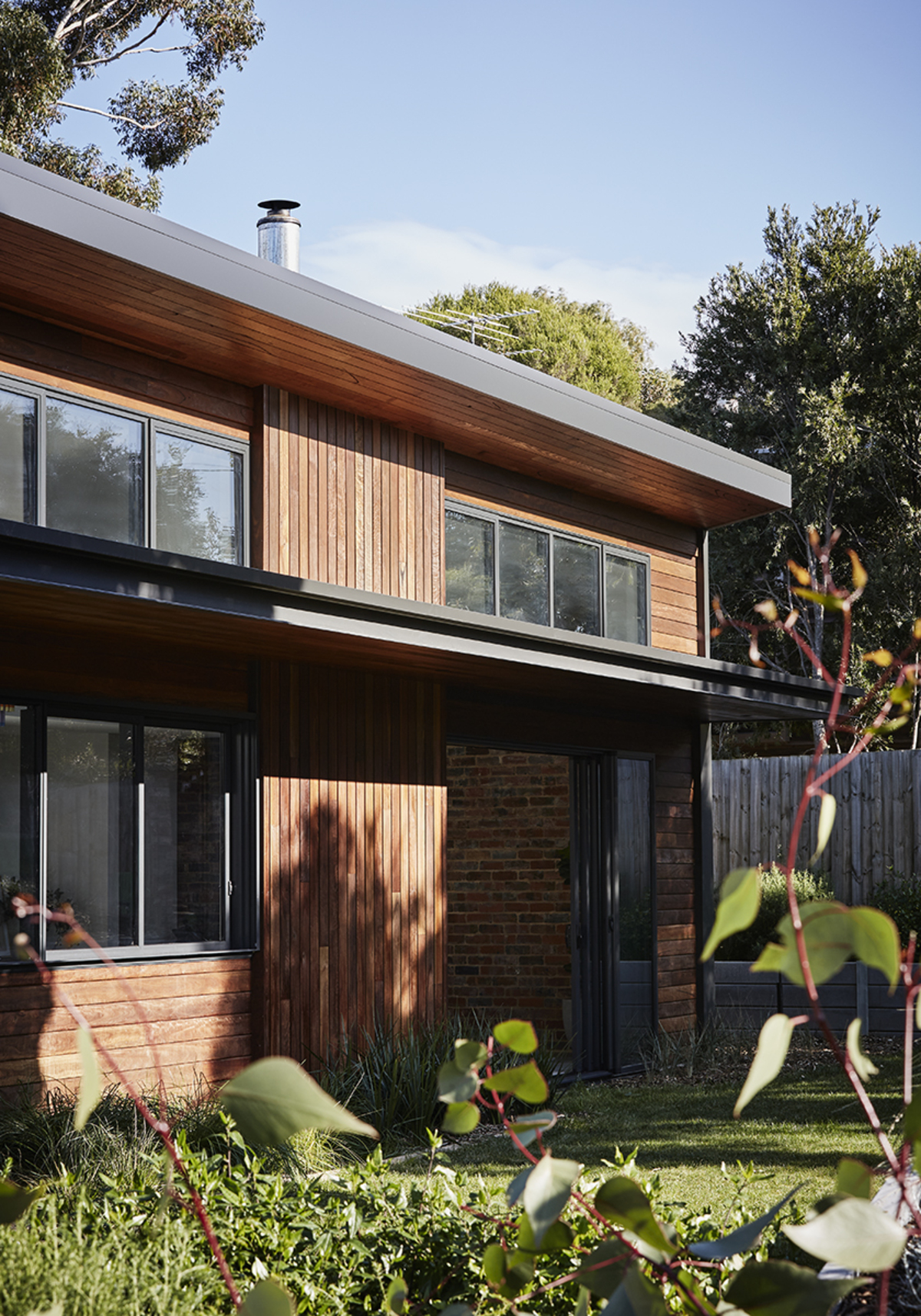
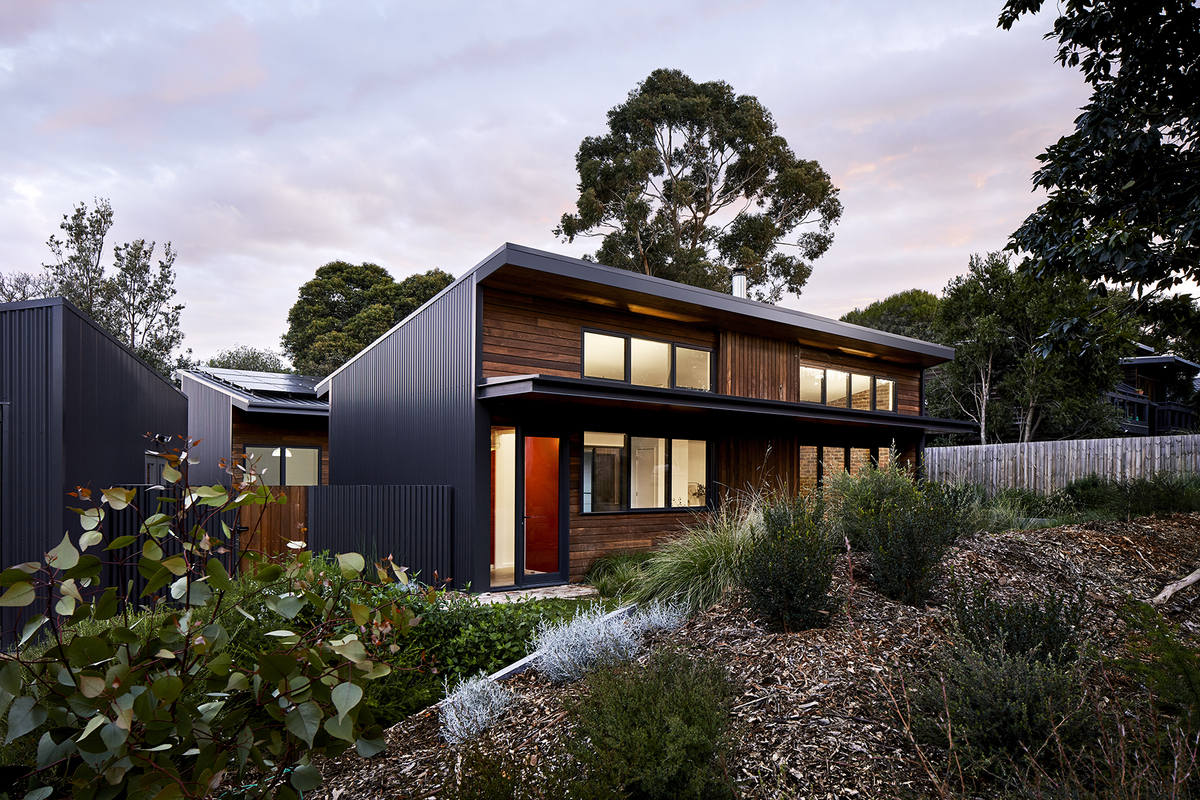
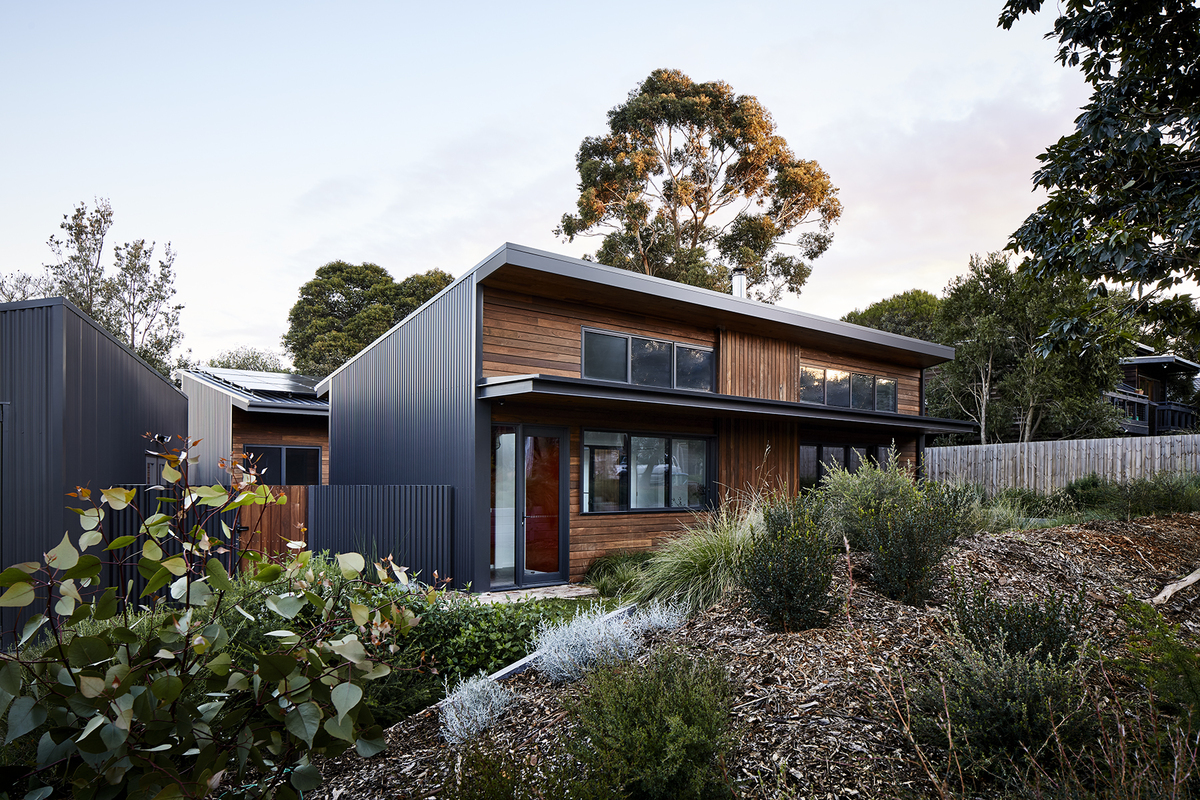
Blending in with its bushy site, the structure’s corrugated iron and timber cladding reference the Australian coastal vernacular.
Environmental sustainability is addressed through large north-facing openings and reverse brick veneer construction.
Generous front and rear gardens provide room for diverse activities.
A central courtyard completes a hierarchy of outdoor spaces, connecting interior functions with the external environment.
Atlas Architects’ clients first approached them looking to build a small sustainable home on a vacant property in Balnarring.
Their initial idea was to build a one-bedroom courtyard home, which could be extended under Stage Two works to include two additional bedrooms.
As concept design commenced, the clients decided to carry out all building works under one contract.
They were after a home that was environmentally and socially sustainable.
So the building needed to be energy efficient and have excellent passive solar qualities and natural ventilation.
The social aspect and the relationship to the landscape and outdoor space were important elements that the Atlas Architects’ team considered in spatial planning.
The house would predominantly be used by the couple.
However, it needed to be flexible when their adult children came to stay.
During the eighties and nineties, Atlas Architects’ clients lived in Balnarring.
They purchased two vacant neighbouring properties, each for $9,600, and built a home on one of these lots.
The other lot remained vacant with only a shipping container used for storage.
Due to work and school commitments, the clients moved back to city life in Melbourne.
However, their love for Balnarring never faded and they would spend every school holiday camped along the foreshore caravan park.
Once their children moved out of home Atlas Architects’ clients turned their attention to building a new home on the vacant property.
They had now owned this property for 45 years and possessed excellent knowledge of the site’s conditions and constraints.
The clients were very involved in the design process and the construction of the project.
Every internal finish, fixture, and fitting was hand-picked by them.
Whilst a registered builder was employed for the construction of the dwelling, a number of tasks were undertaken by the client themselves, such as the construction of retaining walls, landscaping, and site drainage.
This collaboration between clients and builders resulted in a home that achieved all the clients’ specific needs.
It minimized material waste on-site as the clients were mindful of what could be recycled and repurposed on-site.
The outcome is a cherished home with a strong sense of place and an emotional connection to the owners.
The house references the Australian coastal vernacular and the courtyard house typology, both in its form and materiality.
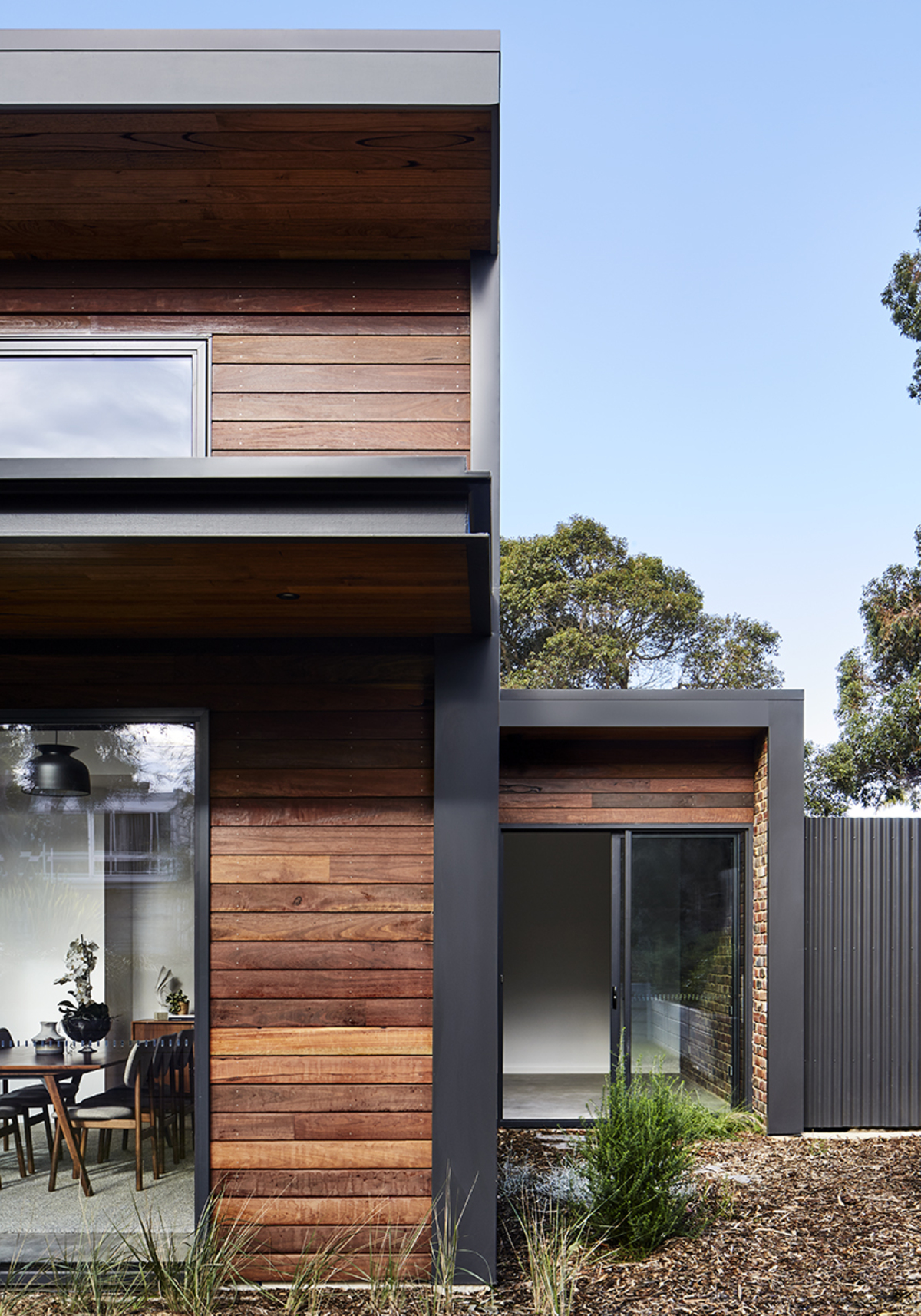
Corrugated iron and timber cladding are both found in typical coastal houses and convey a sense of familiarity with the Mornington Peninsula.
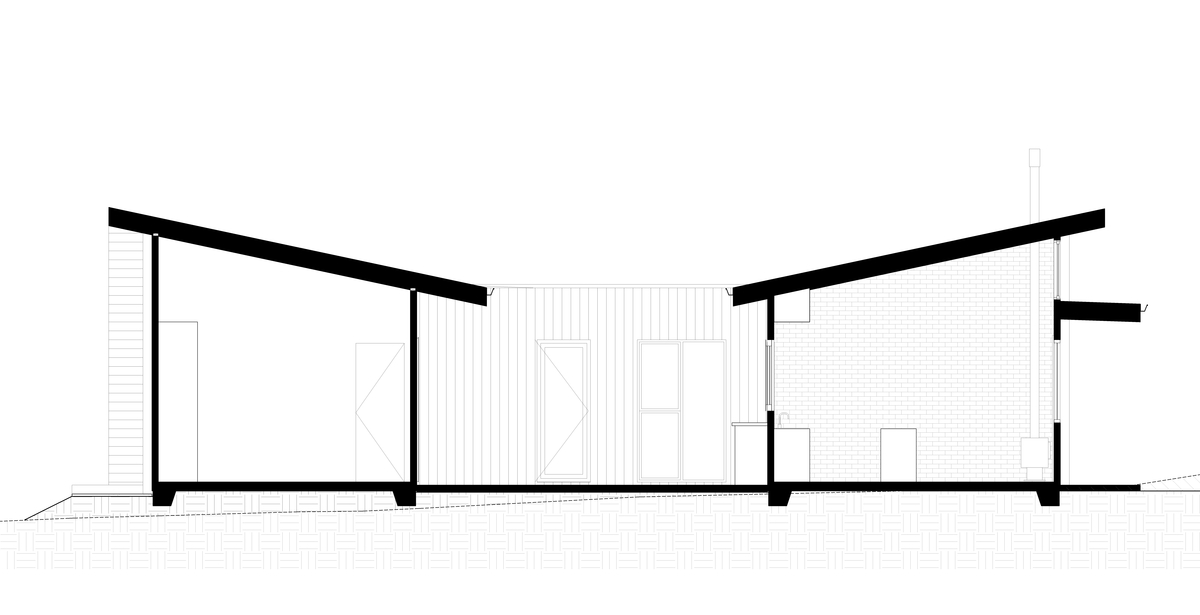
Whilst the courtyard is the centre of the house, it separates the volume into different wings to make heating and cooling more efficient and connect all parts of the house to nature.
When analyzing the site, it was apparent to the Atlas Architects’ team that the front of the property had wonderful opportunities in its wide 29m frontage, northern aspect, gentle topography, and existing vegetation.
The layout of the building separates the outdoor space into three zones:
- Front courtyard: Semi-public – a sunken northern front yard where it is shielded from the street by the shrubs and trees, the generous setback from the street and the landscape provides breathing space and outlook for the living and dining area. The master bedroom sets further back from the main façade. It allows for a private garden for the master bedroom to look out to.
- Central courtyard: Private – This is the family’s social courtyard where social events would happen. It has direct access to the living, dining, kitchen, workshop and entry from the driveway.
- Rear courtyard: Private – This acts as a functional outdoor space with firewood, garden storage, services, fire pit and veggie gardens. With the tall trees retained and new medium-size trees planted, the rear courtyard has a campground vibe, referencing the couple’s love for the outdoors.
A major consideration for this project was achieving privacy whilst also keeping the home open to its leafy surroundings and northerly sunlight.
Atlas Architects’ response was to utilize native vegetation and raised garden areas to shelter the building.
The building sits 800mm below the natural ground level at the front of the property.
The raised garden prevents passers-by from looking into the living and dining rooms.
The retaining walls within the front yard create a sense of enclosure while maintaining views of tree canopies and surrounding gardens.
The central courtyard creates an additional sheltered outdoor area, protected from cold south-westerly winds.
As there are two double-story dwellings on either side of the property, the roof form of the dwelling and workshop create a visual barrier to prevent overlooking into the central courtyard.
On a smaller scale, the placement of windows throughout the dwelling maximizes outlook while maintaining privacy.
The master bedroom window looks out to aspects of the northern yard, yet it is recessed from the front and screened by the landscape.
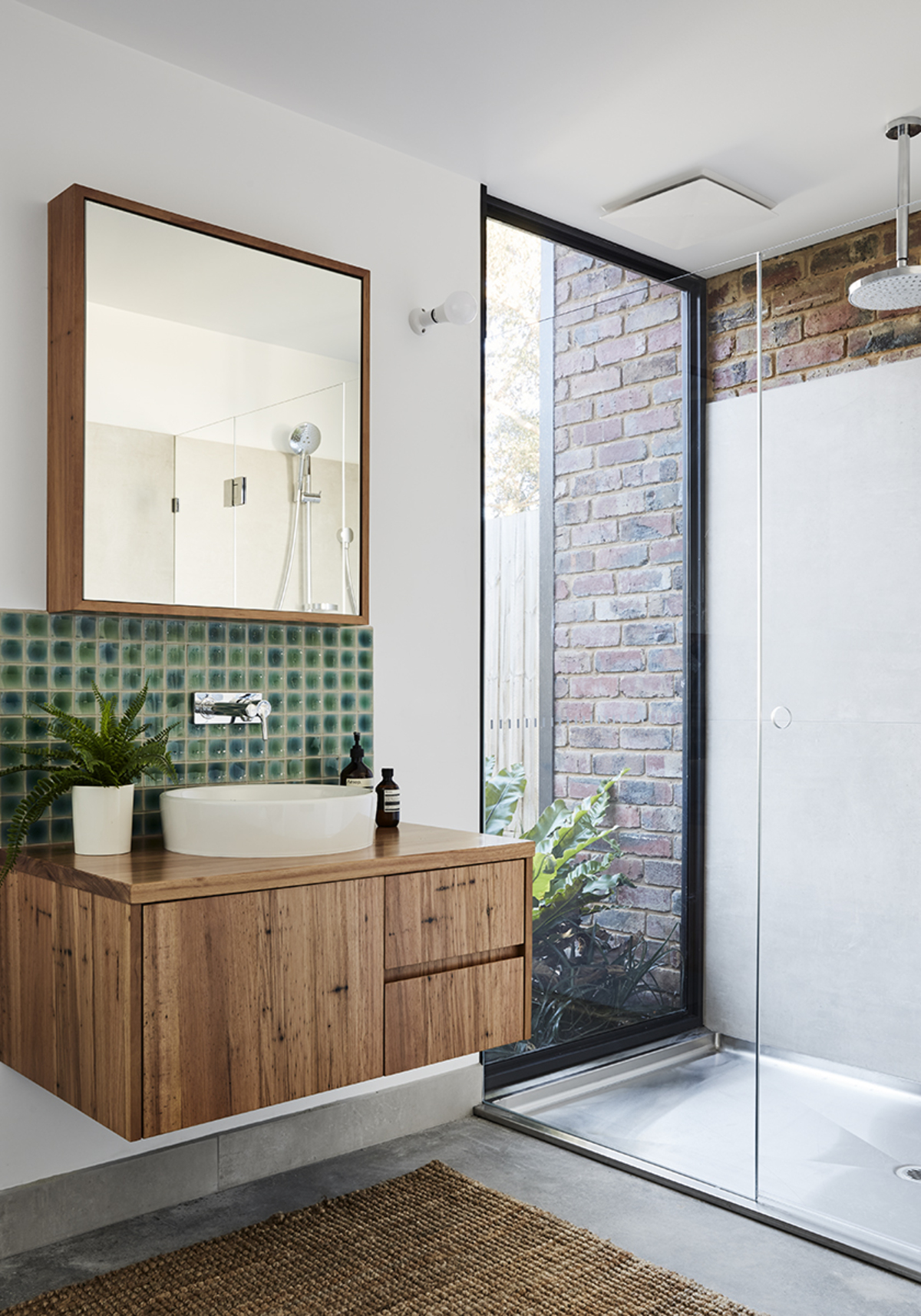
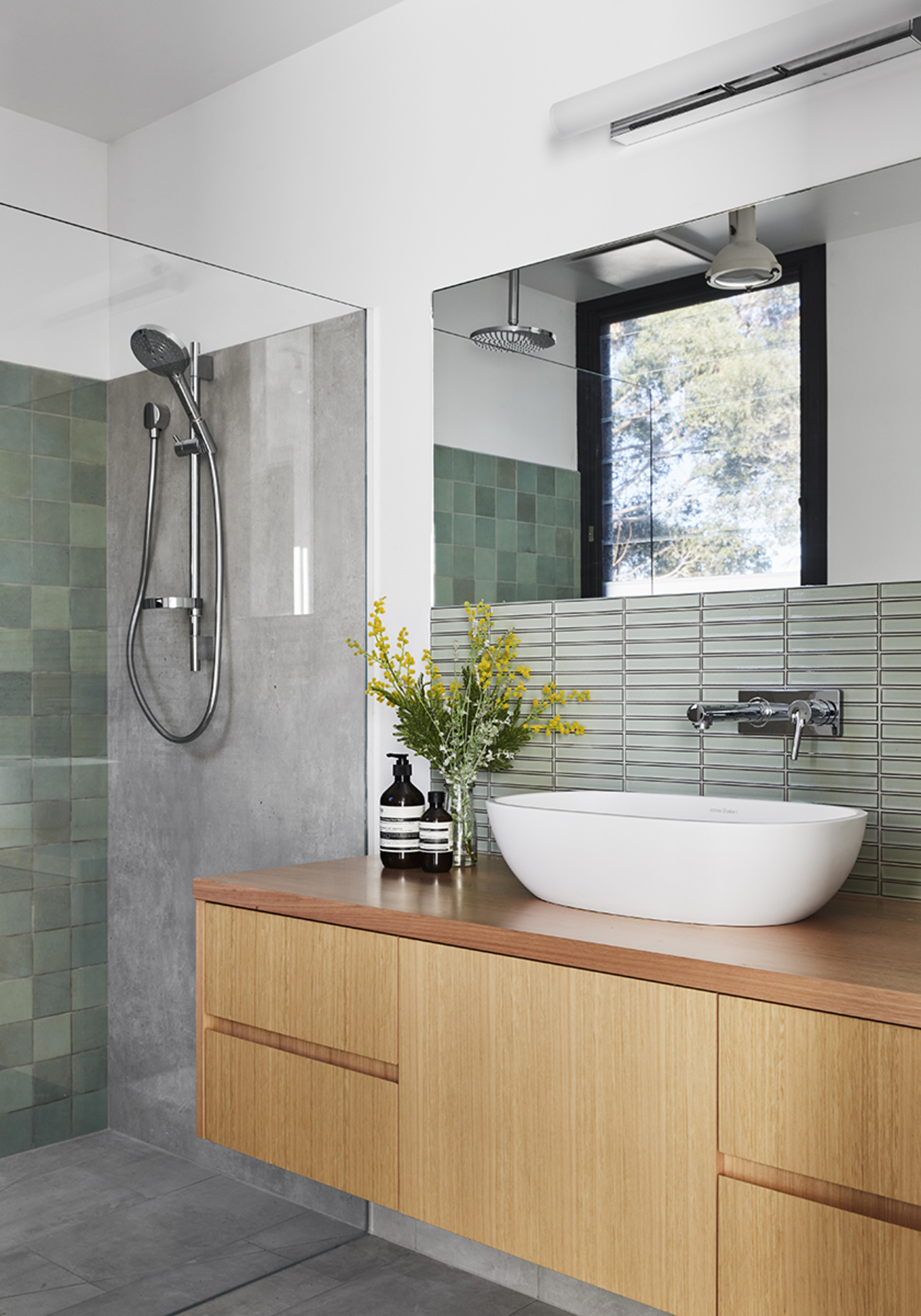
And the ensuite shower has a full-height window facing the rear garden with an adjacent external wing wall obstructing sightlines from neighbouring properties.
The owners were passionate about creating an environmentally sustainable home, not only to achieve long-term savings on energy and water bills but also to reduce their carbon footprint.
For the house to be energy efficient, Atlas Architects’ employed these strategies:
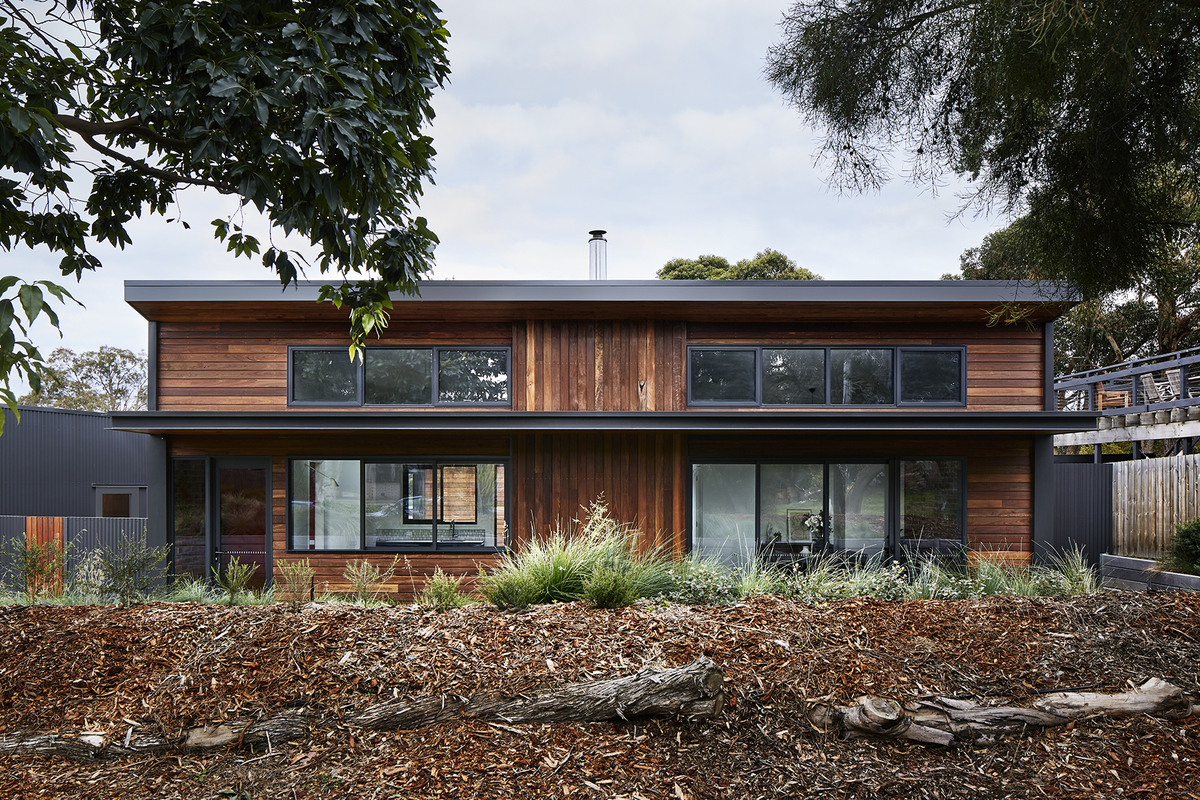
- Solar control: North-facing eaves were designed to prevent the summer sun from entering the building while allowing the winter sun to penetrate the interior.
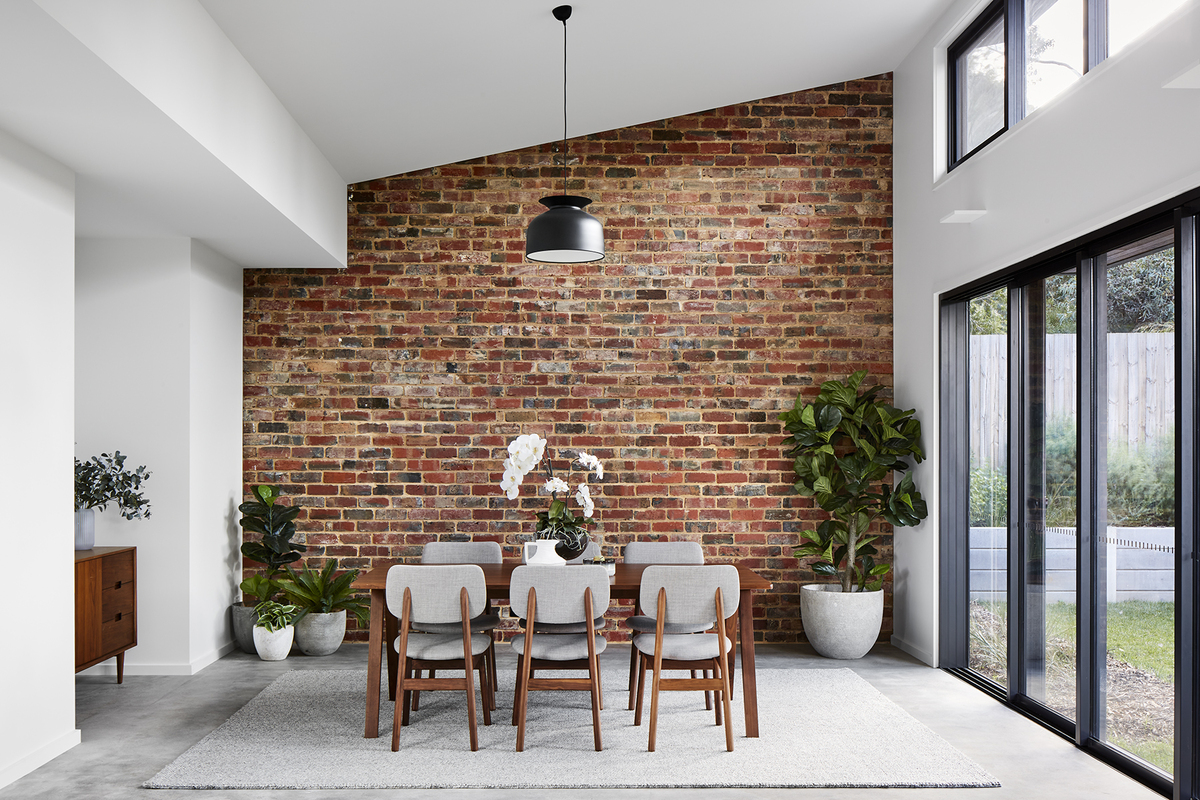
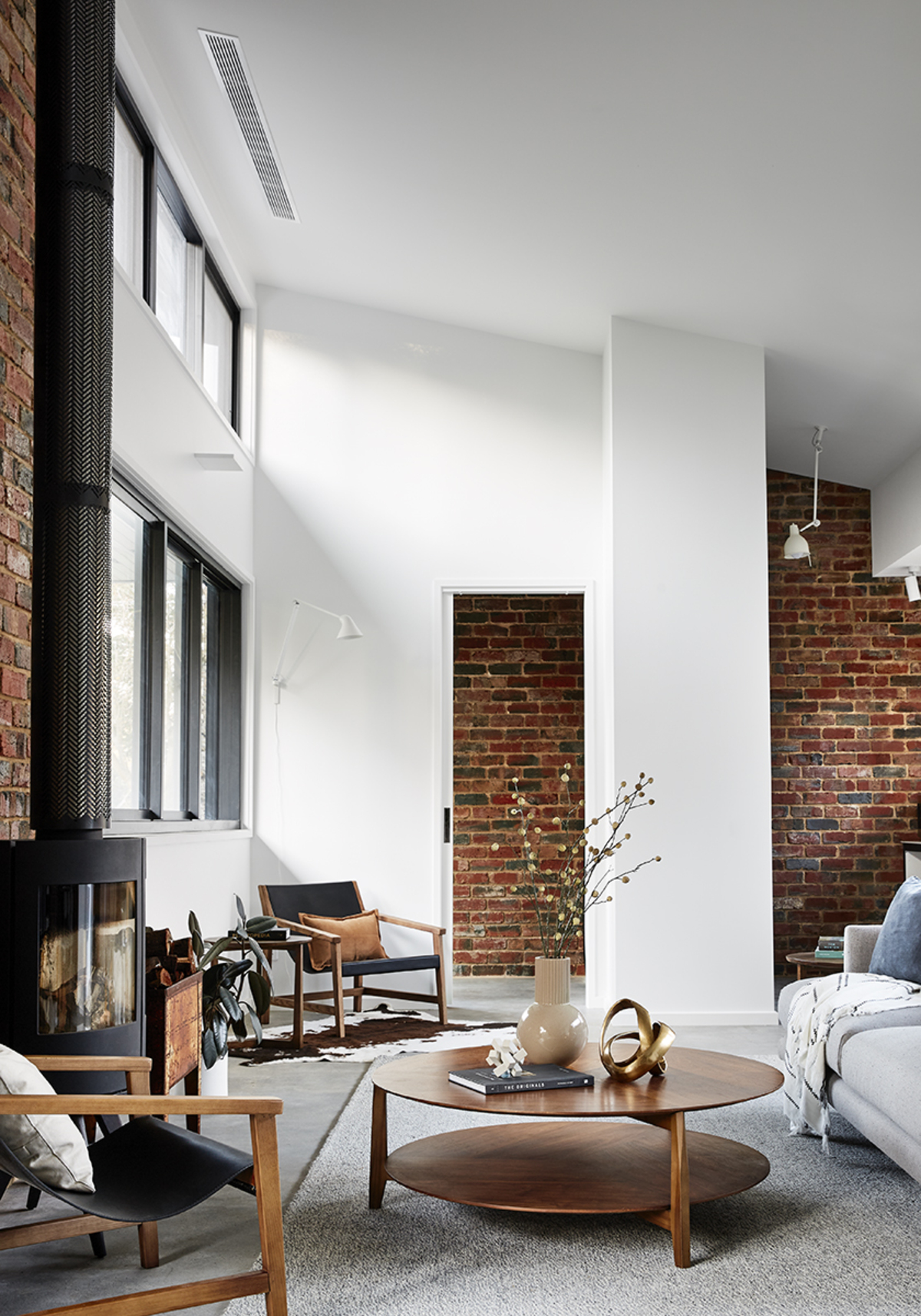
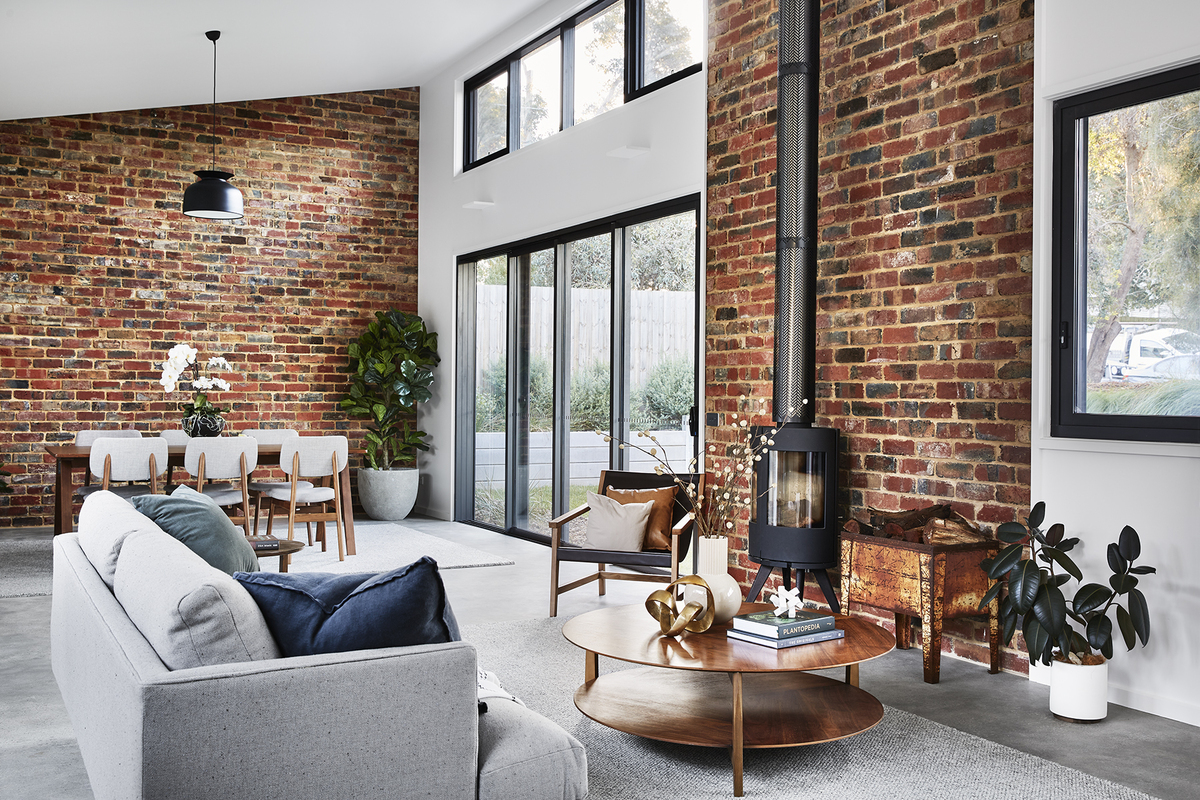
- Optimizing thermal mass: reverse brick veneer construction was used for a majority of the external walls. The brickwork is on the inside face of the wall and stud frame with lightweight cladding on the outside. The internal brickwork together with the insulated concrete floor absorbs solar heat during the day in winter and slowly releases the heat in the evening.
In summer, as the sun is kept out, the masonry walls and concrete floor keep the internal temperature cool. With reflective foil and insulation on the outside face of the brickwork, heat and cold transmission from the outside environment into the internal spaces is significantly decreased.
- The southern wing is separated from the northern wing by a sliding door. This enables a four-zoned heating and cooling system, ensuring only the rooms being used are air-conditioned.
- Natural ventilation: windows and doors were carefully placed to maximize cross ventilation. With the high angled ceiling and motorized clerestory windows, hot air can be easily purged.
- Solar power: Solar panels were integrated into the north-facing roof, generating power for the hot water heat pump and split system air conditioning.
- Rainwater tanks: A 2,000 litre rainwater tank provides a gravity water supply to the toilet and laundry. A 5,000 litre overflow tank provides a pumped water supply for garden irrigation.
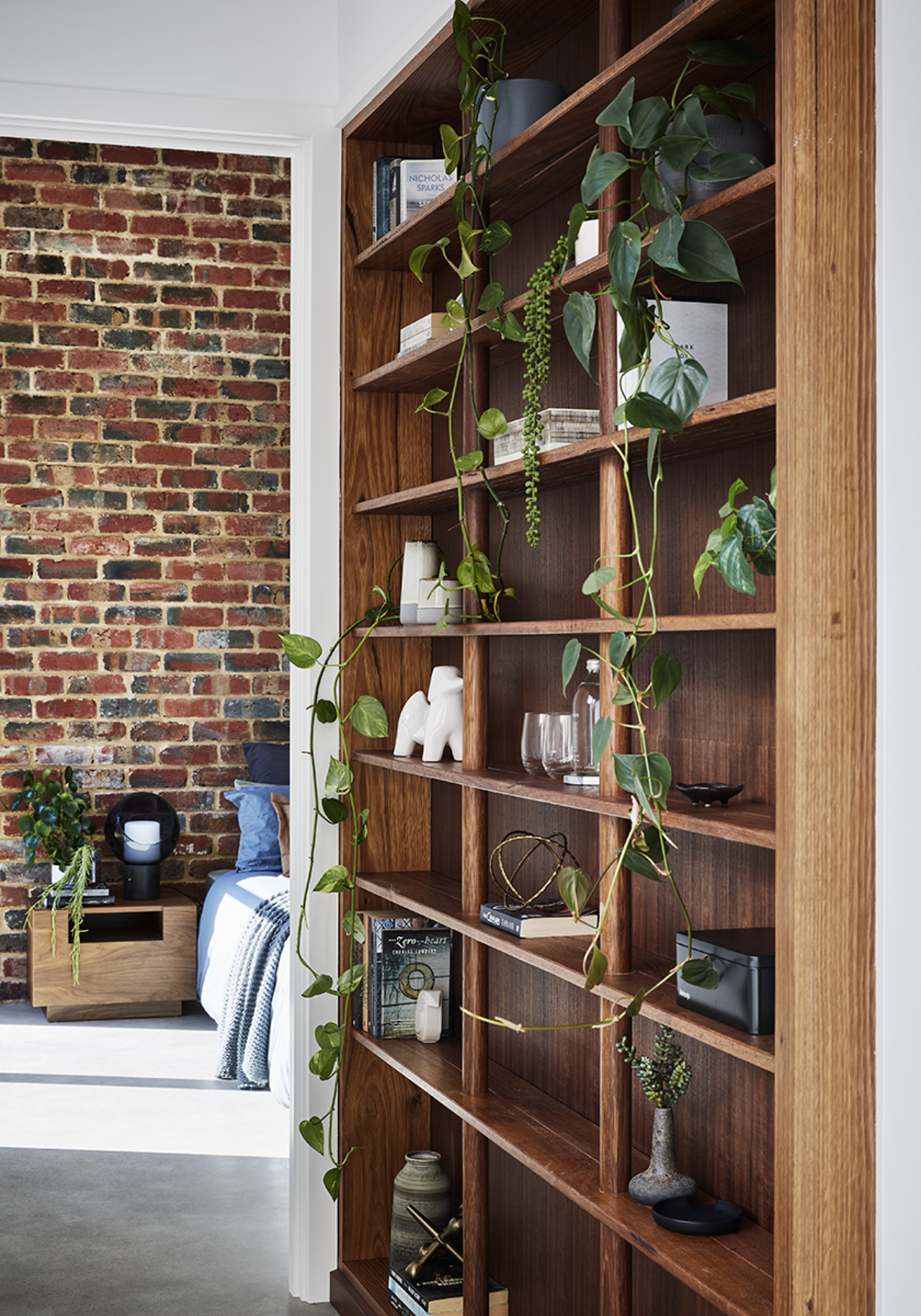
- Recycled materials: Recycled clinker bricks were used for all internal brickwork and courtyard paving. The builder recycled the timber cladding and corrugated iron cladding offcuts to create a built-in bookshelf, fences, gates, and wood storage.
The layout of the house is based on the site’s northern aspect and the private courtyard.
The courtyard is intended for social purposes, acting as both a point of arrival and the heart of the home.
The home’s key living spaces: the living, dining, kitchen, and master bedroom suite, open directly to the northern front yard.
The living space and kitchen are also open to the courtyard.
The southern wing consists of 2 bedrooms, a bathroom, and laundry.
This wing still has a northerly aspect and views of the leafy rear yard.
The workshop and garage are on the east side of the property with direct access to the courtyard.
The material used in this project included a simple palette of corrugated steel and timber cladding that responds to the surrounding coastal township context.
Corrugated steel was applied to external walls that face harsher weather conditions, predominately from the south and west.
The Colorbond finish of the steel cladding requires no maintenance.
Spotted gum timber cladding was selected to soften the facade and provide warmth that contrasts the tough corrugated steel.
The timber cladding is applied to external walls that are weather-protected by deep eaves above.
The cantilevered steel PFC verandah awning brings the dwelling closer to the street, while not impacting setback regulations.
The expression of the steel structure exposes the functionalist aesthetic, consistent with the overall design approach.
The workshop is the client’s retreat.
With a background in civil engineering, Atlas Architects’ client regularly undertakes home construction projects to further improve the property.
This simple workshop relates in form and materiality to the dwelling yet provides much needs separation for sound and privacy.
Key Products Used
Wall Cladding: Lysaght Custom Orb, Spotted Gum Shiplap
Roofing: Lysaght Klip-Lok 700 Hi-strength
Lining Board: James Hardie Hardie-Flex
Insulation: Bradford Gold Hi-Performance, Kingspan Kool-therm K3
Other Materials: Recycled Clinker Brick
Project Details
Project Size – 155 m2
Site Area – 870 m2
Completion Date – 2021
Building Levels – 1
Project Team
Architecture
Atlas Architects
Atlas Architects is a design studio with a passion to provide uncompromising architectural support and guidance to our community.
Its mission is to deliver creative, innovative, and environmentally sustainable design solutions through excellent client-architect relationships and care.
Photography
Tess Kelly
Tess Kelly is a commercial photographer based in Melbourne, Australia. She specializes in architecture, interiors, and still life photography.
Photo Gallery
Click on a thumbnail image to enlarge.










Design © 2021 Atlas Architects. All Rights Reserved.| Images © 2021 Tess Kelly. All Rights Reserved.
The Builtworks Quest
At Builtworks, we’re on a multi-year quest to document, showcase, and spotlight the best of Australia’s built environment.
That’s why we’re creating this comprehensive online archive and educational resource that showcases a diverse and eclectic range of project types and scales.
Together with showcasing older exemplars of enduring merit, we spotlight and celebrate the very best new and recent additions to Australia’s built environment.