
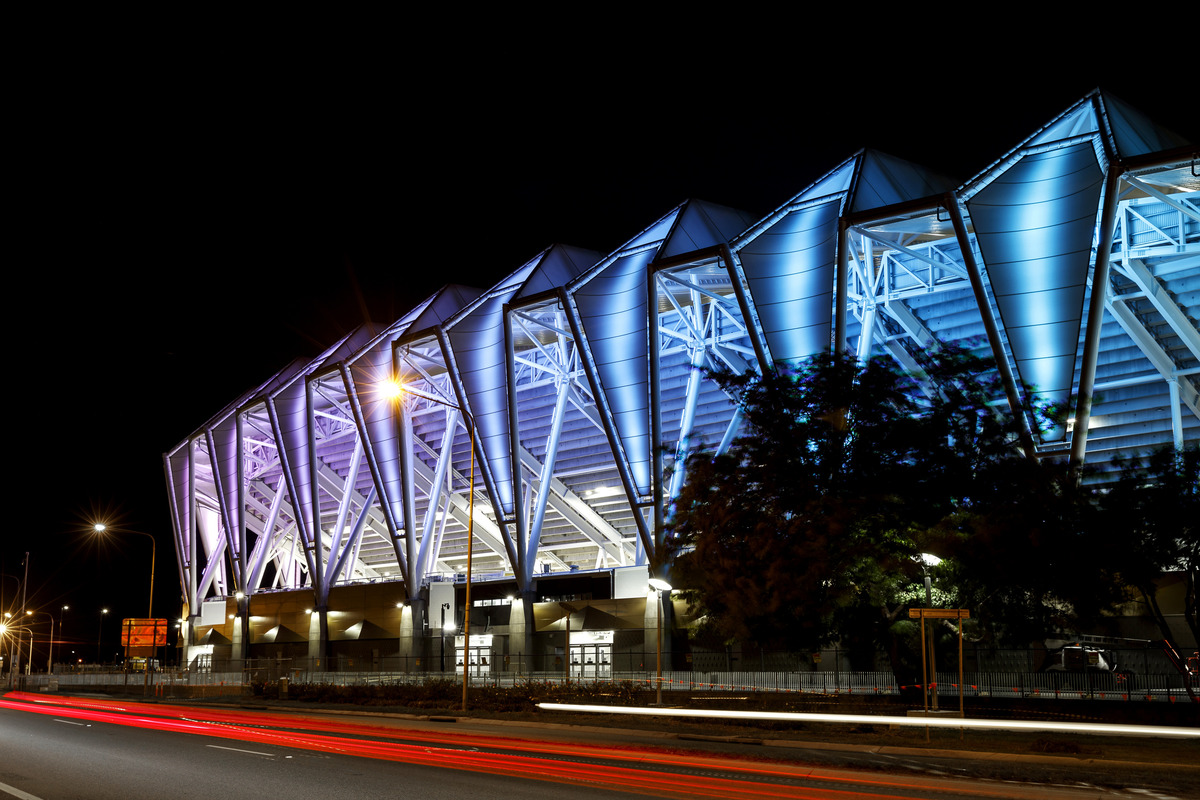
Queensland Country Bank Stadium, formerly known as the North Queensland Stadium, came to life as part of the Townsville City Deal which was signed in December 2016.
It aimed to deliver a centrally located, 25,000-seat multi-purpose regional stadium in time for the 2020 National Rugby League (NRL) season.
The stadium was a joint project of the Queensland Government, Australian Government, and Townsville City Council with the Queensland Government making the biggest contribution of up to $140m for the $250m project.
It is now home to the North Queensland Cowboys NRL football team.
The project was supported given the expectation it would deliver additional activation and development opportunities for the Townsville City Waterfront Priority Development Area and the city’s Central Business District.
A design competition was held during 2016.
Four architectural practices were shortlisted from a field of 17 international and national firms. BVN Architecture, Hassell, and Populous were the short-listed runners-up with the project awarded to COX Architecture working in association with Townsville-based Counterpoint Architecture.
The stadium is designed to host three rectangular sports – rugby league, rugby union, and soccer.
It has the flexibility to host a range of alternative entertainment events such as concerts too.
The final project design was the product of a deeply collaborative process between the design team, Department of Housing and Public Works, Stadiums Queensland, Watpac, and the North Queensland Cowboys rugby league football club.
Consultation with the Wulgurukaba Peoples also played an important role in the stadium’s delivery. COX recognised the Wulgurukaba people of Gurambilarra (Townsville) and Yunbenun (Magnetic Island) as the traditional custodians of the land on which the project stands, Townsville, and the wider region.
It took a year to design. Construction began on 18 August 2017 and was completed in February 2020. Watpac was the builder.
Key features of the COX design include:
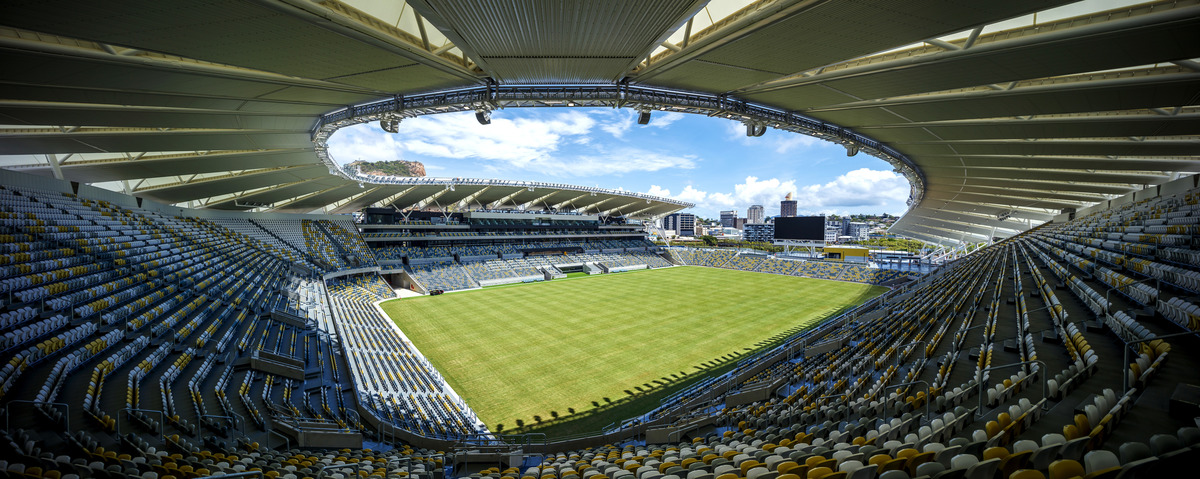
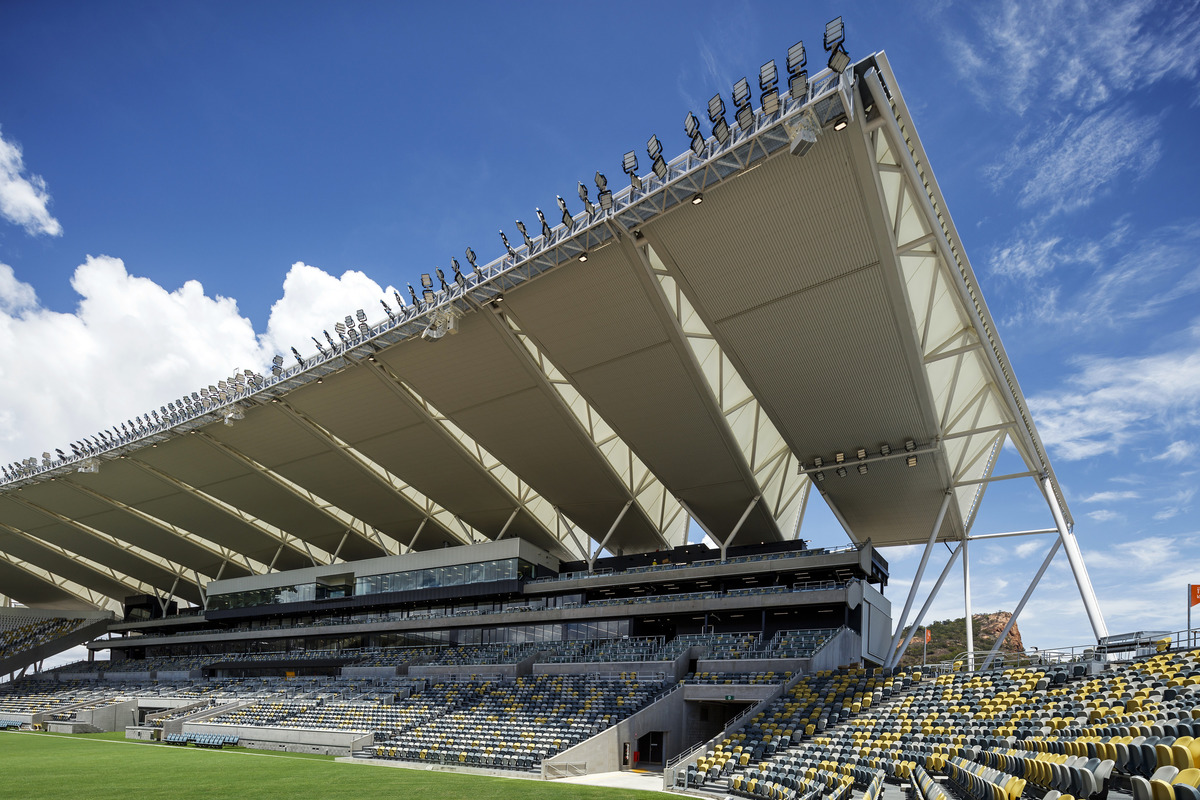
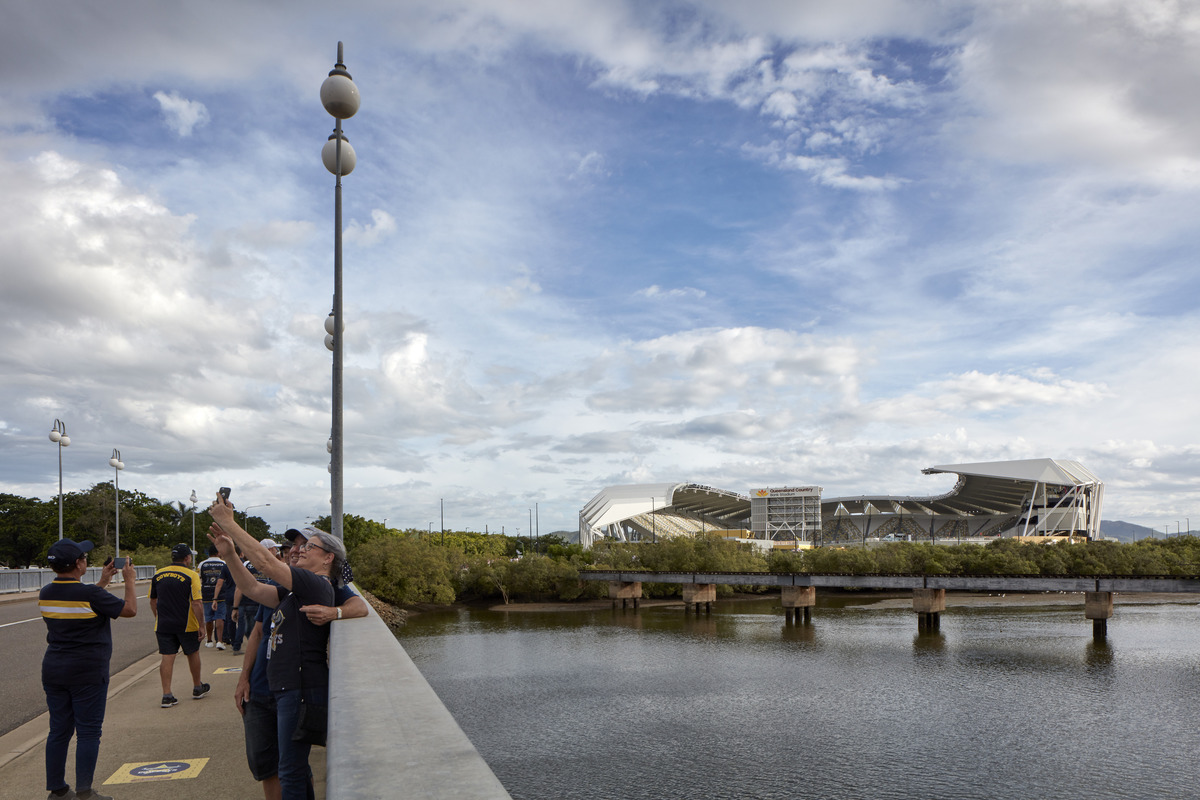
- Open at the north end allowing views to the city and neighbouring Magnetic Island.
- A range of arrival plazas and landscaped greens.
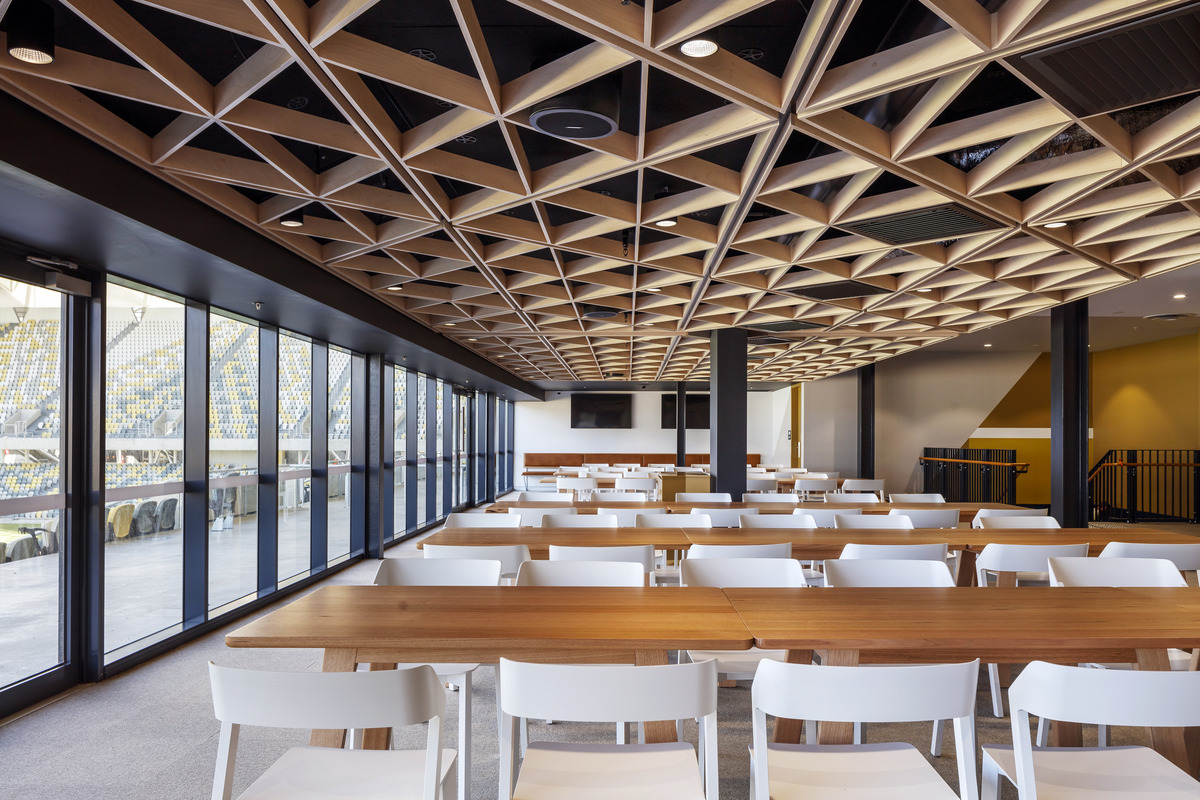
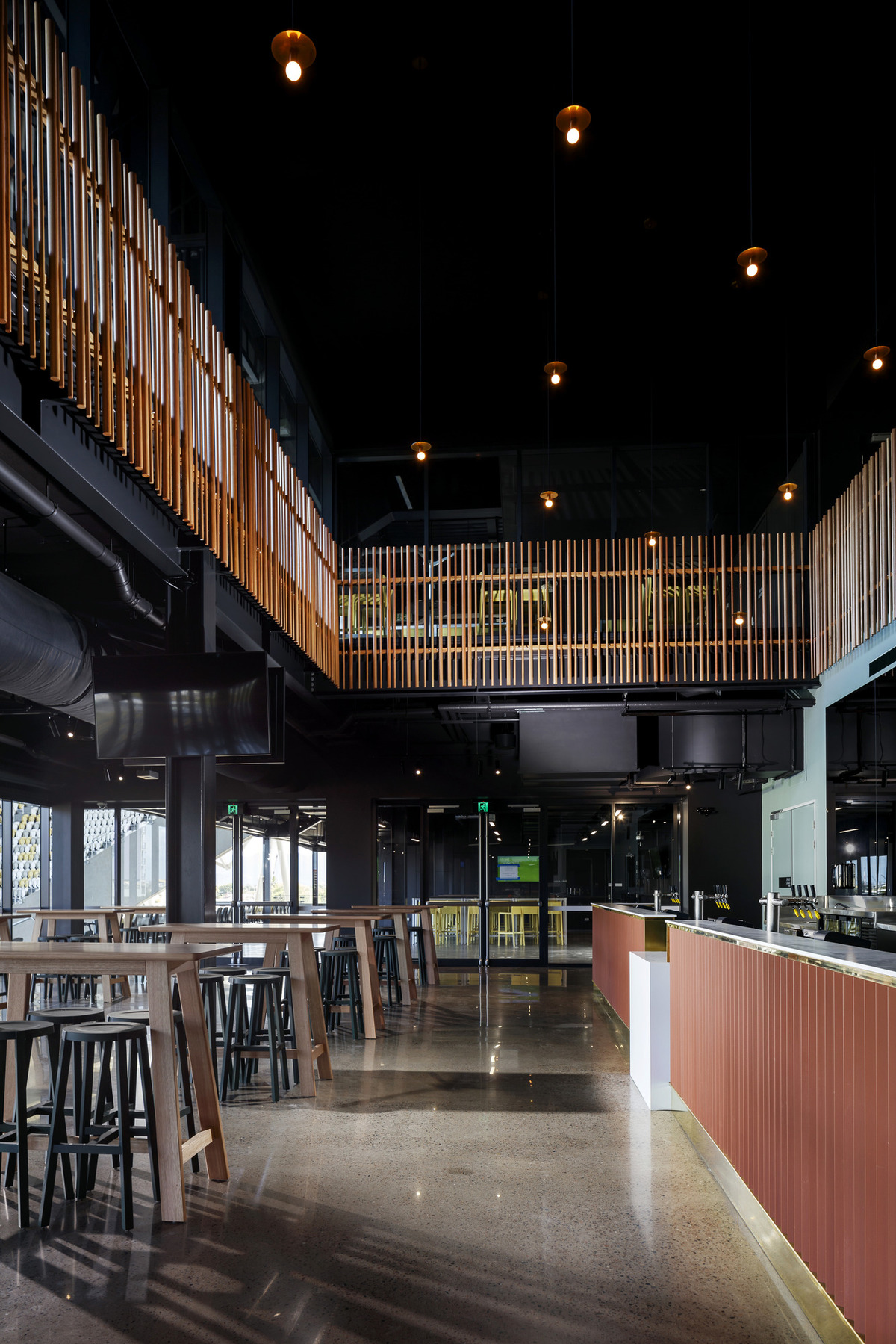
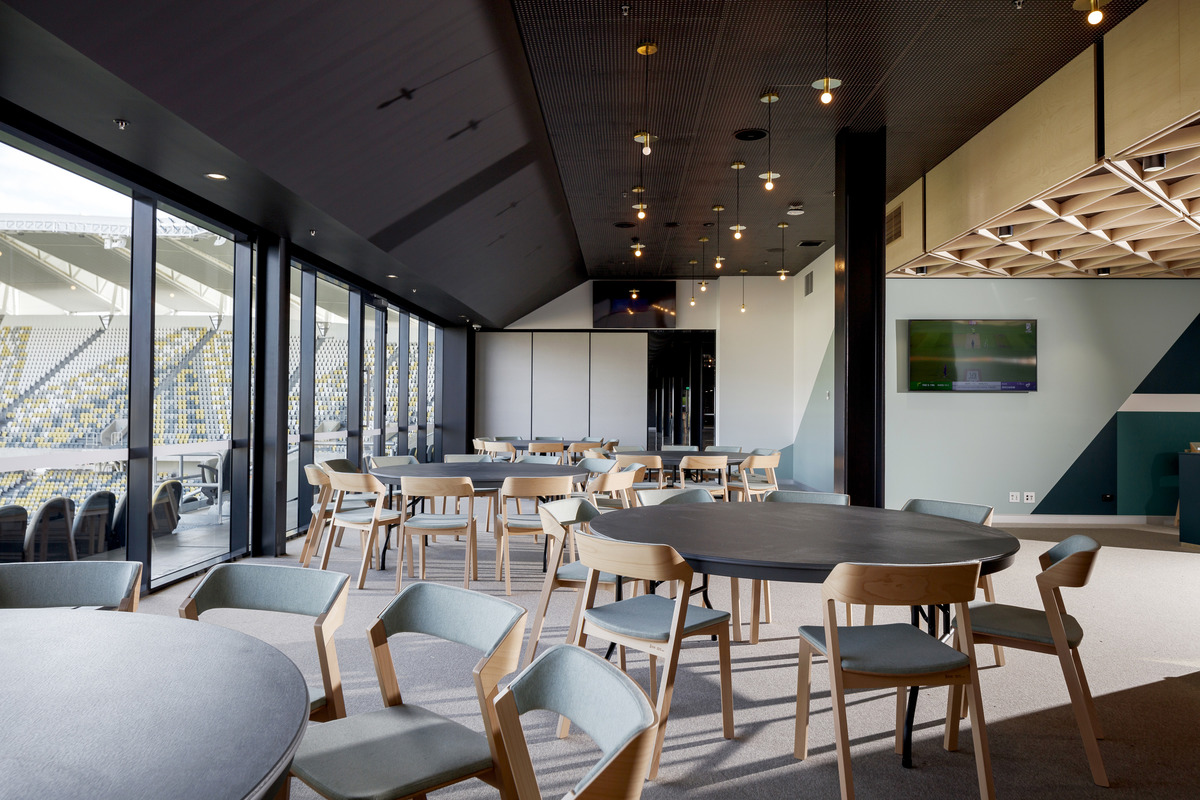
- A fan-focused seating bowl and food and beverage facilities for optimum game experience.
- Accommodation of up to 25,000 patrons for sporting events and 40,000 patrons in concert mode.
- Community-based design including event plazas for smaller for game day and general community use.
- Enhancement of city amenity to drive local economic benefit for all.
The Cox Architecture design delivered a building of its place. In defining a sense of place for the stadium, the COX Architecture team worked closely from the local context. Critical to the success of modern stadia, and essential to regional stadia, is a sense of identity.
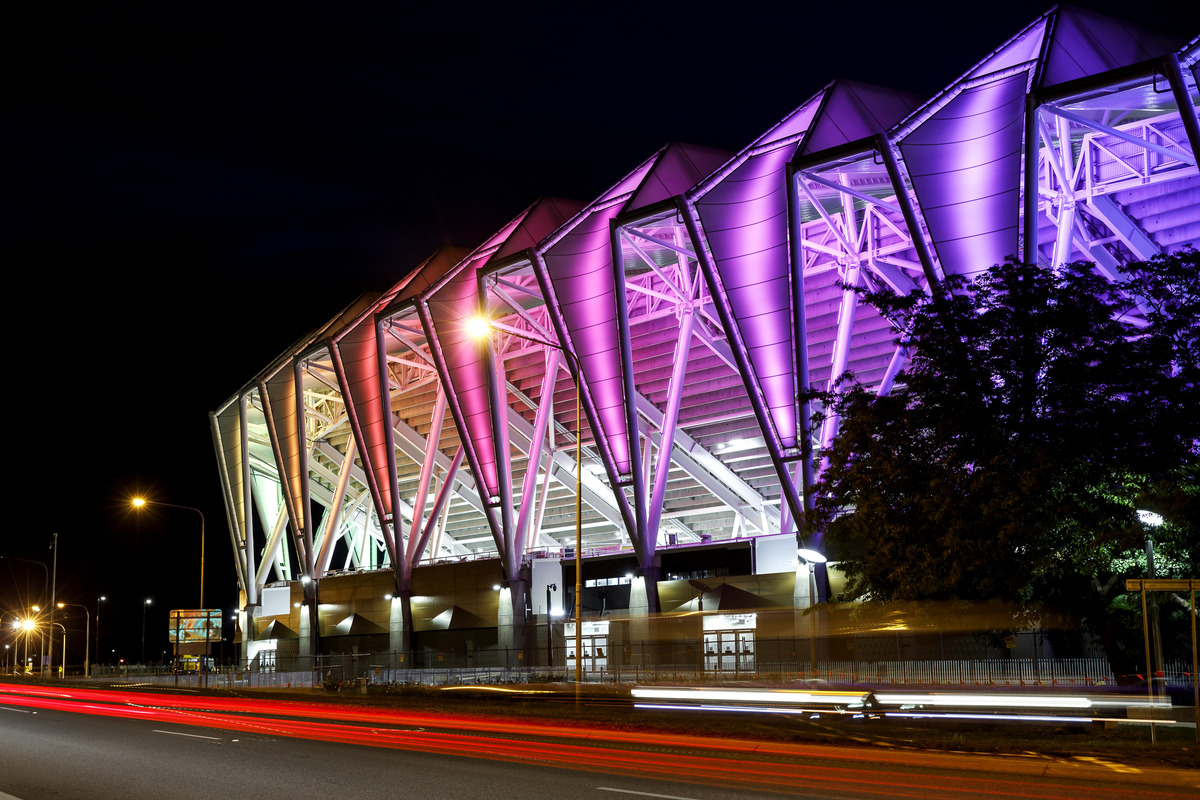
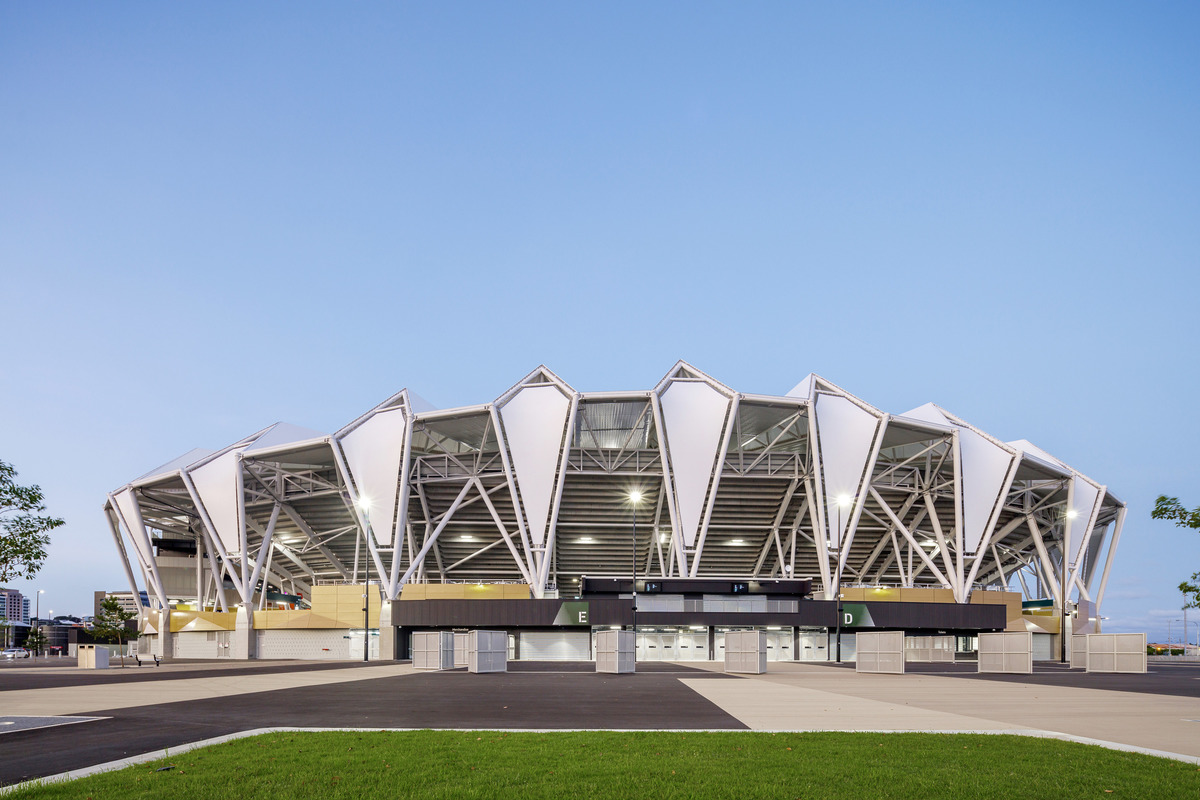
For this project, COX drew inspiration from the form of the native Pandanus tree to create a unique sense of place and identity for the project.
Pandanus Tectorius is native to North-Eastern Australia stretching up to the Torres Strait. It’s common on the coast, but in tropical North Queensland, it grows inland as well.
COX saw the strap-like tapered Pandanus leaves as a suitable reference point for consideration of the roof geometry.
The roof structural scheme, developed with Arup, achieved a structural elegance despite having to accommodate cyclonic wind conditions. The roof design permitted a construction methodology that significantly reduced propping and also provided flexibility in the construction sequence.
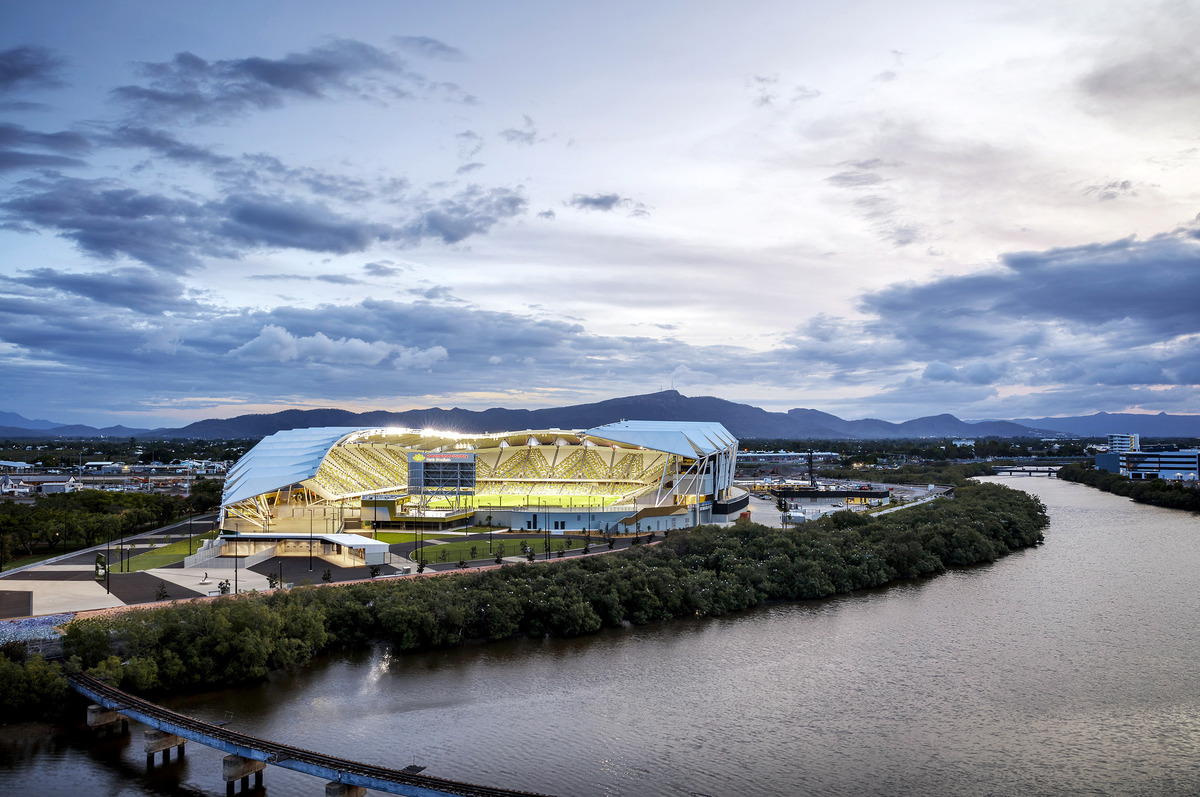
The building is now the single largest in Townsville and one of the largest in Northern Australia. It is at the gateway to Townsville’s Central Business District and has already become one of the defining images of the city.
As well as the physical relationship to the City, the horseshoe stadium form is uniquely identifiable to North Queensland and beyond, both nationally and internationally.
The Stadium is in an urban landscape that is deeply influenced by local topography. Mt Stuart, Castle Hill, and Magnetic Island are key landmarks in Townsville and the organic nature of the venue responds to these dominant physical elements.
The Queensland Country Bank Stadium is an expression of North Queensland.
It combines the functional and operational aspects of international modern stadiums whilst engaging strongly with the environment that is quintessentially Queensland.
Through the development of a ‘fan first’ approach to the design of the stadium, COX forged a unique stadium with a sense of place, belonging, and community.
A deep understanding of the importance of social gatherings, the technical aspects of venue operations, and a variety of patron offerings led to the development of a stadium design that has the powerful sense of ‘home team’ advantage.
Director of COX Architecture Richard Coulson said the new stadium is considerate of both locals and fans.
“The Stadium used the philosophy of maximising the passive design and architectural strategies as a basis for sustainable design. That is; build less, enclose less and connect with the city context.”
Technology-based solutions were adopted in lighting, energy efficiency, and water use.
While the new North Queensland Stadium officially opened with Sir Elton John’s Farewell Yellow Brick Road world concert tour on 29 February 2020, its first sporting event was held on 13 March, 2020 with 22,459 NRL football fans in attendance to watch Townsville’s Cowboys v the Brisbane Broncos.
Jake Turpin scored the stadium’s first try, Jamayne Isaako scored the first goal, and Michael Morgan slotted the first field goal as the Broncos won 28–2.
The first release of tickets for that match sold out in 45-minutes.
Project Details
Completion date – 2020
Project Team
Architecture
Cox Architecture
COX is a design-focused contemporary architectural practice with studios located in every major Australian city and a history spanning 60 years.
Key to their ethos is supporting the public life of our cities. Cox does this by ensuring each project makes positive contributions to its public realm – giving more than it takes.
Counterpoint Architecture
Counterpoint Architecture is a Townsville based studio established by the merging of two of North Queensland’s most progressive and innovative firms – Outcrop Architecture and 9point9 Architects.
Counterpoint is involved in a diverse mix of public, commercial, community, and residential projects as an independent practice and through collaborations with other national Architectural firms.
Co-directors Mark Kennedy and Zammi Rohan are leading the next generation of architects in North Queensland, bringing a high level of expertise, passion, and commitment to the practice of architecture in the region.
Key Consultants
Arup
Ashburner Francis
Parker Hydraulics
Mike Driscoll and Associates
RPS
OMNI
McKenzie Group
Intelligent Risks
NDY
Photography
Christopher Frederick Jones
Christopher is an experienced architectural and interiors photographer based in Brisbane, Australia.
Andrew Rankin
Andrew is a Townsville-based commercial photographer specializing in photography of the built environment.
Photo Gallery
Click on a thumbnail image to enlarge.








Design © 2020 COX Architecture and Counterpoint Architecture. All Rights Reserved.| Images © 2020 Christopher Frederick Jones and Andrew Rankin. All Rights Reserved.
Get the Builtworks Letter
In every edition of the Builtworks Letter, you’ll get the behind-the-scenes backstory as to how buildings are designed, built, and brought to life.
You’ll hear compelling stories, learn surprising ideas, meet engaging characters, and discover unique voices.