

Located in the heart of the city, adjacent the Adelaide Railway Station, “The Strath” as it’s referred to by its loyal patrons has undergone a significant transformation, designed by Studio Nine Architects.
The Strathmore is a family run business.
The Basheer family purchased the hotel in 1974, when their family matriarch, then 79-year-old grandmother Mrs L Basheer walked passed the hotel with her two sons and stated that ‘real estate next to a railway station is always a sound investment’.
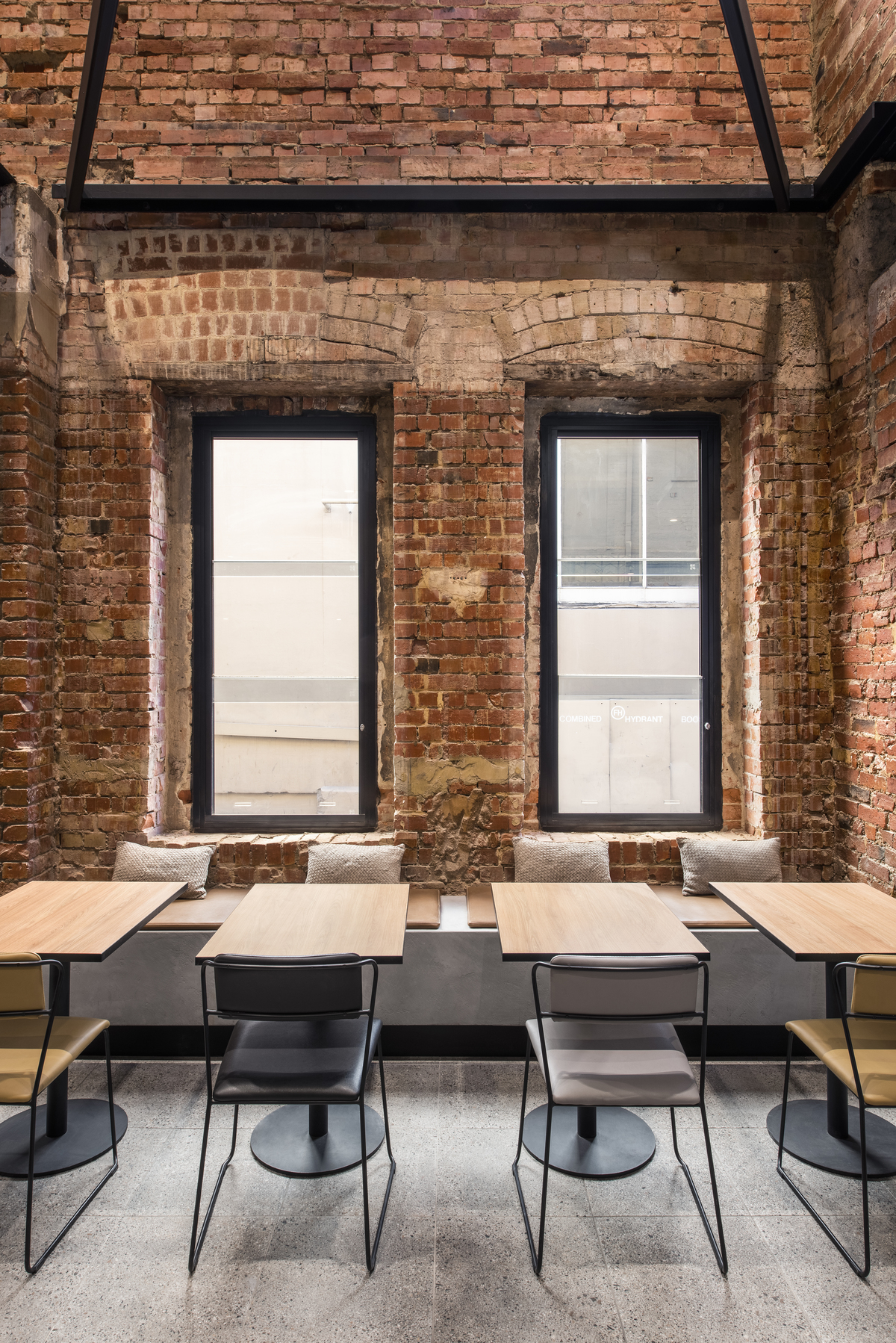
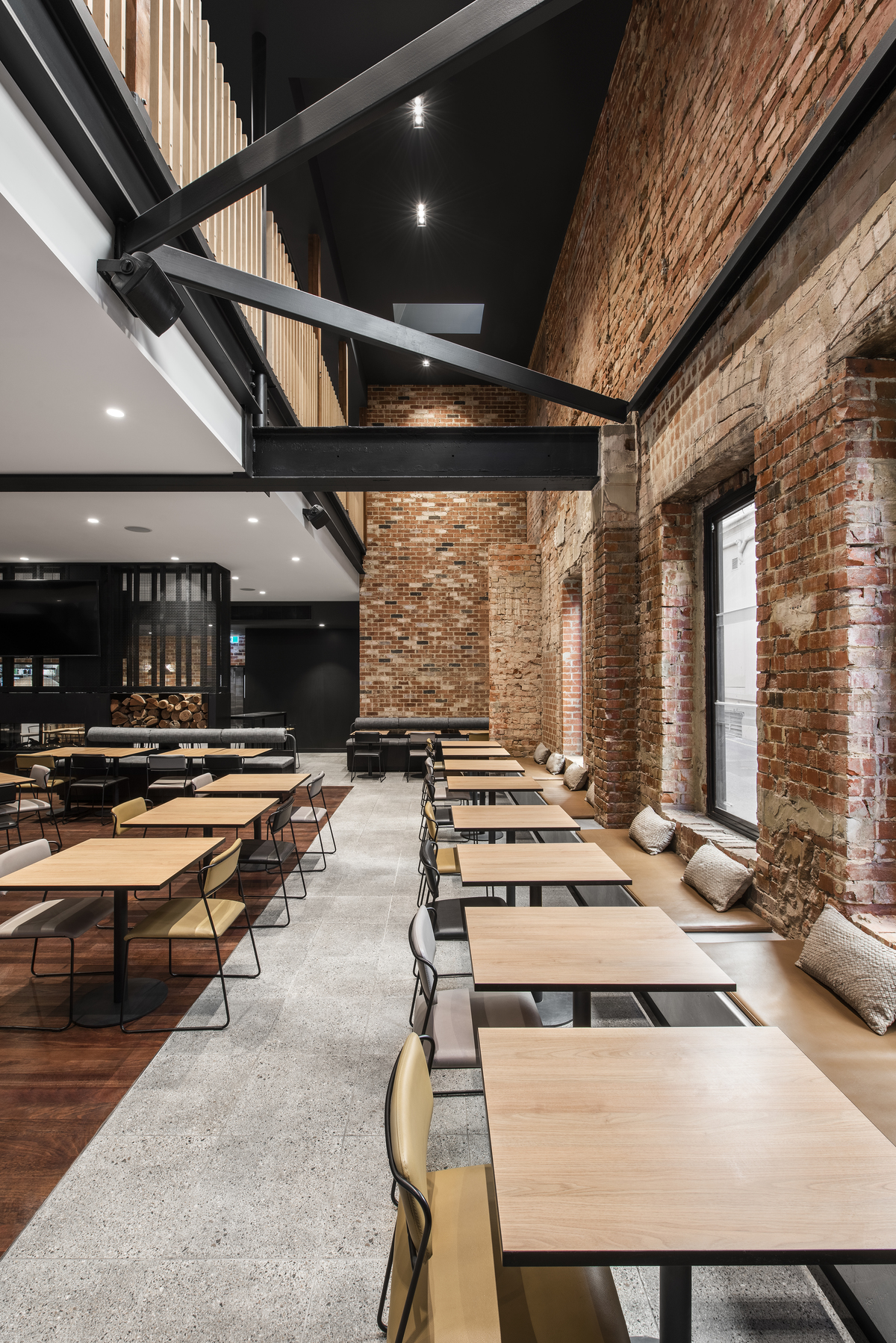
The refurbishment and renovation of the 165-year-old hotel celebrates the pubs rich and textural history by stripping the building back to its original form.
There were four key goals for the project:
- The ground level needed to be an evolution — in keeping with the current times, while the first floor was to be a revolution — a completely new business model.
- A connection to the street was to be created, both upstairs and downstairs, in order to truly benefit from its prime CBD location.
- A connection between upstairs and downstairs was to be formed, rather than functioning as two separate businesses.
- The development needed to be authentic and stay true to the fact that the Strathmore is a pub.
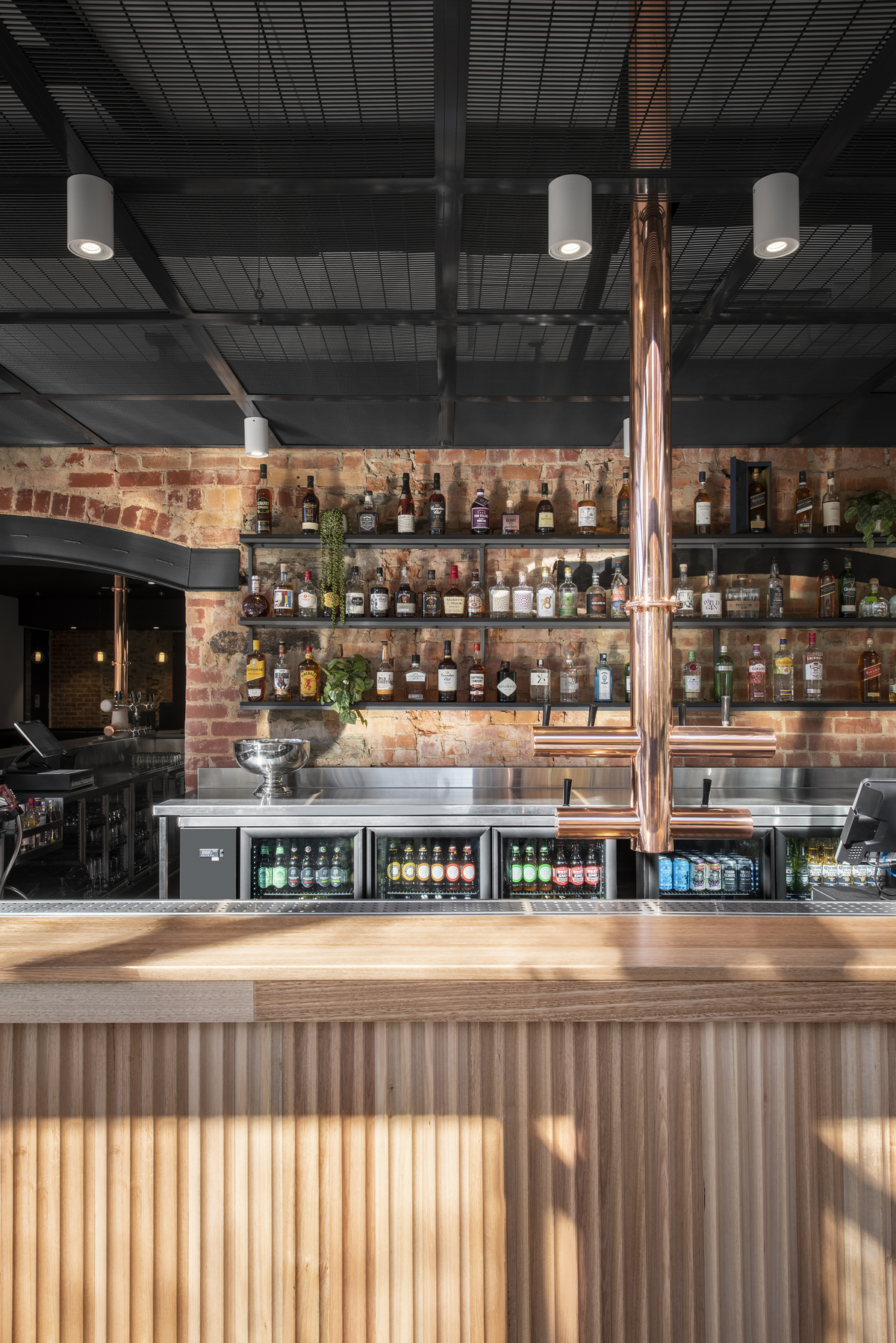
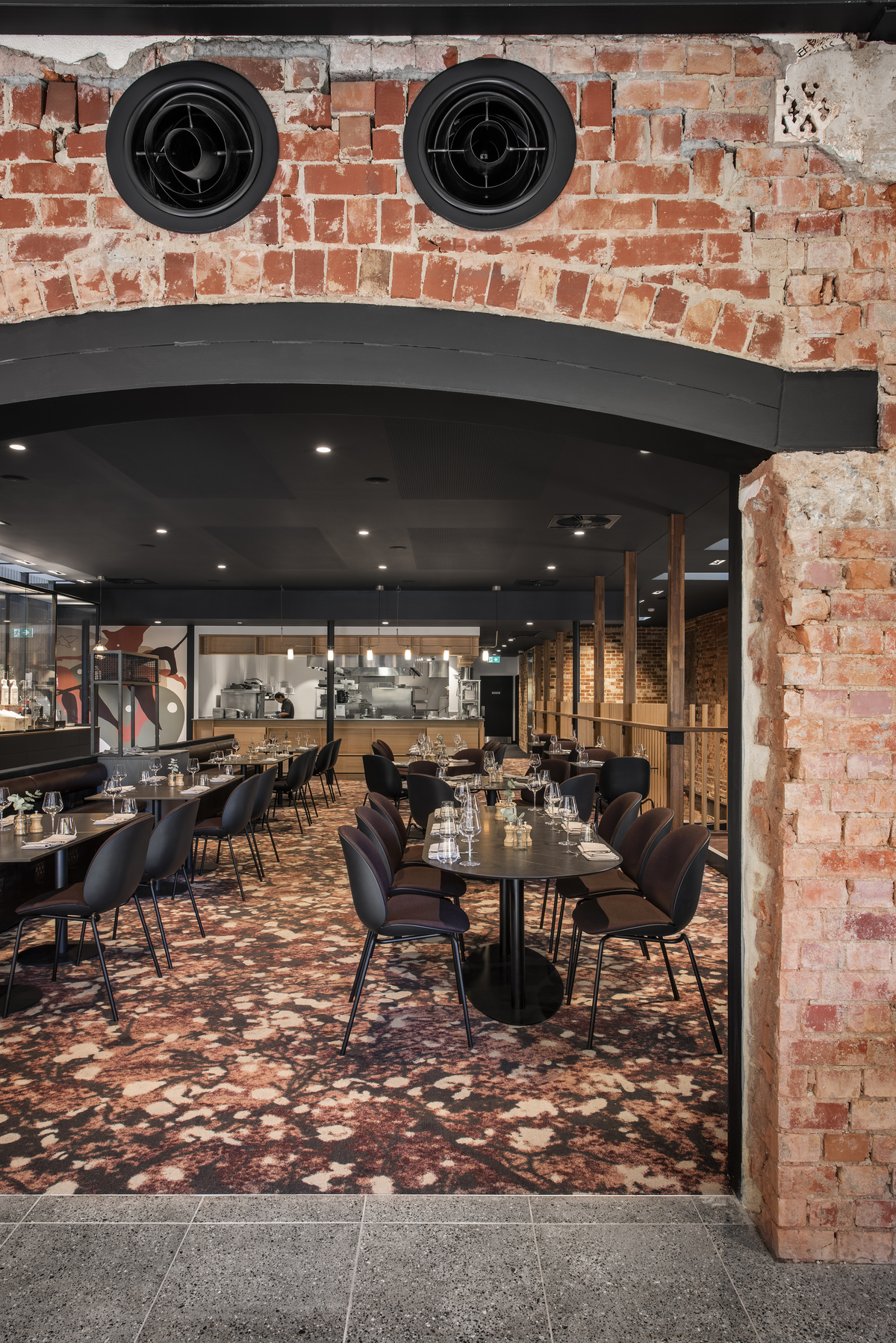
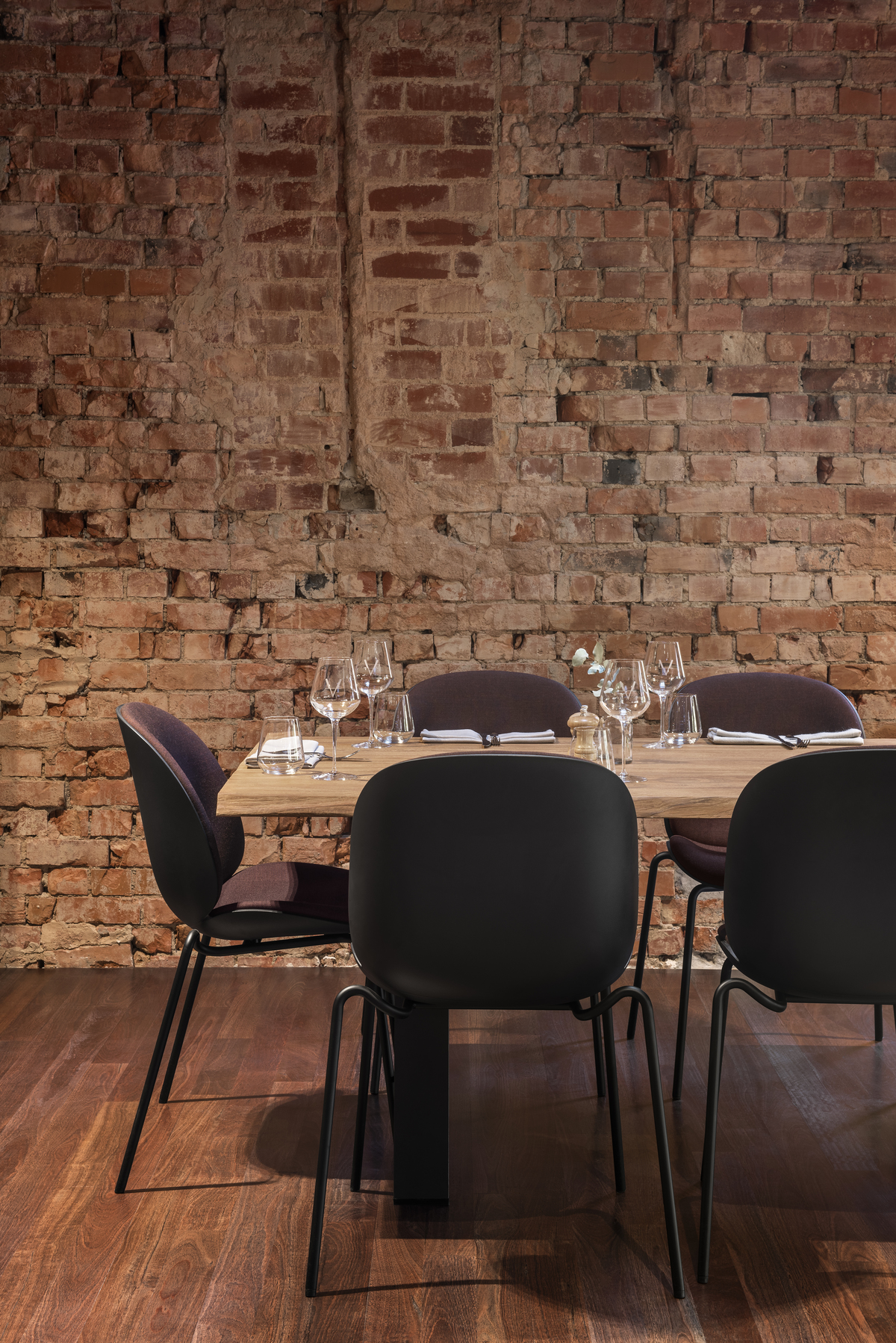
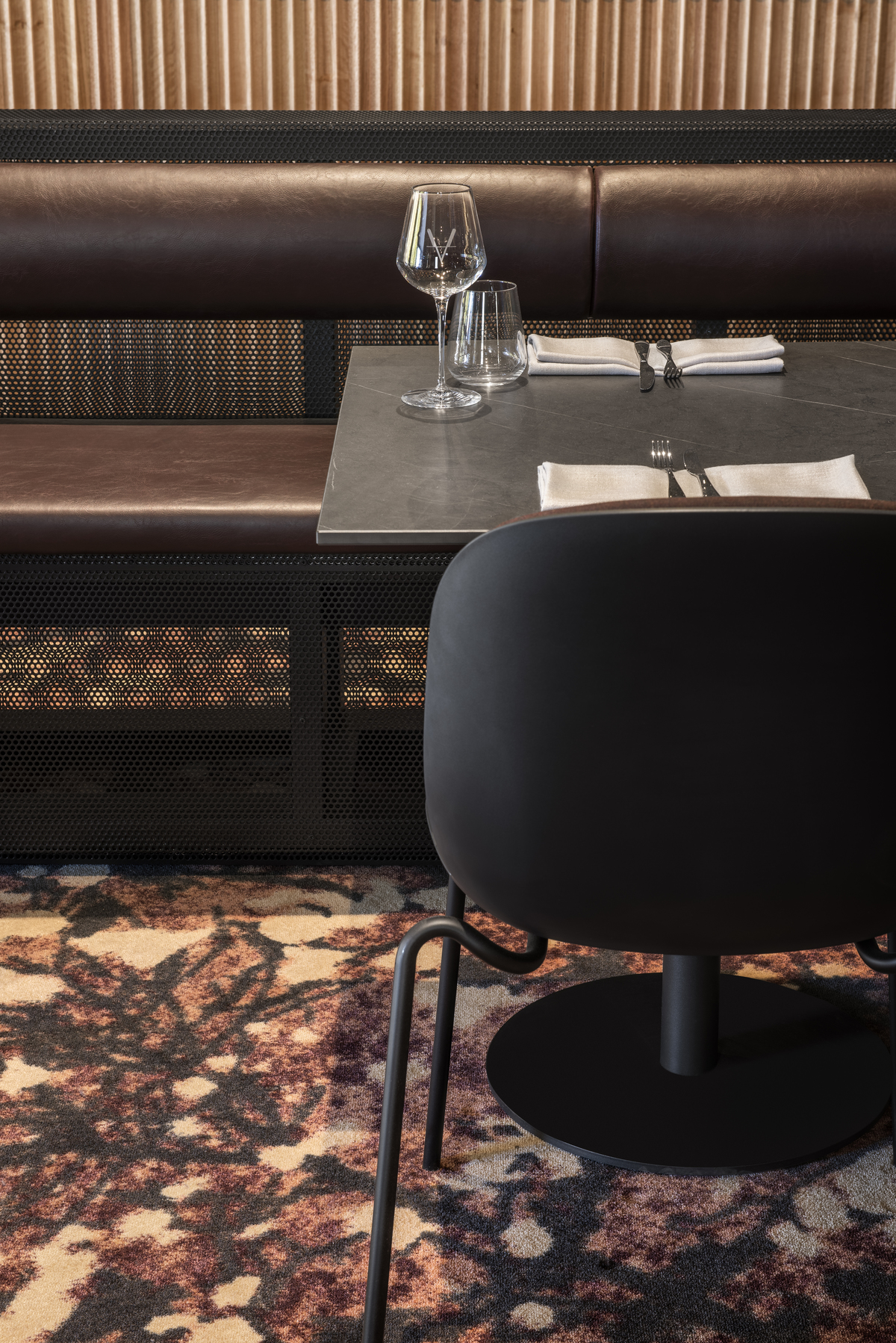
Studio Nine Architects’ design incorporated major structural modifications and infrastructure upgrades to uncover the existing steel structure and brick work, with accents of a restrained and honest palette of blonde and blackened timbers, perforated metal, rich fabrics, and greenery.
The four internal boundary walls showcase the original red brick, acting as a constant sense of orientation in a large and previously disorientating venue.
This was Studio Nine Architects’ initial concept to achieve continuity in the design, with a constant thread of materials throughout to connect the spaces.
Works to the ground floor are an ‘evolution; updating the fit-out and façade to current times, while taking into consideration the existing clientele and successful downstairs trade.
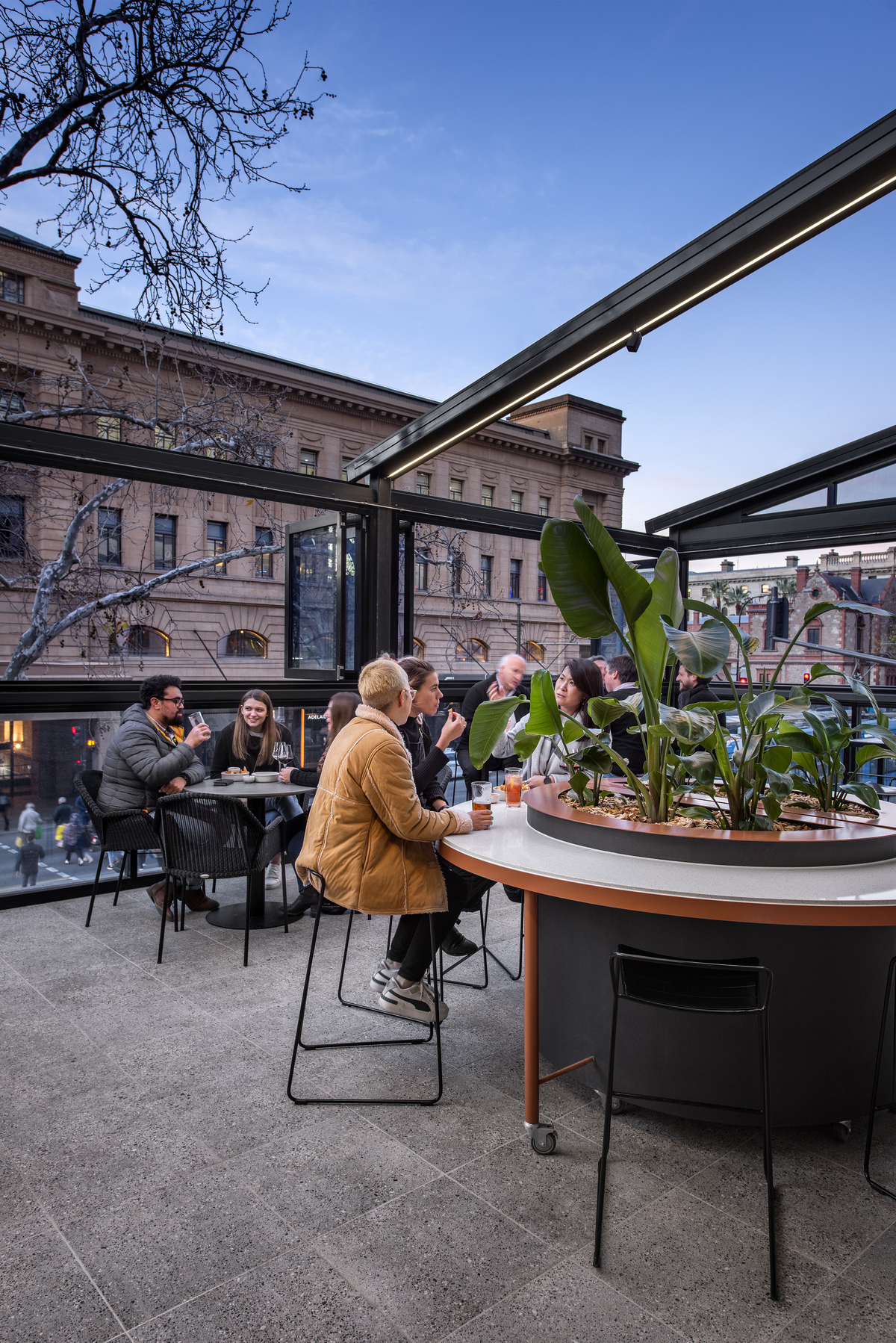
A connection to the street was created by increasing views in and out along the north and west facades.
Internal reprogramming allowed for previously hidden windows on the western wall to be uncovered, creating a large open plan design with smaller ‘zones’ created through the use of mesh screening and change in flooring.
Stepping the front floor plate back created an enhanced entrance statement and transition zone behind the original building façade. The ground floor bar runs from the entry to the rear, leading you into the venue and the outside alfresco area.
Connecting the ground and first floor was a priority.
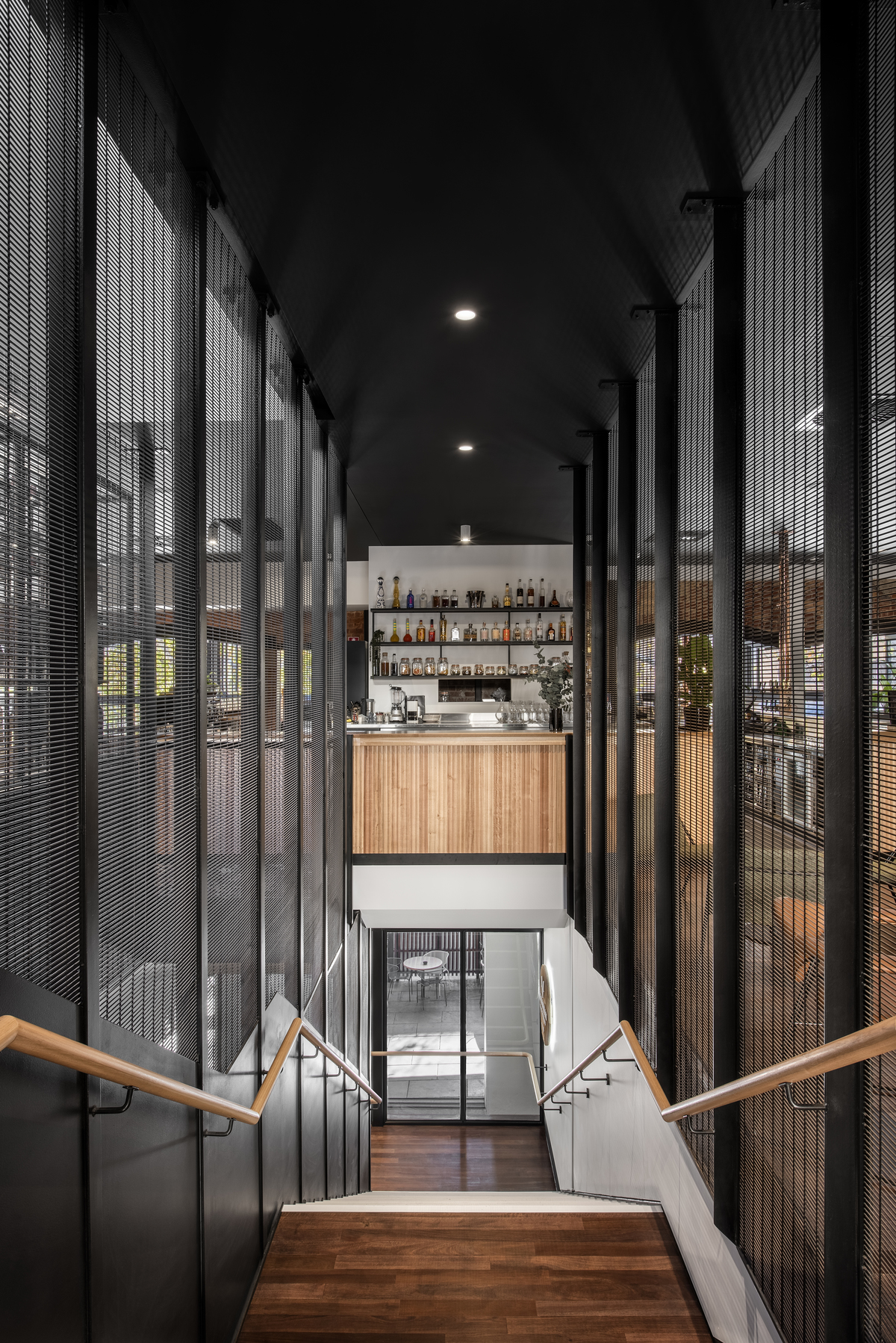
Cutting through the first floor, a large, double-height void was created, with the addition of a new feature staircase to link the two levels.
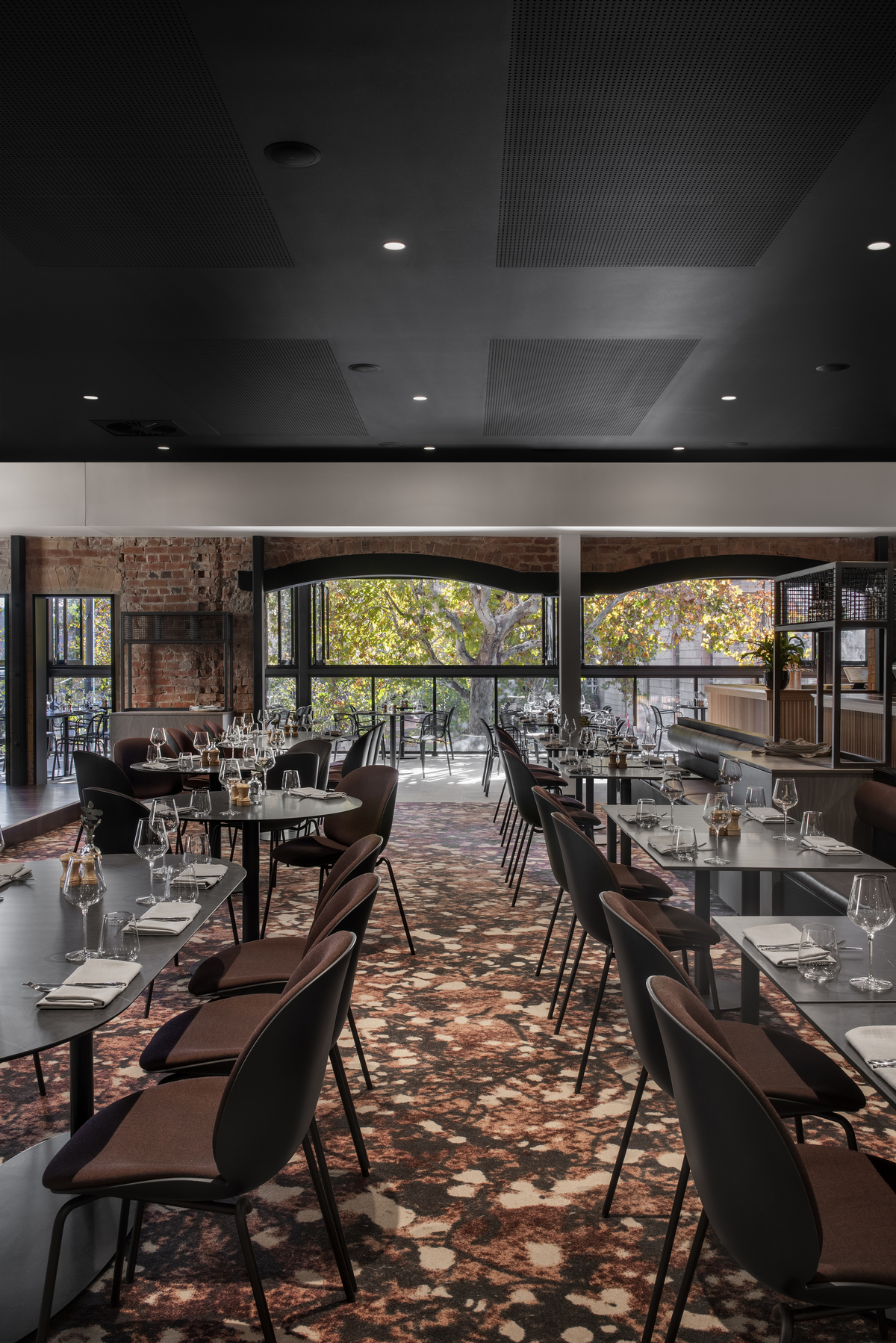
The re-imagined first floor is a ‘revolution’, offering a new, premium dining and lounge experience.
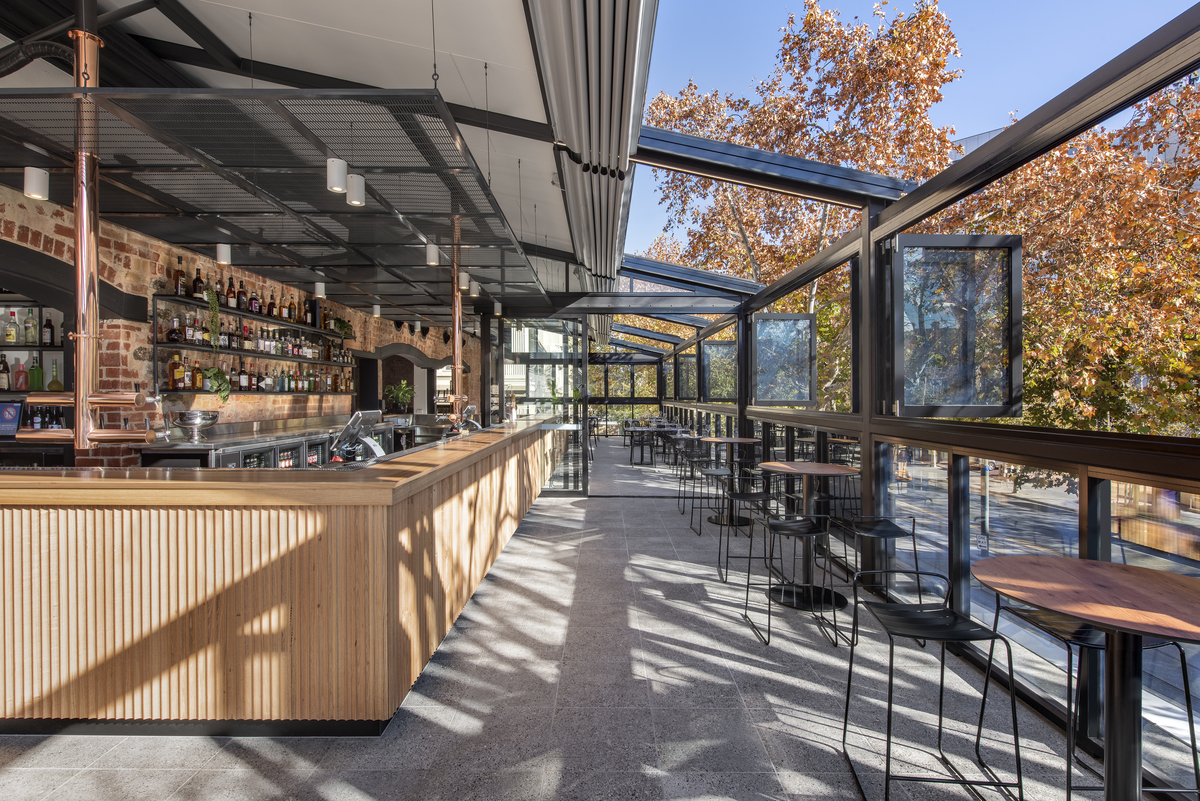
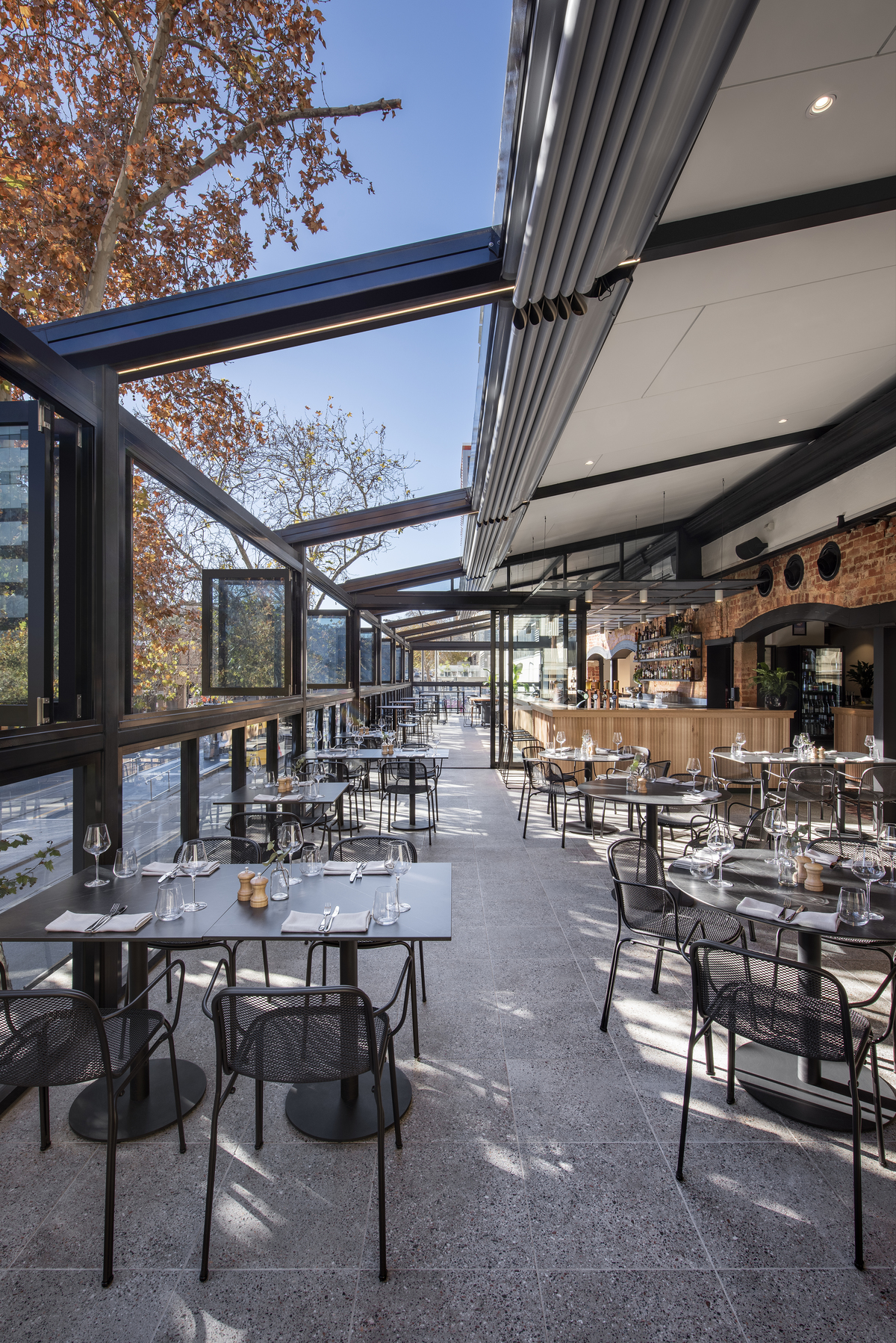
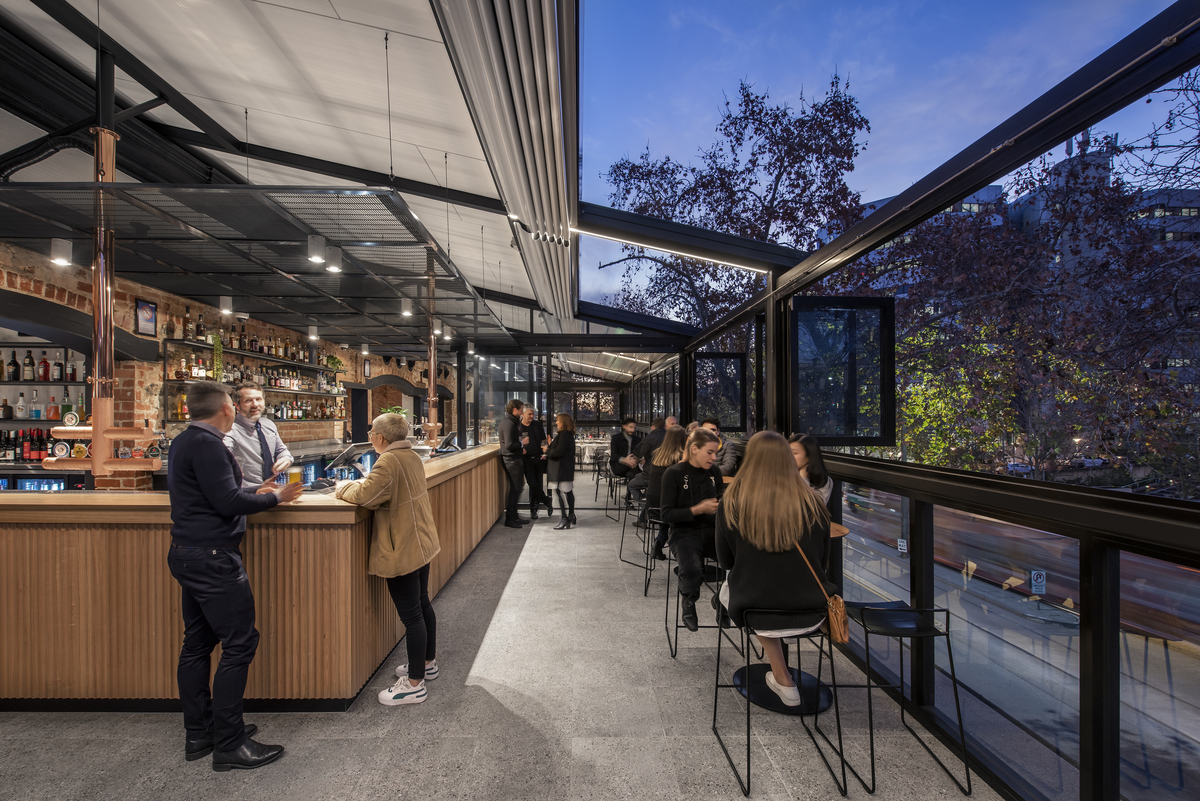
The previously enclosed first floor balcony has been transformed into an open-air bar and dining area with a new operable roof and bi-fold windows providing views out to North Terrace, and in turn, allowing street level to connect with the first floor.
A decline in upstairs trade was a catalyst for the renovation, with first floor hospitality offerings typically not working in Adelaide unless used for functions.
Downstairs, the bar was relocated to a central location, servicing each of its zones inside and out.
Custom perforated steel mesh joinery and screening used throughout doubles as privacy and transparency, separating the lounge and dining zones without closing them off entirely.
The custom wine storage acts as both a backdrop to the dining area as well as creating a circulation zone.
Due to the age of the building, a layer of complexity existed.
The first floor archways were a surprise that were uncovered during construction — with the design changed accordingly to highlight the discovery and showcase the building’s original form.
Undertaking a staged approach over a twelve month period, the hotel remained operational throughout construction, until Covid restrictions were mandated.
The project for Studio Nine Architects’ long-time client has revitalised the hotel, taking full advantage of its prime city location by enhancing the experience for existing patrons and attracting a new crowd.
Key Products Used
- Villa Chair – External Dining Chair – Colos, supplied by 1000 Chairs
- Transit Counter Stool Black Metal Seat & Frame – External & Internal Stools – MAD, supplied by 1000 Chairs
- Beetle Chair Fabric – First Floor Dining Chair – Gubi, supplied by 1000 Chairs
- Laminate Athena Stone Square Top Table – First Floor Square Dining Table – Concept Collections
- Laminate Athena Stone Round Top Table – First Floor Round Dining Table – Concept Collections
- Laminate Athena Stone Oval Top Table – First Floor Oval Dining Table – Concept Collections
- Inox Drybar Black – External Bar Table – Pedrali, supplied by Identity Furniture
- Laminate Athena Stone Drybar – Bar Bench – Concept Collections
- Columbus Tiled Drybar – Tiled Balcony Bar Table – Identity Furniture
- Transit Upholstered Dining Chair in Earth, Saddle & Dove – Ground Floor Dining Chair – MAD, supplied by 1000 Chairs
- Tas Oak Square Top Table – Ground Floor Square Dining Table – Concept Collections
- Custon Tas Oak Round Top Table – Ground Floor Round Dining Table – Concept Collections
- Frayed Edge Long Cushion – Ground Floor Cushions – MJG, supplied by Hard to Find
- Custom Upholstered Seat in James Dunlop Heritage Carbon – Ground Floor seating
- Custom Upholstered Seat Pad in Austex Studio Encore Maple – Ground Floor external seat
- Masculo Chair Leather – First Floor Lounge Chair – Gubi, supplied by 1000 Chairs
pad
Project Details
Project size – 1,842 m2
Site area – 1,842 m2
Project budget – $5,000,000
Completion date – 2020
Building levels – 2
Project Team
Architecture and Interior Design
Studio Nine Architects
Studio Nine is a solutions focused design studio built on strong collaboration.
Their collective ambition is to deliver outcomes that add value and exceed expectations.
To do this, they draw on a rich depth and diversity of project experience, responding to each brief with a balance of evidence and innovation.
Photography
David Sievers
David Sievers has lived photography since 1995. Known for his simple yet striking compositions and attention to detail, he is one of South Australia’s most awarded photographers, and has received the designation of Master of Photography twice (M.Photog) from the Australian Institute of Professional Photography (AIPP).
Photo Gallery
Click on a thumbnail image to enlarge.




Design © 2020 Studio Nine Architects. All Rights Reserved.| Images © 2020 David Sievers. All Rights Reserved.
Get the Builtworks Letter
In every edition of the Builtworks Letter, you’ll get the behind-the-scenes backstory as to how buildings are designed, built, and brought to life.
You’ll hear compelling stories, learn surprising ideas, meet engaging characters, and discover unique voices.
t.